
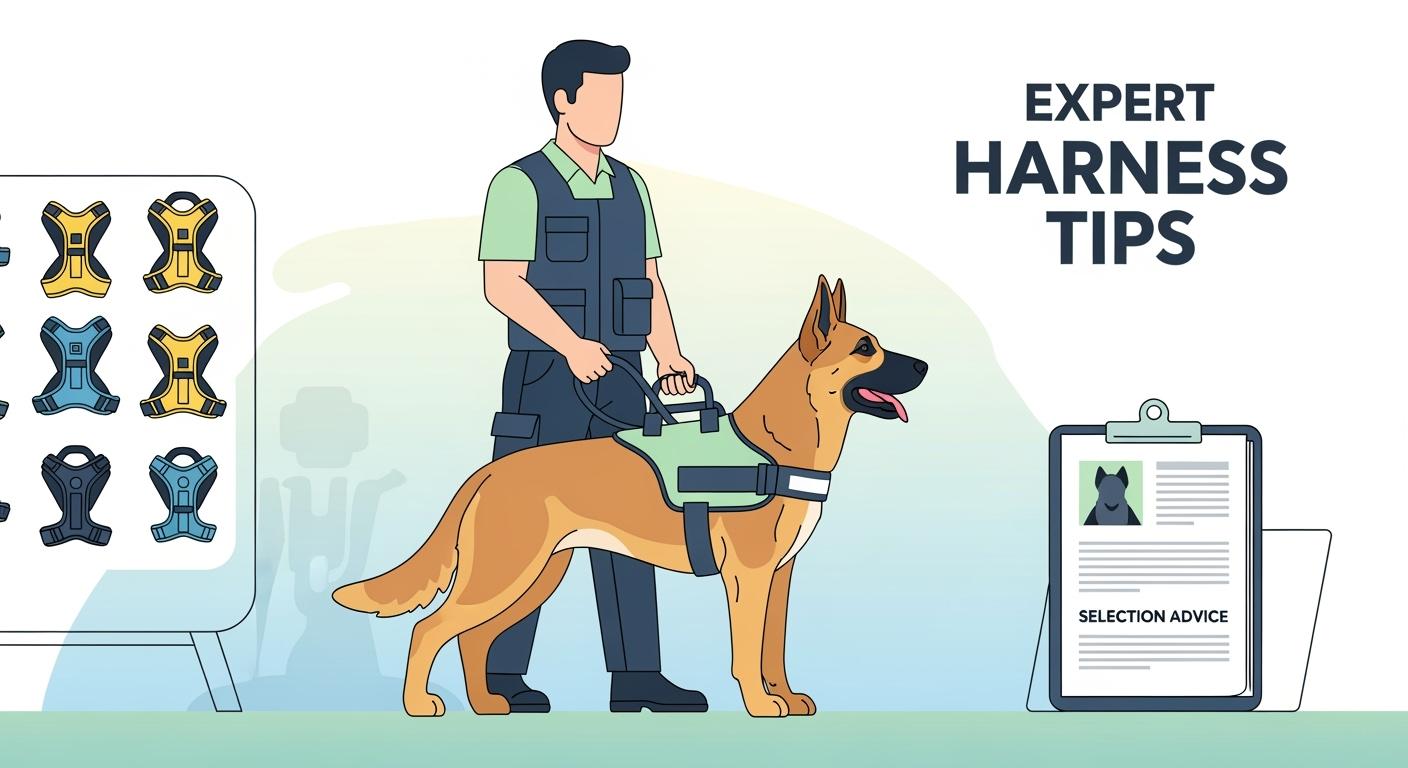
A dog harness with handle can be useful, but only when the extra grab point solves a real problem. The best setups help you steady your dog in crowded areas, shorten distance fast near traffic, or guide a large dog through stairs, doorways, and car exits. If you are comparing options first, start with a dog harness page that lets you compare overall shapes, clip layouts, and adjustment ranges before you narrow the choice to handled designs.
Many low-quality articles make handled harnesses sound useful for every dog. That is not how they work in real walks. Some dogs benefit from a top handle every day. Others end up with extra bulk on the back, more rubbing at the shoulders, or a handle that never gets used. The goal is not to buy the most feature-heavy harness. The goal is to choose the one that gives you better control without creating new fit or comfort problems.
When a handle actually helps and when it just adds bulk
A top handle helps most when you need short, close guidance rather than constant lifting. Think of brief moments: crossing a crowded sidewalk, passing another dog at close range, helping your dog step out of a vehicle, or guiding through a narrow entry. In those situations, the handle gives you a fast way to shorten distance without wrapping extra leash around your hand.
The same feature is less useful when your dog already walks calmly on a loose leash, rarely needs body guidance, and is sensitive to extra weight or structure on the back. Small dogs and narrow-bodied dogs can especially feel bulky harness panels more quickly. If your dog freezes, shortens stride, or starts rubbing more after switching to a handled harness, the handle may be solving the wrong problem.
- Useful: crowded sidewalks, stairs, car exits, brief close control, helping a large dog rebalance, or stopping a sudden forward surge.
- Less useful: calm neighborhood walks, dogs that dislike added structure, very small frames, or dogs that already move well in a lighter harness.
- Important limit: a handle is not automatically a lifting point. If the harness is not clearly designed and rated for support or lift assistance, treat the handle as a guidance point only.
This is also where many owners confuse control with correction. A handle gives you a closer point of contact, but it does not replace training, and it does not make a poor fit safe. If the harness shifts, rides into the armpits, or twists when you grab the handle, the feature becomes less helpful the moment you need it most.
How to choose the right harness style with a handle
Start by matching the harness style to the dog’s size, strength, and walking pattern. A daily-walk dog that pulls lightly may do well in a lighter handled harness with simple chest and girth adjustment. A large dog that surges, leans, or needs closer guidance may benefit from a more structured design with broader chest coverage and a sturdier top panel. If you want a wider comparison of shapes and trade-offs first, this best dog harness guide helps frame the bigger decision before you commit to a handled model.
Look at the handle as part of the whole harness architecture, not as the only deciding feature. A good handled harness should still have clear neck and chest adjustment, stable strap placement, and a clip layout that matches how you walk. For many dogs, control comes more from fit and attachment point than from the handle itself.
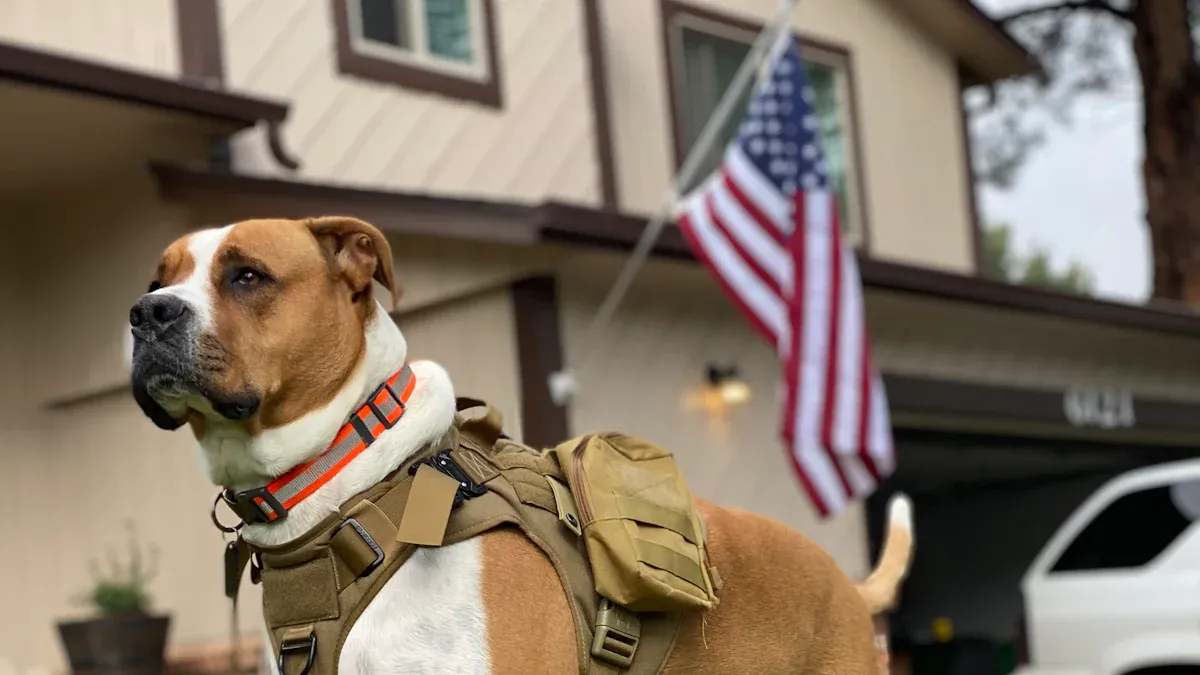
What to compare before buying
- Back panel size: enough structure to support the handle, but not so much that it traps heat or limits shoulder movement.
- Adjustment points: enough range to fine-tune neck and girth without leaving long loose strap tails.
- Handle height and softness: easy to grab quickly, but not so tall that it flops or catches on things.
- Clip layout: back-clip for calm daily walking, front or dual-clip if your dog needs more redirection.
- Weight and padding: enough support for your dog’s size, without overbuilding a harness for a lighter routine.
For large or strong dogs, hardware quality matters more than marketing words. Check the stitching where the handle meets the back panel, the firmness of the ring attachment, and whether the harness stays centered when you lift lightly upward for guidance. A good handled harness should feel stable and predictable, not wobbly or top-heavy.
Fit checks before the first real walk
A handle only works safely when the harness stays in place during motion. Before the first real walk, fit the harness indoors and then test it through a short sequence: stand, sit, slow walking, a gentle turn, and one brief moment of close guidance at the handle. Watch whether the chest panel shifts sideways, whether the girth strap slides into the elbows, and whether the back panel creeps toward the neck.
The two-finger rule still matters, but it is only the starting point. You should be able to fit two fingers under the main straps without the harness floating away from the body. More important is how the harness behaves once the dog moves. A handled harness that looks fine while standing can still rotate badly once tension changes between leash and handle.
- The neck opening stays in place and does not press up into the throat.
- The chest section sits on the chest, not high into the neck base.
- The girth strap clears the armpits enough to reduce rubbing.
- The back panel remains centered when you pick up light control at the handle.
- The dog can walk, sit, and turn without shortening stride.
Leash pairing matters here too. A handle can help at close range, but the leash still controls most of the walk. If you are dialing in both pieces together, this dog harness and leash set guide is the right follow-on reference for leash length, clip pairing, and everyday walk setup.
If your dog reacts badly during the first test, do not force a longer walk just because the harness looked promising online. Back up and check whether the issue is strap placement, overall weight, or simply the wrong harness style for your dog’s build.
Comfort, control, and wear points to inspect over time
Handled harnesses often fail in slow ways. The first few walks may seem fine, but repeated grabbing at the handle can expose weak stitching, loosen the back panel, or create rubbing where the harness shifts under tension. This is why you should inspect a handled harness a little differently from a basic lightweight walk harness.
Focus on the points that take the most stress: the handle base, the ring connection, the seam where padded panels meet webbing, and the strap sections closest to the buckle. If the harness deforms when you grab the handle, that is a warning sign. The handle should support brief guidance without twisting the whole harness off center.
Common problems and what they usually mean
- Back panel drifts sideways: girth fit is loose, or the harness shape does not match your dog’s chest and shoulders.
- Dog shortens stride: chest shape may be too high or broad across the shoulders, or the harness is too heavy.
- Rubbing behind elbows: girth strap sits too close to the armpit or shifts backward during use.
- Handle feels unstable: stitching or back structure is too weak for the dog’s size and pull strength.
- Harness seems fine until you grab the handle: the overall design is relying on leash tension only and loses balance under close-contact guidance.
Cleaning and drying also matter more than many people expect. Dirt and moisture around padded areas can stiffen the fabric, make rubbing worse, and hide early seam wear. After muddy or wet walks, rinse or wash according to the care label and let the harness dry fully before the next use. A damp, half-dried harness can feel completely different on the dog’s coat and skin.
FAQ
Is a dog harness with handle better for large dogs?
It can be, especially when you need fast close control, help at stairs or car exits, or better body guidance in crowded areas. But the benefit depends on fit and structure. A large dog in a loose or twisting handled harness is not safer just because a handle is present.
Can you lift a dog by the harness handle?
Only if the harness is clearly designed and rated for support or lifting. Many top handles are meant for brief guidance, not full lifting. When in doubt, treat the handle as a control point, not a lifting handle.
Does a handled harness help with pulling?
Not by itself. Pull control usually comes from the clip setup, fit, leash handling, and training. The handle can help in short moments when you need your dog close, but it is not a substitute for a better overall walking setup.
How do you know when the handle design is too bulky?
Watch for shortened stride, freezing, more heat buildup, or a harness that feels top-heavy on smaller frames. If your dog moves more naturally in a lighter harness, the handled design may simply be more structure than you need.
How often should you check a handled harness for wear?
Give it a quick inspection before walks and a closer look after muddy, wet, or high-tension outings. Pay special attention to the handle base, ring attachment, stitching, and any area that shifts when you take hold of the handle.






