
You want a daily daypack that makes walks with your dog easier. The right daily daypack helps your dog feel good and lets you carry things. If the daily daypack does not fit well, your dog may have problems. Your dog might walk slower, pant a lot, or not want to move. Some dogs rub against things or seem less happy about walks if the daily daypack is not right. You should measure your dog’s size before picking a daily daypack. Think about how your dog walks to find a daily daypack that fits your needs. This guide will help you choose a daily daypack that keeps you and your dog happy.
Common signs of poor daily daypack fit for dogs:
Walking slower or staying behind
Panting more than normal
Not wanting to move with the pack on
Walking in a strange way
Rubbing against things to get the pack off
Not as excited for favorite activities
Key Takeaways
Pick a daypack that fits your dog well. This helps your dog feel happy and comfortable on walks.
Find strong materials that last a long time. These keep your dog’s things safe from rain and dirt.
Look for comfort features like soft padding and straps you can adjust. This stops rubbing and helps the backpack fit well.
Choose a backpack that spreads weight evenly. This helps your dog carry things without getting tired.
Think about how big the backpack is and how much it can hold. Pick one that matches your dog’s needs and how long you will be out.
Make sure the backpack has safety features like shiny strips. These help people see you and your dog when it is dark.
Check the backpack often to see if it still fits and is in good shape. This keeps your dog safe and comfortable.
Only pack what you really need for your walk or hike. This keeps the backpack light and easy for your dog to carry.
What Makes a Daily Daypack Ideal
Choosing the right dog backpack for daily outings can make every walk smoother and more enjoyable. You want a backpack that matches your dog’s needs and your daily routine. The best daypacks combine quality, comfort, and ease of use. They help you carry essentials and keep your dog happy on every adventure.
Key Features for Dog Owners
When you look for a dog backpack, you should focus on features that improve your experience. The right features make a big difference in how you and your dog feel during walks.
Feature | Description |
|---|---|
Material Durability | High-quality, durable fabrics that withstand wear and tear and are breathable to prevent overheating. |
Comfort | Ample padding and adjustable straps for a snug, comfortable fit. |
Safety Features | Secure fastenings, reflective strips for visibility, and safety clips to keep the dog secure. |
Design | Multiple entry points and built-in storage compartments for essentials. |
Weight Distribution | Ergonomic designs that evenly distribute weight to reduce strain on the owner. |
Comfort and Fit
You want your dog to feel good wearing the backpack. Padding and adjustable straps help you get the right fit. A snug fit keeps the backpack from moving around. This prevents rubbing and chafing. You should check the fit often, especially if your dog grows or changes shape. A comfortable backpack lets your dog move freely and enjoy every outing.
Load Distribution
A good dog backpack spreads weight evenly. This helps your dog carry items without feeling tired. You should look for ergonomic designs that balance the load on both sides. Even weight distribution protects your dog’s back and shoulders. It also makes it easier for you to manage the backpack during walks.
Durability
Quality matters when you pick a dog backpack. Durable materials last longer and protect your gear. Some backpacks use 1000D nylon, which resists tearing and scuffing. Others use water-resistant fabrics to keep items dry in light rain. You should choose a backpack that matches your daily environment. If you walk in wet areas, pick one with sealed seams and strong zippers. This keeps your dog’s items safe and dry.
Streamlined Design for Everyday Use
A streamlined design makes your daily routine easier. You want a backpack that feels light and simple to use. Many daypacks use lightweight materials for easy carrying. Multiple compartments help you organize your dog’s gear. Quick-access pockets let you grab treats or waste bags fast. Some backpacks have slim profiles, so you can move through crowds or tight spaces with ease.
Lightweight materials improve portability.
Multiple compartments keep gear organized.
Quick-access pockets save time.
Slim profiles fit well in busy areas.
Capacity and Storage Needs
You need enough space for your dog’s essentials. The right capacity depends on your dog’s size and your daily plans. Most dog backpacks come in different sizes. Here is a guide to help you choose:
Size | Volume (in³) | Volume (liters) |
|---|---|---|
Small | 183 | 3 |
Medium | 305 | 5 |
Large | 549 | 9 |
A small backpack works for short walks and light loads. Medium and large sizes fit longer outings or bigger dogs. You should pick a size that holds water, snacks, waste bags, and any other items your dog needs. Make sure the backpack does not feel too heavy for your dog. This keeps every walk safe and fun.
Tip: Always check the fit and weight before heading out. A well-fitted, quality backpack with the right features will keep both you and your dog comfortable.
Choosing the Right Dog Backpack for Hiking
When you plan to take your dog on a hike, you need to choose a backpack that matches your dog’s unique body and energy. Every dog has a different size, shape, and strength. The right dog hiking backpacks keep your dog safe and happy on the trail. You want to focus on fit, comfort, and adjustability. These factors help your dog enjoy hiking and avoid injuries.
Fit for Your Dog
A good fit is the most important part of picking dog hiking backpacks. If the backpack does not fit, your dog may feel uncomfortable or even get hurt. You need to measure your dog carefully before you buy a backpack.
Measuring Size and Girth
You should measure your dog in several ways to find the best fit. Follow these steps:
Measure Length: Place the tape at the tip of your dog’s nose. Stretch it along the back to the base of the tail.
Check Height: Measure from the ground to the top of your dog’s head. If your dog has tall ears, measure to the tip of the ears.
Measure Girth or Chest Circumference: Wrap the tape around the widest part of your dog’s chest, just behind the front legs. The tape should be snug but not tight.
Don’t Forget Weight: Weigh your dog. Most dog hiking backpacks have weight limits.
Tip: Always double-check your measurements before you order a backpack. A small mistake can lead to a poor fit.
The size and girth of your dog play a big role in choosing the right backpack. Some dogs cannot carry much weight. Others can handle a larger load, but you must stay within safe limits.
Dog Size Category | Considerations |
|---|---|
Extremely small dogs | Lack skeletal structure to support additional weight; predisposed to joint and bone conditions. |
Extra-large dogs | Higher risks of skeletal issues like hip dysplasia and osteochondrosis due to rapid growth. |
General considerations | Larger dogs can carry more weight, but there is a limit where additional weight becomes harmful. |
You should always match the backpack to your dog’s size and strength. Never overload your dog. Start with a light load and watch how your dog reacts.
Preventing Chafing
Chafing can make your dog dislike hiking. You want to prevent rubbing and sore spots. Choose a backpack with soft, padded straps. Make sure the straps do not dig into your dog’s skin. Adjust the straps so the backpack sits snug but not tight. Check your dog’s skin after each hike. If you see redness or hair loss, adjust the fit or try a different backpack.
Weight and Load Balance
Proper weight and load balance keep your dog safe and comfortable. Dog hiking backpacks should have even weight on both sides. This helps your dog walk straight and keeps muscles balanced.
Place the heaviest items over your dog’s shoulders. The shoulders are the strongest part of your dog’s body.
Center about 80% of the weight over the shoulders.
Keep the lower back and center free from heavy items.
Use a balanced design to avoid muscle strain.
If you pack the backpack unevenly, your dog may walk with a limp or develop sore muscles. Always check the balance before you start your hike.
Adjustability and Padding
Adjustability is key for a secure and comfortable fit. Look for dog hiking backpacks with several adjustable straps. You should be able to tighten or loosen the straps around the chest, belly, and shoulders. This helps you get the best fit for your dog’s body.
Padding adds comfort and protects your dog’s skin. Choose a backpack with soft, breathable padding in all contact areas. Padding helps prevent chafing and makes long hikes easier for your dog.
Note: If your dog gains or loses weight, or if the fur changes with the seasons, you may need to adjust the backpack. Always check the fit and adjustability before each hike.
A good dog backpack for hiking combines fit and adjustability with smart design. The right backpack will keep your dog happy, safe, and ready for every adventure.
Essential Features in Dog Packs for Hiking
Best Dog Backpack for Hiking: Must-Haves
When you look for the best dog backpack for hiking, you want to focus on features that make your outings safe and enjoyable. The best dog backpacks offer comfort, stability, and organization. You need a backpack that fits your dog well and keeps gear secure. Many dog packs for hiking use breathable harnesses to keep your dog cool. Stability matters because a shifting load can make your dog uncomfortable. Some backpacks, like the Palisades Pack, use cross-load compression systems to keep gear steady. You should check for multiple pockets and daisy chains. These help you organize dog gear and keep everything in place.
Here is a table showing what to look for in a dog pack:
Feature | Description |
|---|---|
Pack Volume | Different packs cater to various hiking durations, from day hikes to multi-day treks. |
Stability | Compression systems keep gear stable and balanced. |
Comfort | Breathable harnesses and padding help your dog stay comfortable during long hikes. |
Organization | Multiple pockets and daisy chains keep dog gear organized and easy to reach. |
You want the best overall dog pack to combine these features. Safe dog backpacks protect your dog and make hiking easier for you.
Compartments for Gear
Organization is key when you choose dog packs for hiking. You need compartments that separate dog gear and your own items. Many backpacks have zippered pockets for treats, toys, and waste bags. Some types of dog packs include external loops for extra dog friendly features, like carrying a collapsible bowl or leash. You should look for backpacks with easy-access pockets. These let you grab what you need without stopping. The best dog backpacks use smart layouts so you can find items quickly. Durability matters here, too. Strong zippers and reinforced seams keep compartments secure, even on rough trails.
Tip: Choose a backpack with enough compartments for all your hiking essentials. This keeps you organized and helps your dog enjoy the adventure.
Water and Snack Storage
Your dog needs water and snacks during every hike. The best dog pack for backpacking includes special pockets for bottles and food. You want to keep water separate from dry items to avoid spills. Many backpacks offer mesh pockets or insulated sleeves for water bottles. Some models, like the RUFFWEAR PALISADES, have large storage capacities for longer trips. The best dog backpack for longer backpacking trips gives you space for extra food and water.
Here is a chart comparing the storage capacity of top-rated dog hiking backpacks:
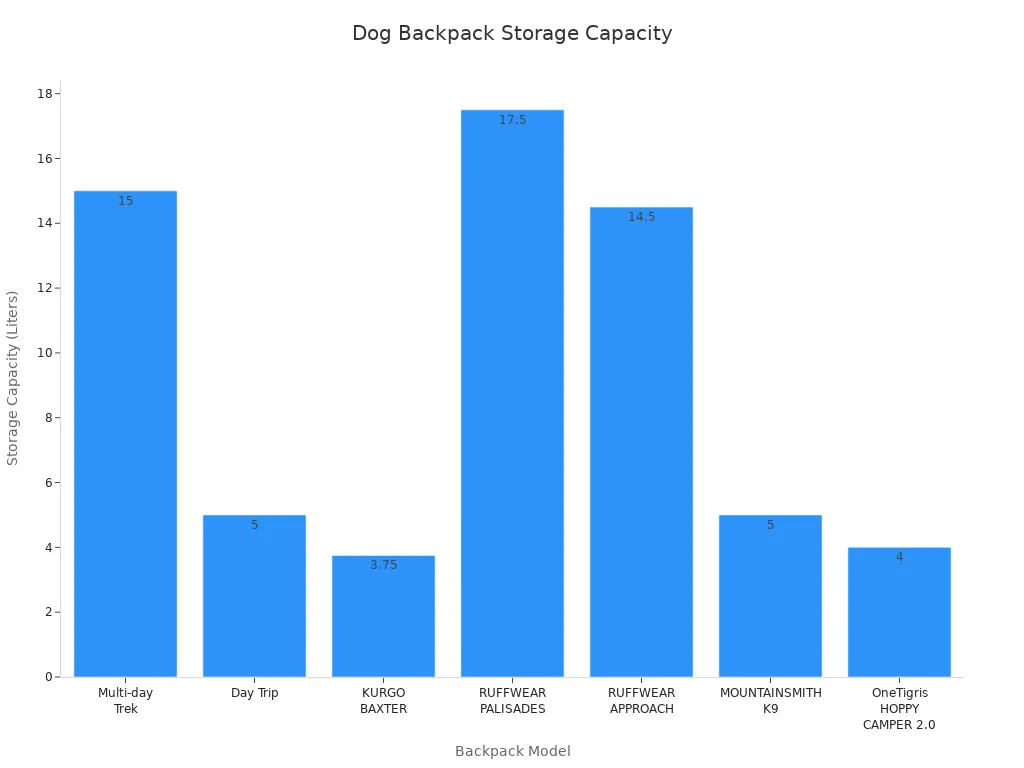
You should match the backpack size to your hiking plans. Day trips need less storage than multi-day treks. The best budget dog pack still offers enough space for water and snacks. Always check the compartments before you head out. This helps you keep your dog safe and happy on the trail.
Leash and Waste Bag Holders
When you go hiking with your dog, you need to stay organized. Leash and waste bag holders make things easier for you. These holders let you carry your dog’s leash and waste bags without trouble. You do not have to bring another bag or worry about losing small things. Many dog backpacks have special spots for leashes and waste bags. These spots keep everything safe and easy to grab.
Here is a table that shows how leash and waste bag holders help you on hikes:
Feature | Benefit |
|---|---|
Secure Attachment | Stops things from swinging, so your dog feels good. |
Ample Storage | Holds poop bags, treats, and keys, so you do not need more bags. |
Easy Access Design | Lets you grab things fast, even if you wear gloves. |
Durable and Hygienic | Handles outdoor weather and keeps waste bags clean and easy to use. |
Universal Compatibility | Fits many leash types, so you can use it for different things with your dog. |
Pick a backpack with leash and waste bag holders that work for your dog. These holders help you get ready for every walk or hike. You can enjoy time with your dog instead of looking for supplies.
Tip: Always check if the leash holder fits your dog’s leash. Make sure the waste bag pocket opens and closes easily. This saves time and keeps your hands free.
Reflective and Safety Elements
Safety is important when you hike with your dog. You want your backpack to have reflective parts. These parts help you and your dog stay seen in low light or busy places. Many dog backpacks use reflective tape or patches. Some backpacks have bright colors like yellow or orange to help people see you and your dog during the day.
Good dog gear meets strong safety rules. Groups like the American Kennel Club (AKC) and the International Organization for Standardization (ISO) test materials for strength and how well they work. These rules make sure your dog’s backpack keeps you safe on the trail.
Look for these safety features in your dog’s backpack:
Reflective backpack covers should meet rules like EN ISO 20471 and ANSI/ISEA 107.
The reflective tape should be bright, with a luminance coefficient of at least 400 cd/lux/m².
Bright colors, such as fluorescent yellow or orange, help people see you in the daytime.
Strong fastenings and secure clips keep your dog safe and stop accidents.
You want a backpack that helps you see your dog in the dark and keeps you both safe. Reflective and safety parts help you feel calm during every trip.
Note: Always check the reflective parts of your dog’s backpack before each hike. Replace tape that looks old or faded to keep your dog easy to see and safe.
Matching Your Daily Daypack to Your Routine
Short Walks vs. Long Hikes
You need to match your backpack to the type of walks and hiking you do with your dog. Short walks around your neighborhood or local park require less gear. You can use a smaller backpack, usually around 20 liters. This size lets you carry water, snacks, and a camera if you want to take pictures of your dog. For medium-length hiking trips, such as 8 to 12 miles, a 24-liter backpack works well. You can fit extra layers, food, and more water for both you and your dog. If you plan long and challenging hikes, you need a larger backpack, between 30 and 39 liters. This size helps you carry everything your dog needs for a full day on the trail, including extra supplies for changing weather.
Tip: Always check the weather and trail conditions before you choose your backpack for hiking. A bigger backpack helps you stay prepared for longer walks and unexpected changes.
Urban vs. Trail Use
Your daily routine may include walks in the city or hiking on a trail. Urban walks do not need as much gear as trail adventures. You can leave out items like shelter or fire starters when you walk your dog in town. For both urban and trail use, you should always bring water, snacks, sun protection, layers, and a small first aid kit. On the trail, you need to think about rough terrain, changing weather, and longer distances. A backpack for trail use should have sturdy straps, extra compartments, and space for emergency supplies. Urban backpacks can be lighter and simpler, making it easy to move through crowds and busy streets with your dog.
Use Type | Backpack Features Needed | Essentials to Carry |
|---|---|---|
Urban | Lightweight, slim profile, easy access | Water, snacks, leash, poop bags |
Trail | Durable, extra compartments, padding | Water, food, first aid, layers |
Carrying Essentials for You and Your Dog
You need to pack the right items for every walk or hiking trip with your dog. Always bring poop bags to clean up after your dog and follow Leave No Trace rules. A first aid kit for pets is important, with vet wrap, gauze, and any needed medications. Food, treats, and water keep your dog happy and healthy during walks and hiking. Use a collapsible bowl for water, especially on the trail where you may not find running water. Carry a proper leash for safety, especially if you walk more than one dog or need to transfer your dog in busy areas. Biodegradable poop bags help protect the environment during trail walks.
Poop bags
First aid kit for pets
Food, treats, and water
Collapsible bowl
Proper leash
Note: Check your backpack before each walk or hiking trip. Make sure you have all the essentials for you and your dog. This keeps every trail adventure safe and fun.
Fitting and Acclimating Your Dog
Proper Sizing and Adjustment
Getting the right fit for your dog’s backpack is the first step to a safe and comfortable outing. You want the backpack to sit snugly without being too tight. Start by loosening all straps. Place the backpack on your dog’s back and position the hip belt so it takes some weight off the shoulders. Tighten the shoulder straps just enough to keep the backpack in place. Adjust the chest strap so it holds the shoulder straps steady but does not make breathing hard. Use load lifter straps to bring the backpack closer to your dog’s body. Change the strap lengths depending on the activity, like hiking or walking, to avoid pressure points. Always check the weight distribution and adjust the straps during use to keep the load balanced between hips and shoulders.
Tip: Measure your dog’s chest girth and length before fitting the backpack. This helps you choose the right size and avoid discomfort.
Step | What to Do |
|---|---|
Loosen straps | Make adjustments easier |
Position hip belt | Take weight off shoulders |
Adjust shoulder | Keep backpack secure, allow movement |
Adjust chest strap | Stabilize, avoid restricting breathing |
Use load lifters | Bring load closer for better control |
Monitor weight | Balance load between hips and shoulders |
Training Your Dog to Wear a Pack
You want your dog to feel good about wearing a backpack. Start by fitting the pack properly, making sure the straps are snug but not too tight. Let your dog wear the backpack inside your home first, without any weight. This helps your dog get used to the feeling. Go for short walks with the backpack empty to create a positive association. Gradually add light items to the backpack as your dog adjusts. Refresh basic obedience training, like sit and stay, to help your dog listen while wearing the backpack. Choose a backpack with wide, padded straps for extra comfort. Use treats to reward your dog and make the experience fun.
Adjust the pack for a snug, comfortable fit.
Begin with light weight and slowly increase it.
Include fun items, like toys or treats, in the backpack.
Use positive reinforcement to help your dog enjoy wearing the backpack.
Note: Always watch your dog’s reaction when you introduce the backpack. If your dog seems stressed, take a break and try again later.
Monitoring Comfort and Safety
You need to check your dog’s comfort and safety every time you use a backpack. Make sure the backpack fits properly by measuring your dog’s chest girth and length. Use lightweight materials to keep the backpack easy to carry. Distribute weight evenly across the backpack to prevent strain. Watch your dog’s behavior for signs of discomfort, such as lagging behind or panting too much. Adjust the straps to keep the backpack snug and prevent shifting. Take breaks during walks or hikes so your dog can rest and drink water.
Check the fit before each outing.
Use lightweight gear for less strain.
Balance the load to protect your dog’s back.
Watch for signs of discomfort or tiredness.
Adjust straps as needed for comfort and safety.
Give your dog time to rest and hydrate.
🐾 If you notice any redness, hair loss, or changes in your dog’s mood, stop and check the backpack. Your dog’s comfort and safety always come first.
Compare Dog Packs for Hiking
StridePaw and Other Brands
There are many dog backpack brands for hiking. StridePaw makes daypacks that keep your dog safe and comfy. Other brands are Ruffwear, Kurgo, Outward Hound, Wellver, and OneTigris. Each brand is good at something different. Some backpacks are light and simple to carry. Others have more room for long hikes. You should pick a backpack that fits your dog and your hiking plans.
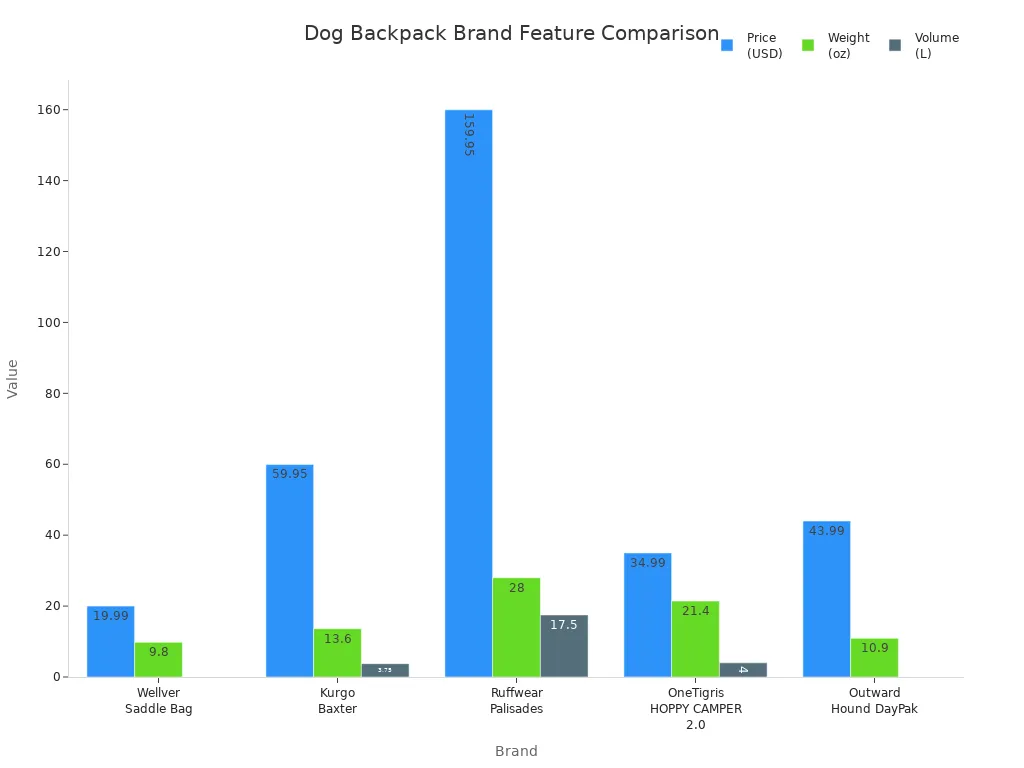
Here is a table that shows how some top dog backpack brands compare for hiking:
Brand | Price | Weight | Volume | Pros | Cons |
|---|---|---|---|---|---|
Wellver Saddle Bag | $19.99 | 9.8 oz | N/A | Cheap, Lightweight | Small space, Not very strong |
Kurgo Baxter | $59.95 | 13.6 oz | 3.75 L | Light, Fits well | Pricey for its size |
Ruffwear Palisades | $159.95 | 28 oz | 17.5 L | Big space, Very comfy | Costs a lot, Heavy |
OneTigris HOPPY CAMPER 2.0 | $34.99 | 21.4 oz | 4 L | Cheap | Heavy, Not very tough |
Outward Hound DayPak | $43.99 | 10.9 oz | N/A | Light | Small space, Not strong |
You can also look at these bar charts to see how the brands compare in price, weight, and volume:
Pros and Cons Overview
Every dog backpack has good and bad points. You need to think about what is best for your dog and how you hike. Some backpacks are light and easy for short walks. Others hold more things for long hikes. A light backpack helps your dog move better. A big backpack can carry more, but it might feel heavy. Some brands use strong materials that last longer. Cheaper backpacks may not last on rough trails.
Light backpacks: Easy to wear, but less space.
Big backpacks: Good for long hikes, but heavier.
Strong materials: Last longer, but cost more.
Cheaper price: Saves money, but may break sooner.
Tip: Always check if the backpack fits your dog well before you buy. A good fit helps your dog have fun on every hike.
Value and Price Points
You want to get the most for your money when buying a dog backpack. Some backpacks cost more because they use better materials and have more features. Some are cheaper and work well for short hikes or new owners. Here is a table that shows how price and value compare for top dog hiking backpacks:
Backpack Name | Price Point | Value Description |
|---|---|---|
Ruffwear Palisades Pack | Expensive | Great for long hikes; high quality makes the price worth it. |
Outward Hound Daypak Dog Backpack | Inexpensive | Good deal; light and great for beginners. |
Ruffwear Approach Pack | Expensive | Costs more but has a good guarantee and is well made. |
Mountainsmith K-9 Pack | High Quality | Made for long hikes; lifetime guarantee shows it is strong. |
Kurgo Baxter Dog Saddlebag | Mid-range | Useful and strong; lifetime guarantee gives peace of mind. |
Pick a backpack that fits your dog, your hikes, and your budget. Expensive backpacks may last longer and keep your dog comfy on long hikes. Cheaper backpacks are good for short walks or if you are just starting out.
Note: Always look for a backpack with a good guarantee. This helps you feel sure about your choice and protects your money.
Care and Maintenance Tips
Taking care of your dog’s backpack helps you get the most out of every walk and hiking trip. You keep your dog safe and comfortable when you clean, check, and store the backpack the right way. These tips will help you keep your gear fresh and ready for every adventure.
Cleaning Your Daypack
You need to clean your dog’s backpack often to remove dirt, odors, and stains. Regular cleaning keeps the backpack comfortable for your dog and helps it last longer. After a beach day, shake out sand, rinse with fresh water, and use mild soap to stop salt from building up. If you go hiking in the woods, brush off dried mud and soak removable parts if the fabric allows. Urban walks can leave greasy spots, so spot-treat with a degreasing cleaner and wipe surfaces to avoid stains. When you travel, let the backpack air out and use a gentle machine wash if the label says it is safe.
Here are some cleaning tools and products you can use:
Mild dish soap is gentle on fabrics.
Baking soda helps remove odors.
Soft-bristled brushes work for stubborn stains.
Microfiber cloths wipe away dirt without scratching.
Vinegar solution acts as a natural disinfectant and removes smells.
Tip: Clean your dog’s backpack after every hiking trip or long walk. This keeps the backpack fresh and ready for your next outing.
Checking for Wear
You should check your dog’s backpack for wear and tear every few weeks. If you use the backpack every day, check it more often. Look at the straps and zippers first. These parts get the most use and can break if you do not watch them. Check for frayed edges, loose stitching, or broken clips. If you see damage, fix it before your next hiking trip. A strong backpack keeps your dog safe and makes every walk better.
Area to Check | What to Look For | Action to Take |
|---|---|---|
Straps | Fraying, stretching | Replace or repair |
Zippers | Sticking, broken teeth | Lubricate or replace |
Fabric | Holes, thinning | Patch or reinforce |
Clips/Buckles | Cracks, loose fit | Tighten or swap out |
Note: Checking your dog’s backpack often helps you avoid problems on the trail. You keep your dog safe and your gear working well.
Storing and Packing Safely
You need to store your dog’s backpack in a dry, cool place. Do not leave it in direct sunlight or damp areas. Sunlight can fade the fabric and weaken straps. Moisture can cause mold and bad smells. Before you pack the backpack away, make sure it is clean and dry. Remove all food, treats, and water bottles. These items can spoil and attract bugs. Pack the backpack loosely so the fabric does not stretch or tear.
When you get ready for a hiking trip, pack the backpack with care. Put heavier items near your dog’s shoulders. Use compartments to keep gear organized. Always check the weight before you go out. A well-packed backpack helps your dog enjoy every walk and hiking adventure.
🐾 Proper care and storage keep your dog’s backpack ready for every outing. You save money and keep your dog happy by making your gear last longer.
When you choose a daily daypack for your dog, focus on these important factors:
Proper fit for your dog’s chest girth, length, and weight
Durable material and construction that resists weather
Design features that offer comfort, safety, and easy cleaning
A well-fitted backpack helps your dog build muscle, stay focused, and feel happier. You can start by measuring your dog and testing the backpack on short walks. Remember, every outing with your dog is a chance to enjoy time together.
Tip: Check your dog’s backpack often to keep every walk safe and fun.
FAQ
How do you measure your dog for a backpack?
Use a soft tape measure. Measure your dog’s chest girth behind the front legs. Measure the length from the neck to the base of the tail. Weigh your dog to check weight limits.
Can puppies wear a backpack?
Wait until your puppy grows and bones develop. Most experts suggest waiting until your dog is at least one year old. Always ask your vet before starting.
What items should you pack for a short walk?
Pack water, treats, waste bags, and a leash. Add a small first aid kit if you want extra safety. Keep the load light for comfort.
How much weight can your dog carry safely?
Most dogs can carry up to 10% of their body weight. Start with a lighter load. Watch your dog for signs of tiredness or discomfort.
How do you clean a dog backpack?
Remove all items. Use mild soap and water. Scrub stains with a soft brush. Air dry the backpack before storing. Check for damage after cleaning.
What signs show your dog feels uncomfortable with the backpack?
Look for slow walking, panting, or rubbing against objects. If your dog tries to remove the backpack or seems less excited, check the fit and weight.
Are reflective strips important for safety?
Yes. Reflective strips help you and your dog stay visible in low light. Choose a backpack with bright colors and reflective parts for extra safety.
Can you use a dog backpack for both city walks and hiking?
Yes. Many backpacks work for both. Choose a lightweight design for city walks. Pick a durable backpack with extra compartments for hiking.






