
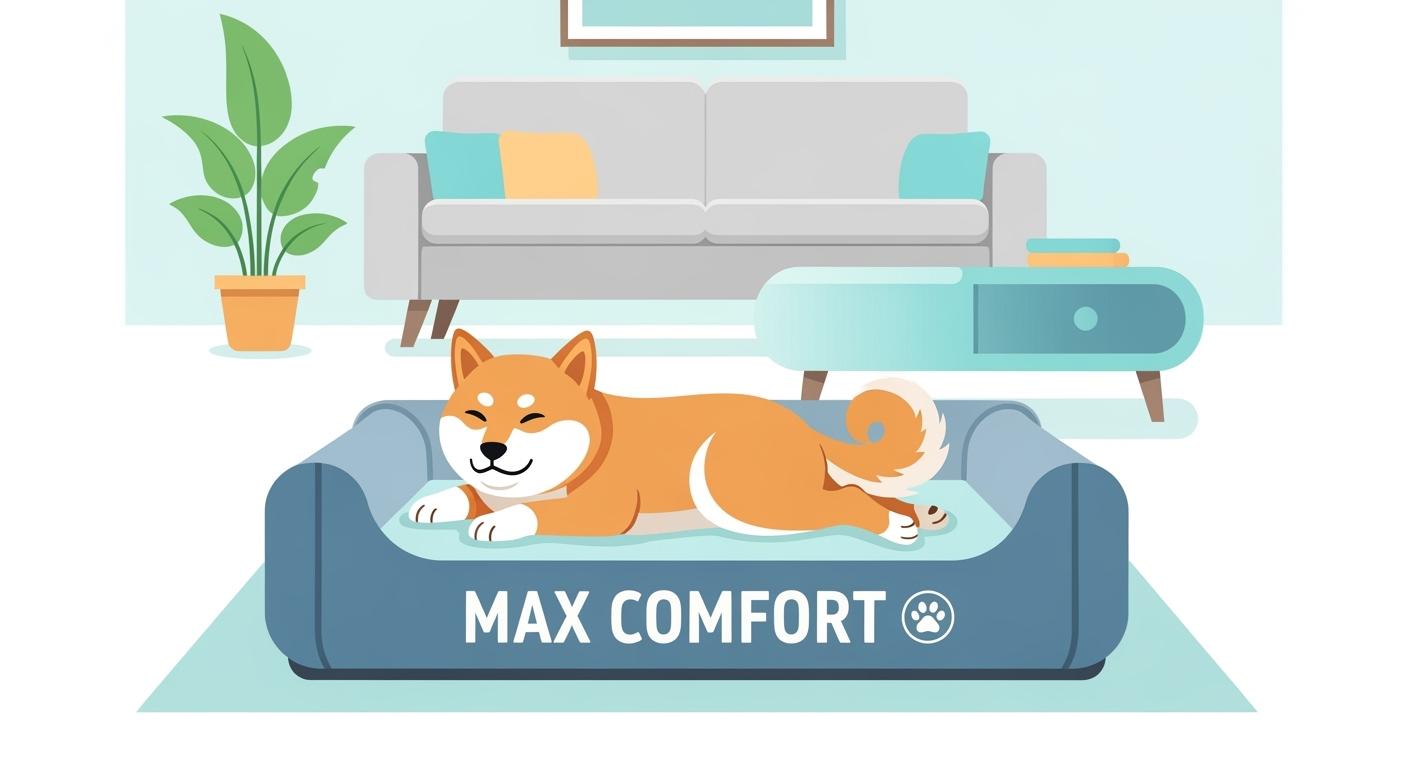
The best dog beds for medium dogs are not always the ones with the biggest outside label. A bed can look generous in a product photo and still feel cramped when the dog lies on its side, turns around, or stretches after a long walk. The real test is the open sleep surface: the flat area the dog can actually use.
Medium dogs often sit in the middle of the size chart. They are too large for small, nest-like beds, but not always heavy enough to need oversized, high-walled designs. That middle range is where many beds fail. Thick bolsters take away room, soft foam sinks too quickly, and covers that hold moisture make the bed less useful after real daily use.
A better medium dog bed keeps the structure simple: enough flat room to stretch, stable cushioning that does not collapse, edges that support without crowding, and a cover system that stays practical after washing. This is the product logic that matters more than a size name.
Why Medium Dog Beds Feel Smaller Than They Look
The outside footprint is not the sleep surface
A medium bed is often measured from the outer edge. That measurement includes bolsters, seams, raised walls, and decorative padding. The dog does not sleep on all of that space. The dog uses the flat center. When the edge is thick, the usable surface becomes much smaller than the label suggests.
This is why a real sleep surface versus the outside footprint can differ so much. The same issue affects medium beds even more because there is less extra room to lose. If the dog can only fit by curling tighter than usual, the bed is not truly roomy enough.
Side sleeping needs open space
Many medium dogs sleep on their sides with the legs extended. That posture needs uninterrupted surface from shoulder to hip. A high wall or overstuffed edge can push the dog inward, leaving only a narrow center strip. The dog may still fit inside the bed, but the posture becomes restricted.
A good medium dog bed should allow three normal movements: lying on the side, turning before settling, and shifting position during sleep. If one of these movements is blocked, the bed may look correct but fail in real use.
| Real-use sign | Likely product problem | Better direction |
|---|---|---|
| Dog hangs paws or hips over the edge | Usable surface is too narrow | Wider flat center with thinner sides |
| Dog curls tightly even when relaxed | Bolsters crowd the resting area | Low-bolster or flat mattress design |
| Dog uses only one corner | Shape does not match sleep style | More open rectangular surface |
| Dog leaves the bed for the floor | Too warm, too soft, or too enclosed | Cooler fabric, firmer support, lower edge |
Where Medium Dog Beds Fail in Real Use
Thick bolsters take away the room the dog needs
Bolsters can be useful when they give the dog a place to rest the head or lean the body. They become a problem when they are so thick that they push into the sleep surface. A medium dog does not need a wall around every side. It needs a stable area to rest without being squeezed into the center.
Low edges work better for many medium beds because they give a sense of support without turning the product into a narrow nest. The edge should support leaning, not steal the main rest space.
Soft foam can collapse before the bed looks worn
A bed can feel plush when new and still fail after repeated use. If the cushion compresses into the floor, the dog loses support even though the cover still looks acceptable. This failure is easy to miss in product photos because loft looks comfortable at first glance.
Medium dogs need cushioning that returns to shape after pressure. A stable core is more useful than loose fill that needs constant fluffing. Shape recovery after washing is also important because a bed that looks full before cleaning can become uneven or lumpy afterward. The same issue appears in medium dog bed washable designs where shape recovery matters.
Heat and moisture change whether the bed gets used
A bed that traps heat can push the dog back to the floor. A cover that dries slowly can hold odor, moisture, and hair. These are not just cleaning issues. They change whether the product stays useful after walks, outdoor play, shedding, or routine washing.
For medium dogs that move between outdoor and indoor spaces, the cover should be easy to remove, wash, and dry. The cushion core should be protected from dampness so the bed does not lose comfort after cleaning.
Structures That Work Better for Medium Dogs
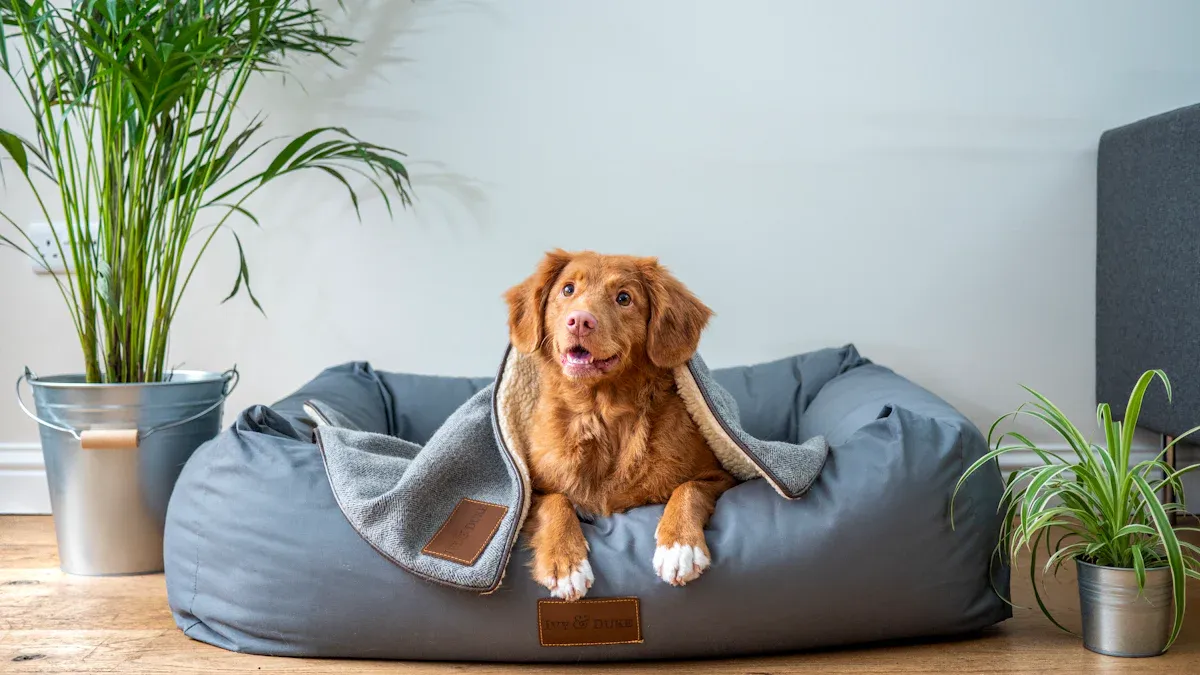
Flat mattress beds keep the most usable room
A flat mattress design gives the dog the largest usable surface for the same outer footprint. It works well for medium dogs that stretch, turn often, or change sleeping positions through the night. Without high walls, the dog can use the corners, edges, and center more freely.
Flat beds also make support easier to judge. The cushion either stays level or it does not. There are fewer hidden zones where walls, seams, or loose fill can distort the real sleep area.
Low-bolster beds add support without crowding
A low-bolster bed can be a strong option when the edge is light and the flat center stays open. The bolster should be low enough for the dog to step over easily and soft enough to rest against without pushing the body inward.
The best low-bolster direction is not “more padding everywhere.” It is controlled padding in the right place. A narrow, stable edge with a wide center usually works better than an overstuffed wall around a small center.
Elevated beds solve a different problem
Not every medium dog needs a padded floor bed. In warmer rooms, outdoor patios, or wet-paw situations, airflow can matter more than plush cushioning. A steel-frame elevated design can help when the goal is faster drying, better air movement, and easier cleaning around the bed.
The tradeoff is that elevated beds need stable frame tension and enough surface size. If the fabric sags or the frame shifts, the dog may avoid the center or step off too quickly. Elevated designs work best when the structure stays level and the dog can settle without feeling the surface move under its body.
| Bed structure | Works better when | Fails when |
|---|---|---|
| Flat mattress | The dog stretches, turns, or changes position often | The cushion is too soft or loses shape |
| Low bolster | The dog likes light edge support without being enclosed | The bolster is thick enough to shrink the center |
| High wall or donut style | The dog strongly prefers curling and nesting | The dog sleeps on its side or runs warm |
| Elevated frame | Airflow, drying, and outdoor use matter most | The frame sags, wobbles, or feels too exposed |
Product Details That Matter Most
Interior flat dimensions
The most important measurement is the flat, usable surface. This is the area inside any raised edge where the dog can actually lie down. A medium dog bed should not be judged by the outer footprint alone. The bed needs enough interior length and width for the dog to stretch without spilling onto the floor.
When the interior space is clear, the product is easier to understand and easier to match to real sleep behavior. When only the outer measurement is shown, the bed can disappoint even if the size label sounds correct.
Cushion density and recovery
Support should stay consistent after daily pressure. A cushion that bottoms out, forms a permanent hollow, or shifts fill to the edges does not solve the comfort problem. It only looks soft. Medium dogs need a surface that keeps the body level and returns to shape after use.
For dogs that need fuller support, orthopedic support combined with washable, waterproof construction can be more useful than thick loose fill. The key is not a medical claim. The key is a stable rest surface that does not collapse or stay damp.
Cover fabric and cleaning structure
A removable cover matters because the bed will collect hair, dirt, odor, and moisture. The easier the cover is to remove and dry, the more likely the bed stays usable. A non-removable cover turns normal cleaning into a problem, especially for dogs that come inside after outdoor use.
Water-resistant or waterproof layers can help protect the cushion core, but they should not make the sleeping surface stiff, noisy, or hot. The cover system needs balance: soft enough for rest, durable enough for washing, and protective enough to keep the core from absorbing moisture.
Seams, corners, and edge shape
Seams and corners decide how much of the bed is really usable. Rounded corners and high walls create dead zones that the dog may ignore. Flat corners and low edges let more of the surface work as sleep space. Smooth seam placement also helps prevent hard ridges under elbows, hips, and shoulders.
Durability matters after use, not only at first touch. An indestructible dog bed direction that holds its shape, fits correctly, and cleans fast is stronger when it keeps the same usable room after repeated rest, washing, and movement.
| Product detail | Why it matters | Better design direction |
|---|---|---|
| Interior flat space | Shows where the dog can actually rest | Wide center, low edge, clear usable dimensions |
| Cushion recovery | Prevents sagging and pressure concentration | Stable foam or support core that returns to shape |
| Edge height | Affects stretching, leaning, and entry | Low bolster or open side for easier movement |
| Cover system | Controls odor, moisture, and daily upkeep | Removable, washable, quick-drying cover with core protection |
| Seam and corner shape | Can create hard ridges or wasted zones | Smoother seams and corners the dog can actually use |
FAQ
What makes the best dog beds for medium dogs different from small or large beds?
Medium dog beds need a careful balance of room and support. Small-bed structures can be too tight, while oversized beds can feel unstable or too bulky. The best direction is a bed with enough open sleep surface, steady cushioning, and edge support that does not crowd the dog.
Why does a medium dog bed feel smaller than the size label?
The size label often describes the outside footprint. Thick bolsters, seams, raised walls, and rounded corners can reduce the flat area the dog actually uses. The usable inner surface is a better fit signal than the outside measurement alone.
Are bolster beds bad for medium dogs?
No. Bolster beds can work when the edge is low, lightly structured, and does not shrink the center too much. They fail when the raised sides take over the bed and leave too little room for side sleeping or position changes.
What bed structure is best for medium dogs that stretch out?
A wide rectangular mattress or a low-bolster bed usually works better than a donut or high-wall shape. Stretching dogs need open length and width more than a deep surrounding edge.
What cleaning features matter most in a medium dog bed?
A removable washable cover, quick-drying fabric, and protected cushion core matter most. The bed should stay supportive and cleanable after repeated use, not just look soft when new.






