
You may notice that a dog car seat cover for back seat can lay flat or bunch up, depending on how well it fits your car. The shape of your seat and the way you install the car seat cover play a big role in keeping the surface smooth. If your dog moves around or digs, the cover can shift and bunch more easily. To get the best fit, measure your back seat’s width and depth before you buy. Look for features that support stability, easy to clean materials, and ease of installation. This helps your dog stay steady and keeps your car seat cover in place.
Key Takeaways
Measure your back seat before you buy a dog car seat cover. The right fit stops bunching and helps it stay in place.
Pick the best style for your dog’s behavior. Bench covers work for calm dogs. Hammock covers protect better for active dogs.
Find covers with waterproof fabric and non-slip backing. These features help your dog feel comfy and keep your car clean.
Check the cover’s fit and shape often. Fix the straps and anchors so it does not sag and stays safe.
Try the cover with your dog before you travel. A snug fit helps your dog grip and feel good, so trips are better.
Dog Car Seat Cover for Back Seat: Fit and Seat Shape
Bench vs Hammock vs Firm Support Styles
You need to choose the right dog car seat cover style for your back seat. Each style offers unique features, fit, and comfort. The bench style dog car seat cover lays flat across the seat bottom and seatback. The hammock style dog car seat cover stretches from the seatback to the front seat, creating a barrier and extra protection. Firm support covers use rigid panels or inserts to keep the surface flatter and steadier.
Here is a comparison table to help you decide which dog car seat cover fits your needs:
Style | Use Case | Benefit | Watchout | Who Should Skip It |
|---|---|---|---|---|
Bench | Calm dogs, shared seating | Flatter fit, easy buckle access | May bunch if seat shape varies | Skip if you need full gap coverage |
Hammock | Active dogs, full protection | Broader coverage, footwell block | Buckle access can be tricky | Skip if you need shared seating |
Firm Support | Dogs needing extra traction | Steadier footing, less sagging | May not fit all seat shapes | Skip if your seat is highly contoured |
You should look for features like waterproof, non-slip backing, and durable materials. These features improve comfort, traction, and protection for your dog and your car. Waterproof dog car seat cover options help keep your seat dry and clean. Non-slip surfaces prevent sliding and bunching, which supports safety and comfort.
Seat Shape and Buckle Access
Your car seat shape and buckle placement affect the fit of your dog car seat cover. Most rear seats are not perfectly flat. You may notice dips, curves, or raised edges. These can cause the car seat cover to bunch or curl. After you install the cover, check if the seatbelt buckles are easy to reach. If the cover blocks the buckles, you may need to adjust the fit or choose a different style.
You should test the dog car seat cover for back seat in your actual vehicle. Place the cover, anchor it tightly, and check for gaps or sagging. Sit your dog on the cover and watch for movement. If the cover wobbles or slides, your dog may lose traction and comfort. You want a stable base for safety and easier daily reset.
Look for waterproof dog car seat cover features that keep moisture away from the seat. Durable materials and fit and workmanship matter for long-term use. Non-slip backing and extra anchor points help keep the cover in place. If you use a hammock style dog car seat cover, make sure the openings for buckles stay aligned after installation.
Pass/Fail Checklist for Flat Fit
You can use this checklist to evaluate the fit of your dog car seat cover after installation and after your dog uses it:
Check Item | Pass Signal | Fail Signal | Fix |
|---|---|---|---|
Seat surface coverage | Cover lays flat, no gaps | Bunching, curling, exposed seat | Adjust straps, reposition cover |
Buckle access | Buckles easy to reach | Buckles hidden or blocked | Realign openings, check fit |
Anchor tension | Cover feels tight and secure | Loose, sagging, shifting | Tighten anchors, add support |
Traction for dog | Dog stands or sits without sliding | Dog slips or loses footing | Add non-slip mat, check cover |
Waterproof protection | Seat stays dry after use | Moisture seeps through | Check waterproof features |
Comfort for dog | Dog settles calmly, no stress signs | Dog avoids cover, restless | Adjust fit, check for discomfort |
You should check these signals before every trip. If you notice bunching or sagging, fix it right away. A flat fit improves traction, comfort, and safety for your dog.
Common Mistakes and Real Consequences
Many people make mistakes when installing a dog car seat cover. You may skip measuring your back seat, leading to poor fit and bunching. You may forget to check buckle access, which can affect safety. Loose anchors or straps cause the cover to slide, reducing traction and comfort.
If you ignore these mistakes, your dog may slip or feel uncomfortable. Moisture can seep through if the waterproof features fail. Your car seat may get dirty or damaged. Poor fit and workmanship can lead to durability issues. You want to avoid these problems by following the checklist and testing the cover in real use.
Tip: Always measure your back seat and check the shape before buying a dog car seat cover. Test the cover with your dog before travel. Adjust as needed for the best fit, traction, and comfort.
If your dog shows signs of motion discomfort, heat, or stress, consult your veterinarian. This blog does not provide medical advice.
What Causes Bunching in Dog Car Seat Covers
Seat Contours and Gaps
Bunching happens when the seat shape does not match the cover. Most car seats have dips, curves, or raised edges. These shapes make gaps under the cover. When your dog moves, the cover can shift and bunch up. Headrest loops alone do not keep the cover steady. You need anchors that hold both the seat base and seatback.
Here are the main causes of bunching:
Headrest loops give only a little stability.
Dog movement pushes and shifts the cover.
Weak anchoring systems make the cover unstable.
Small cars with tight seats make fitting harder.
Smooth upholstery lets covers slide around.
You can check for bunching by pressing on the cover and watching for movement. If you see gaps or curling, adjust the anchors and straps. Make sure the cover lays flat and covers the whole seat.
Material and Construction Impact
The material and build of a dog car seat cover affect how flat it stays. Strong fabrics resist tearing and last longer. Non-slip backing stops the cover from moving. Good installation methods help keep the cover steady. Waterproof dog car seat cover options protect your seat from moisture and make cleaning easier.
Look for these features in the best dog car seat covers:
Feature | Description |
|---|---|
Anti-slip backing | Keeps the cover in place, stopping movement and bunching during travel. |
Wider straps | Gives better stability and lowers the chance of slipping. |
Secure buckles | Makes sure the cover is tightly fastened, so it moves less. |
Strong anchors | Holds the cover firmly, stopping bunching. |
Reinforced stitching | Makes the cover stronger and stops wear at stress points. |
Heavy-duty Oxford fabric | Lasts longer and gives a sturdy surface for pets. |
Strong materials and reinforced stitching help the cover last and reduce bunching. Waterproof features keep your seat dry and make cleaning easier. You want a cover that stays flat and protects your car seat.
Installation Tips for Flatter Fit
You can get a flatter fit by following these steps:
Lay the dog car seat cover flat on the back seat. Put anchors between the seat back and cushion.
Secure all straps around headrests. Adjust for a snug, non-slip fit.
Open the built-in seat belt slots. Pass seat belts or pet harness tethers through as needed.
Double-check the fit. Adjust non-slip layers for a secure installation.
Check the cover after your dog sits on it. If you see bunching or curling, tighten the anchors and straps. Tuck the edges firmly between the seat and door panel. Adjust the cover’s position before securing the straps. Make sure the seat belt openings line up with the buckles.
Here is a troubleshooting table to help you fix common issues:
Symptom | Likely Cause | Fast Check | Fix |
|---|---|---|---|
Cover keeps slipping | Anchors not fully inserted | Pull on cover, check anchor depth | Insert anchors, tighten headrest straps |
Seat belt openings misalign | Cover not positioned right | Try to buckle seat belt | Adjust cover before securing straps |
Side flaps don’t stay | Edges not tucked | Look at side flaps | Tuck edges between seat and door panel |
Cover too loose/tight | Straps not adjusted | Press on cover, check tension | Adjust straps and anchors |
Bunching near seams | Weak stitching or fabric | Look for worn spots | Choose reinforced stitching, strong fabric |
You improve safety and comfort by checking these signs before every trip. A flat fit helps your dog stand steady and makes daily reset easier.
Tip: Always test the cover with your dog before travel. Adjust for the best fit and traction. Clean and dry the cover often to keep waterproof protection and durability.
Choosing the Best Dog Car Seat Covers for Your Car
You want the best dog car seat covers for your car. Look for covers with strong materials, waterproof features, and secure ways to install. Non-slip backing and strong anchors help stop bunching. Wider straps and reinforced stitching make the cover last longer and fit better.
The best dog car seat cover should match your seat shape and your dog’s habits. Waterproof dog car seat cover features protect your upholstery and make cleaning easier. You need a cover that gives safety, comfort, and easy installation.
Check for these dog car seat cover features:
Strong fabric that resists wear and tear.
Waterproof surface for easy cleaning.
Non-slip backing for stability.
Secure buckles and anchors for a snug fit.
You should measure your back seat and compare it to the cover’s size. Test the cover in your car and adjust as needed. If your dog shows signs of motion discomfort, heat, or stress, ask your veterinarian. This blog does not give medical advice.
Note: Cleaning and drying the cover often helps keep waterproof protection and durability. Weekly cleaning is best for soft travel fabrics used a lot.
Signs of Failure: Sagging, Curling, and Bunching
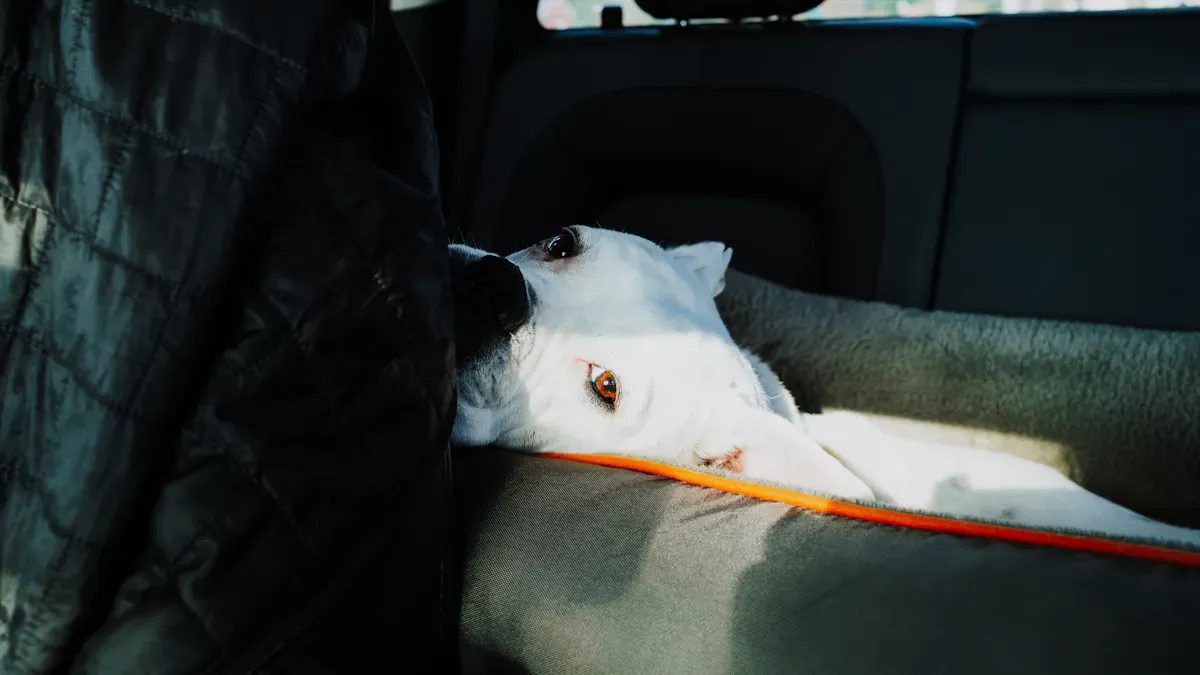
Identifying Problem Areas
You can spot trouble with your dog car seat cover by checking for sagging, curling, and bunching. These signs show up when the cover shifts, leaves gaps, or exposes your upholstery. Many covers slide around when your dog moves, especially if the material lacks non-slip backing. Weak fabrics may rip under pressure, causing sagging and loss of traction. Poor fit often leaves gaps, which can lead to bunching and less protection. If you notice your dog slipping or avoiding the cover, traction and comfort may be missing.
Common mistakes include:
Not anchoring the cover tightly, which causes shifting and bunching.
Ignoring seat shape, leading to gaps and curling.
Using covers with weak materials, which sag and rip under active use.
Tip: Always check for exposed seat areas and test traction by letting your dog walk or sit on the cover.
Quick Fixes for Common Issues
You can fix most problems with a few simple steps. Adjust the anchors and straps to tighten the cover. Tuck the edges between the seat and door panel for better protection. Realign seat belt openings to keep buckle access clear. If the cover slips, add a non-slip mat underneath. Reinforce seams if you see fraying. Clean and dry the cover often to maintain waterproof features and comfort.
Issue | Quick Fix |
|---|---|
Cover shifts | Tighten anchors, add non-slip mat |
Sagging or curling | Adjust straps, tuck edges |
Bunching | Reposition cover, check seat shape |
Fraying seams | Reinforce or plan replacement |
Odor after cleaning | Replace cover |
When to Replace or Upgrade
You should replace your dog car seat cover if problems keep coming back. If the cover shifts after careful reinstall, it is time for a new one. Damaged straps or buckles mean you need immediate replacement for safety. Persistent odors after cleaning suggest trapped residue, so swap out the cover. Fraying seams may allow limited extra life, but plan to upgrade soon. Inspect all attachment points for durability and protection.
Who Should Skip Certain Cover Styles
Some cover styles do not fit every car or dog. If your seat is highly contoured, skip firm support covers. If you need shared seating, avoid hammock styles. Active dogs need covers with strong non-slip backing for traction and comfort. Calm dogs may do well with bench covers. Always match the cover style to your car seat shape and your dog’s habits for the best protection.
Note: If your dog shows signs of motion discomfort, heat, or stress, consult your veterinarian. This blog does not provide medical advice.
Most dog car seat covers for back seats can lay flat when you measure your seat, pick the right style, and install it carefully. You protect your upholstery and give your dog steadier footing by checking fit and cleaning the cover often. Choose a cover that is easy to clean, with features like adjustable straps and reinforced anchors. Use the tables and checklists above to compare options and spot problems. Before every trip, test the cover for a flat fit and make sure it stays easy to clean. A cover that is easy to clean saves you time and keeps your car fresh.
FAQ
How do you keep a dog car seat cover from bunching up?
You should anchor the cover tightly and adjust the straps. Tuck the edges between the seat and door panel. Test the fit by letting your dog sit or move on it. Adjust as needed for a flatter surface.
Can you use seat belts with a dog car seat cover?
Yes, you can. Most covers have seat belt openings. Align these slots with your car’s buckles. Always check buckle access after installation to keep your dog safe and secure.
How often should you clean a dog car seat cover?
You should clean the cover weekly if your dog travels often. Remove loose hair and dirt, then wash and dry the cover fully. Regular cleaning keeps your car fresh and the cover in good shape.
What if your dog slips or seems uncomfortable on the cover?
Try adding a non-slip mat under the cover or choose a cover with better traction. If your dog shows signs of motion discomfort or stress, talk to your veterinarian.
Note: This is not medical advice.
Do all dog car seat covers fit every back seat?
No, not all covers fit every seat. Measure your back seat before buying. Check the cover’s size and shape. Test the fit in your car and adjust as needed for the best result.






