
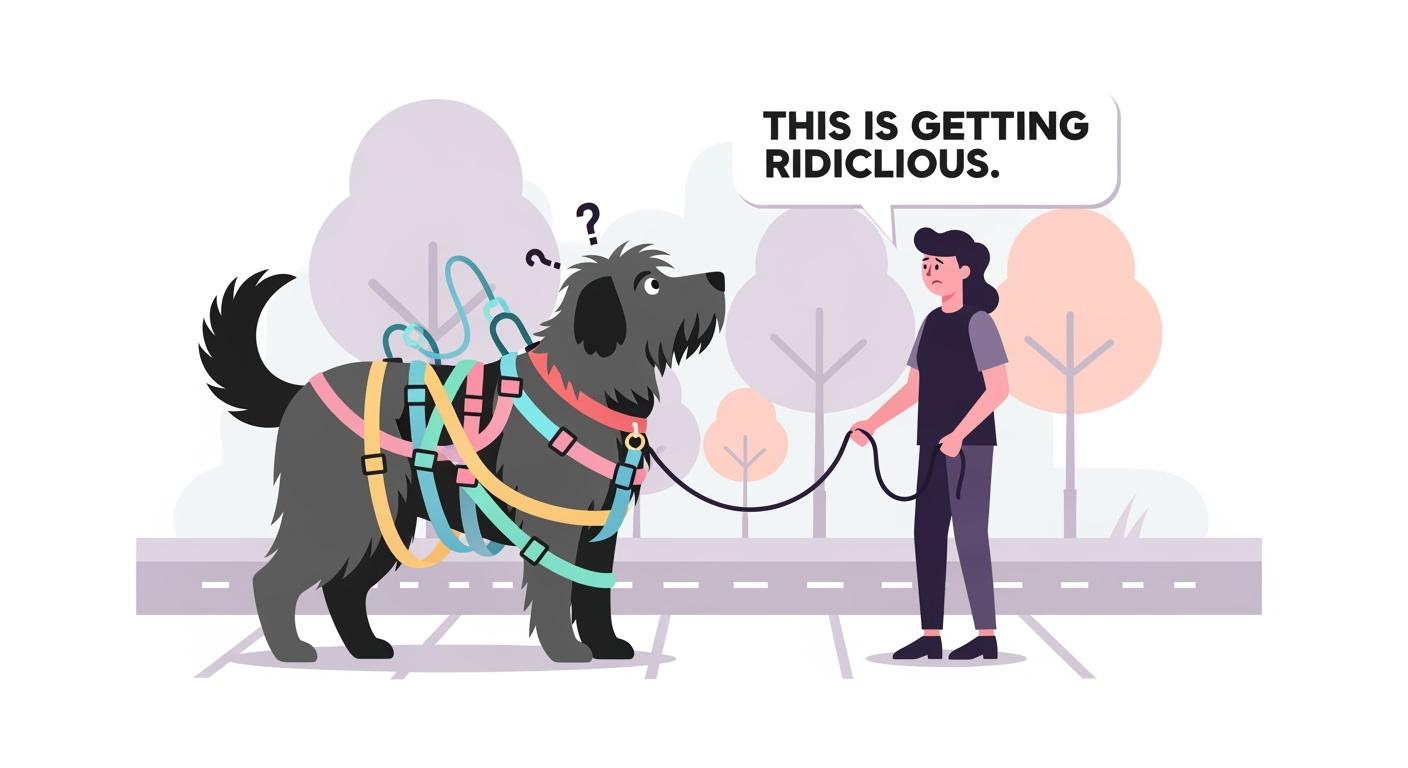
When a large dog pulls hard, the best no pull harness for large dogs should make control easier without making the dog move stiffly. The real test is not how strong the harness looks, but whether it guides the dog through turns, keeps pressure away from the throat, and still lets the shoulders move normally on real walks.
Note: This is a guide to harness choice and walk management, not a diagnosis of breathing, orthopedic, or behavior disorders.
Key Takeaways
- For most strong pullers, control improves when the harness stays centered, keeps the neck clear, and leaves the shoulders free to extend normally.
- More material does not usually mean more help, because extra bulk can add drift, heat, and shorter stride.
- The best results often come from pairing the harness with front clip harness training steps instead of expecting gear alone to change leash behavior.
What Usually Changes Once the Walk Starts
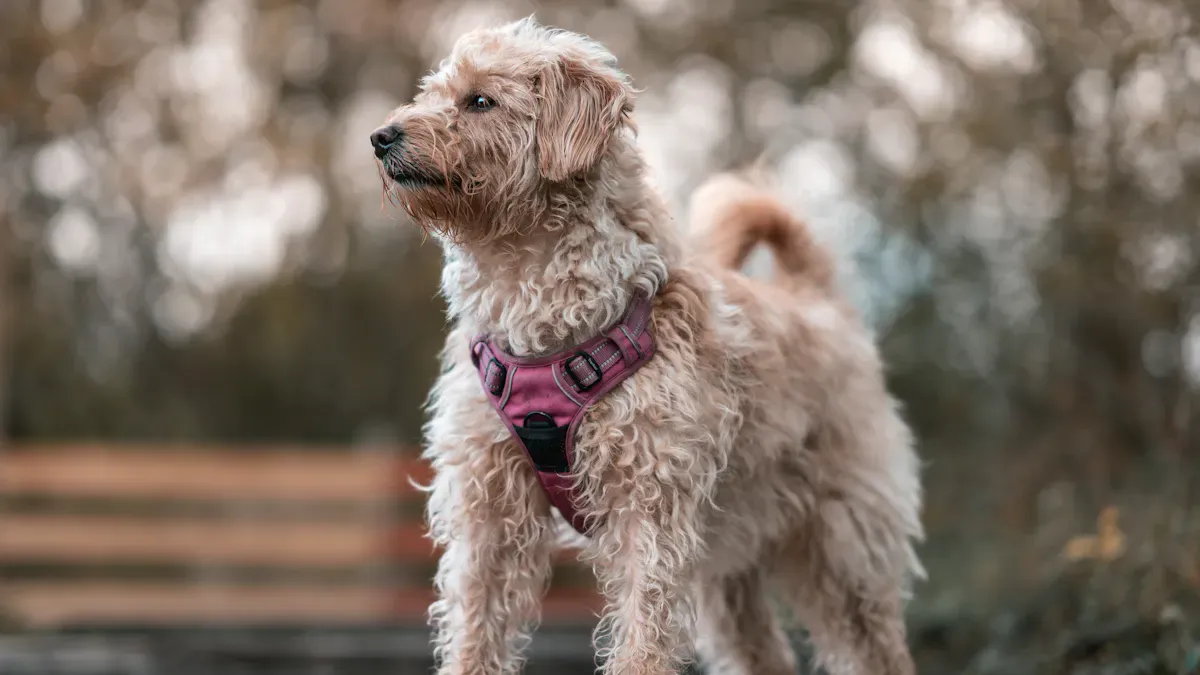
Control matters because large dogs can create meaningful forward leverage before you have time to respond. What most owners want is not maximum restraint. It is earlier steering, less arm strain, and a cleaner path back to slack leash walking.
| Walking Pattern | What You Usually Feel | Why It Matters | What to Watch |
|---|---|---|---|
| Steady forward lean | Constant pressure | Back clip setups often let the dog brace harder | Handler gets dragged, dog leans into chest |
| Sudden lunge | Late reaction window | Earlier redirection usually matters more than padding | Harness rotates during fast turns |
| Zigzag pulling | Side to side drift | Stability matters more than bulk | Chest panel slides off center |
| Crowded route tension | Short handling time | Close control usually helps when triggers appear fast | Dog resists turns or crowds elbow area |
If your dog alternates between a steady lean and sudden bursts, the same contrast becomes clearer in a steady pull versus sudden lunge comparison. For most owners, the goal is not stronger restraint. It is a shorter delay between the dog loading the leash and you getting back to a readable line of control.
Why some harnesses feel calmer even before training improves
The first improvement often comes from leverage, not obedience. A harness that redirects the dog before the pull becomes a full-body lean usually feels calmer because it buys you time. That does not mean the dog has learned loose leash walking yet. It means the setup gives you a clearer moment to respond.
Why more structure can backfire
The thickest or most built-up harness does not automatically give better control. Some styles look secure but feel hot, drift off center, or make the front end harder to move freely. Once that happens, the harness may create a different problem even if it reduces straight-line pulling a little.
How Clip Position Changes the Feel of Control
Clip position matters because leash force changes the dog’s path differently depending on where the connection starts. A front clip attachment often helps when you need earlier steering, while a back clip usually feels simpler and smoother for dogs that already walk with lighter tension.
For a no pull dog harness for large dogs, the useful control comes from a clear leash path and a stable front section, not from simply adding more bulk around the chest.
| Harness Type | Why It Helps | Feel in Use | Best Use Case | What to Watch |
|---|---|---|---|---|
| Back clip | Low neck pressure, simple handling | Smooth, less busy | Calmer large dogs | Often allows stronger forward bracing |
| Front clip | Earlier redirection | More steering help | Dogs that surge or lunge | Can twist if fit is loose |
| Dual clip | Flexible by environment | Balanced control options | Dogs that change by route | Needs consistent handler use |
| Low bulk design | Less coverage, more freedom | Lighter, cooler feel | Dogs sensitive to gear | May offer less emergency leverage |
The difference becomes easier to judge once you compare it with the same fit logic used in a dog training harness fit guide. For most large dogs, the better choice is the one that improves steering while preserving shoulder extension, not the one with the heaviest body panel.
The same question also shows up across the broader dog harness range. If your dog pulls in straight lines, a front clip often helps first. If your dog already walks with moderate slack and mainly needs comfort, a back clip may suit daily routes better.
When extra coverage helps
More coverage can help when the harness stays stable and spreads contact over a wider area without crowding the shoulder. Some dogs do feel more settled in a broader body design, especially if narrower straps tend to dig or drift.
When extra coverage becomes the problem
More coverage can also add heat, trap moisture, and shorten stride when the front layout sits too close to the joint. If the dog starts moving stiffly or the harness becomes harder to center after a few minutes, the extra structure is usually not helping enough to justify the tradeoff.
| Pros | Cons |
|---|---|
| Can feel more secure | Can hold more heat |
| May reduce strap digging | May crowd shoulder extension |
| Often easier to grab | Usually heavier when wet |
| Can spread contact area | More edges can rub |
That is why the best no pull large dog harness is not automatically the thickest one. If a broader panel starts to shift, trap heat, or shorten stride, the extra structure is usually hurting more than it helps.
How to Test Fit on Real Walks
Fit quality matters because large dogs expose weak geometry quickly. A harness that looks fine when standing still can start drifting, riding up, or limiting gait as soon as leash pressure cycles from slack to tight and back again.
- Indoor fit check: put the harness on in a quiet room, center the chest piece, and watch for throat crowding before any leash tension starts.
- Normal route test: use one calm neighborhood walk to watch whether the harness stays centered through turns, stops, and brief pulling episodes.
- Loaded route test: repeat on a busier route only after the first walk looks clean, then inspect skin, coat, and gait changes right after the session.
Tip: Record three early walks before you judge a new harness, because many fit problems appear after coat settling, repeated turns, and brief pulling bursts rather than in the first minute.
Record for three walks before making a final decision: route type, pull pattern, harness drift, shoulder reach, and post-walk skin check.
| Check Item | Pass Signal | Fail Signal | Why It Matters |
|---|---|---|---|
| Harness center line | Stays aligned on sternum | Rotates or drifts sideways | Off-center load usually reduces control |
| Neck clearance | Sits clear of throat | Rides up under tension | Throat pressure often increases discomfort |
| Shoulder extension | Full forward reach | Shorter stride or stiffness | Restricted gait usually means poor layout or fit |
| Underarm contact | Skin stays calm | Rubbing, licking, or redness | Friction often worsens with repeated walks |
| Turn response | Dog redirects smoothly | Jerky resistance or fight back | Poor redirection often means the setup is mismatched |
If you want another real-use comparison point, the same early problems often show up in fit red flags after a short walk test. If the harness stays centered but your dog still leans hard, the issue is often training or clip choice. If the harness twists first, fit is usually the more urgent fix.
Why Training Still Matters After You Change the Harness
Training matters because a harness changes leverage, not motivation. Large dogs often keep pulling when the environment is exciting unless reward timing stays short and the dog learns that slack leash walking pays better than surging forward.
If your timing feels late or your handling gets inconsistent when the route becomes busy, the same pattern usually becomes clearer in leash handling mistakes that cause pulling. For most dogs, the harness is management, while reward-based practice is what slowly reduces the pulling habit itself.
Disclaimer: If pulling appears with coughing, limping, sudden reluctance to walk, or clear panic, stop changing equipment at random and seek veterinary or behavior support.
Common Problems and Fast Fixes
Troubleshooting matters because failure usually shows up as a pattern, not a single dramatic event. The safest approach is to match the visible problem to the most likely cause, then change one variable at a time.
| Symptom | Likely Cause | Fast Check | Improvement Plan |
|---|---|---|---|
| Harness twists | Uneven adjustment or wide chest panel | Watch clip line in turns | Rebalance straps, try narrower front geometry |
| Dog pulls harder | Back clip leverage or weak training history | Observe straight line lean | Test front clip with reward-based handling |
| Shorter stride | Front layout crowds shoulder area | Compare walk with and without harness | Choose lower bulk, more open front design |
| Rubbing behind legs | Strap placement too far forward | Inspect after each walk | Refit chest line or change style |
| Dog resists turns | Pressure feels abrupt or confusing | Watch when tension starts | Slow handling, shorten route, reward earlier |
Common Mistakes That Make Walks Worse
Most mistakes happen because owners equate more structure with more control. In practice, the wrong shape often makes a large dog feel more awkward, hotter, and harder to guide.
| Mistake | Real Consequence | Better Choice | What to Watch |
|---|---|---|---|
| Buying by label alone | No-pull claim hides poor geometry | Judge clip path and fit first | Control feels better only in the store |
| Choosing maximum bulk | Heat, drift, shorter stride | Use only as much structure as needed | Dog slows or resists after a few minutes |
| Sizing by weight only | Loose chest or crowded neck | Measure body shape and test movement | Harness looks centered only at rest |
| Expecting gear to train | Pulling habit stays unchanged | Pair equipment with reward timing | Same pressure pattern every walk |
Tip: The most common mistake is choosing the most restrictive-looking harness for a strong dog, then ignoring the first signs of drift, heat, and shortened stride.
Real Walk Problems Show Up in Motion
Video can help because harness problems are easier to spot in motion than in a standing photo. Watch whether the chest line stays centered, whether the front legs reach normally, and whether the dog turns with less effort instead of fighting the line.
If the first few walks look calmer, the harness is probably helping, but keep checking after real route changes. Large dogs often reveal fit issues only when they accelerate, pivot, or lean into the leash with full body weight.
Failure Signs You Should Not Ignore
Failure signs matter because dogs usually show discomfort before owners see damage. The earliest clues are often reduced enthusiasm for walking, active scratching at the harness, sideways pulling, or a harness that ends every walk in a different position.
- The harness rides toward the throat under load.
- The dog shortens stride or looks stiff through turns.
- You see coat wear, redness, or licking after walks.
- Pulling becomes more forceful instead of more readable.
- The dog starts resisting harnessing before the walk begins.
What Usually Works Best for Different Large Dogs
| Dog Pattern | Usually Helpful Setup | Why It Fits | What to Watch |
|---|---|---|---|
| Steady strong puller | Front clip or dual clip | Earlier redirection | Rotation if chest fit is loose |
| Large dog, gear sensitive | Low bulk harness | Better movement freedom | May offer less emergency leverage |
| Mostly calm, occasional surge | Dual clip | Flexible by route | Handler consistency matters |
| Broad chest, fit instability | Open front design with more adjustment | Better centering options | Do not size by label alone |
The best no pull large dog harness is usually the one that keeps the front line clear, the shoulders moving, and the dog easier to redirect before full tension builds. If you can keep those three things true across several real walks, you are usually much closer to the right setup.
Note: A harness can improve handling and reduce neck strain, but it works best when fit, route difficulty, and reward-based practice support each other.
FAQ
How do I know the harness fits my large dog?
A good fit usually stays centered, clears the throat, allows normal shoulder extension, and leaves no rubbing after the walk.
Is a front clip always better for large dogs that pull?
A front clip often helps strong pullers, but it is only better when the harness stays stable and your dog can still move freely.
What should I do if my dog still pulls with a harness?
You should usually recheck fit, test clip choice, and tighten your reward timing before assuming the harness itself has failed.






