
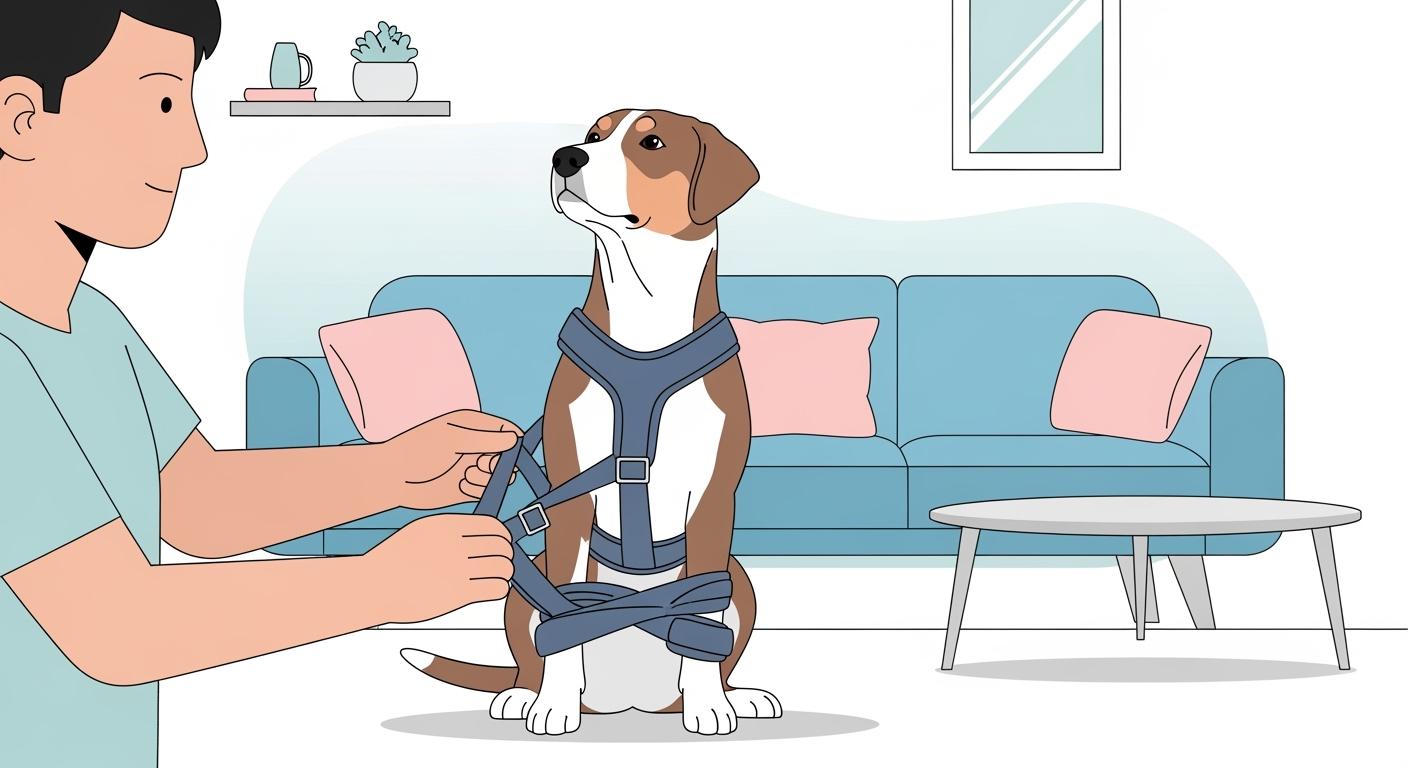
Putting on a dog harness should feel simple, but many fit problems start before the walk even begins. The harness goes on twisted, the chest piece sits too high, or the straps get buckled before the front section is pulled into the right place. A minute later, the harness is riding up, rubbing, or shifting to one side.
The easiest way to avoid that is to slow down at the start. First figure out which part goes on the chest, which strap goes behind the front legs, and whether the harness is a step-in style or an overhead style. Then check the fit before you clip the leash.
Note: This article focuses on how to put on a dog harness for everyday walks. It does not replace veterinary advice when your dog coughs, shows pain, or struggles with movement in any walking gear.
Key Takeaways
- Lay the harness flat before you put it on so you can tell the chest piece from the girth strap.
- Pull the front section into place before you tighten the strap behind the front legs.
- Always check the fit after a few steps, not only while the dog is standing still.
How to Tell Which Part Goes Where Before You Start
Before you try to put the harness on your dog, lay it flat and look at the shape. Most harnesses have three main parts: the front section that sits on the chest, the strap that goes around the ribcage behind the front legs, and the top section where the leash ring sits.
The difference between a step-in or overhead dog harness matters here, because the wrong starting position often creates the twist, drift, or buckle confusion before the walk has even begun.
Find the chest piece first
The chest piece should sit low on the front of the dog’s body, not up near the throat. On some harnesses it looks like a padded panel. On others it looks like the lower point of a Y-shape.
Find the girth strap next
This strap usually wraps around the widest part of the chest behind the front legs. It is the part that stabilizes the harness once everything else is in place.
Check how the harness is meant to go on
Some harnesses go over the head first. Others lie open on the floor so the dog can step into them. If you start with the wrong method, the harness often ends up twisted before you even buckle it.
| Harness Type | How It Goes On | What to Identify First | Common Mistake |
|---|---|---|---|
| Overhead harness | Slides over the head, then buckles at the sides | Neck opening and chest section | Chest piece starts too high before buckling |
| Step-in harness | Dog steps into the openings, then buckles on the back | Which loop is left and right | Twisted loops or flipped back section |
| Y-front harness | Usually overhead with a lower front section | Point of the Y on the sternum | Front section sits too high and crowds the neck |
Tip: If you cannot tell front from back right away, hold the leash ring at the top and let the harness hang naturally. The chest section should fall below it, not fold upward toward it.
How to Put On an Overhead Dog Harness
An overhead harness is the most common type for everyday walks. It usually has one opening that goes over the head and one or two side buckles that close behind the front legs.
Step 1: Loosen the straps if needed
If the neck or girth area looks tight before you start, loosen it slightly. A harness is easier to place correctly when you are not forcing it into position.
Step 2: Slip the neck opening over the head
Guide the harness over the dog’s head so the top section with the leash ring sits on the back. The front section should fall down the chest, not bunch under the throat.
Step 3: Pull the chest section into place
Before you buckle anything, pull the front section down so it sits low on the sternum. This is the step many people skip, and it is why the harness often starts the walk too high.
Step 4: Bring the girth strap behind the front legs and buckle it
The strap should sit behind the front legs, not in the armpit and not too far back on the belly. Once it is buckled, the harness should look centered from both sides.
Step 5: Smooth everything flat
Check that no strap is twisted and that the back ring sits centered on the spine. If one side looks shorter, fix it before you clip the leash.
- Slide the harness over the head.
- Pull the front section low on the chest.
- Wrap the girth strap behind the front legs.
- Buckle the side strap.
- Check that the back ring stays centered.
How to Put On a Step-In Dog Harness
A step-in harness opens flat and usually buckles on the back. It can feel easier for dogs that dislike gear going over the head, but only if the loops are laid out correctly before the dog steps in.
Step 1: Lay the harness flat on the floor
Spread it out so the two leg openings are clearly visible. The top buckle section should be at the back, and the chest section should be at the front.
Step 2: Place the front paws in the correct openings
Guide one paw into each opening. Do not rush this part. If the harness twists under the paws, the whole fit will be off once you lift it up.
Step 3: Lift the side straps up along the body
Bring both sides upward so they meet over the back. The chest section should now lie flat on the front of the dog, not off to one side.
Step 4: Buckle the harness on the back
Close the buckle and check that the leash ring is on top, not sideways. If the buckle lands off-center, the dog may not have stepped into the harness evenly.
Step 5: Adjust before walking
Check the same things you would check with an overhead harness: chest position, no twisting, no crowding at the front legs, and a centered back section.
| Step | What You Want | Fail Signal | Fix |
|---|---|---|---|
| Harness laid flat | Loops open clearly and do not overlap | Loops cross over each other | Reset it before the dog steps in |
| Paws placed in loops | One paw in each opening | One side twisted or both paws in the wrong section | Lift out and restart |
| Back buckle position | Buckle and ring sit centered on top | Buckle sits off to one side | Reposition and even out the loops |
| Chest section | Lies flat across the front of the body | Pulls sideways or sits too high | Adjust before clipping the leash |
How to Check the Fit Before You Walk
Putting the harness on is only half the job. A harness can look fine while the dog is standing still and then start shifting as soon as the dog moves forward.
Chest girth and neck size still matter when you measure a dog for a harness, because two dogs with the same weight can still need very different strap paths once the harness is actually on the body.
Check the chest piece first
The front section should sit low on the sternum and stay clear of the throat. If it is already high before you move, it will usually climb higher once the leash comes tight.
Check the strap behind the front legs
The girth strap should be snug enough to stabilize the harness without rubbing into the armpits. A harness that looks finished while the dog is standing still can still be too loose, and how tight should a dog harness be usually becomes clearer after three to five relaxed walking steps.
Check the shoulders and stride
Watch the dog take three to five normal steps. The front legs should move freely, and the harness should stay centered instead of rotating or creeping upward.
Check the skin after the walk too
When you remove the harness, look at the sternum, the armpits, and the strap lines. Redness or warm contact points usually mean the fit still needs work.
| Check | Pass Signal | Fail Signal | Fix |
|---|---|---|---|
| Chest position | Front section stays low on the chest | Rides up toward the throat | Pull it lower before tightening |
| Back alignment | Leash ring stays centered on the back | Harness tilts or rotates | Even out both sides |
| Shoulder movement | Dog walks with a normal front stride | Short, stiff, or choppy steps | Reposition the front section |
| Skin contact | No hot spots or visible rubbing | Red marks or flattening at one contact point | Adjust or stop using until corrected |
Tip: Do not judge the fit only while the dog is standing. Three calm walking steps usually show more than thirty seconds of standing still.
Common Mistakes When Putting On a Dog Harness
Most mistakes happen fast and look small, which is why they get repeated. But the same few errors cause most day-to-day fit problems.
Overall build still affects what feels stable in best dog harnesses for daily walks, especially when the front section has to stay low without crowding the shoulders or shifting back toward the throat.
- Buckling the harness before pulling the chest section into place.
- Leaving one side shorter than the other.
- Starting the walk with a twisted strap.
- Using the wrong put-on method for the harness style.
- Ignoring early signs like head-tossing, pawing, or short steps.
| Problem | What It Looks Like | Likely Cause | Fast Fix |
|---|---|---|---|
| Harness rides up | Front section climbs toward the throat | Started too high or girth too loose | Reset lower and rebuckle |
| Harness twists | Back ring shifts off-center | Uneven straps or bad step-in placement | Match both sides and restart |
| Dog takes short steps | Front movement looks stiff | Front section crowds the shoulder | Lower the front and check clearance |
| Dog paws at chest | Repeated scratching or fussing | Pressure or rubbing at the front | Stop and recheck the placement |
| Redness after walk | Warm marks at sternum or armpit | Repeated friction in one spot | Adjust before the next use |
Note: If your dog repeatedly coughs, stops suddenly, or shows obvious distress in the harness, stop using it and speak with your veterinarian before trying again.
FAQ
How do you know if the harness is on the right way?
The front section sits low on the chest, the back ring stays centered, the straps lie flat, and the dog can walk without the harness shifting or rubbing.
What if the dog hates an overhead harness?
A step-in style may feel easier for dogs that dislike gear going over the head, as long as the loops are set out correctly before the dog steps in.
Should the chest piece sit near the throat?
No. The front section should stay low on the sternum, not ride upward into the throat area.
How often should you recheck the fit?
Check3>How often should you recheck the fit?
Check it before every walk. Small strap changes and small placement mistakes are enough to change how the harness behaves once the dog starts moving.
Learning how put on dog harness the right way is mostly about sequence. Identify the parts first, place the front section before you tighten the girth strap, and always watch the first few wal ::contentReference[oaicite:1]{index=1} ing steps before you assume the fit is done.






