
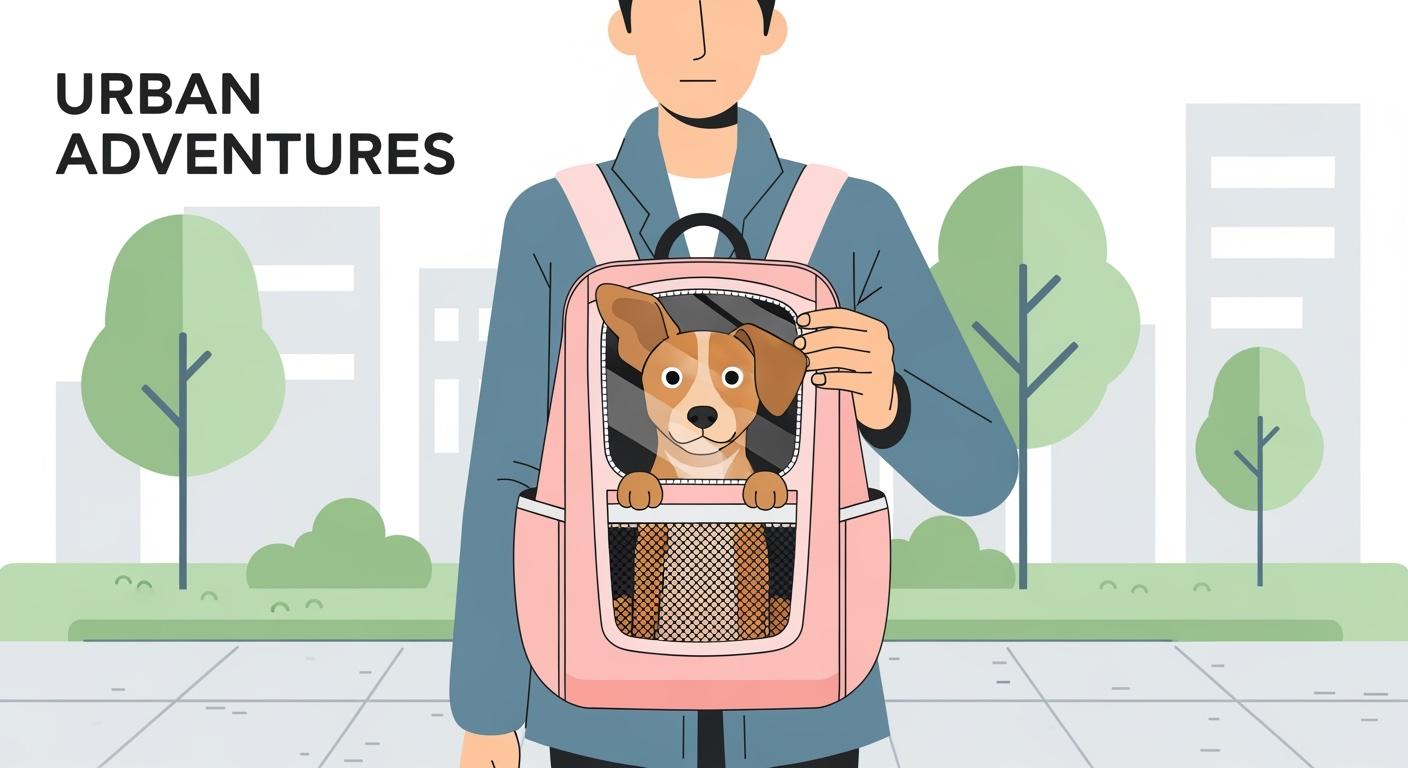
A dog carrier front backpack makes it easier to see your dog, but it also changes how both of you move. The front position helps you notice panting, shifting, stress, or poor posture faster than a back carrier. At the same time, the weight sits in front of your body, which can affect your stride, balance, shoulder load, and heat buildup. The best choice depends on whether the better view is worth the extra carrying effort for your dog, your route, and your body.
Key Takeaways
- A dog carrier front backpack allows you to keep your dog close and secure while keeping your hands free. It works best for short, controlled outings where frequent monitoring matters.
- Check dog posture, ventilation, and your own walking rhythm before using it outdoors. A carrier that looks secure can still fail if your dog slumps or you feel pulled forward.
- Use another carrier style if your dog overheats easily, panics in tight spaces, claws at openings, or cannot stay upright without sliding.
When Dog Carrier Front Backpack Works Best
Ideal uses for dog carrier front backpack
You want to choose the best dog carrier for your outing, not just the most convenient style. A dog carrier front backpack works best when the trip is short, the dog is small enough for the carrier, and you need to keep your pet visible. It can be useful on city walks, in public transport areas, during short travel transfers, or in crowded places where you want to monitor your dog closely.
The front position is helpful because you can see your dog’s face, breathing pattern, posture, and stress signals. That does not make it the best choice for every activity. If the route is long, hot, uneven, or physically demanding, the front load may become tiring faster than expected.
You may find a dog carrier front backpack useful when:
- You need close monitoring in a busy or noisy place.
- Your dog is small, calm, and already comfortable in enclosed carriers.
- You need hands-free movement for a short, predictable outing.
- You want to notice panting, shifting, or stress before it becomes serious.
Tip: Let your dog explore the carrier at home first. Short, calm practice sessions are safer than making the first test happen outdoors.
Comparison table: best dog carrier types
You may wonder which carrier fits your needs. Use this table to compare the main types:
| Carrier Type | Best Use Case | Main Benefit | Main Watchout | Who Should Avoid |
|---|---|---|---|---|
| Dog Carrier Front Backpack | Short outings, city walks, public transport, close monitoring | Easier view of your dog and faster comfort checks | More front-body load, possible heat buildup, and less storage | Dogs prone to overheating, panic, escape attempts, or poor upright posture |
| Dog Carrier Backpack | Longer walks, hiking, travel, carrying extra items | Weight often feels more balanced for the handler | Harder to check your dog without stopping | Dogs that need constant visual monitoring |
| Dog Carrier Sling | Quick errands and calm small dogs | Easy to put on and lightweight | Less structure and uneven load on the handler | Active, squirmy, larger, or poorly supported dogs |
A dog carrier front backpack is usually the better choice when monitoring matters most. A back carrier often works better when distance, storage, and load balance matter more. A sling is simplest for quick errands, but it gives less structure.
Who should avoid dog carrier front backpack
Some dogs and owners should avoid front backpacks. Dogs that overheat easily, breathe with difficulty, panic in tight carriers, claw at openings, or keep trying to climb out may not be good candidates. Dogs recovering from injury or surgery also need a veterinarian’s guidance before using any carrier that changes posture or pressure.
Owners should also be realistic. If the carrier blocks your stride, pulls your shoulders forward, or makes stairs and curbs feel unstable, the setup is not working. A front backpack should not force you to hold the carrier the whole time to keep it steady.
Note: If your dog shows heat stress, breathing trouble, pain, weakness, or panic behavior, stop using the carrier and let your dog rest. Contact your veterinarian if signs continue.
Dog Carrier Backpack: Visibility and Carry Comfort
Monitoring your dog in a front backpack
When you use a dog carrier front backpack, you can check your dog more often than with most back carriers. Mesh panels, a stable opening, and a clear view help you notice whether your dog is calm, alert, slumping, pawing, panting, or trying to turn around. This is the main advantage of the front position.
But visibility only helps if you act on what you see. Heavy panting, repeated shifting, drooling, clawing at openings, dullness, or attempts to escape should not be treated as normal adjustment. Those are signs to stop, cool down, shorten the outing, or switch carrier style.
- Mesh panels should let you check breathing and posture without opening the carrier.
- Closures should stay secure without pressing into the dog.
- The base should support the dog instead of letting the body slump.
- Internal safety clips should reduce sudden escape risk, not pull the dog into an awkward angle.
Human comfort and ergonomics
Your own comfort matters as much as your dog’s. A front carrier places the load in front of your chest and abdomen. That can feel secure at first, but it can also change your balance, shorten your stride, and increase shoulder or neck fatigue if the carrier hangs too low or sways.
Adjust the straps so the carrier sits close to your body without crushing your chest. The dog should stay upright, the base should remain level, and the carrier should not bounce with every step. If you need one hand on the carrier the whole time, the hands-free benefit is not really working.
Physical comfort depends on a few key points:
- The carrier should not pull your upper body forward.
- Shoulder straps should feel even, not sharp or twisted.
- The base should stay flat enough for the dog to sit or rest naturally.
- Ventilation should work for the dog and should not make the carrier feel hot against your body.
Pass/Fail checklist table
Use this checklist before and during your walk. A front carrier should pass for both dog comfort and handler comfort.
| Check Item | Pass Signal | Fail Signal | Fix |
|---|---|---|---|
| Carrier fit | Sits close to your body and dog stays upright | Carrier hangs low, gaps, sways, or dog slumps | Adjust straps, check base support, or change size |
| Dog visibility | You can see face, posture, and breathing cues | Dog is hidden or hard to monitor | Reposition the dog and check mesh panel alignment |
| Secure closure | Zippers, clips, and openings stay secure | Gaps appear or dog claws at openings | Stop and recheck closure; switch style if escape risk repeats |
| Shoulder load | Weight feels even with no sharp pressure | One side pulls, straps dig, or shoulders tire quickly | Rebalance, raise carrier, or shorten the outing |
| Walking rhythm | You can walk naturally without looking down constantly | Carrier blocks stride, stairs, or curb movement | Adjust height or use a back carrier for longer movement |
| Dog comfort | Calm, alert, steady breathing, relaxed posture | Panting, whining, drooling, shifting, clawing, or freezing | Stop, cool down, and shorten or end the outing |
| Ventilation | Airflow feels open and dog does not overheat | Hot carrier, heavy panting, drooling, or dull behavior | Move to shade, offer water, and stop use if signs continue |
| Hands-free use | You can move without holding the carrier | You keep grabbing it to stop sway or slipping | Tighten straps or switch to a more stable carrier |
Common mistakes and consequences
Many front backpack problems come from skipping the real-use test. A carrier may look fine when empty but sag, sway, or trap heat once your dog is inside. Another common mistake is using a front backpack for a long outing before the dog has practiced short sessions at home.
Common mistakes include:
- Choosing a carrier by weight range only instead of checking posture and base support.
- Skipping a short indoor test with your dog inside.
- Using the carrier in heat, direct sun, or crowded routes without enough breaks.
- Overpacking pockets until the carrier pulls forward or stresses closures.
- Ignoring panting, shifting, clawing, or refusal to enter.
A loose carrier can bounce and make your dog brace constantly. A sagging base can force the dog into a crouched position. Poor airflow can turn a short trip into a heat problem. Treat these as setup failures, not normal carrier behavior.
Note: If you notice heat stress, breathing trouble, weakness, disorientation, or pain, stop using the carrier and let your dog rest. If symptoms do not improve, contact your veterinarian.
Signs of Trouble and Fixes for Dog Carrier Front Backpack
Troubleshooting table: symptoms and solutions
You want your walks to be safe and easy. If you see problems with your carrier, fix them before continuing.
| Symptom | Likely Cause | Fast Check | Fix |
|---|---|---|---|
| Chest pressure | Carrier sits too tight or too high against your body | Check whether you can breathe and walk naturally | Loosen slightly, rebalance, or try a different carry style |
| Fatigue | Front load is too heavy or uneven | Notice shoulder, neck, or lower-back strain | Shorten the outing or switch to a back carrier |
| Blocked stride | Carrier hangs too low or protrudes too far forward | Walk stairs, curbs, or a short hallway test | Raise carrier position or change carrier type |
| Dog slumping | Base not supportive or carrier is too loose | Watch whether dog slides down or leans hard | Improve base support or use a more structured carrier |
| Repeated readjustment | Wrong size, poor strap layout, or unstable carrier shape | Notice whether you keep fixing it every few minutes | Stop relying on that setup and try another size or carrier style |
Adjusting or switching carriers
If the same problem keeps returning, the carrier may not match your dog or your body. Adjusting straps can fix mild sway or uneven load. A more supportive base can help if your dog slides down. But if your dog panics, overheats, claws at openings, or cannot stay in a natural position, the answer is not more tightening. It is a different carrier or a shorter, easier outing.
Try a back carrier when you need better load balance for longer walks. Try a sling only for calm, small dogs and very short errands. Use a more structured carrier when posture support matters more than quick access.
When to stop using a front backpack
Some warning signs mean you should stop using the carrier right away. Watch for these:
| Warning Sign | What It May Mean | Next Step |
|---|---|---|
| Load shifts | Carrier is unstable or poorly fitted | Stop, adjust, or switch carrier |
| Panic behavior | Dog feels trapped, unsafe, or uncomfortable | Remove dog calmly and restart training later |
| Repeated clawing at openings | Escape attempt, stress, poor airflow, or bad fit | End the outing and reassess carrier style |
| Heavy panting that does not settle | Heat, stress, poor ventilation, or overexertion | Move to shade, cool down, and seek veterinary help if signs continue |
If you ignore these signs, carrier use can become stressful or unsafe. Your dog may associate the carrier with panic, heat, or discomfort. You may also lose balance if the load shifts suddenly. The better choice is to stop early, fix the problem, and choose a carrier style that works without constant correction.
A dog carrier front backpack gives you a better view of your dog, but it asks more from your body and your setup. Use it when close monitoring, short distance, and hands-free movement matter most. Check posture, ventilation, closures, base support, and your walking rhythm before each outing. If your dog shows heat, panic, slumping, or repeated escape behavior, stop using the front backpack and switch to a safer carrier style.
Tip: Let your dog explore the carrier at home first. This helps them feel safe and ready for outings.
FAQ
How do you help your dog adjust to a new carrier?
Let your dog explore the carrier at home. Place treats inside, keep the first sessions short, and reward calm behavior. Add outdoor use only after your dog can stay relaxed inside.
What should you do if your dog resists entering the carrier?
Stay calm and do not force entry. Check whether the carrier smells strange, feels unstable, traps heat, or fits poorly. Try again later with a favorite treat or toy. If resistance continues, ask your veterinarian or a qualified trainer for guidance.
Can you use a dog carrier for long walks?
You can use a dog carrier for short trips first. For longer walks, check your dog’s posture, breathing, heat level, and stress often. If you feel shoulder strain or your dog pants, shifts, or claws at openings, stop and reassess the carrier.






