
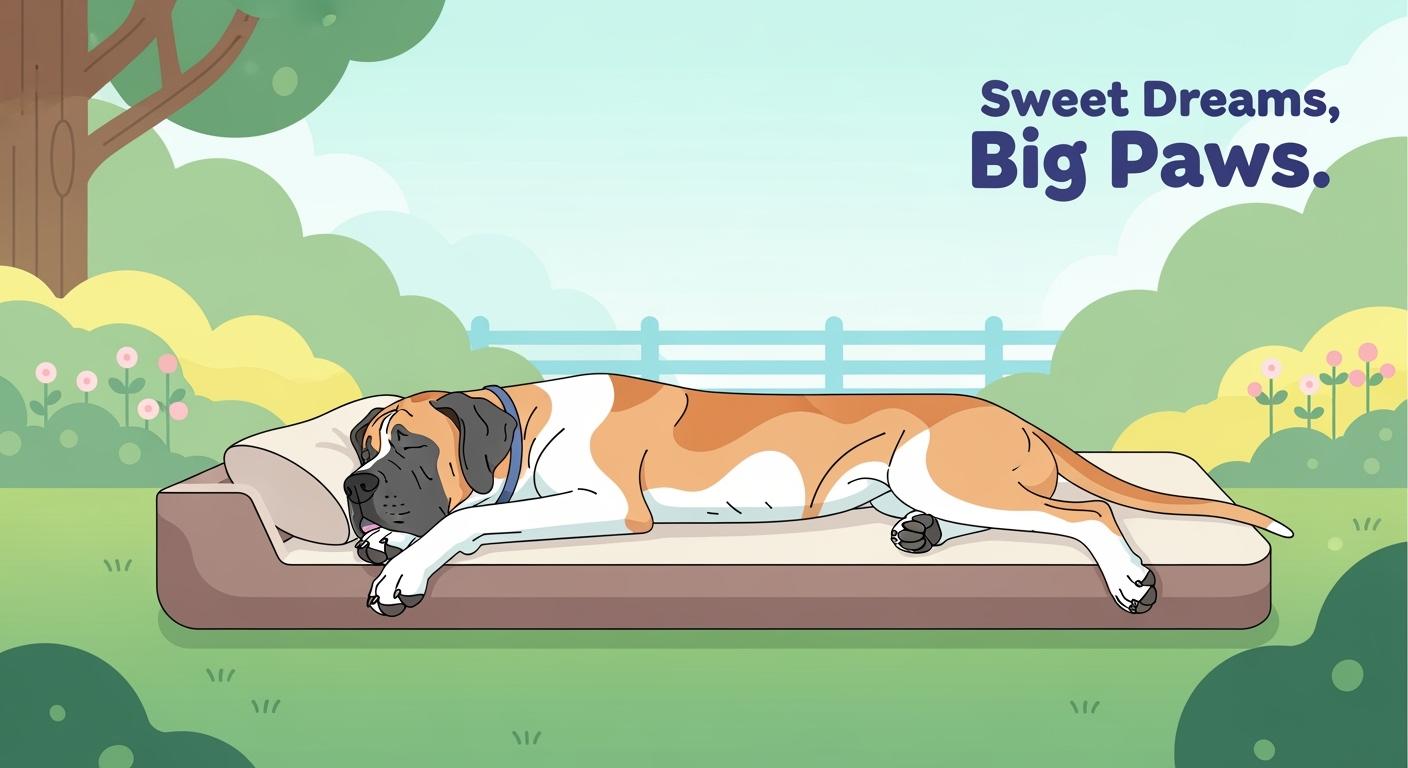
You want a big bed to do more than look big. The real question is whether a bed dog extra large gives your dog enough usable room to stretch, turn, and settle without hanging off the edge or sinking into the middle. Outside dimensions can make a bed look generous, but thick bolsters, crowded corners, and soft walls can quietly reduce the flat area your dog actually sleeps on.
A large bed should match your dog’s full sleeping outline, not just their standing length. It should also match how your dog rests: sprawled out, leaned into a side wall, or curled into a corner. For many dogs, especially seniors, very large breeds, and dogs with pressure-point sensitivity, support matters just as much as space. The 2023 AAHA Senior Care Guidelines advise adequately padded bedding for senior pets, and veterinary references on pressure-point trauma in dogs emphasize soft bedding and padding when hard surfaces are creating repeated elbow or hip pressure.
- Check the inner usable surface, not only the footprint listed on the tag.
- Match the bed shape to your dog’s real sleep style instead of assuming all XL beds work the same way.
- For dogs with stiffness, pressure-point swelling, or trouble getting up, prioritize fuller support over soft bulk or thick side walls.
Bed Dog Extra Large: Outside Size vs Real Sleep Space
Choosing a bed dog extra large feels simple until you realize that “XL” can describe the footprint, not the flat sleeping zone. The bed that looks big on the showroom floor may still feel cramped if your dog sleeps with legs extended or likes to change position during the night.
Why outside dimensions can mislead
When owners compare extra-large beds, they often compare only the outside numbers. That misses the main point. A dog rests on the inner platform, not on the full outline including bolsters and raised edges. A bed with deep side walls may look roomy from the outside while giving your dog less flat space than a simpler rectangular bed with a wider open center.
| What You Check | Why It Matters | Common Mistake |
|---|---|---|
| Outer dimensions | Shows the total footprint of the bed | Assuming the whole footprint is usable sleep space |
| Inner flat surface | Shows where your dog can actually rest | Ignoring how thick walls shrink the center |
| Sleep posture | Changes how much room your dog truly needs | Measuring only standing body length |
Tip: The better extra-large bed is the one your dog can fully settle on without having paws, elbows, or hips pushed into the edge line.
How to check real sleep space at home
You can do a simple real-world fit check before buying or right after the bed arrives.
- Watch your dog in their most common sleep position, not just while standing.
- Look at the full outline they take up when deeply relaxed.
- Compare that outline to the bed’s open inner area, especially if the bed has thick bolsters.
- After your dog settles, check whether elbows, hips, or paws keep touching or crossing the edge.
- Notice whether your dog stays for long naps or keeps relocating to the floor or another surface.
You want your dog to have enough room to stretch, turn, and rest without feeling crowded. If your dog only fits by curling tighter than usual, the bed is not functionally large enough even if the label says extra large.
Comparison table: flat, bolster, and support-core beds
| Bed Type | Best Use Case | Main Benefit | Main Watchout | Who Should Skip It |
|---|---|---|---|---|
| Flat XL Bed | Dogs who sprawl or stretch wide | Maximum open sleep area | May feel too exposed for dogs that like head support | Dogs that strongly prefer leaning or nesting |
| Bolster XL Bed | Leaners and head-rest sleepers | Added side support and a more enclosed feel | Thick sides can reduce the flat center | Wide sprawlers and dogs that run warm |
| Support-Core XL Bed | Seniors, giant breeds, pressure-point concerns | More even body support and less middle collapse | Support matters more than plushness, so it may feel firmer | Dogs that strongly prefer very soft, nest-like beds |
Matching Bed Shape, Support, and Temperature

Big outside size is not enough if the bed shape fights your dog’s natural rest style or the support collapses under heavier body weight. A better bed matches three things at once: posture, support needs, and heat preference.
Support matters more for some dogs than others
Healthy young dogs can sometimes tolerate more variation in bed style. Older dogs, giant breeds, and dogs with mobility limits often cannot. AAHA’s senior care guidance recommends adequately padded bedding for senior pets, and veterinary references on hygroma and pressure-point trauma recommend soft bedding or padding over pressure areas to reduce repeated stress from hard surfaces. That is why “real sleep space” is not only about length. It is also about whether the bed stays supportive once your dog’s full weight is on it.
Supportive-core beds usually make more sense when your dog needs fuller body support and less risk of center collapse. The better claim here is not that a bed cures joint problems. It is that the right support surface can make rest more comfortable and reduce obvious pressure-point strain.
Temperature and surface preference
Some dogs leave their beds and choose the floor because the floor feels cooler. That does not always mean they do not need a bed. It may mean the bed is too warm, too plush, or placed in the wrong spot. Veterinary guidance on comfort for older or painful dogs notes that dogs dealing with musculoskeletal discomfort may prefer comfortable padding on a more stable, low surface, but heat and ease of access still matter.
- If your dog runs hot, look for easier airflow and less heat-trapping bulk.
- If your dog leans into walls, choose bolsters that do not crowd the center too much.
- If your dog has trouble getting up, avoid beds that are too soft, too deep, or awkward to step onto.
Note: If your dog has joint pain, overheating, skin irritation, or mobility limits, talk to your veterinarian before changing sleep setups. This article does not replace medical care.
Pass/fail checklist: is the bed actually working?
| Check Item | Pass Signal | Fail Signal | Fix |
|---|---|---|---|
| Dog can stretch fully | No body parts spill off the usable surface | Hips, elbows, or paws hang off | Choose more open inner space |
| Dog can turn and settle easily | Moves and lies down without crowding | Looks cramped or keeps bumping edges | Choose a flatter or less crowded shape |
| Bed stays supportive | Center stays level under body weight | Middle sags or bottoms out quickly | Upgrade support core |
| Dog uses it for long naps | Returns willingly and stays there | Leaves quickly or sleeps elsewhere instead | Reassess shape, warmth, or support |
| Skin and pressure points stay calm | No rubbing, redness, or swelling over bony areas | Calluses, redness, or pressure-point irritation worsen | Use better padding and consult your vet |
Failure Signs: When Big Outside Size Still Fails
Some beds fail even when they look huge. The most common reason is that the usable center is too small or the core loses support too quickly.
Troubleshooting table: symptom, cause, fix
| Symptom | Likely Cause | Fast Check | Fix |
|---|---|---|---|
| Limbs hang off the bed | Usable sleep area is too small | Watch your dog in their deepest sleep position | Choose more flat inner space or thinner sides |
| Middle collapse | Support core compresses too much | Press the center under your dog’s usual rest zone | Upgrade to firmer support |
| Unused corners | Bed shape does not match sleep style | Dog always curls in the same cramped area | Switch shape, not just size |
| Daily fluffing/reset needed | Fill shifts too easily | Bed looks uneven every morning | Choose a more stable core |
| Dog avoids the bed | Wrong temperature, support, odor, or shape | Notice whether your dog chooses the floor or another surface | Adjust setup before assuming the dog dislikes all beds |
Cleaning, odor, and everyday upkeep
A big bed only stays useful if you can keep it clean enough that your dog still wants to use it. Routine cleaning matters more than a fixed schedule because some dogs track in dirt, shed heavily, or have accidents more often than others. Clean sooner when you notice odor, visible dirt, dampness, or skin sensitivity. Washable covers and liners make this easier, but they do not matter if the inner support already feels flat or unstable.
Tip: “Easy to clean” matters more in real life than “easy to describe.” A bed that is awkward to strip, wash, and dry often ends up being used less well.
FAQ
How do you know if your dog’s bed is truly big enough?
Watch your dog sleep naturally. If your dog can fully stretch, turn, and settle without hanging off the flat area, the bed is probably large enough. Check the inner surface, not only the outside size.
Can an extra-large bed still be wrong for a large dog?
Yes. Thick bolsters, a weak center, too much heat retention, or the wrong shape can make a bed feel wrong even when the outside label says XL.
What if your dog has joint pain or mobility issues?
Use a bed with fuller support, easier entry, and enough stable surface for the dog’s whole body. Ask your veterinarian what kind of support makes sense for your dog’s condition.






