
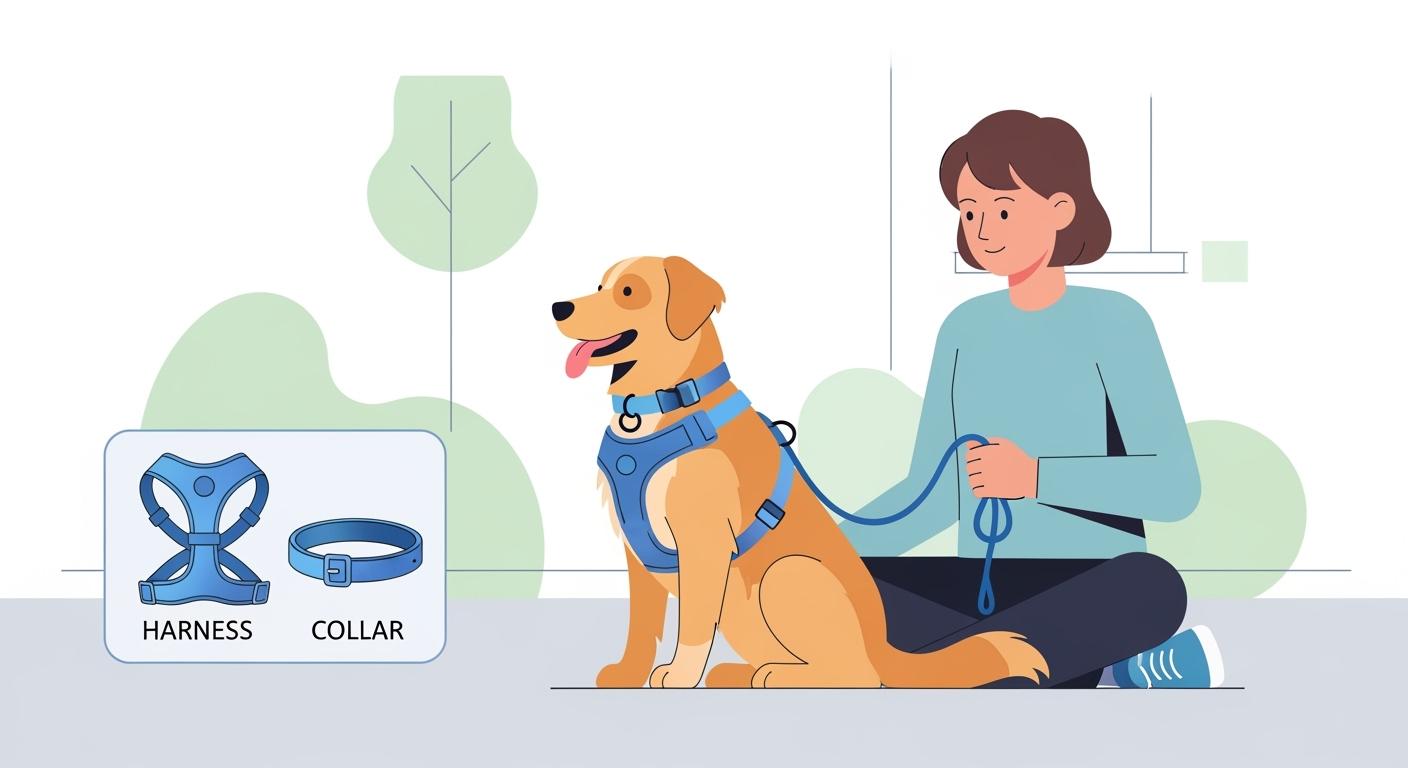
You may wonder whether a dog harness is better than a collar for daily walks. The better answer depends on what the gear needs to do. A harness usually makes more sense when your dog pulls, coughs, lunges, or should avoid heavy pressure at the throat. A collar still makes sense for ID tags, daily wear, and calmer dogs that walk with very little leash tension. For many homes, the real answer is not one or the other. It is both, used for different jobs.
Key Takeaways
- Choose a harness for dogs that pull or have health concerns that make neck pressure a poor fit. A good harness spreads force over the body instead of concentrating it at the throat.
- Use a collar for ID tags and for dogs that already walk calmly on simple outings. A collar is not automatically wrong. It is just less forgiving when leash pressure gets high.
- Many dogs do best with both: a collar for identification and a harness for walks. This setup is often the most practical answer.
Dog Collar vs. Dog Harness for Walks
Is a Dog Harness Better Than a Collar for Walking?
You want your dog to enjoy walks and stay safe. The better question is not “which is better in general?” but “where does the leash pressure go when something goes wrong?” If your dog pulls hard, surges, coughs when the leash tightens, or has already shown discomfort at the neck, a harness is usually the safer walking tool. It keeps that pressure away from the throat and gives you a wider margin for control.
A harness can also reduce escape risk and improve handling when the dog is strong or energetic. Front-clip designs can help redirect pulling. Back-clip designs usually work better for calmer dogs that do not need much steering. But not every harness is automatically a good one. If it sits too close to the shoulder, rubs behind the elbow, or lets the dog back out, it is still the wrong choice for walking.
Tip: If your dog coughs, gags, surges forward, or seems uncomfortable when the leash tightens, test a well-fitted harness before assuming the problem is only training.
When a Dog Collar Is Enough
Some dogs walk calmly and do not put much force into the leash. For those dogs, a collar can be enough for short walks, quick toilet trips, or very simple daily outings. Flat collars are easy to use, easy to leave on with ID tags, and usually feel less bulky than a harness.
A collar usually makes more sense when:
- Your dog walks with a loose leash most of the time.
- Your dog does not cough, gag, or lunge when the leash comes tight.
- You need a simple daily-wear option for identification.
- The walk is short, familiar, and low-drama.
Collar fit still matters. Too loose and the dog can slip it. Too tight and the collar creates rubbing or pressure. If your dog has a body shape that makes flat collars easy to back out of, a martingale may be more secure for specific situations. But that still does not make it the best answer for strong pullers.
Note: A calm dog on a collar is not a problem. The problem starts when the dog’s behavior, health, or leash pressure no longer matches what a collar does well.
Comparison Table: Flat Collar, Martingale Collar, Walking Harness
| Type | Best Use Case | Control Features | Comfort Watchout | Main Pros | Main Cons |
|---|---|---|---|---|---|
| Flat Collar | Calm dogs, ID tags, simple short walks | Basic leash attachment and easy daily wear | Neck pressure matters more if the dog pulls | Simple, light, practical for tags | Less forgiving under tension |
| Martingale Collar | Dogs more likely to back out of a flat collar | More secure than a standard flat collar | Still acts on the neck and needs supervision | Helps reduce slipping out | Not the best answer for strong pullers |
| Walking Harness | Pullers, energetic dogs, dogs with neck or airway concerns | Can offer better redirection and body control | Bad fit can chafe, restrict stride, or allow escape | Keeps pressure off the throat, often easier for leash management | Takes more fit checking and style matching |
Step-by-Step: How to Choose for Your Walks
- Watch your dog on leash. Pulling, coughing, lunging, or repeated backing out usually points toward a harness, not a collar-only setup.
- Check your dog’s health and body type. Dogs with airway, throat, or neck concerns usually need less pressure at the neck, not more.
- Test fit and movement. The gear should stay secure without rubbing, slipping, or changing the dog’s stride.
- Try a short real walk. The better option should feel calmer and easier to manage, not just look correct while standing still.
- Use both if needed. Many dogs need a collar for ID and a harness for walks. That is normal, not overcomplicated.
Remember, “is a dog harness better than a collar” is really a use-case question. For dogs that pull or have throat-pressure risks, usually yes. For calm dogs on easy walks, sometimes no. For everyday life, both may be the smartest answer.
Dog Harnesses and Collars: ID, Control, and Safety
Dog Collar for ID Tags and Daily Wear
A dog collar still has an important job even when you prefer a harness for walking. It gives you a consistent place for ID tags, license information, and everyday identification. That matters because a walking harness may come off at home, in the yard, or after a walk, while a collar is often the more stable daily item.
Tip: Treat the collar as your dog’s ID layer first. Keep tags readable, secure, and quiet enough that the dog will tolerate wearing them comfortably.
Dog Harnesses for Leash Control and Pulling
Dog harnesses help you control your dog on walks, especially if your dog pulls or jumps. A better harness spreads force over more of the body instead of focusing it at the throat. That usually gives you a wider safety margin for dogs that pull, for dogs that should avoid neck pressure, and for handlers who need steadier control.
But harness type matters. Some shapes allow cleaner shoulder movement than others. Some dogs walk better in a simple Y-front or well-shaped body harness, while others need front-clip steering for training. The right harness is not the one with the most straps. It is the one that fits the dog’s body and the walk’s actual demands.
Pass/Fail Checklist Table: Gear Fit and Function
| Criteria | Pass | Fail |
|---|---|---|
| Proper fit | Gear stays secure without digging in | Twisting, slipping, or obvious pressure points |
| Secure ID tags | Tags are readable and firmly attached | Loose ring, unreadable tag, or missing info |
| Comfortable wear | Dog settles quickly and moves normally | Scratching, freezing, shaking off, or resisting |
| Easy to clip leash | Clip point is easy to reach and stable | Hard to clip or constantly flips |
| No rubbing/chafing | No hair loss, redness, or worn spots | Skin irritation or coat damage |
| Quick release | Easy to remove without a struggle | Buckles stick or create stress every time |
Common Mistakes and Consequences
Many owners make mistakes because they choose by label instead of by behavior. A collar that is too tight can cause rubbing or coughing. A loose collar can slip off. A harness that looks secure while standing still can still rub, restrict stride, or let the dog back out once the walk starts.
Another common mistake is using a gear change as a substitute for training. Better equipment can reduce risk and improve handling, but it does not replace loose-leash training. Reward-based practice still matters more than buying a different shape of strap.
Alert: Changing gear can help manage risk, but it does not solve leash habits by itself. Use fit checks and reward-based training together.
Troubleshooting Dog Harness and Collar Issues
Signs of Gear Failure: Coughing, Escaping, Rubbing
You need to watch your dog for signs that the current setup is the wrong one. The gear may be wrong because of fit, because of style, or because your dog’s walking pattern changed and the old setup no longer matches it.
Common warning signs include coughing, gagging, rubbing, limited stride, repeated backing out, or a sudden change in walking confidence. If your dog used to walk normally and now freezes, scratches, or resists being geared up, take that seriously. Discomfort often shows up in behavior before you see marks on the body.
Alert: If your dog shows airway sensitivity, neck pain, coughing, or major behavior changes during walks, stop using the current setup and consult your veterinarian.
Troubleshooting Table: Symptoms and Solutions
| Symptom | Likely Cause | Fast Check | Fix |
|---|---|---|---|
| Coughing or gagging | Too much throat pressure | Check whether it happens when the leash tightens | Switch to a well-fitted harness and reassess |
| Escaping | Loose collar or poor harness fit | Try a gentle backward pull test in a safe area | Refit the gear or choose a more secure style |
| Rubbing or chafing | Poor fit, wrong shape, or rough contact point | Inspect skin and coat after the walk | Adjust or change the gear before using it again |
| Limited front-leg movement | Harness sitting too close to the shoulder joint | Watch stride length on a loose leash | Change to a less restrictive harness shape |
| Backing out | Harness not adjusted to the dog’s body shape | Observe during turns and reverse pressure | Tighten, resize, or use a more secure design |
When to Switch or Use Both
You should switch gear if your dog shows repeated discomfort, coughing, rubbing, or escape behavior. Use a harness for walks if your dog pulls or has neck or airway concerns. Keep a collar on for ID tags and daily wear if it fits comfortably and the dog tolerates it well.
Some dogs do best with both because the two tools solve different problems:
- The collar handles identification.
- The harness handles walking pressure and leash control.
This is often the most practical answer for daily life. It gives you the benefits of each without forcing one piece of gear to do every job.
Tip: Adjust your dog’s gear as they grow, gain muscle, lose weight, or change walking habits. Good fit is not a one-time decision.
You want the best solution for your dog’s daily walks, but the best answer depends on what the walk demands. Use a harness when throat pressure, pulling, or control are the real problem. Use a collar when the dog is calm, the walk is simple, and you mainly need everyday ID. For many dogs, the smartest setup is both: collar for tags, harness for walks.
| Factor | Harnesses | Collars |
|---|---|---|
| Best for walking | Pullers, stronger dogs, dogs with neck or airway sensitivity | Calm dogs on easy, low-pressure walks |
| Best safety role | Leash management and pressure distribution | Identification and simple daily wear |
| User experience | More control, but more fit checking | Faster and simpler, but less forgiving under tension |
Regularly check fit and comfort as your dog grows or changes. A better walking setup is the one your dog can move in comfortably and you can use consistently.
FAQ
How do you decide between collars and harnesses for daily walks?
Watch your dog on the leash. If the dog pulls, coughs, lunges, or seems uncomfortable at the neck, a harness is usually the better walking tool. If the dog walks calmly and the outing is simple, a collar may be enough.
Can you use both collars and harnesses at the same time?
Yes. Many dogs wear a collar for ID tags and a harness for leash control. That is often the most practical setup because each tool is doing the job it is best at.
How often should you check the fit of collars and harnesses?
Check before regular use and recheck whenever your dog’s body shape, coat, or walking behavior changes. Good fit is not permanent, especially for growing dogs or dogs whose weight changes through the year.






