
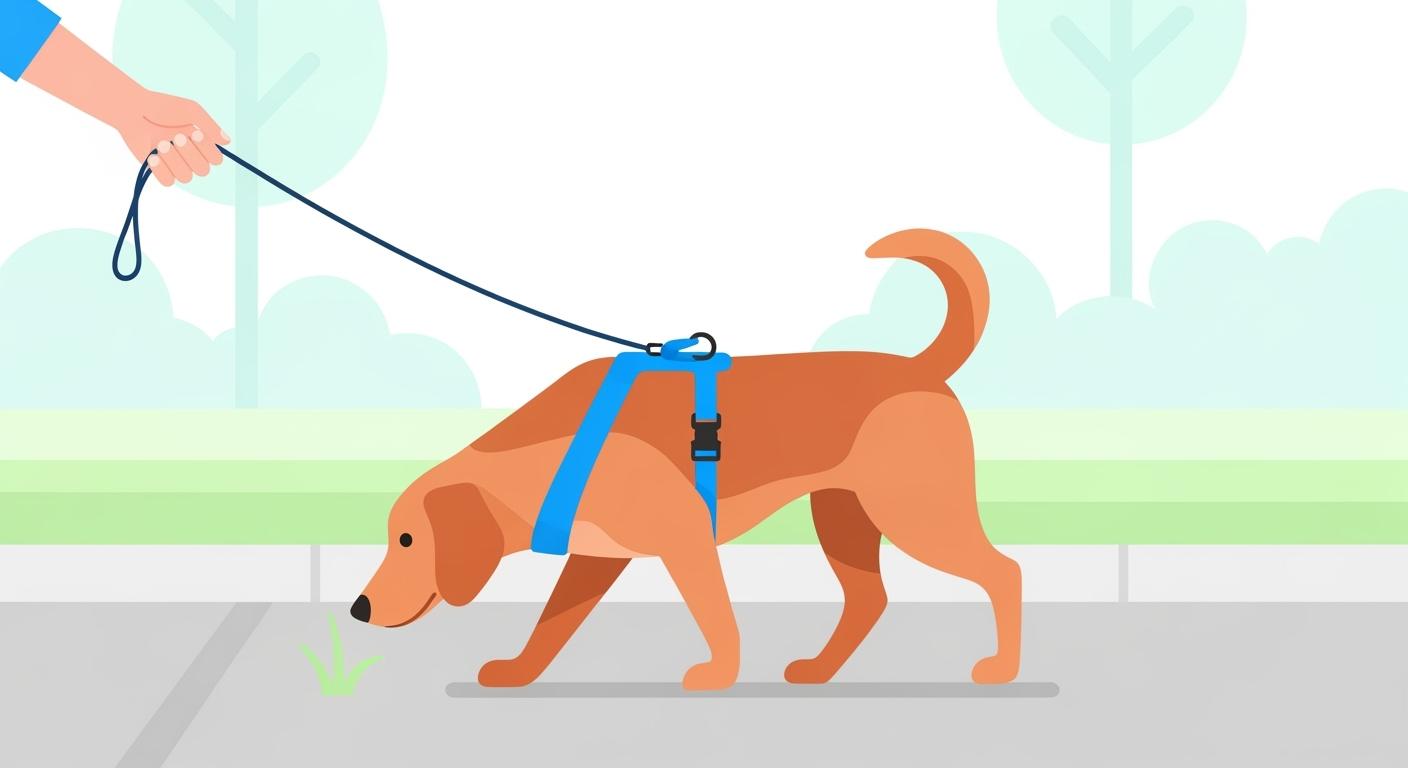
An anti dog pulling harness is not automatically too much for a sniff walk, but it is not automatically the best choice either. The real question is what the walk demands. On a busy street, extra steering can help you manage traffic, corners, and sudden distractions. On a relaxed sniff walk, that same setup can start to feel unnecessary if it keeps interrupting your dog’s natural movement, leash freedom, or stop-and-sniff rhythm.
| When It Helps | When It Can Feel Like Too Much |
|---|---|
| More control near traffic, crowds, bikes, and fast turns | Too much steering on low-distraction sniff walks |
| Useful for dogs that surge forward suddenly | Can interfere with comfort if the fit is off or the design sits badly |
Key Takeaways
- An anti dog pulling harness makes the most sense when the walk needs more control. That usually means busy sidewalks, street crossings, training sessions, or dogs that surge toward triggers.
- Use a no-pull setup as a walking aid, not as a shortcut around training. The better long-term result still comes from loose-lead practice and reward-based handling.
- Pick the right harness for your dog’s needs. A simpler setup is often enough for easy sniff walks, while a front-control style is more useful when the environment is tighter or more chaotic.
Anti Dog Pulling Harness: When and Why to Use
Safety and control in busy areas
You usually notice the value of an anti dog pulling harness when the walk gets narrow, noisy, or unpredictable. Think of curb edges, scooters, crowded sidewalks, or a dog that spots another dog and lunges before you are ready. In those situations, a front-control setup can make it easier to turn the dog back toward you and shorten the distance between reaction and recovery.
- A no-pull dog harness is often easier to manage in high-distraction places than a simple back clip.
- It can help reduce straight-line pulling by changing the leash path and the dog’s forward leverage.
- Pressure is kept off the neck, which is usually a better choice than relying on the throat area for control.
- It is especially useful when you need short, frequent redirection rather than one long relaxed walking pattern.
- It also works better when your dog is strong enough that you need extra steering, not just a place to attach the leash.
Tip: Busy-street walking is less about giving the dog full freedom and more about keeping the path predictable. If you need frequent steering, a front-control harness makes more sense than a loose, comfort-first setup.
Training aid, not the whole answer
You might hope that an anti dog pulling harness will solve leash pulling on its own. It usually does not. It can reduce the dog’s leverage and make the walk easier to manage, but it does not replace teaching the dog how to move on a loose lead, check in, or slow down around distractions.
The better way to use this gear is as part of a cleaner routine: reward the dog for staying with you, stop forward progress when the leash goes tight, and make calm walking more rewarding than dragging ahead. That is why the harness works best as a support tool. It buys you better handling while the dog is still learning.
- Start in a lower-distraction area before taking the harness into crowded places.
- Reward check-ins, slower pace, and loose leash moments instead of waiting only for mistakes.
- Pause or change direction when the leash goes tight rather than pulling back continuously.
- Keep early sessions short so the dog does not spend the whole walk rehearsing pulling.
- Use the harness to help you guide better timing, not to force a position every second.
Note: If your dog shows pain, panic, repeated coughing, or movement changes during walks, stop and reassess the fit and the walking setup. This article is not a medical diagnosis guide.
When extra control is not needed
Not every walk needs the same amount of equipment. If your dog already walks fairly loosely, the route is quiet, and the goal is decompression or sniffing, a strong steering setup can feel like more harness than the walk actually needs. That is especially true if the dog keeps getting turned off-line every time they follow a scent arc or pause to investigate.
- A simple, well-fitted harness is often enough for dogs that do not surge or drag.
- You may not need a no-pull setup for low-traffic sniff walks where the handler has time and space.
- Proper fit and shoulder freedom often matter more here than extra control features.
If the dog is relaxed, the leash stays mostly loose, and you are not constantly redirecting, that is usually a sign that you can prioritize movement and comfort over stronger steering.
Tip: Watch the type of walk your dog is having, not just the route name. A quiet walk can still need extra control if your dog is highly reactive, and a sniff walk can stay relaxed only if the gear does not keep interrupting it.
No-Pull Dog Harness on Different Walks
Steering and leash path
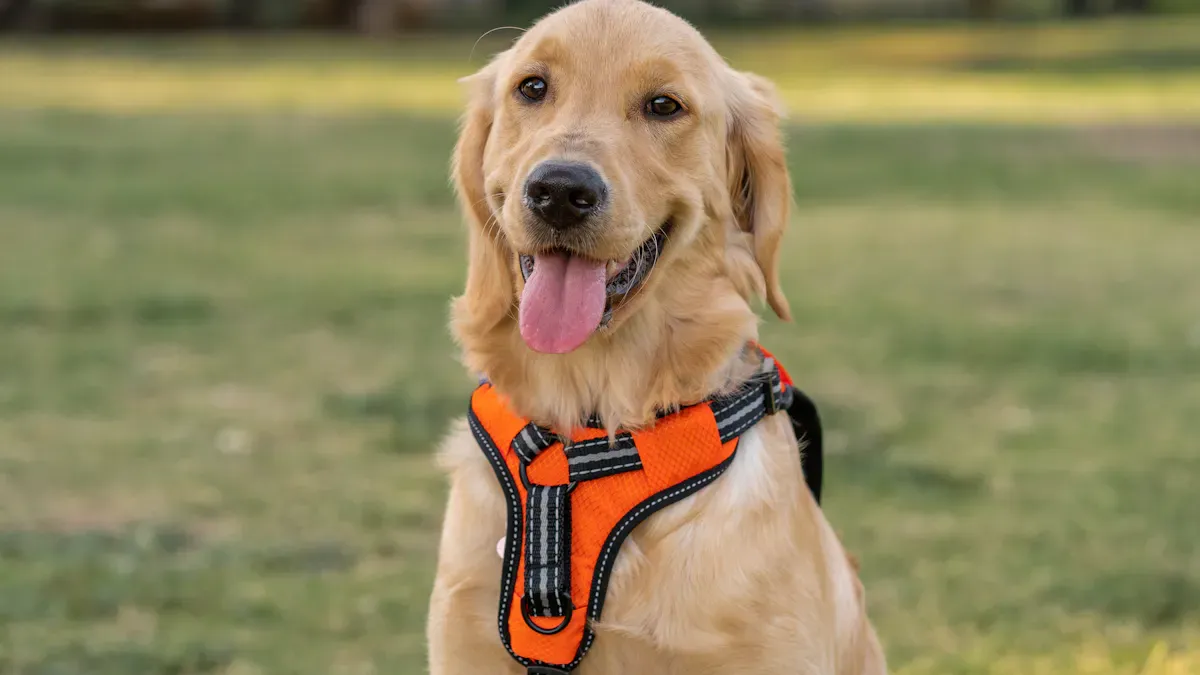
Leash path is one of the easiest ways to tell whether the harness matches the walk. On busy streets, you usually want the dog’s path to stay narrower and easier to redirect. A front-clip setup helps with that because it changes what happens when the dog drives forward. On a sniff walk, though, the same leash path can start to feel busy. The dog may want to drift, arc, pause, and change angles often. If every small move causes the harness to turn the dog back toward you, the walk can become more about correction than decompression.
- No-pull dog harnesses help most when the handler needs frequent redirection.
- They are less natural-feeling when the dog is meant to explore with a little more leash freedom.
- If the dog keeps getting tangled, wrapped, or turned off every scent line, the setup may be too control-heavy for that walk.
Natural movement and comfort
You want your dog to move cleanly, not just stay technically attached to the leash. A no-pull harness can work well only if it still allows normal shoulder reach, does not ride into the armpits, and does not shift awkwardly across the chest when the dog turns. Some front-control designs are fine when fitted well. Others feel restrictive fast, especially on longer walks or dogs with bigger front-end movement.
That is why comfort on a sniff walk is different from comfort on a short city stretch. If your dog looks stressed or uncomfortable, check the fit and fix it. A setup that works for a five-minute street crossing may still feel wrong for a thirty-minute scent-heavy walk.
Note: Watch for shorter stride, head dipping, repeated scratching at the chest, or a harness that twists every time the leash tightens. Those are usually fit or design clues, not just behavior problems.
Comparison table: harness types and real use cases
| Harness Type | Key Features | Where It Usually Works Best | Main Watchout |
|---|---|---|---|
| Front-Clip | Chest attachment for more steering | Busy streets, training, stronger pullers | Can feel over-controlling or awkward on relaxed sniff walks |
| Back-Clip | Simple leash attachment on the back | Calmer dogs, low-distraction walks, easy everyday use | Usually gives less steering help if the dog surges hard |
| Dual-Clip | Front and back options in one setup | Mixed routes where needs change during the walk | Still depends on fit and handler use, not just the number of clips |
Pass/fail checklist table
| Criteria | Pass | Fail |
|---|---|---|
| Leash handling | You can redirect without constant tension | You are steering every few seconds even on easy parts |
| Movement | Stride stays even and relaxed | Short stride, hopping, or stiff front movement |
| Fit stability | Harness stays centered without twisting | Chest piece shifts sideways or rides into the leg |
| Walk purpose | Gear matches the route and distraction level | Using the highest-control setup on every walk by default |
| Dog response | Dog sniffs, moves, and checks in naturally | Dog hesitates, scratches, or keeps fighting the leash path |
You can use this checklist before every walk. For sniff walks, the setup should allow more natural pacing and turning. For busy walks, the setup should help you redirect quickly without turning the whole walk into a constant tug-of-war.
No Pull Dog Harness: Signs of Trouble
Troubleshooting table: symptoms and fixes
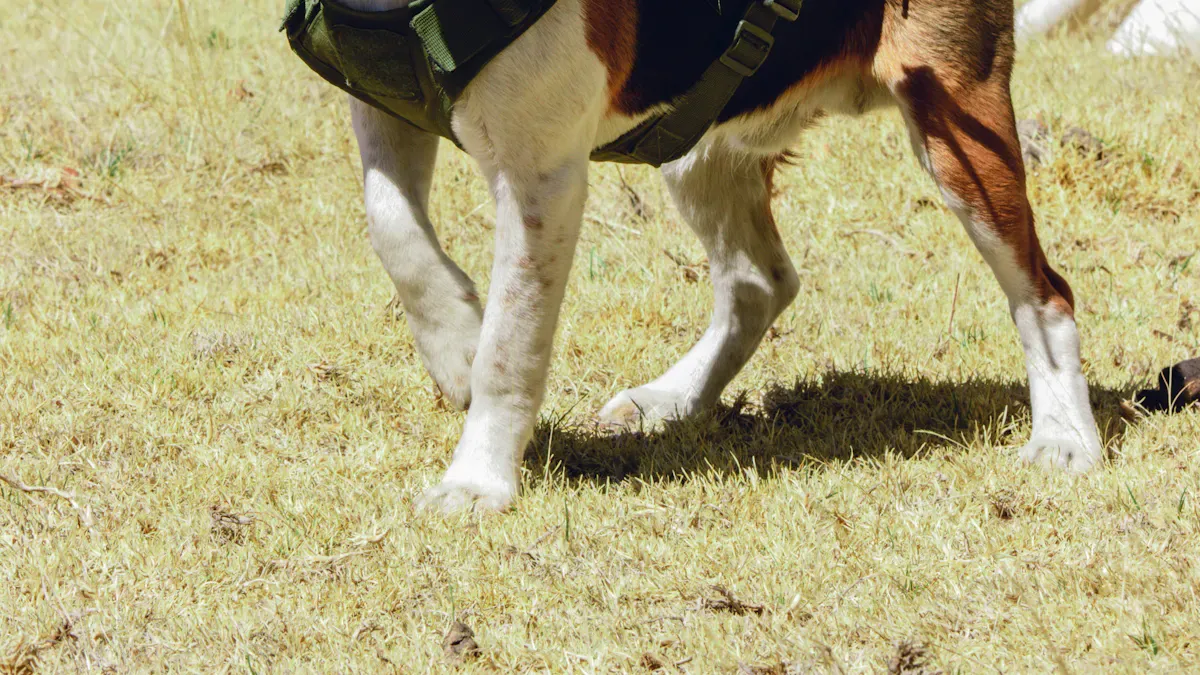
When you use a no-pull dog harness, the first sign of a mismatch is usually in movement, not hardware. Dogs often tell you something is off by shortening the stride, resisting one direction, or constantly rubbing at the chest area.
| Symptom | Likely Cause | Fast Check | Fix |
|---|---|---|---|
| Harness twists | Uneven adjustment or wrong chest shape match | Check both sides after a few turns and leash changes | Even out the straps or switch to a better-matched shape |
| Short stride | Front area is too high, too tight, or restrictive | Watch the dog walk away from you on a loose leash | Refit the harness or use a less restrictive design |
| Reluctance to walk | Pressure, rubbing, or too much correction feeling | Look for red spots and compare with a simpler harness | Stop using the setup for that walk type and reassess |
| Excess scratching | Rubbing under the leg or chest irritation | Check the coat and skin after the walk | Adjust position, padding, or harness style |
| Dog backs out or slips loose | Poor fit or wrong size | Test backward tension in a safe area | Refit immediately and do not rely on it in busy areas until secure |
Note: If your dog shows pain, breathing trouble, or cannot move normally, stop and reassess the fit and the route. This article does not replace veterinary advice.
Common mistakes and real consequences
Many problems with a no-pull dog harness come from using the same setup for every walk without asking what the dog actually needs that day. A front-control harness can be very useful, but it becomes a poor match when the route is calm, the dog is already walking loosely, and the handler still keeps the leash short and corrective the whole time.
- Using the harness as a substitute for training can leave the dog dependent on gear changes instead of learning better leash habits.
- Ignoring rubbing, stride change, or repeated scratching can turn a fit issue into an ongoing comfort problem.
- Leaving a high-control harness on without direct supervision adds unnecessary entanglement risk.
- Assuming “more control” is always better can make sniff walks less natural and less useful as decompression time.
- Failing to recheck fit after body changes, coat changes, or strap slippage can quietly create escape or chafing problems.
You should always balance the walk goal with the gear choice. A dog that needs steering in one environment may need freedom and cleaner shoulder movement in another.
When to switch gear
Sometimes the best choice is not to quit the walk, but to change the setup or rethink which walk this harness is actually for. Look for these signs:
- The harness only feels manageable when the leash stays tight the whole time.
- Your dog cannot settle into a natural sniffing rhythm on an otherwise easy walk.
- You see repeated twisting, slipping, or strap migration during normal movement.
- The dog looks fine on short city stretches but uncomfortable on longer relaxed walks.
- The gear is worn, frayed, or no longer holds adjustment consistently.
If you notice these signs, switch to a simpler harness for relaxed walks or reserve the no-pull setup for the places where the extra control actually earns its keep. Always recheck fit before the next walk.
Tip: The right question is not “Is this a good harness?” but “Is this the right harness for this kind of walk?” That single change usually leads to a much better setup decision.
You should use an anti dog pulling harness when the route, distraction level, or dog’s behavior makes extra steering genuinely useful. For relaxed sniff walks, comfort, movement, and leash freedom matter more. The best setup is the one that matches the walk in front of you, not the one with the strongest control features on paper.
FAQ
What should you do if your dog resists wearing a harness?
You can introduce the harness slowly. Let your dog inspect it first, reward calm interest, and keep the first few sessions short. Resistance often gets worse when the dog only experiences the harness right before a stressful walk.
How do you know if your harness is too restrictive for sniff walks?
Watch your dog’s stride, turning pattern, and sniffing rhythm. If your dog keeps getting redirected off scent lines, moves stiffly, or seems reluctant to arc naturally from side to side, the harness may be too control-heavy or fitted poorly for that walk style.
Are the best no-pull harnesses good for every walk?
No. Even a well-made no-pull harness is still a tool for a specific job. It often works best for stronger pullers, busier routes, or training sessions. On relaxed walks, a simpler harness may give your dog a more natural and comfortable experience.
Note: Always check with your veterinarian if your dog shows pain, stress, or trouble moving. This advice does not replace professional care.






