
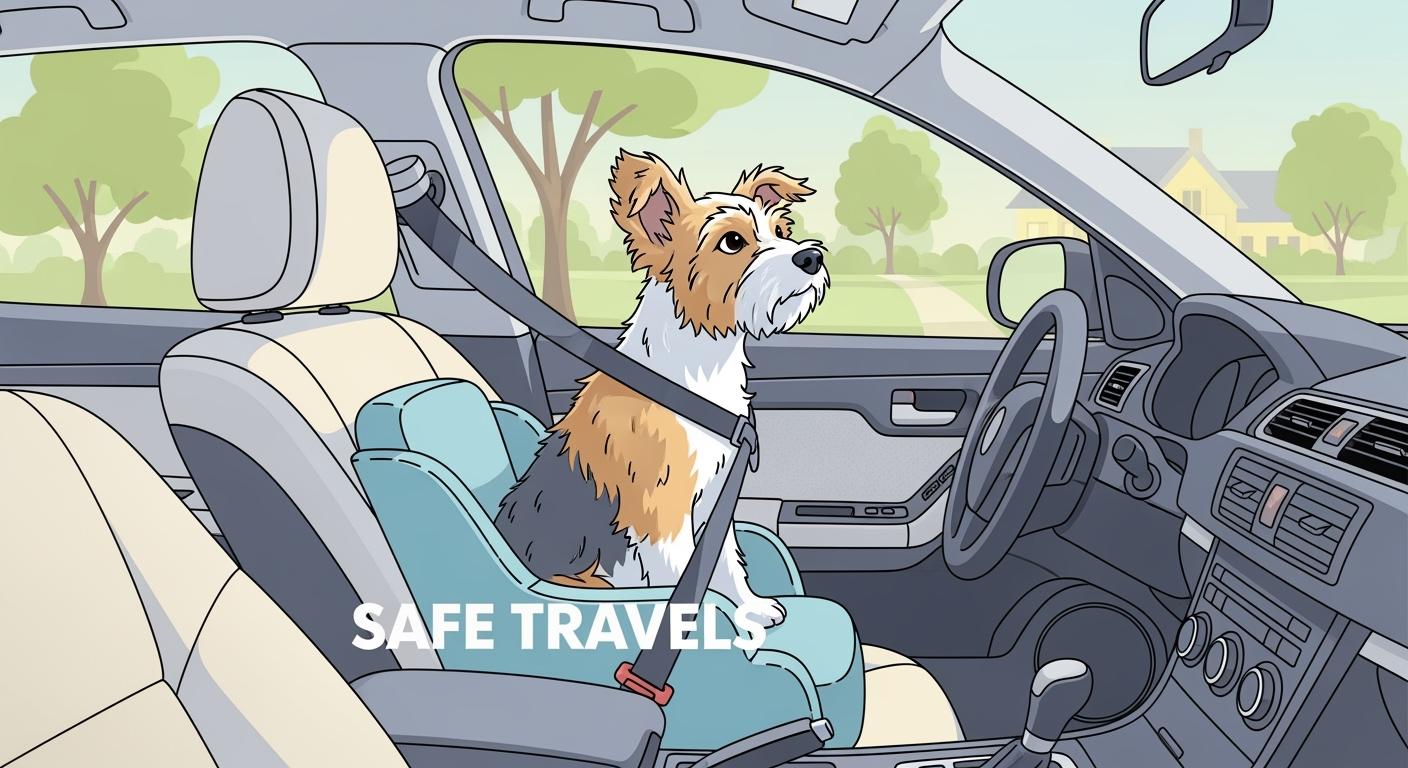
You do not choose a booster dog car seat just to raise your dog higher. The real question is whether the extra height helps this dog settle or makes balance and motion feel worse. Some dogs relax once they can see out and stop scrambling for a view. Others do better lower, where they can curl up, brace less, and ride through turns with less body movement. The safer baseline is simple: use the rear seat, secure the dog with a body harness rather than a collar, and judge the setup by how the dog behaves after the car starts moving, not by whether the seat looks cozy while parked.
Key Takeaways
- Choose the right car seat based on your dog’s comfort. A booster seat can work for dogs that settle once they can see out, while a lower bed often suits dogs that want to lie flatter and move less.
- Always secure your dog with a body harness attached to the seat setup. A higher seat is only helpful if the restraint stays controlled and the dog stays supported.
- Watch the first few minutes of the ride closely. If your dog stays restless, drools, braces through turns, or never settles, the higher position may be making the trip worse rather than better.
Booster Dog Car Seat vs. Lower Car Bed
When a Booster Car Seat Helps
You may notice that your dog gets more restless when they cannot see anything around them. In that case, a booster dog car seat can help by lifting the dog high enough to reduce the constant urge to stand up, climb, or search for a view. Small dogs often benefit most when the seat adds visibility without leaving them wobbling above the seat line. A booster can also work well when the sides feel supportive, the base stays stable through turns, and the harness connection lets the dog sit naturally instead of pulling the body into an awkward position.
Tip: Height helps only when the dog becomes calmer because of it. If a better view leads to more leaning, bracing, or pacing, the higher setup is solving the wrong problem.
When a Lower Bed Is Better
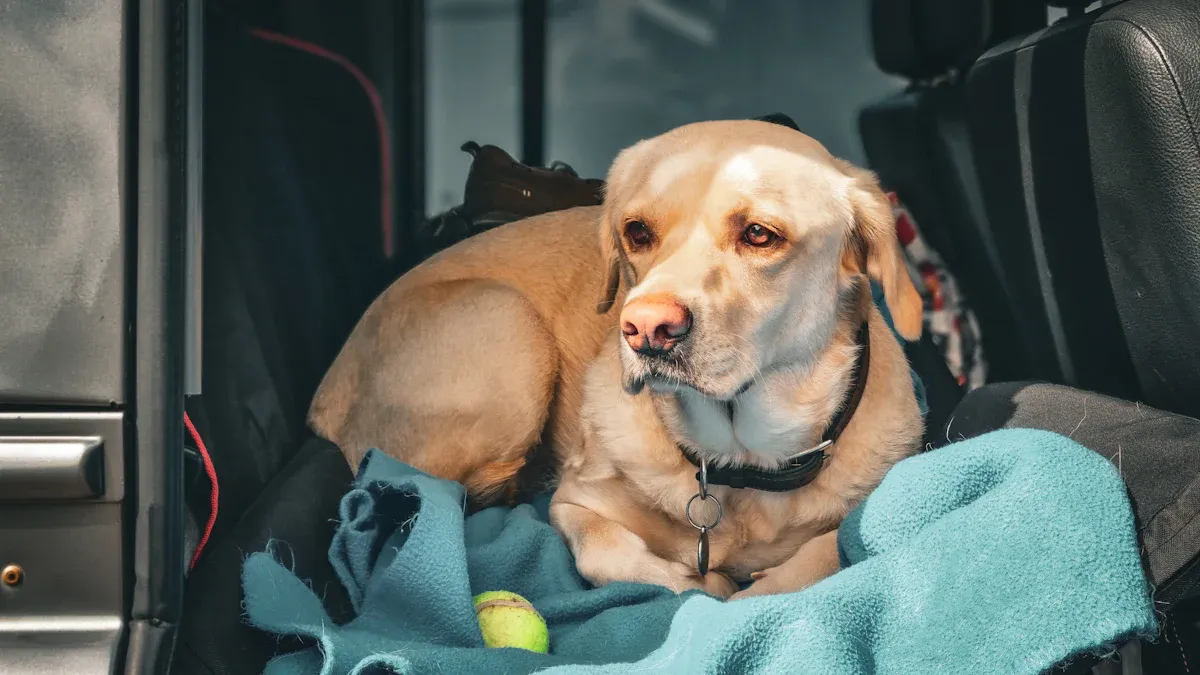
Some dogs do not want more height. They want less movement. A lower car bed often works better for dogs that curl up, prefer to lie flatter, feel uneasy when lifted, or show early motion discomfort in a booster. It can also suit dogs that need easier entry and exit or dogs that settle faster when the car environment feels more contained and less visually busy.
Note: If your dog seems calmer once they are lower and more tucked in, that does not mean they “dislike travel.” It usually means they cope better with less motion and less visual stimulation.
Comparison Table: Booster, Bed, Carrier
You have several ways to set up car travel. The best one depends less on the label and more on how your dog handles movement, visibility, and restraint.
| Type | Use Case | Main Benefit | Main Watchout | Who Should Skip It |
|---|---|---|---|---|
| Booster Dog Car Seat | Small dogs that settle better with a view and stable side support | Can reduce view-seeking restlessness | May add anxiety, sway, or motion discomfort | Dogs that brace through turns, drool early, or never settle higher up |
| Lower Car Bed | Dogs who prefer lying flatter and easier entry | Less body movement and easier resting posture | Less outside visibility and less containment | Dogs that stay frustrated when they cannot see out at all |
| Enclosed Carrier | Dogs that settle better in a contained, den-like space | More controlled environment and less visual overload | Can feel warm or restrictive if the fit and airflow are poor | Dogs that panic in enclosed setups or need more room to reposition |
You can see booster seats help only one kind of problem well: dogs that become calmer once they can see and do not lose stability at that higher position. Lower beds and enclosed carriers solve different problems, so it is better to match the seat style to the dog’s actual travel pattern than to assume “higher” always means “better.”
Safety Reminder: Keep dog car seats in the back seat and use a body harness restraint. If you are comparing products, independent crash testing matters more than extra height or marketing language alone.
Comfort, Positioning, and Everyday Use
You want your dog to feel comfortable while traveling, but comfort in the driveway is not the same as comfort once the car is in motion. A useful booster seat keeps your dog high enough to see without forcing the body into a half-stand. A useful lower bed lets the dog lie down without sliding into a corner every time you brake. A useful carrier keeps the dog contained without turning the trip into a warm, cramped box. The right choice is the one your dog can actually ride in without repeated correction.
Non-medical reminder: If your dog repeatedly shows motion discomfort, breathing stress, or trouble getting comfortable during rides, talk with your veterinarian instead of assuming seat height alone will fix it.
Elevated Dog Car Seats: View, Movement, and Settling
Elevated Design and Visibility Benefits
You may want your dog to enjoy the ride more by seeing outside. An elevated dog car seat can help when lack of visibility is what keeps the dog fidgeting. Some small dogs stop popping up, twisting around, or pushing at the seat edge once the outside view is easier to access. In those cases, the extra height can make the ride feel less confusing and less frustrating. A booster works best when the base stays planted, the sides help contain the body, and the harness connection does not pull the dog off balance.
Tip: Strong support matters more than a dramatic lift. A slightly raised seat that stays stable usually works better than a higher seat that lets the dog sway through every turn.
Motion, Restlessness, and Settling Issues
Not all dogs like sitting up high. A higher seat can also make movement feel more obvious. Some dogs start lip licking, shifting, whining, drooling, or leaning into the sides because they are working harder to stay balanced. Others seem interested in the window but never fully relax, which is a different problem from being calmly alert. A dog looking outside is not automatically comfortable if the rest of the body stays tense.
- An elevated seat can help dogs that were restless only because they could not see.
- The same elevated seat can make some dogs feel less stable, especially during braking, lane changes, and turns.
- If height adds more movement than calm, the better setup is often lower, flatter, or more enclosed.
Note: Excessive panting, continued restlessness, or excessive drooling are not small “adjustment signs” to ignore. They are reasons to stop and reassess the setup.
Pass/Fail Checklist: Is Your Dog Comfortable?
Use this checklist to judge what is happening once the car is actually moving:
| Check Item | Pass Signal | Fail Signal | Fix |
|---|---|---|---|
| Dog sits or lies calmly | Relaxed body and steady breathing after the car gets moving | Whining, body tension, repeated repositioning, or lip licking | Shorten the ride and reassess whether height is helping or adding stress |
| Dog looks out with interest | Watching quietly without constant leaning or pawing | Leaning hard, climbing the side, or bracing through turns | Lower the setup or switch to a style with more containment |
| Harness fits and restrains well | Body stays supported without awkward pulling | Harness pulls up, twists, or makes the dog sit strangely | Refit the harness and check restraint length and anchor point |
| Seat stays stable | No wobble, slide, or tip through normal driving | Seat shifts, tips, or rocks during braking and turns | Reinstall before using again |
| Dog settles after the start of the trip | Calms within a short part of the drive | Stays restless, drools, or whimpers through the ride | Try a lower bed or a more contained carrier instead of pushing the booster |
| Padding and side support | Dog can rest against the sides without collapsing posture | Dog stands, circles, or avoids resting on the surface | Reassess support depth and whether the seat shape matches your dog |
Troubleshooting Table: Common Problems and Fixes
If your dog seems worse in an elevated seat, use this table to check what is actually happening:
| Symptom | Likely Cause | Fast Check | Fix |
|---|---|---|---|
| Excessive drooling | Motion discomfort, anxiety, or heat building during the ride | Look for panting, lip licking, and failure to settle after a short pause | Stop the drive, cool the dog if needed, and reconsider a lower setup |
| Whining or whimpering | Instability, stress, or poor body support | Watch whether the dog braces through turns or pulls away from the side walls | Reinstall the seat or switch to a flatter, steadier option |
| Freezing or refusing to reposition | The seat feels unsafe or the harness is pulling awkwardly | Check whether the dog stays rigid even when the car is smooth and quiet | Recheck harness path, restraint length, and seat depth |
| Vomiting | Stronger motion sickness or escalating travel stress | Look for earlier drooling, restlessness, and failure to relax | End the trip if needed and discuss recurring motion sickness with your veterinarian |
| Restlessness | The dog wants a better view or the seat feels too unstable to rest in | See whether the dog is scanning calmly or constantly trying to stand and rebalance | Decide whether the dog needs more controlled height or less height overall |
| Leaning hard into the side or window direction | The dog is using the seat walls to brace | Watch what happens during ordinary turns and stops | Reduce motion demands with a lower, more stable travel style |
- Common causes are motion discomfort, anxiety, heat buildup, and unstable installation.
- A stable base and a correctly fitted harness usually matter more than extra padding alone.
- If you keep making the same fix every ride, the issue is often the seat style, not a one-time setup mistake.
Step-by-step: Watch what happens after the car starts moving, through the first turn, and after the first stop. If the dog still has not settled by then, the setup likely needs adjustment instead of more time.
Safety Signs and Common Mistakes
Spotting Discomfort in Booster Car Seats
You want your dog to ride calmly, but discomfort often shows up before a dog becomes obviously distressed. Watch for repeated reluctance to get into the seat, whining, panting that keeps rising, drooling, lip licking, shaking, trying to climb out, or leaning and pushing against the restraint during turns. A hunched back, wide eyes, or a tight face can also mean the dog is enduring the ride rather than coping well with it.
If your dog keeps pushing forward, leaning hard, or cannot find a stable position even on an ordinary drive, that is useful information. A booster is supposed to make the dog more settled, not turn the whole trip into constant balancing work.
Common Mistakes and Real Consequences
Many booster-seat problems come from setup mistakes that look small until the car moves. The table below shows some of the most common ones and what they lead to:
| Common Mistakes | Consequences |
|---|---|
| Choosing the wrong size | Too large lets the dog slide and brace. Too small leaves the dog crowded and unable to settle normally. |
| Leaving slack in the restraint | The dog gets more movement during sudden stops and may be thrown farther than expected. |
| Bad installation angle or loose attachment | The seat becomes less stable, which makes the dog work harder to balance throughout the ride. |
| Using a loose harness or clipping to a collar | The restraint can pull poorly, shift badly, or increase injury risk if the dog is thrown forward. |
| Using the front seat | Airbags increase risk for small dogs, even when they seem restrained. |
| Using long extension tethers or zipline-style add-ons | The dog gets too much forward movement, which can make crash forces and restraint failure worse. |
Rear-seat placement and a properly fitted harness are the safer baseline. Height only becomes an advantage after those basics are already right.
When to Switch Seat Styles for Safety
If your dog keeps feeling nervous, braces through turns, never settles, or gets sick in a high dog car seat, it is usually time to try a lower bed or a more contained carrier. You should also switch if the seat never feels stable, the harness pulls your dog into an odd posture, or the dog has to use the seat walls just to stay balanced.
The best seat style is the one that gives you a calmer, more controlled ride with fewer corrections. If a booster only works when you keep “fixing” it mid-trip, that is already a sign it may not be the right choice for this dog.
Tip: Check all straps, harness paths, and seat stability before every trip. Small installation errors matter much more once the car starts turning and braking.
A booster dog car seat helps when your dog becomes calmer because the extra height reduces frustration without adding instability. It stops helping when the higher position turns the ride into more balancing, more drooling, more bracing, or more anxiety. The right answer is not always “higher.” It is the setup that keeps your dog restrained, supported, and able to settle in the rear seat.
FAQ
How do you know if your dog prefers a booster seat or a lower bed?
Watch the first few minutes of the ride. If your dog relaxes, watches quietly, and settles into the seat, a booster may be helping. If your dog drools, braces, hides low, or keeps shifting for stability, try a lower bed.
Can you use a booster dog car seat for every trip?
You can use a booster seat only when the setup stays stable and your dog keeps coping well in it. A dog that never settles in a booster should not be kept there just because the seat fits the car.
What should you do if your dog gets motion sickness in a booster seat?
Try a lower, flatter setup first and shorten the next test drive. If motion sickness keeps returning, stop assuming height is the solution and talk with your veterinarian about the pattern.
Note: This FAQ is not a substitute for veterinary advice. If your dog has persistent motion sickness, breathing stress, or travel anxiety, ask your veterinarian for guidance.






