
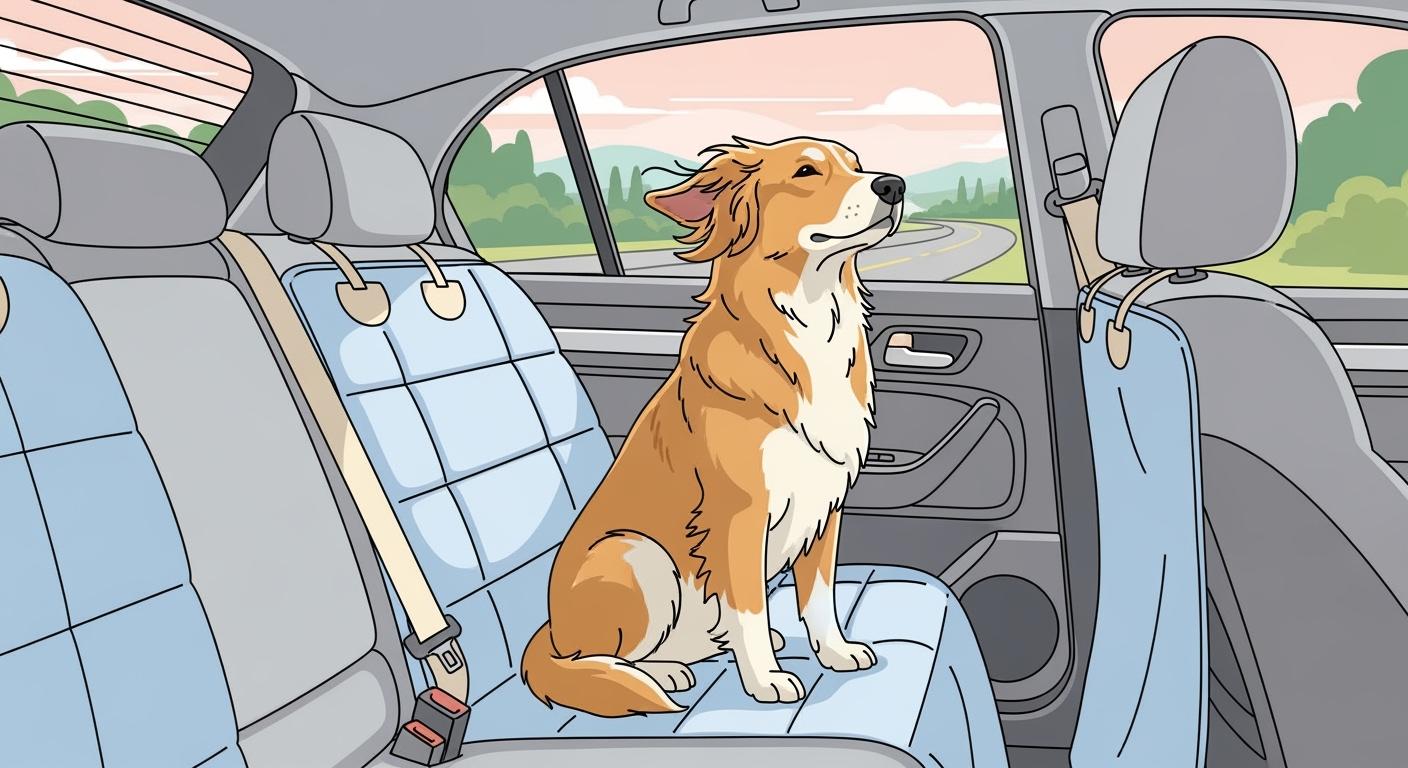
Choosing a car dog seat cover for longer rides usually means weighing two things at once: how cool the surface stays after the car has been sitting in the sun, and how quiet it feels under your dog’s paws when the road gets bumpy. A cover can look sturdy on the shelf and still feel sticky on a warm afternoon, or rustle just enough to keep an anxious dog from settling. The right pick is the one that matches your dog’s temperament and the climate you usually drive in.
Note: A cooler or quieter cover helps with comfort, but it works best when the fit, anchoring, and your dog’s restraint setup all match each other.
Key Takeaways
For longer rides, most dogs settle better on a breathable seat cover that does not trap heat or rustle under their paws. Match the fabric to your climate and your dog’s noise sensitivity, then test it after the car has been in the sun before any long trip.
Why Some Covers Feel Wrong on Long Rides
Two issues show up most often on longer trips: heat buildup and surface noise. Both can quietly ruin a ride even when the cover looks fine on paper.
Heat and Sticky Surfaces
Heat buildup matters because dogs cool themselves through panting and paw pads, and a hot vinyl surface blocks both. Non-perforated synthetics often hold warmth and feel tacky after sun exposure, while perforated or woven fabrics usually breathe better. The table below compares the most common surface types for warm-weather rides.
| Material | Feel After Sun | Airflow | What to Watch |
|---|---|---|---|
| Perforated eco leather | Cooler, low tack | Moderate to good | Can scratch under claws |
| Mesh and woven fabric | Coolest, dry feel | High | May let spills soak through |
| Vinyl or coated synthetic | Hot and sticky | Low | Often traps heat on warm days |
Noise and Rustling Under Paws
Surface noise matters because dogs notice every shift and crinkle inside an enclosed cabin. A loose, plasticky cover can sound a bit like a shopping bag every time your dog repositions, and noise-sensitive dogs often start bracing or standing instead of settling. Quilted or padded surfaces usually dampen paw sound; thin coated fabrics usually amplify it.
Reading Your Dog’s Reactions
If your dog shifts often, stands during turns, or braces against the door, the cover is generally part of the problem. Bunching, sliding, and poor fit all reduce stability, which a dog will read as “this surface is not safe to lie down on.”
Cooler Fabric vs Quieter Surface: How to Think About It
Neither cooler nor quieter is universally better-the right pick depends on what usually goes wrong for your dog on a long ride. A heat-stressed dog needs airflow first; an anxious dog needs a surface that does not crinkle. Use the framing below as a starting point, then test in your own car.
Material Comparison
Use this table as a starting point for matching surface type to ride conditions, not as a ranking.
| Material | Cooler Feel | Quieter Surface | Best Use Case | Main Limitation |
|---|---|---|---|---|
| Mesh or breathable fabric | High | Medium | Hot climates, long highway rides | Lets spills through if unlined |
| Quilted cotton padding | Medium | High | Noise-sensitive dogs, daily commuting | Can trap heat in summer |
| Oxford fabric | Medium to high | Medium | Active dogs, mixed weather | Can feel stiff before break-in |
| Polyester with PVC or TPU coating | Low | Medium | Wet, muddy trips | Often hot and tacky in sun |
| Perforated eco leather | High | High | Style-focused setups, mild climates | Can scratch under heavy claws |
Tip: Park the car in the sun for about 20 minutes, then press your palm flat on the cover for a few seconds. If it feels uncomfortable to you, it generally feels worse to your dog.
When Cooler Fabric Wins
Airflow matters most when your dog already runs warm or your drives are long and sunlit. Breathable fabrics wick moisture and let body heat escape instead of pooling under your dog’s belly. For most dogs in warm climates, this is usually the first variable to fix. The trade-off is spill resistance-a thin mesh top often needs a waterproof layer underneath for messy days.
When a Quieter Surface Wins
Sound dampening matters most when your dog is noise-sensitive, older, or new to car travel. Quilted padding and perforated eco leather absorb paw impact and reduce the rustle that often keeps anxious dogs from lying down. Padding also adds joint cushioning, which often helps senior dogs on longer trips. The trade-off is summer heat-thicker padding usually traps more warmth than open mesh.
Middle-Ground Setups
Many dogs do best on a hybrid: a quilted base with mesh inserts, or Oxford fabric with light padding. These usually balance airflow and quiet well enough for mixed conditions, as long as the cover fits snugly so it does not bunch and start crinkling on its own. For most owners who drive in changing weather, a hybrid is often the safer first pick than committing to one extreme.
Note: No single cover suits every dog. A short test ride after the car has warmed up tells you more than any spec sheet.
Common Mistakes With Surface Feel and Fit
Most cover problems on long rides trace back to a handful of fit and material errors. They are easy to spot once you know what to look for.
- Blocking seat belt buckles or tether anchors
- Choosing a coated fabric for a hot-climate dog
- Skipping the sun touch test before a long trip
- Letting the cover slide because anchors are not tightened
- Ignoring rustle noise during the first short ride
Tip: The most common mistake is picking a waterproof coated cover for a dog that overheats easily-the coating usually solves a cleanup problem while creating a comfort one.
Pre-Trip Pass/Fail Checks
Run this quick check before any longer ride. It catches the issues that turn into restless behavior 30 minutes down the road.
| Check | Pass Signal | Fail Signal | Fix |
|---|---|---|---|
| Cover stays in place | No shifting on a tug | Slides or bunches | Re-anchor and tighten straps |
| Buckle access | Easy to reach by feel | Covered or pinched | Reinstall to expose buckles |
| Surface temperature | Cool to the palm after sun | Hot or tacky | Switch to a more breathable layer |
| Surface noise | Quiet under paw shifts | Crinkles or rustles | Tighten fit or try padded fabric |
| Dog’s posture | Lies down within minutes | Stands or braces | Try a quieter or cooler cover |
Troubleshooting on the Road
| Symptom | Likely Cause | Fast Check | Fix |
|---|---|---|---|
| Dog slips or stands | Slick or loose surface | Tug the cover by a corner | Add non-slip backing or tighten fit |
| Dog pants heavily | Heat buildup under the body | Palm test after sun | Switch to breathable fabric |
| Dog refuses to lie down | Noise or instability | Listen during a slow turn | Try padded or quilted surface |
| Mess soaks through | No waterproof layer | Drop a teaspoon of water | Add a waterproof liner underneath |
Disclaimer: A seat cover is a comfort and protection layer, not a restraint. For travel safety, always pair it with a crash-tested harness or carrier and keep buckles and tether anchors clear.
What to Record Before Your Next Long Trip
A short log makes the cooler-vs-quieter decision easier than guessing. Track a few rides and the pattern usually shows itself.
Record for 3 short rides before a long trip: cover surface temp after sun (cool / warm / hot), audible rustle (none / some / constant), minutes until your dog lies down, and any standing or bracing during turns.
Recommended Setup by Dog Type
| Dog Type | Surface to Try First | Key Consideration |
|---|---|---|
| Heat-sensitive or thick-coated | Mesh or perforated eco leather | Airflow before padding |
| Anxious or noise-sensitive | Quilted cotton | Snug fit to avoid rustle |
| Senior or joint-sore | Padded Oxford or quilted hybrid | Cushion plus stable base |
| Active, messy, all-weather | Oxford with waterproof liner | Cleanup without full coating |
FAQ
How do I tell if a cover gets too hot?
Press your palm on it after the car has been parked in the sun-if it feels uncomfortable to you, it generally feels worse to your dog.
Can most car dog seat covers go in the washing machine?
Most fabric covers are machine washable, but always check the care label before the first wash.
What if my dog keeps slipping on the cover?
A non-slip backing and a snugger fit usually solve it without changing the surface material.
Cooler fabric or quieter surface-which should I pick first?
Pick whichever problem your dog shows first, since heat stress and noise anxiety usually need different fabrics.
Note: This FAQ covers comfort and surface choice. It does not replace veterinary advice when restlessness in the car may be linked to motion sickness, pain, or ongoing anxiety.






