
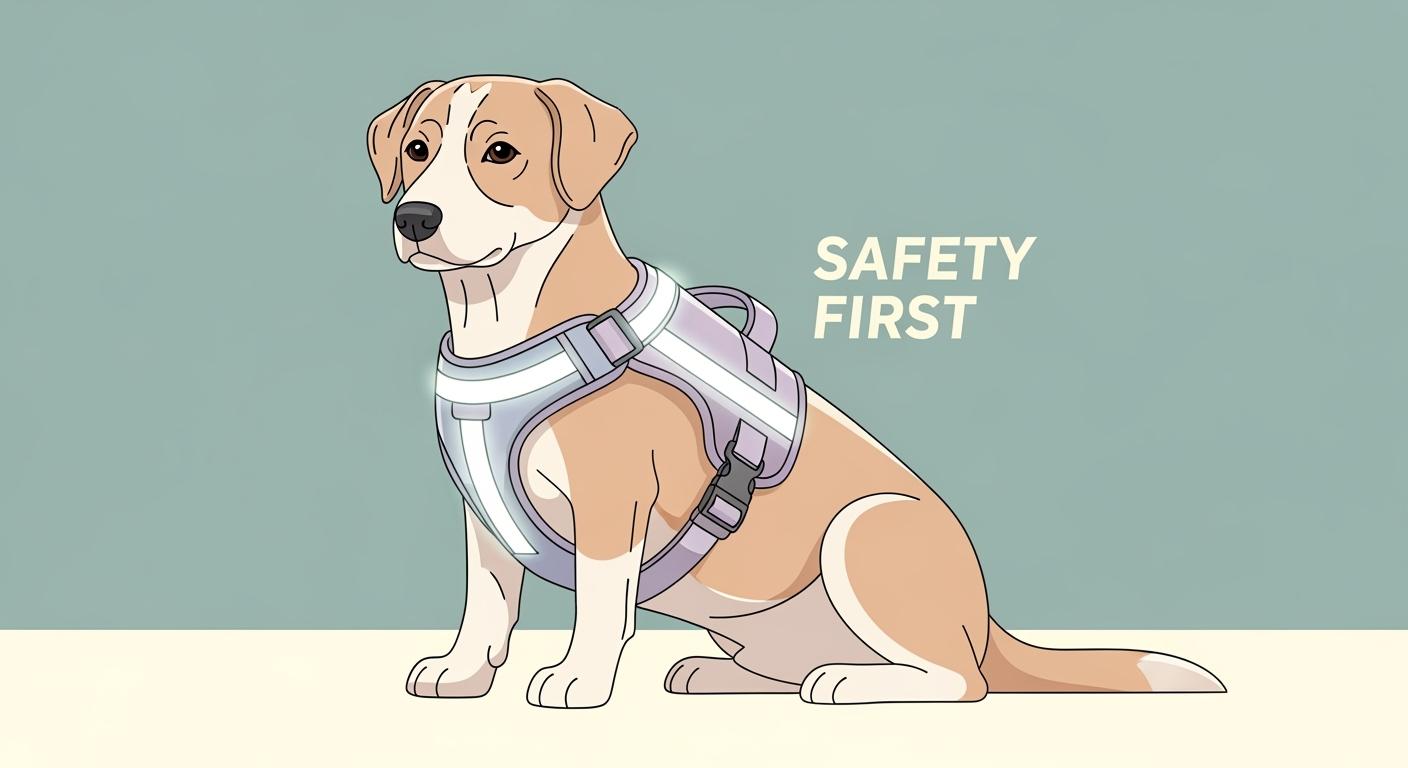
A reflective dog harness does not fail only because the reflective strip is too small. It often fails because the visible area hides under fur, sits too low on the body, twists after the dog pulls, or adds too much bulk for warm walks. The better choice is not simply the widest reflective panel. It is the harness that keeps side visibility clear while still allowing normal shoulder movement, stable strap position, and enough airflow for the walking conditions.
Note: Reflective material only helps when light hits it from the right angle. A “high-visibility” label on the box does not guarantee your dog is actually visible from a moving car.
Key Takeaways
Wider reflective panels usually win for night and low-light walks, while low-bulk cuts are often the better call for warm weather or short daytime outings. Either way, fit comes first-a slipping harness hides its own reflective zones. Browse the full dog harness collection with both visibility and fit in mind, not just one.
Why Reflective Visibility Often Fails in Real Walks
Most reflective harnesses look great in the product photo and disappoint in the driveway. Three things usually explain the gap between catalog and curb.
Narrow Trim and Hidden Strips
Trim width matters because reflective material only bounces light back from a limited angle. A thin piped edge often catches headlights for a moment from straight ahead and goes dark from the side, while a wider panel stays lit across more of your dog’s outline.
Coat Coverage and Strap Placement
Coat thickness matters because long fur drapes over straps and buries any reflective surface sitting underneath. On dense or fluffy coats, a wider panel that rides on top of the back usually stays visible, while a low belly strip generally does not.
Catalog Shots vs. Real Headlights
Studio lighting matters because it hits reflective fabric evenly from the front, which is almost never how a car or cyclist sees your dog. The honest test is to walk away from your car with the harness on, turn the headlights on low, and see what is actually lit up from the side and rear.
Wider Coverage vs. Comfortable Fit: How to Match It to Your Walks
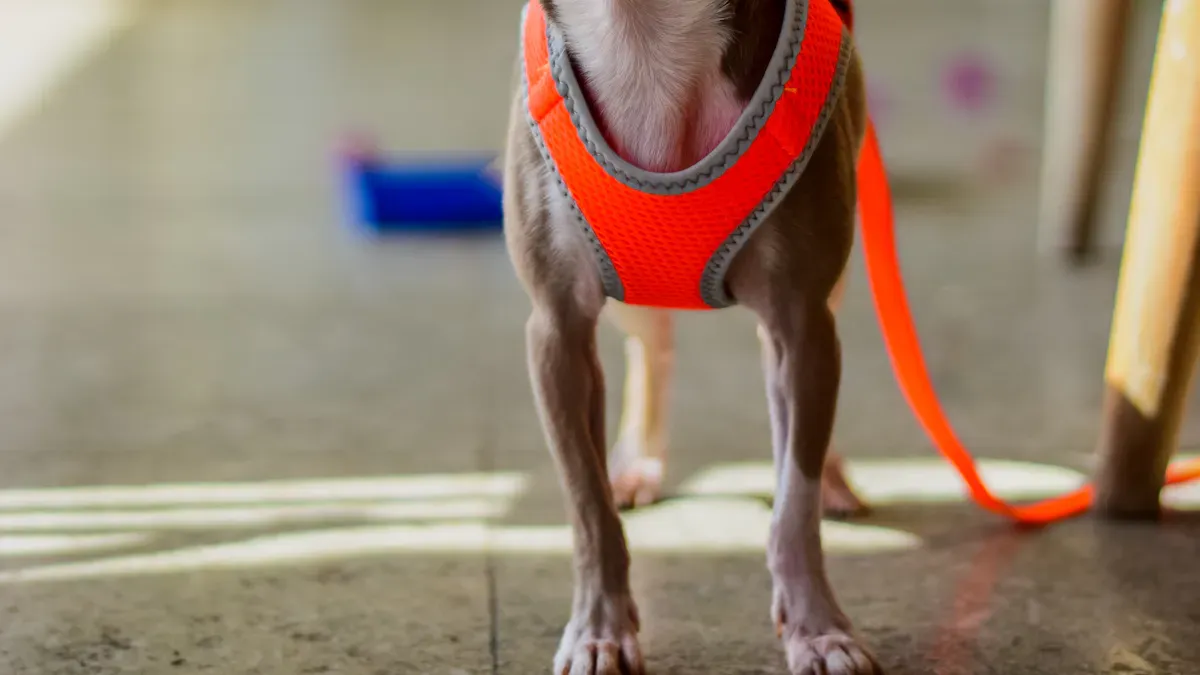
The honest comparison is not “more reflective is better.” It is “which build matches my walks.” Our harness size and material guide is a useful starting point if you are still deciding what build suits your dog’s coat and routine.
| Build Style | Reflective Coverage | Best Use Case | What to Watch |
|---|---|---|---|
| Narrow trim | Low, easily hidden | Daylight walks, short coats | Loses visibility from the sides at night |
| Wide reflective panel | High, visible from many angles | Night and dawn walks near traffic | Bulkier and warmer in summer |
| Low-bulk sport cut | Moderate, focused zones | Active dogs, warm weather | Reflective area can be too small for dark routes |
| LED-lit harness | Very high, active light | Very dark or unlit paths | Adds weight and needs charging |
For most owners, a wide reflective panel is usually the better choice when walks happen at dusk or after dark, while a low-bulk cut often makes more sense when comfort and heat are the bigger constraint.
Coat, Climate, and Route
Coat type matters because it decides whether reflective material gets to face the world at all. Thick or long coats generally need top-mounted panels; short coats can usually carry almost any reflective placement as long as it faces outward.
Climate matters because heavy padding plus a wide reflective panel can trap warmth fast. In hot weather, a lighter cut with smaller but well-placed reflective zones is usually the more comfortable trade-off.
Route matters because high-traffic streets reward maximum side visibility, while a quiet daytime park rewards range of motion. A good harness setup also depends on how you handle the leash-our harness and leash fit and length guide covers how the two work together.
Match to Walk Conditions
| Walk Type | Better-Matched Build | Why It Helps |
|---|---|---|
| Short daytime walks | Low-bulk, light trim | Comfort and freedom matter more than visibility |
| Night or dawn walks | Wide panels or LED zones | Drivers see your dog from more angles |
| Hot weather routes | Lightweight, breathable cut | Reduces heat buildup on the back and chest |
| Cold weather routes | Padded with wide reflective panels | Adds warmth and side visibility together |
| High-traffic streets | Maximum reflective coverage, secure fit | Visibility and escape resistance both matter |
Tip: Try the harness indoors first to confirm the fit, then walk it past your own car headlights on low beam. If you cannot see the reflective area clearly from the side, a driver probably will not either.
Pass / Fail Check Before Night Walks
A quick pre-walk check catches most fit and visibility problems before they matter on the road.
| Check Item | Pass Signal | Fail Signal |
|---|---|---|
| Girth strap snugness | Snug but lifts off the coat easily | Digs in or leaves visible slack |
| Neck opening | Sits above the shoulder, lies flat | Twists, slides, or rides up the throat |
| Reflective zone-front view | Clearly lit from straight on | Hidden by chest fur or strap fold |
| Reflective zone-side view | Visible outline along the body | Only a small dot visible |
| Shoulder freedom | Normal walking stride | Short or stiff steps |
Common Mistakes Owners Make
- Trusting a “reflective” label without testing it in real low light.
- Choosing a harness for the human’s outfit rather than the dog’s coat color and length.
- Letting reflective panels stay dirty-dust and oil dim them noticeably over time.
- Forgetting their own visibility on the same walk.
Tip: The single most common mistake is buying a thin reflective trim for a long-coated dog-the fur covers the strip and you end up with a dark outline at night.
Troubleshooting Visibility and Fit
| Symptom | Likely Cause | Improvement Plan |
|---|---|---|
| Reflective strips look dark | Covered by fur, dust, or oil | Hand-wash with cool water, brush coat back from panels |
| Harness twists during walks | Chest strap too loose or panel too bulky | Tighten the front strap before the belly strap |
| Dog scratches at the harness | Strap pressing on a sensitive spot | Reposition behind the elbow and recheck |
| Visible only from behind | Reflective area concentrated on the back | Switch to a cut with side panels or add a side strip |
| Dog pants on cool walks | Padded panel trapping heat | Try a lighter mesh build for warmer routes |
A Simple Visibility Log
One short note after each walk for the first week tells you more than a single test on day one.
Record for 5 walks before deciding to keep or swap: time of day, what you could see from 30 feet away, harness position after the walk, and any rubbing marks.
If the same reflective zone goes dark on three out of five walks, the placement is the problem-not the brightness.
FAQ
What should I check before using a reflective harness at night?
Test the harness outdoors in real low light and confirm you can see the reflective area from the front, side, and rear.
Is wider reflective coverage always safer?
Usually for night walks, but on hot days a lighter cut with smaller well-placed reflective zones often makes the better trade-off.
Can a reflective harness work in hot weather?
Yes, as long as you pick a low-bulk build that does not trap heat across the chest and back.
How do I keep reflective panels working over time?
Hand-wash with cool water and air-dry flat-dirt and oil dull the reflective layer faster than wear does.
Note: This FAQ covers reflective harness choice and pre-walk checks. It does not replace veterinary or behavior advice if your dog shows ongoing pain or refuses to walk.
Putting It Together
The best reflective harness is the one that matches your real walking conditions: wider panels when light is the constraint, lower bulk when heat or movement is the constraint, and a snug fit either way so the reflective material stays where it can do its job.
| Walk Profile | Recommended Setup | Key Consideration |
|---|---|---|
| Mostly daytime, warm climate | Low-bulk cut, focused reflective zones | Heat control matters more than full coverage |
| Mixed dawn and dusk walks | Wide reflective panel with breathable webbing | Side visibility matters near traffic |
| Dark, unlit routes | Wide panels plus an LED accessory | Active light covers gaps reflective fabric cannot |
Disclaimer: If your dog shows ongoing rubbing, limping, or refuses the harness after the fit looks correct, stop using it and check in with your veterinarian.






