
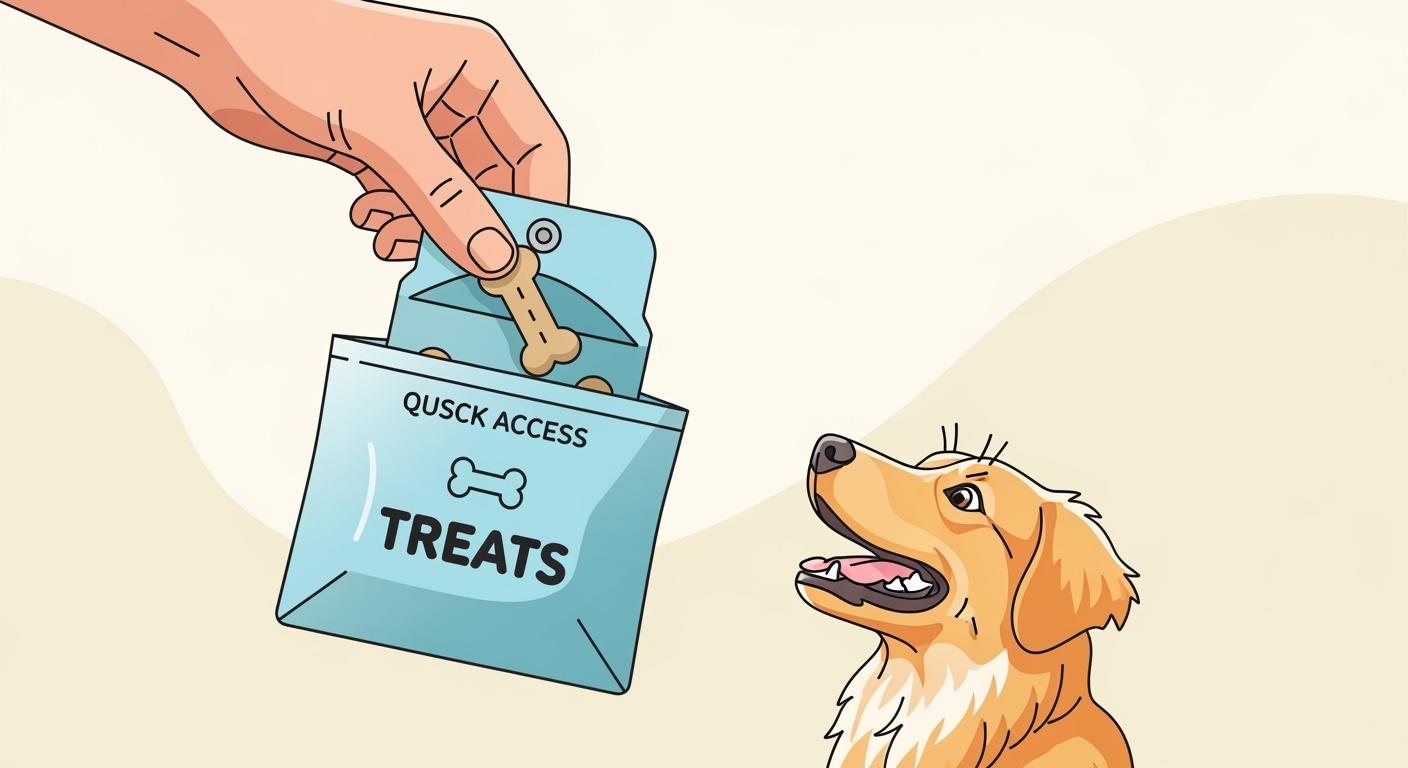
A treat bag for dog training usually fails during use because rewards are not easy to reach at the right moment. The pouch may swing while walking, sit where it blocks the leash hand, close too slowly after each reward, or get messy around the opening when moist treats are used. This guide focuses on one-hand access, stable carry, clip-on versus waist-belt use, spill control and cleanup details that affect training and walking sessions.
Key Takeaways
- Pick a dog treat pouch that opens cleanly with one hand and does not force you to stop or look down every time.
- Choose a carry style that stays stable on your body. Stable carry usually matters more than extra storage.
- Use a pouch that matches your actual routine. Short walks, longer training sessions, and multi-dog outings do not all need the same setup.
Carry Style and Treat Bag for Dog Training
Clip-on vs waist-belt dog treat pouch
You usually have two main carry styles: clip-on and waist-belt. Clip-on pouches are quicker to attach and remove. They often feel simpler for short walks or lighter clothing. Waist-belt pouches usually stay in place better and feel more predictable when the walk is longer or the dog is more active.
Each style changes how your treat bag for dog training behaves once you are moving. A clip-on pouch may shift more if it hangs from loose fabric. A waist-belt pouch may feel steadier, but only if the belt sits comfortably and the pouch stays where your hand expects it to be.
| Type of Pouch | Advantages | Disadvantages |
|---|---|---|
| Waist Clip | Quick to attach, easy to remove, light for shorter use | May shift more on loose clothing or fuller pouches |
| Waist Strap | Usually steadier, easier to keep in a predictable position | Can feel bulky or restrictive if the fit is off |
Bag swing and reward timing
Bag swing matters because it changes how easily you can reach a reward without losing rhythm. If the pouch keeps bouncing or shifting away from your hand, one-hand use becomes slower and less certain. That delay may only be a second, but it is often enough to make the whole setup feel less smooth than it should.
Stable carry usually helps more than people expect. A pouch that stays where you expect it to be lets you reach in quickly, deliver the treat, and move on without needing to re-center the bag every few minutes. Features like easier openings and cleaner closure shapes can help, but they only matter when the pouch is also staying put.
Tip: Practice opening and closing your treat bag for dog training three to five times before your first walk. That quick check tells you whether the opening really works one-handed.
At-home vs walk use
The same pouch can feel different indoors and outside. At home, you are often standing more, moving less, and working without jacket layers or extra gear. On a walk, the pouch has to work while you turn, shorten the leash, change speed, or reach around your clothing. That is where size, opening style, and carry position start to matter more.
A smaller pouch may be enough for short sessions or quick reward work. A larger one may make more sense for longer walks, multiple dogs, or when you need more than one treat type. Always test the pouch at home first, then recheck it on a real walk. If you carry moist or oily treats, empty and wipe the pouch after use.
Comparing Dog Training Treat Pouch Options
Best dog treat pouch for walks
The best pouch for walks is usually the one that stays easy to reach once the walk gets messy. A good dog treat pouch should let you grab a treat quickly, close it easily, and keep moving without the bag pulling your focus away from the dog. That usually means paying attention to three things first: one-hand opening, stable carry, and a closure that does not spill the moment the pouch tilts.
- A pouch with a cleaner opening is usually faster than one that needs two-handed adjustment.
- A pouch that stays closer to the body is usually easier to use on active walks.
- A pouch that closes neatly helps more than one with extra space you rarely use.
Clip-on, waist-belt, and mixed carry table
Carry style changes how the pouch fits, how much it swings, and whether it gets in the way of your leash hand. The table below compares the common options in more practical terms.
| Carry Style | Fit | Swing/Bounce | Leash-Hand Interference | Comfort | Fit-For | Not-Fit-For |
|---|---|---|---|---|---|---|
| Clip-On | Small and simple | Can swing more on loose clothing | Usually low if placed well | Light for short use | Short walks, lighter sessions | Long outings, heavier loads, bulky clothing |
| Waist-Belt | Adjustable and more stable | Usually less bounce | Usually low when positioned well | Steadier for longer use | Longer walks, active dogs, repeated rewards | People who dislike belt carry or want minimal gear |
| Mixed Carry | Flexible placement | Depends on setup | Can get in the way if overfilled or badly placed | Useful when routines change often | Multiple dogs, changing training setups | Quick, simple daily outings |
Comfort and usability judgments
You want a dog treat pouch that feels normal after a few minutes, not one that keeps reminding you it is there. A good pouch should not keep hitting your leg, collapsing inward, or making you reposition it every time you reach for a reward. Comfort matters, but only when it supports easy use. A very soft pouch that folds shut on itself can be less practical than a simpler pouch that keeps its opening shape.
A treat bag should also stay easy to manage once it has real treats inside. Some bags feel tidy when empty and much less usable once moist treats, crumb dust, or a fuller load change how the opening behaves.
Tip: Open and close your dog treat pouch several times before your first walk, then repeat the same check once it actually has treats inside.
You may find that a silicone dog treat pouch works better for moist treats because it is easier to wipe out. Always empty and clean the pouch after using sticky or oily rewards.
Common Mistakes with Best Dog Training Treat Pouch
Frequent carry errors
Most treat-pouch problems are simple. The pouch sits too far back to reach quickly. It hangs too loose and bounces. The opening looks easy until you try to use it one-handed. Or the closure works for dry treats but not once crumbs and residue build up. These issues are small, but they are the reason a pouch that looked good online ends up feeling annoying outside.
- Choosing storage size before checking one-hand access
- Letting the pouch hang too loose on walks
- Using a carry position that interferes with leash handling
- Ignoring residue buildup that makes the opening slower and messier
Pass/Fail Checklist Table
Check your setup before each walk. Use this table to catch obvious problems quickly.
| Check Item | Pass Signal | Fail Signal | Fix |
|---|---|---|---|
| One-hand access | Opens and closes cleanly without looking down much | Needs both hands or repeated correction | Reposition the pouch or switch opening style |
| Carry stability | Pouch stays where you expect it | Swings, bounces, or rotates | Tighten the carry or change carry style |
| Leash-hand clearance | Pouch does not block or bump your leash hand | It gets in the way during turns or shorter leash moments | Move the pouch to a cleaner position |
| Closure and spill control | Treats stay in place during normal walking | Treats spill, stick, or the closure stays partly open | Clean the pouch and recheck the closure |
| Cleanliness after use | Pouch empties and wipes down easily | Residue builds up and changes how it opens | Clean after each session, especially with moist treats |
Troubleshooting carry issues
If the pouch still feels wrong on walks, use this table to narrow down the problem faster.
| Symptom | Likely Cause | Fast Check | Fix |
|---|---|---|---|
| Pouch swings or bounces | Loose fit or a carry style that does not suit the walk | Walk a short loop and watch movement | Adjust placement or switch to a steadier carry |
| Opening feels slow in use | Closure design or residue buildup | Open it several times with treats inside | Clean it or change opening style |
| Treats spill or stick | Poor closure or dirty interior | Check after a normal walk | Clean the pouch and inspect closure shape |
| Pouch blocks leash hand | Wrong side or wrong carry height | Notice where your hand catches on the pouch | Move it to a cleaner access point |
Tip: Test your dog treat pouch at home first, then recheck on a real walk. A setup that works only indoors is not really solved yet.
You support smoother reward delivery with the best dog treat pouch, but the pouch still needs to suit your routine. Try different carry styles and practice one-hand access until the bag feels like part of the walk instead of another thing to manage.
Choosing the right treat bag for dog training means finding a pouch that opens quickly, stays stable, and does not interfere with the rest of the walk. Test the setup at home and outside, pay attention to swing and closure speed, and clean the pouch often enough that the opening still works the way you expect.
FAQ
What makes a treat bag easy to use with one hand?
You want an opening that stays easy to find and easy to use without needing both hands. A pouch that keeps its shape and closes cleanly is usually easier to manage on walks.
How do I stop my treat bag from swinging during walks?
Adjust the carry position so the pouch sits closer to your body. A steadier carry style usually reduces swing more effectively than just tightening one strap.
Can I use the same treat pouch for moist and dry treats?
Yes, but moist treats usually need more frequent cleaning. A pouch that wipes out easily works better when you switch between treat types.






