
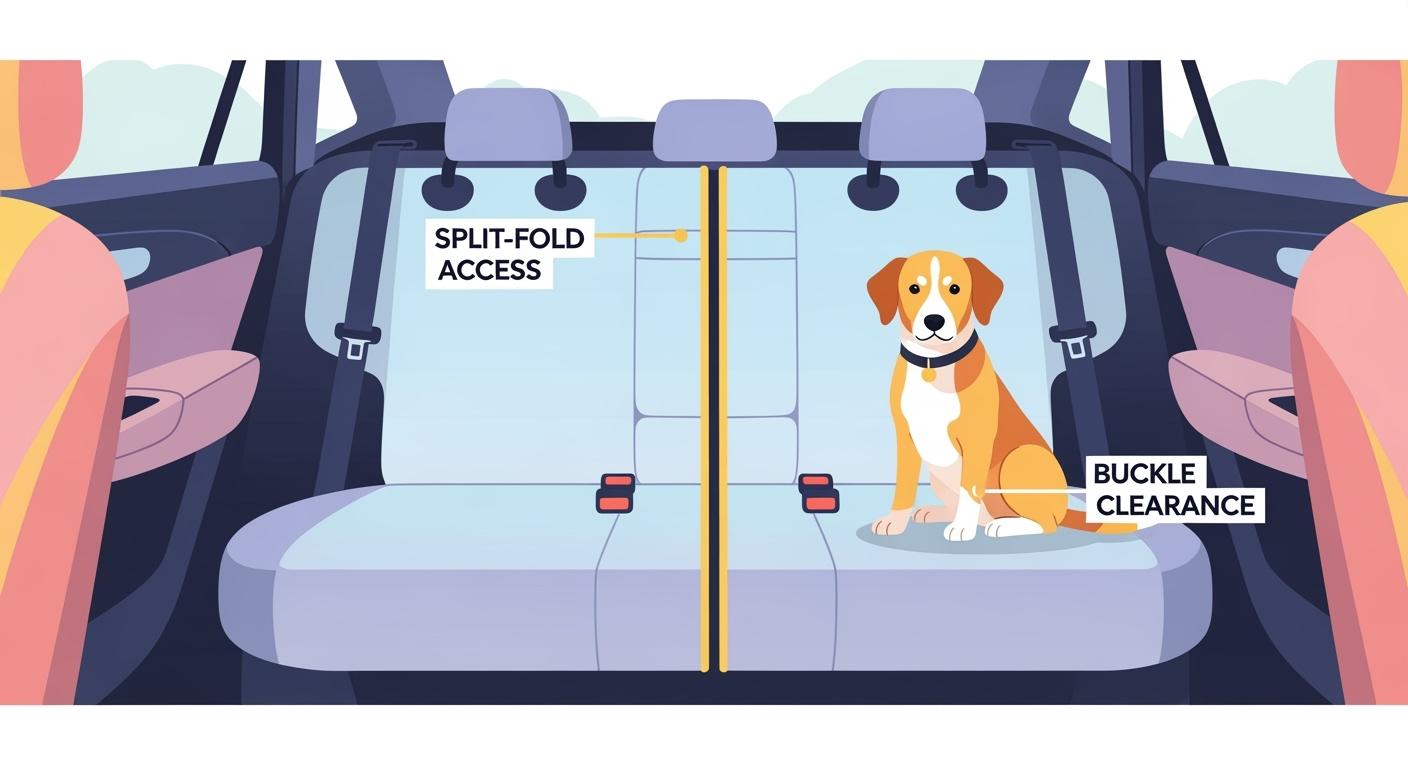
You need a dog car back seat cover that works when the back seat does more than one job. Many families switch between dogs, passengers, child seats, folded cargo space, and everyday errands. That is where split-fold access and buckle clearance stop being small details and start becoming the whole point of the cover. A cover that protects well but hides the buckles, blocks a seat split, or bunches when one side folds down quickly becomes frustrating to use. A better setup keeps the back seat flexible without turning every trip into a reinstall.
Key Takeaways
- Choose a dog car back seat cover that keeps split-fold access usable. This makes it much easier to switch between dog space, passenger space, and cargo without removing the whole cover.
- Look for clear buckle openings that stay reachable after installation, not just before the dog gets in or the seat is folded.
- Always check the fit of the cover before each trip. A well-fitted cover prevents slipping and bunching, keeping your dog steadier and the back seat easier to use.
Dog Car Back Seat Cover for Shared Use
Split-fold access in mixed-use cars
You often need to fold down part of the back seat for groceries, strollers, bags, or one extra passenger. A split rear seat cover makes that easier because it lets you use one part of the bench without stripping off the full cover first. That sounds simple, but many covers only work neatly when the seat stays flat all the time.
The better split rear seat covers use zippers, separated panels, or flexible openings that let one side move while the other side stays protected. This saves time and makes daily use much less annoying. If your cover has to be half removed every time you need the split seat, it is probably not a good match for a shared-use car.
Tip: Always check that your split rear seat cover still lies flat after one side is folded back up. Some covers look flexible until the seat returns to normal and the whole surface starts bunching.
Buckle and middle-seat access
You need to reach seat belts for passengers, child seats, or travel harness attachments without digging under a shifted panel. A good dog car back seat cover gives you clean buckle access and keeps those openings readable after installation. Look for covers with zipper or Velcro openings that stay aligned instead of drifting closed once the dog moves around.
Middle-seat access matters too. Some covers technically have buckle slots but still make the center belt awkward to reach. Others interfere with cup holders or fold-down armrests. In shared-use cars, that becomes a daily frustration, not a minor detail.
Common shared-use issues
Many dog car seat cover models work fine for dog-only setups but not nearly as well for mixed use. Some covers block seat buckles, some fight the seat split, and others look secure at first but start slipping once passengers and dogs both use the bench. Waterproofing and easy cleaning still matter, but they are not enough on their own if the layout keeps getting in the way.
Before buying, check this table of must-have features for mixed-use:
| Feature | Description |
|---|---|
| Split rear seat cover | Lets you fold down part of the bench without removing the full cover. |
| Buckle access | Keeps all seat belt openings visible and usable. |
| Waterproof | Helps protect against spills, mud, and wet coats during daily use. |
| Easy to clean | Makes reset and cleanup faster after pets, passengers, or groceries. |
| Bench compatibility | Fits your seat shape without blocking armrests, cup holders, or split sections. |
A well-designed bench seat cover supports your daily routine instead of turning shared rear-seat use into extra work.
Split-Fold, Buckle Clearance, and Best Dog Car Seat Covers
Comparison: full bench vs. split-seat covers
You should know how each dog car back seat cover works before choosing one. Full bench covers protect the entire rear seat well, but they often treat the back bench as one fixed surface. Split rear seat covers are more useful when the seat actually gets folded, shared, or rearranged during normal life. Zipper-style covers are usually the easiest to work with because they let you separate one section without fully disturbing the rest of the cover.
Here is a comparison table showing the main differences:
| Cover Type | Split-Fold Access | Buckle Clearance | Easy to Clean | Waterproof | Fit for Mixed Use | Easy Installation |
|---|---|---|---|---|---|---|
| Full Bench | ❌ | ⚠️ | ✅ | ✅ | ❌ | ✅ |
| Split-Seat | ✅ | ✅ | ✅ | ✅ | ✅ | ✅ |
| Zipper-Style | ✅ | ✅ | ✅ | ✅ | ✅ | ✅ |
Note: Zipper-style covers are usually the easiest option when you need both split-fold access and reliable buckle clearance in the same setup.
Use cases: fit and not-fit
You want your dog car seat cover to fit the way the car is actually used, not just the seat measurements. Split rear seat covers work well for families who regularly switch between dogs, passengers, and folded cargo space. Full bench seat covers can still work in flatter, simpler rear seats, but they are much less forgiving when the seat needs to stay flexible.
Common fit-for scenarios:
- Split rear seat cover fits cars with split-fold benches that get used often.
- Zipper-style cover fits cars needing frequent seat folding and quick buckle access.
- Bench seat cover fits cars with flat, non-split rear seats or dog-only use.
Not-fit scenarios:
- Full bench cover blocks split-fold seats or hides buckle openings.
- Oversized covers bunch up and make the dog or passengers sit on loose fabric.
- Covers without non-slip backing slide on leather or smoother seats and feel unstable.
Tip: Always measure your bench and check the seat split before buying. A cover that is “close enough” often becomes the one that keeps drifting out of position.
Tradeoffs: bunching, buckle blockage, space loss
You face tradeoffs when picking the best dog car seat covers. More coverage can mean more protection, but it can also mean more extra fabric to manage. That is where bunching starts. Buckle blockage happens when the cover drifts, the slot placement is wrong, or the fabric collapses back over the buckle opening after the dog moves. Space loss happens when the cover sags, pulls inward, or uses a hammock shape that eats into usable bench space.
Common issues include:
- Less usable rear-seat room for pets and passengers.
- Sliding during braking if the base grip or anchors are weak.
- Footwell collapse with some hammock layouts, creating instability.
- Bunching in smaller cars, especially where the cover is too deep for the bench.
- Buckle blockage that turns simple seatbelt access into a repeated hassle.
- Passenger space loss when the cover keeps pulling inward or folding up.
Manufacturers try to fix these problems with stronger slot designs, better anchors, and split-seat layouts, but you still need to check how the cover behaves once it is installed. A cover that works on paper can still fight your actual bench geometry.
Safety reminder: Always keep seatbelt buckles clear and check split rear seat access before every drive. Tight enough to stay put is good. Overtightened to the point of bunching is not.
You can install most covers by laying them over the bench, securing the headrest straps, pushing anchors between cushions, and opening the split-fold sections where needed. Then comes the important part: making sure the cover still lies flat when the seat is used normally.
Setup Mistakes and Quick Safety Checks
Mistakes blocking buckles or folds
Problems usually happen when the cover looks installed but is not actually aligned to how the seat works. Buckles may disappear under the fabric, one split section may stop folding smoothly, or the front edge may start curling once weight is on the seat. These are all signs that the cover is technically on the bench but not really fitted to it.
Here is a table that lists common setup mistakes and how you can fix them:
| Problem | What it usually means | What to do |
|---|---|---|
| Buckles disappear under cover | Slot position is wrong or the cover has shifted forward | Re-center the cover and retest buckle access before driving |
| Cover slides when dog turns | Underside grip is weak or anchors are loose | Tighten straps and recheck anchor placement in the seat crease |
| Front edge curls or lifts | Cover depth or tension does not match the seat | Flatten the cover and reset the strap tension after a short test drive |
| Dog slips during braking | Top surface is slick or the cover is moving underneath | Recheck both the top surface grip and the base grip together |
Pass/Fail Checklist for setup
Check your cover before every trip. Use this checklist to find problems quickly:
| Check item | Pass signal | Fail signal | Fix |
|---|---|---|---|
| Buckle access | Buckles stay visible and easy to reach | Buckles are hidden, covered, or hard to clip | Realign the cover and reopen the buckle path |
| Split-fold usability | Bench folds smoothly with the cover in place | Cover bunches, pulls, or blocks the fold | Unzip or reposition the split section |
| Cover stability | Cover stays flat and secure | Cover slides, wrinkles, or drifts | Tighten straps and check anchors again |
| Pet footing | Dog stands and settles without slipping | Dog slides, braces, or avoids one area | Check grip, fit, and cover flatness |
Troubleshooting access issues
If you cannot reach buckles or fold your bench easily, use this troubleshooting table:
| Symptom | Likely cause | Fast check | Fix |
|---|---|---|---|
| Cover keeps slipping | Loose anchors or uneven strap tension | Pull both sides and compare movement | Retighten and rebalance the setup |
| Seat belt openings misalign | Cover is off-center | Check alignment before securing all straps | Shift the cover and retest buckle access |
| Side flaps out of place | Edges are not tucked or the cover depth is wrong | Check the door-side edge after use | Tuck edges again and verify they stay put |
| Cover too loose or too tight | Strap adjustment does not match the bench | Test with light hand pressure across the surface | Reset the strap tension instead of only tightening one side |
Safety tip: Always keep seat belt access open. Do not use a seat cover as a restraint system. Never leave pets alone in a parked car.
You keep pets safer and passengers happier by checking the cover’s fit and access before each trip. Waterproof, non-slip materials and strong anchors help, but the layout still needs to match how your rear seat is actually used.
Split-fold access and buckle clearance are what make a back seat cover genuinely usable in shared rear-seat setups. These details matter just as much as waterproofing or easy cleaning.
- Hammock-style covers
- Bench seat covers
- Split-fold designs
Check for these things before you buy:
- Fabric that is waterproof and durable
- Backing that does not slip easily
- Openings that keep seat belts reachable
Always try the cover and check the fit before each trip. Seat covers help protect the bench and improve everyday setup, but they are not the same thing as crash-tested restraints.
FAQ
Can you use a dog car seat cover with child seats?
Yes. You can use a dog car seat cover with child seats as long as the buckle openings remain clear and the seat belt path stays easy to reach and use.
How do you keep seat belt buckles clear with a cover?
Look for covers with zipper or Velcro openings and make sure they stay aligned after installation. Always check buckle access again after the dog gets in or the bench is folded.
Do split-fold covers fit all vehicles?
No. You still need to check your rear-seat split and measure the bench. Some covers fit certain split layouts much better than others.






