
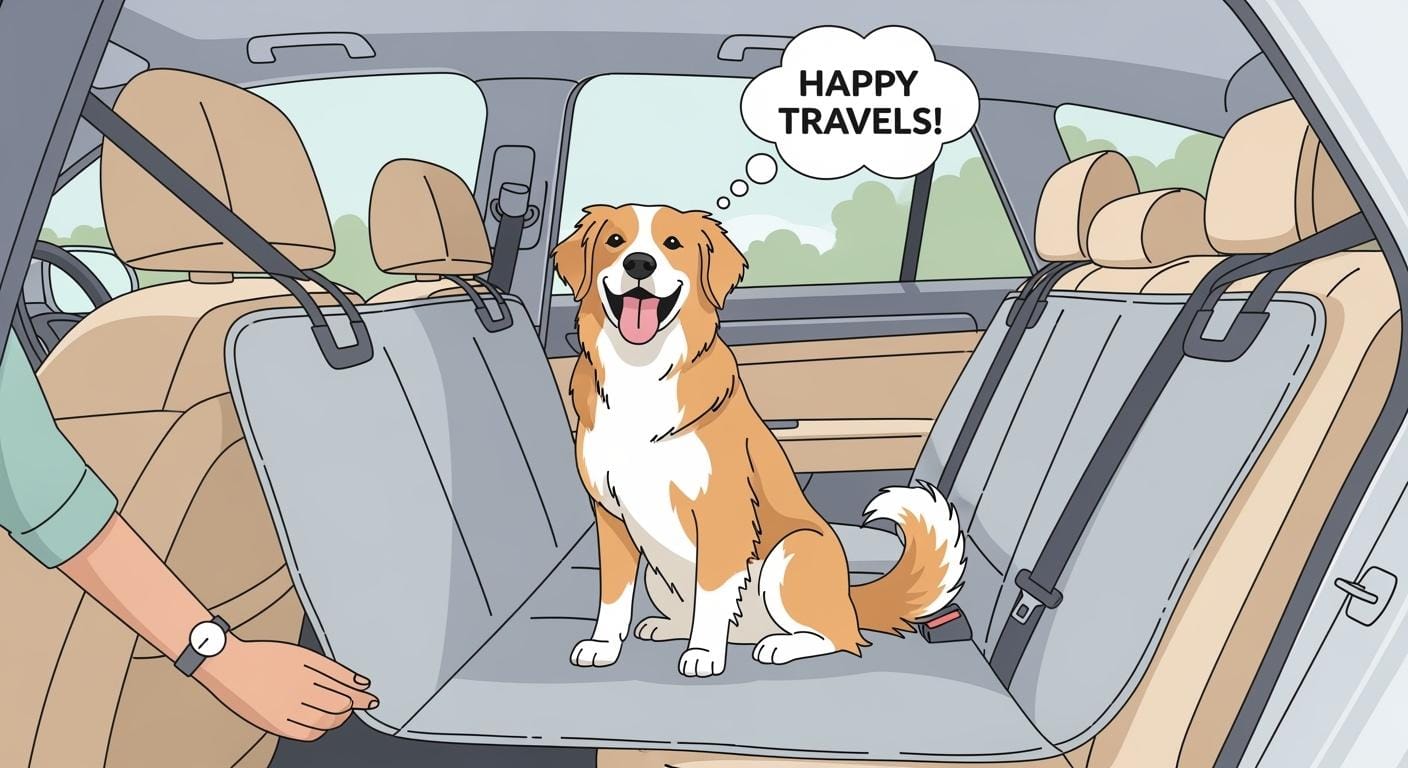
You want a dog cover for back seat of car that fits your car and protects your seats. Measure your car before you buy a dog car seat cover. Many covers slip, bunch, or collect mess. You need easy protection for your car and comfort for your dog. These tips help you protect your car and keep your dog safe.
Key Takeaways
Measure your back seat before buying a dog cover. This ensures a proper fit and full coverage to protect your car from hair, dirt, and moisture.
Choose a cover with non-slip backing and secure anchor straps. This keeps the cover stable and prevents it from sliding or bunching during drives.
Select a cover that allows easy access to seat belts. This ensures your dog can be safely secured while traveling.
Dog Cover for Back Seat of Car Fit Checks
Choosing the right dog cover for back seat of car starts with a careful fit check. You want to protect your car, keep your dog comfortable, and avoid common problems like slipping or bunching. Use this section to guide your decision and installation process.
Seat coverage and side gaps
You need full coverage to protect your car seats from dog hair, dirt, and moisture. Start by measuring the width and depth of your back seat. Compare these numbers to the dimensions listed for the dog car seat cover you plan to buy. Look for a cover that extends over the seat edges and tucks into the gaps. This helps prevent side gaps where fur, claws, or moisture can reach your car upholstery.
Common seat coverage issues include:
Claw punctures and scratches from large dogs.
Moisture and odor soaking into seats after wet walks.
Heavy shedding that collects in seams and under the cover.
Impact damage from a dog’s weight compressing the seat foam.
Drool and saliva stains that cause lasting odors.
A good fit means the cover lays flat, covers all seat surfaces, and does not leave exposed areas. If you see gaps or the cover rides up, adjust the straps or try a different size.
Tip: Test the fit by running your hand along the seat edges. If you feel fabric bunching or see open gaps, the cover may not protect your car as intended.
Seat-belt access and anchor fit
You need to secure your dog safely in the car. Dog car seat covers should allow easy access to seat belts and anchors. Check for Velcro or zipper openings that line up with your car’s seat belt buckles. If the cover slides or shifts, it can block access and make it hard to attach a harness.
A cover that moves around can interfere with your dog’s harness. This creates an unstable surface and can distract you while driving. Always check that the cover stays in place when your dog moves or turns. Proper anchor fit keeps the cover tensioned and helps your dog settle comfortably.
Safety Note: Always use a harness or restraint for your dog. Never let your dog ride on your lap or in the front seat.
Stable comfort for your dog
Comfort depends on more than padding. Your dog needs a stable surface to stand, turn, and settle. Check that the cover grips the seat and does not slide when your dog jumps in. Listen for noise-some car seat covers crinkle or shift, which can make your dog anxious.
Test the cover by letting your dog move around. Watch for bunching or sliding. If the cover stays flat and your dog settles quickly, you have a good fit. If not, adjust the anchor straps or try a different style.
Practical Step: After installation, drive a short distance with your dog. Check for slippage, bunching, or discomfort. Make adjustments before longer trips.
Step-by-step fit check guide
Measure your back seat (width, depth, and height).
Compare your measurements to the dog car seat cover’s listed size.
Lay the cover flat on the seat and tuck in the edges.
Attach anchor straps and adjust for tension.
Check seat-belt and anchor access points.
Let your dog enter and move around.
Test for slippage, bunching, or exposed areas.
Make final adjustments or try another cover if needed.
Pass/Fail Fit Checklist Table
Check Item | Pass Signal | Fail Signal | Solution |
|---|---|---|---|
Seat coverage | All seat surfaces covered, no gaps | Gaps, exposed edges, or bunched fabric | Adjust straps, try larger cover |
Anchor tension | Cover stays flat, no movement | Cover slides or bunches | Tighten anchors, retuck edges |
Seat-belt access | Buckles accessible, easy harness attachment | Buckles blocked, hard to secure harness | Realign openings, check cover alignment |
Dog comfort | Dog settles quickly, moves easily | Dog slips, hesitates, or seems anxious | Add grip mat, adjust tension, try new style |
Durability | No tears, holds up to claws and movement | Rips, punctures, or worn spots | Choose stronger material, reinforce seams |
Universal vs. Custom-Fit Dog Car Seat Covers
Feature | Custom-Fit Covers | Universal Covers |
|---|---|---|
Fit | Designed for specific vehicle make/model | Fits a variety of vehicles |
Coverage | Maximum coverage and protection | Less precise fit |
Installation | Simple, tailored to vehicle dimensions | Adjustable straps for various vehicles |
Flexibility | Limited to specific vehicle | Flexible for switching vehicles |
Bench vs. Hammock, Padded vs. Unpadded, Wipe-Clean vs. Soft Surface
Style/Feature | Bench Cover | Hammock Cover | Padded Surface | Unpadded Surface | Wipe-Clean Surface | Soft Surface |
|---|---|---|---|---|---|---|
Seat Protection | Good | Excellent | Extra comfort | Basic comfort | Easy to clean mess | More comfort |
Dog Containment | Limited | High (blocks floor) | Same as above | Same as above | Same as above | Same as above |
Cleaning Ease | Moderate | Moderate | May hold more mess | Less absorbent | Quick wipe-down | May need washing |
Comfort | Good | Good | Best for long trips | Fine for short trips | Good for spills | Good for naps |
You want to match the cover style to your car, your dog’s habits, and your cleaning routine. Hammock dog car seat covers offer extra containment and protection. Bench covers work well for dogs who stay seated. Padded covers add comfort for long rides. Wipe-clean surfaces help with drool and mud. Soft surfaces may feel better for naps but can hold more fur.
Judgment Call: If you switch cars often, choose a universal cover. If you want the best dog car seat covers for your specific car, choose custom-fit. For heavy shedders or droolers, prioritize waterproof and easy-to-clean surfaces.
Dog Car Seat Covers Stability Guide
Non-slip backing and anchor hold
You want your dog to be safe and comfy in the car. Non-slip backing and strong anchor hold help keep the cover steady. Non-slip materials stop the cover from moving when your dog shifts. Seat anchors add extra safety and keep the cover from sliding or bunching.
Many covers use rubber backing or anti-slip dots. These features grip the seat and cut down movement. Adjustable straps let you change the fit for your car. Mesh side panels let air in and help your dog see out, which keeps your dog calm.
Feature | Description |
|---|---|
Non-slip backing | Keeps the cover in place during driving, no matter how active your dog is. |
Seat anchors | Adds security to prevent shifting. |
Adjustable straps | Customizes fit and improves stability. |
Mesh side panels | Provides ventilation and visibility for your dog. |
Check anchor straps every time you install the cover. Tighten them if you notice movement. If your cover slides, look for a rubberized mesh bottom. This makes the cover grip better, especially on leather seats. A stable cover lets your dog stand, turn, and settle without slipping.
Tip: Make sure the cover does not block seat-belt access. Safety is most important for you and your dog.
Surface grip and movement control
Surface grip helps your dog stay steady during rides. Slip-resistant materials, rubber backing, and quilted surfaces all help. These features stop unwanted movement and keep your dog comfortable.
Dog car seat covers with grip on both sides make a strong base. Quilted surfaces give extra traction, so your dog does not slide forward. Adjustable straps and seat anchors hold the cover tight. Quick-release buckles make it easy to put on.
Slip-resistant materials help keep the cover in place.
Rubber backing stops the cover from moving.
Adjustable straps and seat anchors make the fit snug.
Quilted surfaces give more traction.
Test the cover by letting your dog step on it, walk around, and lie down. If the cover stays flat under your dog’s paws and chest, the surface grip works well. If your dog slides or keeps moving, adjust the straps or try a cover with better grip.
Technology | Description |
|---|---|
Fia’s Super-Grip® technology | Uses slip-resistant materials and attachment points to keep the cover in place. |
Non-slip backing materials | Rubber backing and anti-slip dots eliminate movement. |
Adjustable straps and anchors | Secures covers firmly to prevent shifting. |
Quilted surfaces | Enhances traction for steady and comfortable rides. |
Note: Surface grip is more important than padding. A slick cover can make your dog slip, even if it feels soft.
Common mistakes and troubleshooting
Many dog owners make mistakes when picking and installing car seat covers. Cheap covers often use weak materials. These covers slip, bunch up, and do not protect your car. Not checking seat shape leads to bad fit. Trusting waterproof claims can disappoint if seams or openings let moisture in. Not understanding padding and safety features can leave your dog uncomfortable or unsafe.
Avoid these mistakes by checking fit, material quality, and installation steps. Always put safety and stability first.
Troubleshooting Table for Stability Issues
Issue | Possible Cause | Quick Check | Solution | Common Mistakes |
|---|---|---|---|---|
Cover slides | Smooth seat, weak anchors | Tug cover, check for movement | Use rubberized mesh bottom, tighten anchors | Choosing low-cost covers with poor grip |
Cover bunches | Incorrect size, loose straps | Run hand over surface, look for folds | Adjust straps, retuck edges | Ignoring seat shape and size |
Dog slips | Slick surface, no traction | Watch dog move, listen for noise | Try quilted surface, add grip mat | Over-relying on padding for comfort |
Seat-belt blocked | Misaligned openings | Try to access buckles | Realign cover, check anchor placement | Not checking seat-belt access |
Mess collects | Poor seam design, loose fit | Inspect seams and corners | Clean regularly, check fit after rides | Believing waterproof claims without checking seams |
Troubleshooting Steps:
Let your dog step onto the cover, walk around, and lie down. Check if the cover stays flat.
Look at seams, corners, and the front edge after messy rides. Clean these spots to stop shifting.
Make sure the cover does not block seat-belt access or feel slippery.
Safety Reminder: Always use a harness or restraint for your dog. Never let your dog ride on your lap or in the front seat.
You can fix most stability problems by checking anchor tension, surface grip, and cover fit. Strong materials and proper installation keep your car seat covers steady and your dog comfortable. Regular checks and cleaning help keep your cover safe and lasting longer.
Car Seat Covers Cleanup and Material Tips
Wipe-clean vs. machine washable
You want car seat covers that are simple to clean after trips with your dog. Many people like machine washable covers because you can put them in the washer for a deep clean. Wipe-clean covers let you use a damp cloth to get rid of dirt and hair fast. Both types help keep your car smelling nice, but machine washable covers are better for big messes.
Feature | Machine Washable Cover | Wipe-Clean Cover |
|---|---|---|
Cleaning Method | Washer and dryer | Damp cloth or pet wipes |
Convenience | Easy for deep cleaning | Easy for quick cleanup |
Owner Preference | High | Moderate |
Drying Time | Longer | Short |
Most dog owners think machine washable covers are great for easy cleaning after trips.
Wipe-clean covers are good for quick cleanups, but most people still like machine washable covers for easy care.
Mess collection zones and seams
Check where mess builds up on your car seat covers. Look at the seams, anchor holes, and edges. Some covers use ultrasonic quilting, which joins layers without needle holes. This stops leaks and keeps wetness off your car seats. Triple-layer covers have a tough polyester top, cotton padding, and a rubber mesh bottom. These layers catch hair, water, and germs on top, so cleanup is easy and smells do not get into your car.
Tip: Pick covers with water-resistant or waterproof features. These help you control mess and make cleaning simple.
Drying and odor control
Let your car seat covers dry all the way before using them again. Waterproof and water-resistant covers keep water and germs inside, which helps stop bad smells. Cleaning fast means less time for odors to grow in your car. Always read the label for cleaning and drying steps.
Waterproof covers block smells and keep your car fresh.
Water-resistant covers help you handle wet dog smells.
Clean your covers every week to keep your car and dog happy.
Quick Table: Troubleshooting Car Seat Covers
Problem | Quick Check | Action |
|---|---|---|
Gaps or bunching | Run hand over surface | Adjust straps |
Blocked buckles | Try seat belt access | Realign cover |
Mess buildup | Inspect seams and edges | Clean up immediately |
You want strong protection for your dog and your car. Check fit, stability, and cleanup steps. Use the tables for quick decisions. A well-chosen cover gives protection, keeps your dog comfortable, and helps you protect your car. Take action now for less stress and a cleaner ride.
FAQ
How do you keep dog seat covers from sliding during a drive?
You should check anchor straps and surface grip. Tighten everything before each trip. This helps maintain stability and keeps your water-resistant dog car seat cover in place.
What is the fastest way to clean up after a muddy ride?
Use a damp cloth for an easy to clean surface. If you have a machine washable cover, remove it and wash it. Dry it fully before reuse.
Can you use hammock dog car seat covers for large dogs?
Yes, hammock dog car seat covers support large dogs. They offer waterproof protection and stability. Choose the best dog car seat covers with water-resistant materials for extra durability.






