
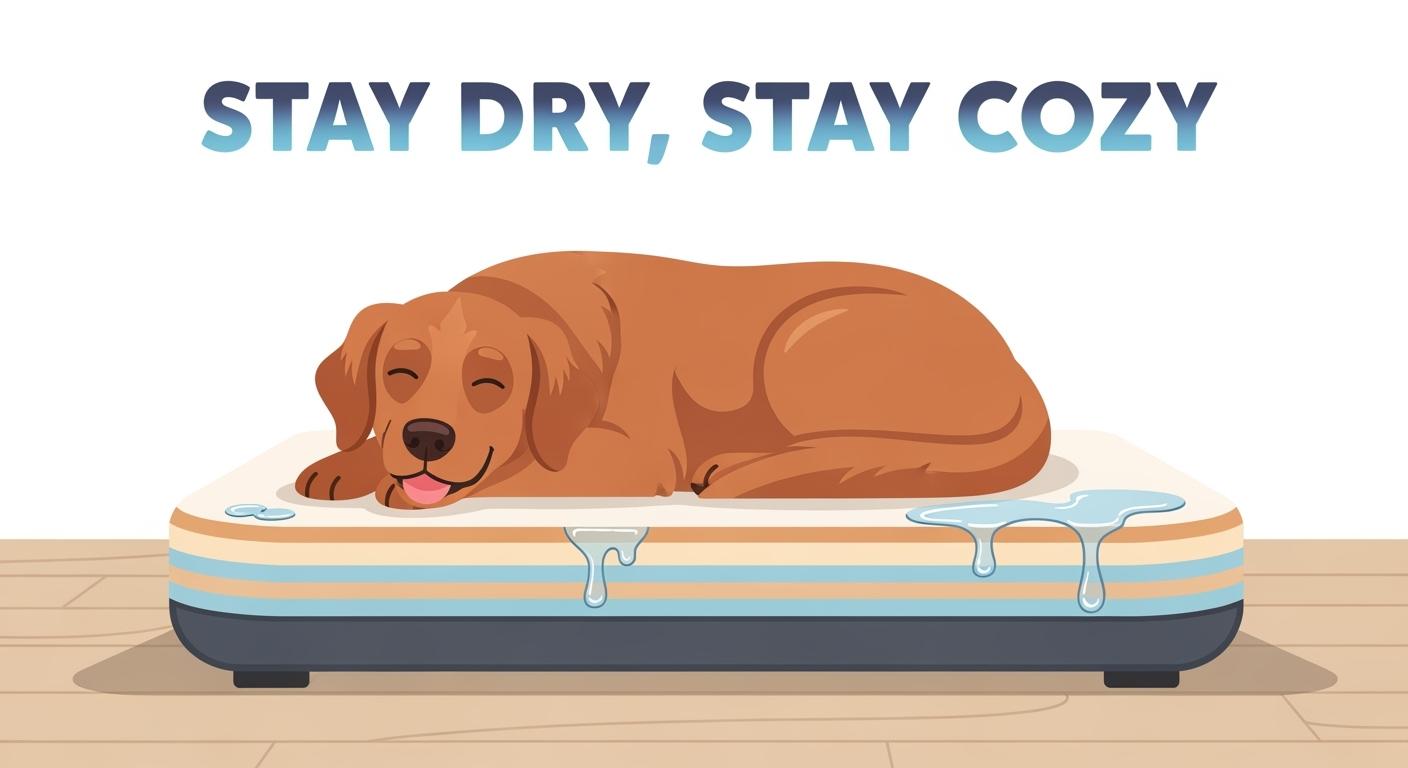
A waterproof dog bed can look successful right up until you unzip it and find a damp core, trapped odor, or a liner that never dried properly after the last wash. That is why the real question is not whether the top looks wipe-clean. It is whether the inside stays dry after the kind of mess your dog actually makes.
This article stays focused on that one problem. It is not a broad dog bed buying guide. It helps you judge what really keeps the core dry: the barrier layer, the weak points around seams and zippers, and the cleaning routine that determines whether a bed stays usable after repeated accidents or incontinence-related cleanup.
Key Takeaways
- Pick dog beds that have waterproof liners and covers you can take off and wash in a machine. A wipe-clean face fabric alone is not enough if liquid can still reach the fill.
- Check seams, zipper ends, and the underside before you trust a waterproof claim. Many beds fail at the openings, not in the middle of the panel.
- A bed only stays truly dry if you can wash, inspect, and fully dry every layer that can hold moisture.
Why Some “Waterproof” Beds Still End Up with a Damp Core
Surface protection is not the same as core protection
Many beds do a decent job of resisting a light spill on the sleeping surface. That does not mean the inside is protected. A top fabric can bead water for a short time and still let moisture work through the zipper line, stitched edge, underside panel, or unprotected insert. For dogs with accidents, post-bath dampness, or incontinence, the core is what matters most. Once the inner fill stays wet, odor and repeat dampness become much harder to solve.
The first failure point is often not the top panel
Leaks often show up where the product changes direction or changes material. Corners, seam lines, zipper ends, and wrapped edges are common weak points. If the top looks dry but the foam smells sour later, the problem may have come from one of those openings rather than from the center panel itself.
Test language helps only when you know which layer it describes
Some sellers mention hydrostatic pressure or hydrostatic head testing. That can be useful when it clearly applies to a specific cover fabric or liner material. It is less useful when you do not know whether the result belongs to the outer shell, the hidden barrier, or just a raw material sample that does not reflect the finished bed. A strong fabric result does not automatically confirm that the assembled bed resists leaks at seams, zipper paths, or corners.
| Layer or Detail | What It Can Do Well | What Can Still Go Wrong |
|---|---|---|
| Surface cover | Repels light spills and makes wipe-down easier | Can still pass moisture through openings or saturation over time |
| Inner waterproof liner | Blocks liquid before it reaches the core | May fail if it is incomplete, punctured, poorly wrapped, or hard to dry |
| Seams and zipper area | Allow assembly and cover removal | Often become the practical leak path if they are exposed or poorly protected |
| Underside panel | Helps the bed stay put and separate from the floor | Can wick moisture from below or hold dampness after cleaning |
Tip: If a bed is described as waterproof, ask yourself one specific question: which layer is actually stopping liquid from reaching the core?
Check the Barrier Layer Before You Trust the Cover
A true waterproof bed is easier to understand when you inspect it as a system instead of a single fabric. Start with the removable cover, then look for what sits under it. If the bed has an inner liner, see whether it wraps the core completely or leaves obvious entry points at the edges. If the bed does not have a separate barrier layer at all, then the top cover is doing all the work and may fail faster under real messes.
Look for protected openings, not just coated fabric
Covered zippers, flap protection, neatly finished seam lines, and cleaner edge construction usually matter more than shiny marketing words. If the zipper ends are exposed, the seam allowances look loose, or the liner stops short of the full insert, treat the waterproof claim more cautiously.
Use a real-use check, not just a label check
You can use this table after the first wash or after the first real cleanup event. It is more useful than deciding from a product title alone.
| Check Item | Pass Signal | Fail Signal | What to Do Next |
|---|---|---|---|
| Barrier layer | The insert or foam remains dry after a real mess | The core feels damp or starts holding odor | Move to a bed with a better-wrapped liner or a separate insert barrier |
| Seam and zipper protection | No damp marks near edges or zipper ends | Moisture shows up near corners, zipper tracks, or seam turns | Choose stronger opening protection, not just a tougher top fabric |
| Underside dryness | The bottom stays dry after use and after washing | The bed feels clammy or smells from underneath | Reassess the underside fabric and drying routine |
| Cover removal | The cover comes off and goes back on without twisting the insert | The cover is hard to remove or bunches the liner after washing | Prioritize a simpler construction you can actually maintain |
Note: A waterproof claim is most believable when the seller explains the barrier layer clearly, not just when the outside fabric sounds technical.
Cleaning Only Works If the Bed Dries All the Way Through
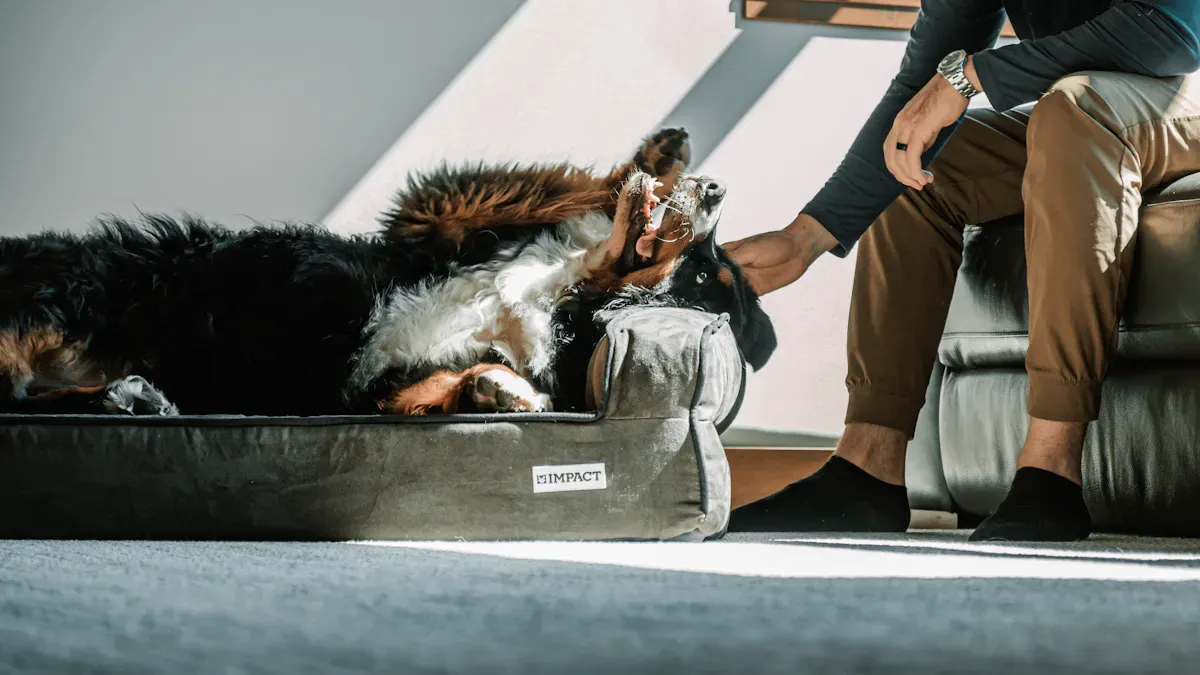
Some beds sound easy to clean because the cover is machine washable. You should check if the bed is really simple to wash and stays comfortable. If the liner stays damp inside, if the core absorbs odor after each cleanup, or if the bed becomes noisy, hot, or stiff after washing, daily comfort drops even when the product still looks neat from the outside.
Removable covers help only when the inside can recover too
A removable cover is useful because it makes routine washing much easier. But if the insert never fully dries, the bed still fails the real task. After cleaning, the full setup should return to a dry, usable state without trapped odor, sticky underside spots, or a liner that feels cool and damp hours later.
Comfort changes after the waterproof layer is added
Some waterproof constructions make the bed warmer, louder, or less flexible. That does not always make them wrong, but it does mean you should check the trade-off honestly. A bed can protect the core yet still be unpleasant if it crackles, traps too much heat, or bunches under the dog after washing.
| Feature | Why It Helps | What to Watch For |
|---|---|---|
| Removable washable cover | Makes routine cleanup faster and more realistic | Can still hide a damp insert if you only wash the shell |
| Separate waterproof liner | Protects the core during accidents or leaks | May hold moisture if not fully dried after washing |
| Quiet surface fabric | Feels less distracting for light sleepers | Some barrier-backed fabrics become noisy after repeated washing |
| Supportive insert | Keeps the bed comfortable for longer rests | Support means less if the insert stays damp or begins to smell |
Tip: A bed is easier to live with when you can clean it quickly, dry it fully, and put it back into use without guessing whether moisture is still trapped inside.
When a Waterproof Bed Is Still the Wrong Fix
Repeated moisture may need an extra absorbent layer above the bed
If your dog has frequent accidents, a waterproof bed alone may not be the full answer. You may still need a washable pad or sacrificial top layer that is easier to swap out between deeper cleanings. The goal is not just to protect the floor. It is to reduce how often liquid reaches the bed system in the first place.
Ongoing dampness, odor, or skin irritation are stop signs
If the bed smells sour even after proper washing, if dampness keeps returning, or if your dog develops redness, irritation, or obvious discomfort after lying on it, do not assume the problem is cosmetic. A bed should help keep the resting area dry enough to stay comfortable. If it cannot do that reliably, the setup is failing.
Sometimes the bed should be replaced, not rescued
Once a liner loses integrity, the zipper area leaks repeatedly, or the core keeps holding odor after full drying, it may be more practical to replace the bed than to keep trying to recover it. Waterproof performance usually gets worse gradually, not all at once, which is why late-stage failures are often overlooked.
Note: If your dog has ongoing wet spots on bedding, strong odor, or skin changes, speak with your veterinarian. A better bed can help with hygiene, but it does not replace medical evaluation.
The best waterproof dog bed is usually the one that keeps liquid out of the core, not just off the top. If the barrier layer is clear, the openings stay protected, and the whole bed dries fully after cleaning, the product is doing the job that waterproof bedding is supposed to do.
FAQ
Is waterproof the same as water-resistant for a dog bed?
No. Water-resistant surfaces may handle light spills or damp paws, but they may still let enough moisture through to leave the core wet after an accident or heavy soaking. If core dryness matters, the barrier layer matters more than the label alone.
Does hydrostatic test language prove the whole dog bed is leakproof?
No. It can support a claim about a fabric or liner material, but it does not automatically prove that the finished bed resists leaks at seams, zipper openings, corners, or after repeated washing.
What should you do if the bed looks dry on top but still smells damp later?
Open the bed and check the liner, insert, underside, and zipper area instead of trusting the surface alone. If the core or hidden layers stay damp after proper drying, the bed is not keeping moisture where it needs to stay out.






