
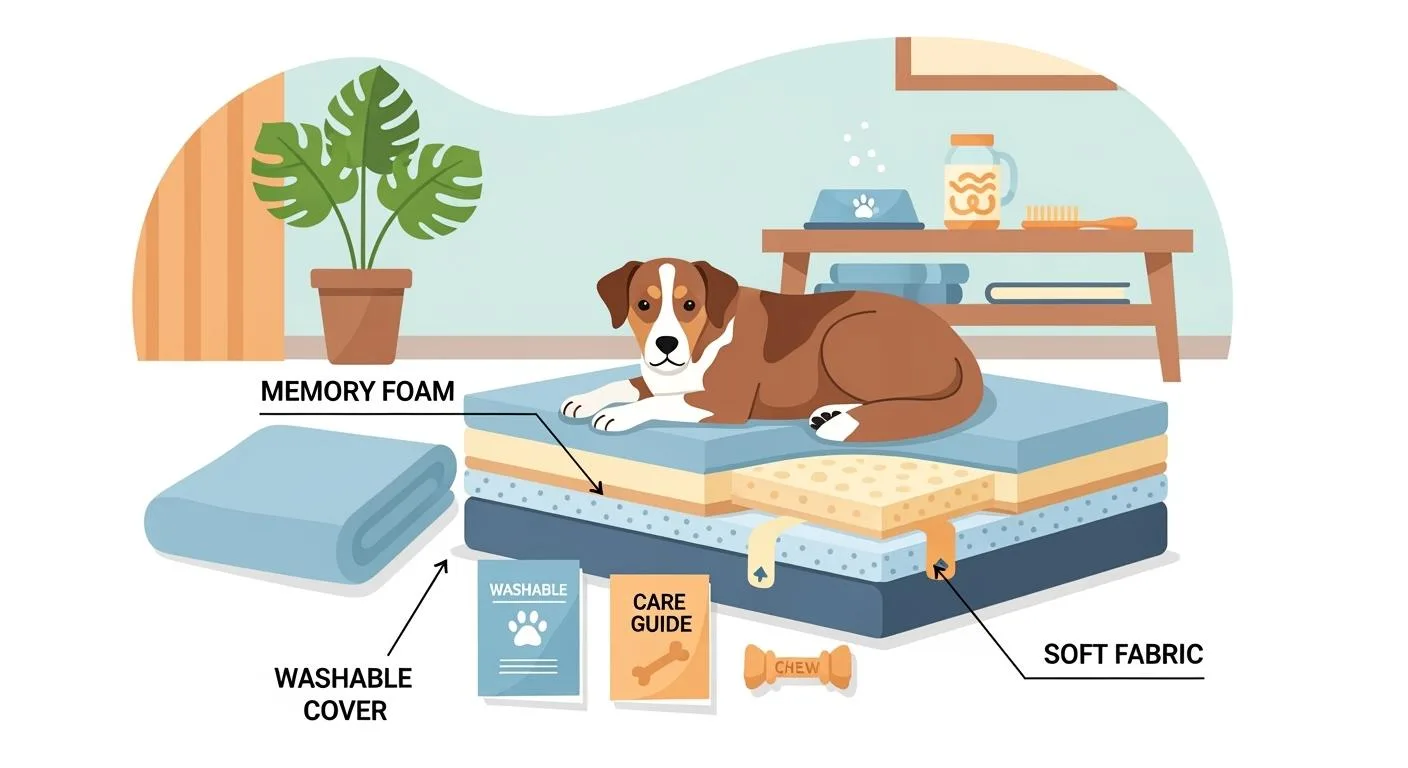
A comfortable dog bed should feel soft, supportive and easy to keep clean in daily use. But comfort can fail when the filling flattens, the cover traps heat or moisture, seams and zippers rub against the dog’s body, or the usable sleeping space is smaller than it looks. This guide explains what to check in dog bed materials, support, covers and cleaning details before choosing a bed that stays comfortable over time.
Key Takeaways
- A comforting dog bed should be judged by support, usable sleep space, surface feel, airflow, and cleaning design, not by plush appearance alone.
- Soft fabrics can create real comfort, but they can also trap heat, hold odor, flatten quickly, or become harder to clean if the construction is weak.
- Covered, bolstered, flat, orthopedic, and reinforced beds solve different problems. Buyers should match the bed shape to the intended dog size, sleep style, climate, and maintenance expectations.
What Comfort Really Means in a Dog Bed Product
Softness is only one part of comfort
A dog bed can feel soft to the hand but still be uncomfortable after regular use. If the filling collapses, the base becomes lumpy, or the surface gets hot and damp, the bed may stop feeling restful even though the fabric still looks plush. This is why buyers should separate surface softness from long-term comfort performance.
For a comforting dog bed, the most important checks are simple: the bed should support the dog without bottoming out, provide enough usable space for natural sleep posture, and allow the contact surface to stay clean and dry. A bed that fails any of these points may create poor daily acceptance even when the product image looks appealing.
| Comfort Factor | What Buyers Should Check | Common Failure Risk |
|---|---|---|
| Surface feel | Soft, skin-friendly fabric that does not feel sticky or overly warm | Heat buildup, hair retention, odor, or fabric matting |
| Base support | Foam or fill that rebounds and keeps the dog off the floor | Flattening, lumpy padding, uneven pressure, or floor contact |
| Usable sleep space | Enough internal room for curling, stretching, or turning | Dog hangs off the edge or avoids the bed despite the outer size |
| Cleaning design | Removable cover, protected zipper, quick-dry materials, and simple reassembly | Persistent odor, damp inner layers, shifted padding, or zipper damage |
Marketing claims need product-level proof
Words such as cozy, calming, orthopedic, supportive, or washable can be useful, but they are not enough by themselves. Buyers should connect every claim to a visible product detail. “Orthopedic” should lead to questions about foam density, thickness, shape retention, and entry height. “Washable” should lead to questions about the cover, liner, zipper protection, drying time, and whether the bed keeps its shape after cleaning.
For a product line, vague comfort claims are weaker than clear construction evidence. A bed is easier to trust when the material stack, seam quality, cover design, and intended use case all point in the same direction.
Materials and Construction Details That Decide Daily Use
Surface fabric, fill, and airflow should match the use case
Soft fleece, plush, suede-like fabrics, and quilted covers can create a warm and secure feel. They can also hold hair, moisture, and odor if the fabric is too dense or the bed is slow to dry. A smoother or more breathable surface may be a better fit for dogs that run warm, homes with warmer climates, or beds used in areas with more dirt and shedding.
Support material matters just as much. Loose fill can feel cozy at first but may shift to the edges. Low-quality foam can flatten under heavier dogs. A stronger base may reduce shape loss, but it still needs a comfortable top layer. For buyers comparing material options, the right choice depends on the expected dog size, sleep style, cleaning frequency, and whether the bed is meant for indoor rest, crate use, patio use, or travel crossover.
| Material or Build Choice | Best Fit | Buyer Watchout |
|---|---|---|
| Plush or fleece surface | Dogs that prefer warmth and a soft contact feel | Can hold hair, trap heat, or mat after washing |
| Quilted or padded cover | Moderate comfort with a more structured look | Stitch channels can collect dirt if cleaning is difficult |
| Memory foam or supportive foam | Senior dogs, heavier dogs, or beds positioned around support | Poor foam quality can flatten or retain heat |
| Reinforced or ripstop fabric | Rougher daily use, scratching, or dogs that drag bedding | May feel less plush if no comfort layer is added |
| Water-resistant shell or liner | Mess-prone use, patios, travel crossover, or easier wipe-down | Can reduce breathability if the layer is not balanced well |
When the bed is part of a wider home-comfort or travel-comfort range, material choices should stay consistent with the use case. A multi-use pet travel seat and home bed, for example, needs a different balance of washable fabric, structure, and base stability than a simple indoor pillow bed.
Seams, zippers, and covers often decide whether comfort lasts
Many product failures start around details that look small: weak seams, exposed zippers, thin corners, loose cover fit, or inner fill that shifts after washing. These details matter because a comforting dog bed is touched, stepped on, scratched, turned around on, and cleaned repeatedly. If the cover stretches or the zipper area becomes a chewing point, the bed can lose its comfort value quickly.
For buyers comparing samples, the practical check is direct: pull gently at the seam lines, open and close the cover, press the corners, and check whether the inner pad returns to the same position. Abrasion-resistant construction is useful only when it still works with comfort, cleaning, and a surface feel the dog can accept.
Bed Shape, Sizing, and Use Boundaries
Covered, bolstered, and open beds do not solve the same problem
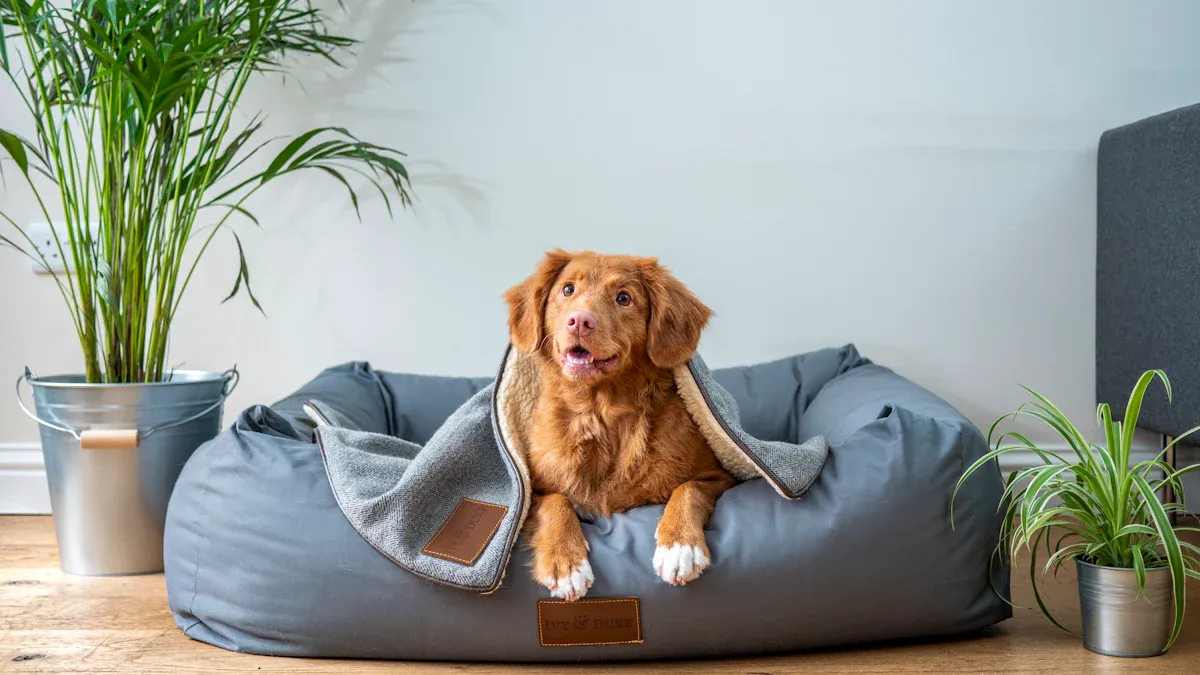
A comforting dog bed should match how the dog actually rests. Some dogs curl tightly and like edge contact. Some stretch long and need open surface area. Some prefer an enclosed or hooded shape, while others avoid any bed that traps warmth or limits exit. A bed shape that comforts one dog can feel restrictive to another.
| Bed Shape | Best Fit | Where It Can Fail |
|---|---|---|
| Flat open bed | Stretchers, warm sleepers, and dogs that need easy entry | May feel less secure for dogs that like edge support |
| Bolster or donut bed | Curlers and dogs that like head or body contact | Internal sleep space can be smaller than the outer size suggests |
| Covered or cave bed | Burrowers, shy dogs, and dogs that prefer a sheltered feel | Can trap heat, block airflow, or become harder to clean |
| Orthopedic foam bed | Senior dogs, heavier dogs, or buyers prioritizing support | Can feel too warm, too high, or too firm if the design is not balanced |
Outer size is not the same as usable sleep space
One common selection mistake is judging a dog bed by outside dimensions only. Thick bolsters, raised edges, sloped sides, or a deep cave opening can reduce the space the dog can actually use. This matters most for medium and large dogs, dogs that stretch, and dogs that shift positions during rest.
Buyers should compare the outer size with the usable inner space. A bed can appear generous but still force the dog to curl tightly, hang off the edge, or press against a bolster. For support-focused designs, entry height also matters. If the dog has to step too high or climb over a stiff wall, comfort can fail before the dog ever settles into the bed.
Heat, moisture, and cleaning define the boundary of use
Comforting beds are often made with soft and warm materials, but warmth can become a problem in warmer rooms, warmer climates, covered designs, or beds used by dogs that already run hot. If the product holds heat or dries slowly, the bed may feel good at first touch but unpleasant in regular use.
Cleaning design should be checked before selection, not after complaints appear. A removable cover helps, but it is not enough if the inner pad absorbs odor, the zipper is hard to operate, or the bed takes too long to dry. For waterproof or washable positioning, buyers should look at the full cleaning path: cover removal, liner protection, drying, reassembly, and whether the bed returns to its original shape. These same checks are central when comparing washable waterproof support designs for home-comfort products.
Buyer Checks Before Choosing a Comforting Dog Bed
Pass/fail checklist
| Check Item | Pass Signal | Fail Signal | What to Reconsider |
|---|---|---|---|
| Support | Padding rebounds and keeps the dog off the floor | Bed flattens, dips, or becomes lumpy | Foam quality, fill structure, or base thickness |
| Surface comfort | Soft feel without sticky warmth or rough seams | Fabric mats, overheats, or irritates contact areas | Fabric type, pile length, and airflow |
| Usable size | Dog can curl, stretch, and turn naturally | Dog hangs off the edge or avoids the bed | Inner dimensions, bolster thickness, or shape |
| Cleaning | Cover removes easily and bed dries fully | Odor remains or inner layers stay damp | Cover design, liner, zipper, and drying path |
| Durability details | Seams, corners, and zippers stay protected | Loose threads, exposed zipper pulls, or thin edges | Stitching, reinforcement, and cover fit |
Common mismatch problems
- A plush bed is chosen for comfort, but the fabric traps too much heat for warm sleepers.
- A covered bed is chosen for security, but the opening limits airflow or makes cleaning harder.
- A bolster bed looks large outside, but the usable sleep space is too small inside.
- A washable bed has a removable cover, but the inner pad absorbs moisture or odor.
- A reinforced bed resists wear, but the surface feels too stiff without a softer comfort layer.
The best comforting dog bed is not always the softest option. It is the bed whose material, structure, size, cleaning path, and use boundary match the dog group and home scenario it is meant to serve. For B2B buyers, that means checking comfort as a product decision, not just as a visual style.
FAQ
When should buyers choose an open bed instead of a covered bed?
An open bed is usually safer for dogs that stretch out, run warm, need easy entry, or rest in warmer rooms. It gives better airflow and is usually easier to clean. Covered beds are better reserved for dogs that like a sheltered feel and can still enter, exit, and cool down comfortably.
Why does washability matter even for a soft indoor dog bed?
Washability affects whether the bed stays usable after shedding, odor, dirt, accidents, or repeated daily contact. If the cover is difficult to remove, the inner pad holds moisture, or the bed loses shape after cleaning, the soft feel on day one may not last.
What is the biggest sizing risk in a comforting dog bed?
The biggest risk is confusing outer size with usable sleep space. Bolsters, thick walls, covered openings, and shaped edges can reduce the area where the dog can actually rest. Buyers should compare both the outer dimensions and the internal usable space before choosing a bed shape.






