
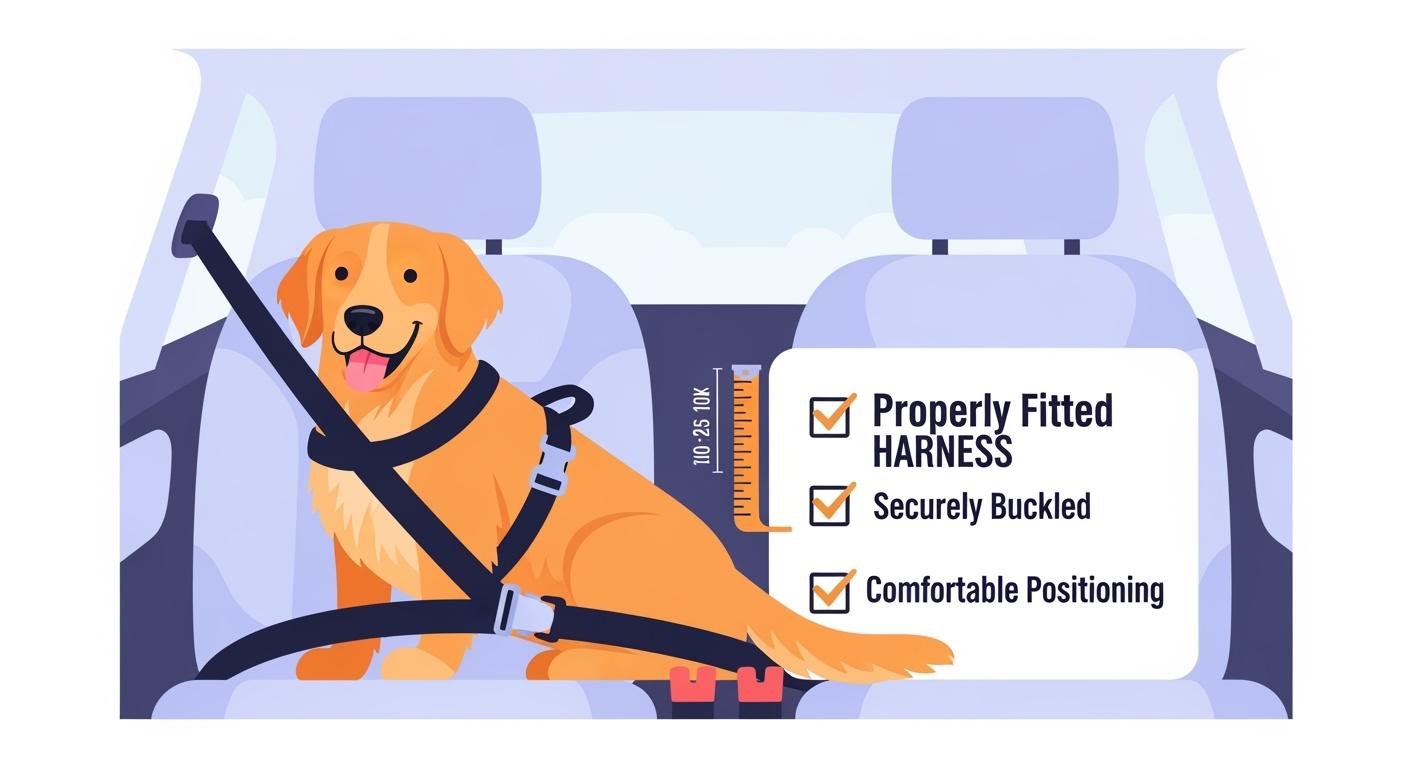
A dog seat harness for car travel can look secure when the dog is standing still. The problem often appears only after the dog gets into the back seat and the car begins to move. The harness may slide sideways, creep toward the throat, leave too much tether slack, or let the dog reach the seat edge during braking.
That is why car fit needs a different check from everyday walking fit. The harness has to keep the dog in a controlled rear-seat space while still allowing a natural sitting or lying position. If the dog feels restricted, twisted, or pulled forward, the ride may feel less safe even though the harness is clipped in.
This guide is general product-use information, not medical or legal advice. If a dog coughs, wheezes, limps, panics, or shows pain during travel, stop using the setup and speak with a qualified professional.
Key Takeaways
- Pick a travel harness made for cars.
- Measure your dog’s neck and chest before you buy a harness.
- A short test ride can reveal the real problems: twisting, throat pressure, loose slack, seat-edge reach, or a dog that cannot settle.
What a car harness has to do differently
A comfortable walking harness may still be wrong for the car
A walking harness can feel soft and stable on a leash but still work poorly as a travel restraint. In the car, the harness is not just sitting on the body. It also has to work with the tether angle, the rear-seat layout, and the way the dog shifts when the vehicle turns or slows down.
The common weak points are easy to miss at first. A neck opening that sits slightly high can move toward the throat. A chest panel that looks flat outside the car can rotate when the tether pulls from one side. A clip point that seems convenient can change the harness angle once the dog sits or lies down.
The goal is controlled space, not extra room
Many travel problems start with too much room. A long tether may look more comfortable, but it can let the dog lean over the seat edge, lunge forward, spin into the strap, or lose balance when the car brakes.
| What the harness needs to do | Good sign | Problem sign |
|---|---|---|
| Control rear-seat movement | The dog stays in a predictable space. | The dog climbs forward, reaches the seat edge, or gets tangled. |
| Stay centered on the chest | The chest section lies flat and even. | The panel twists, gaps, or slides to one side. |
| Keep pressure away from the throat | The upper section stays low and stable. | The harness rides upward when the dog moves or the car slows. |
| Allow a natural posture | The dog can sit and lie down without fighting the gear. | The dog braces, crouches, freezes, or keeps turning around. |
Measure first, then check the fit inside the car
Start with the base of the neck and the widest part of the chest. These measurements are more useful than breed name, body weight, or a simple small, medium, or large label. Dogs with a deep chest, slim waist, broad shoulders, or short body may need a different harness shape even when the size chart looks correct.
Chest fit decides whether the harness stays stable
The chest area usually shows fit problems first. If the chest section is too loose, the harness can rotate when the dog turns or when the tether pulls from an angle. If it is too tight, the dog may sit stiffly, resist lying down, or brace against the seat.
A good car fit should feel secure without locking the dog into an awkward posture. The harness should stay centered when the dog stands, turns, sits, and lies down, not only when the dog is standing still outside the vehicle.
The two-finger check is not enough by itself
The two-finger rule can help avoid an obviously tight fit, but it does not prove the harness is ready for car travel. A harness can pass that quick check and still ride up, twist, or pull from the wrong angle once the tether is attached.
| Check point | Good sign | Problem sign | Better response |
|---|---|---|---|
| Neck opening | Sits low at the base of the neck. | Moves up toward the throat. | Refit or choose a different harness shape. |
| Chest panel | Stays centered and flat. | Twists, gaps, or shifts sideways. | Adjust the size or change the layout. |
| Body posture | The dog can sit and lie down naturally. | The dog braces, crouches, or resists. | Reduce restriction and test again. |
| Strap tension | Feels secure without pinching. | Looks too loose, too tight, or uneven. | Reset all straps before driving. |
Watch what changes once the car starts moving
Too much slack can make the ride feel less controlled
The restraint path should give the dog enough room to sit and lie down, but not enough room to lunge forward, fall off the seat edge, or turn into the tether. For car travel, controlled space is usually safer and easier to manage than a long strap that lets the dog roam.
If the dog can reach the front seat, hang over the rear-seat edge, or turn fully around the tether, the harness is not solving the travel problem. The cause may be tether length, clip position, rear-seat layout, or simply the wrong restraint style for that dog.
Twisting and forward pulling are warning signs
The first short ride should be treated as a fit test. Watch what happens when the car turns, slows, or stops. If the chest panel rotates, the upper section creeps toward the throat, or the dog has to brace hard to stay balanced, the setup needs to be changed before normal travel.
| What you notice | Likely cause | Fast check | Best next move |
|---|---|---|---|
| Harness twists off center | The chest fit is loose or poorly balanced. | Check panel position after a short turn. | Refit before the next ride. |
| Dog reaches the seat edge | The restraint path has too much slack. | Watch how far the dog can lean forward. | Shorten the usable travel zone. |
| Neck area rides upward | The harness shape or tether angle is wrong. | Inspect the upper section after braking. | Stop using that fit as-is. |
| Dog cannot settle | Posture, restraint length, or product type may not match the dog. | Watch for bracing, crouching, or constant turning. | Recheck harness size or travel setup. |
| Dog backs out or slips loose | The fit is too loose or the geometry is wrong. | Check neck and chest security while parked. | Do not trust the setup for travel. |
Do not attach a travel tether to a collar. A car restraint should work from a chest-and-torso harness, not from the neck.
When a harness is not the right travel setup
Some dogs need more containment than a harness can give
A car harness is not the best answer for every dog. Small dogs, restless dogs, dogs that spin repeatedly, and dogs that chew or back out of gear may do better in a secured carrier or crate. The right setup depends on the dog’s body size, behavior, and the available vehicle space.
Repeated problems usually mean the setup should change
Adjusting the straps again and again does not always solve the issue. If the harness keeps twisting, riding upward, allowing too much reach, or making the dog panic, a different travel setup may be safer than another small adjustment.
| Travel situation | Is a harness a good match? | Main concern | Better direction |
|---|---|---|---|
| Calm dog on short rear-seat trips | Often yes | The fit and slack still need routine checks. | Use a travel harness and recheck before trips. |
| Small dog that cannot settle | Maybe not | An open rear-seat setup may feel too loose or stimulating. | Consider a secured carrier. |
| Dog that keeps backing out or spinning | Often no | Repeated movement makes the setup hard to trust. | Use a different restraint category. |
| Large dog with limited rear-seat space | Maybe | The dog may still lack room to sit or lie correctly. | Recheck the seat layout or consider crate travel if practical. |
A dog seat harness for car use should make the ride feel more controlled, not more complicated. The right fit keeps the harness centered, gives the dog enough room to settle, and limits forward reach without pulling near the throat. If the same problems keep returning, the better answer may be a carrier, crate, or another restraint style before regular travel continues.
FAQ
When should you use a carrier instead of a harness for car travel?
Use a carrier when the dog is small, cannot settle in an open rear-seat setup, or keeps spinning, escaping, or chewing during travel. Some dogs need more containment than a harness can provide.
Is a walking harness enough for car rides?
Usually no. A walking harness may work well for daily leash use but still be the wrong tool for vehicle restraint. Car travel needs a setup that controls rear-seat movement, tether angle, and chest-and-torso stability.
How much slack should a car harness setup have?
Enough for the dog to sit and lie down comfortably, but not so much that the dog can lunge forward, fall off the seat edge, or turn into tangles. Controlled space is more useful than extra roaming room.
What if the dog still looks uncomfortable after careful sizing?
Recheck the neck position, chest centering, tether length, and rear-seat posture. If the same issues keep returning, another restraint style may be a better fit.






