
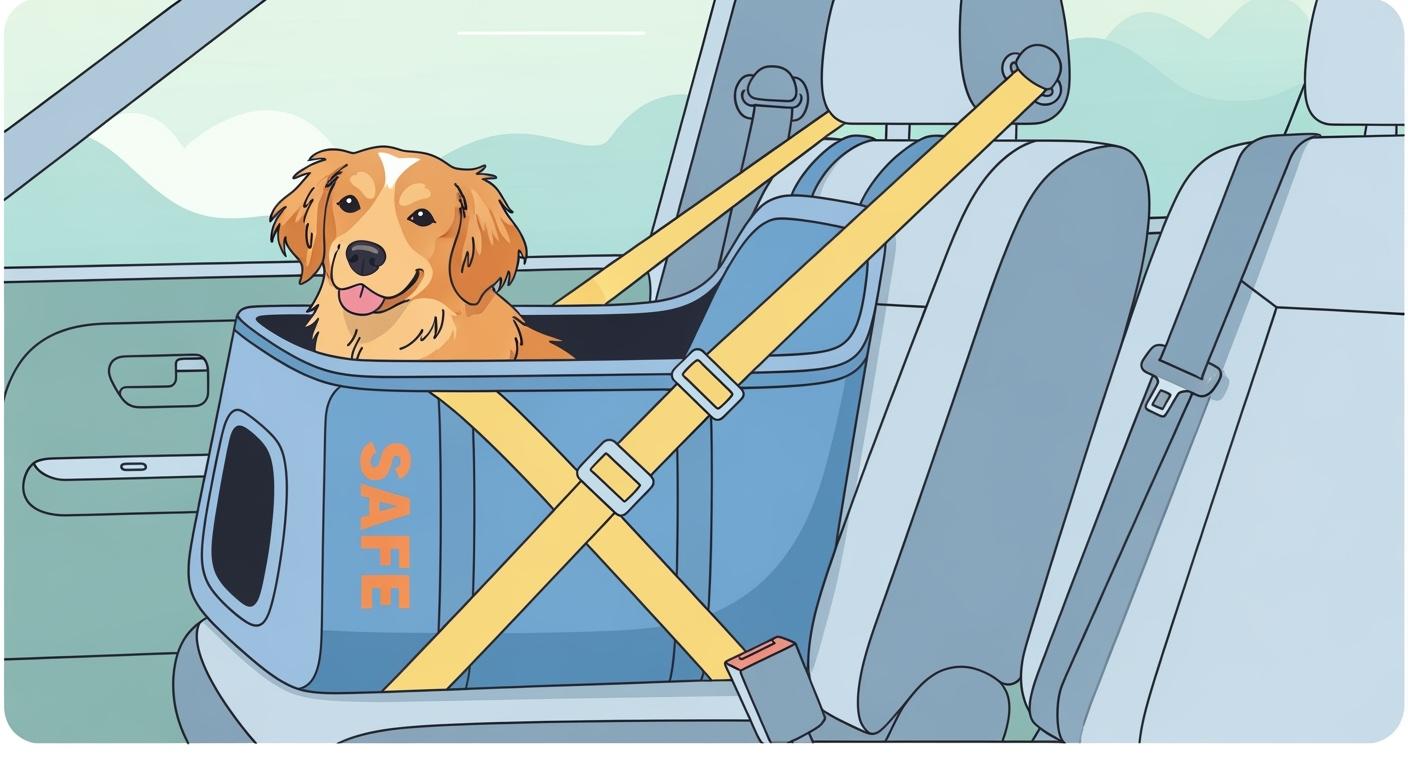
A car seat dog carrier should first solve two practical problems: give your dog enough room to settle naturally and stay stable on the rear seat during normal driving. Many pages talk about “safety” in a broad way, but buy decisions usually go wrong for more basic reasons. The carrier may be too tight inside, sit unevenly on the seat, block airflow, or shift when the car turns or brakes. Those fit problems often matter more than long feature lists.
This guide stays focused on real buying checks for a carrier-style seat. It looks at space, entry shape, base support, rear-seat placement, ventilation, cleanup, and setup mistakes. A carrier-style seat can help with containment and comfort, but it is not the same thing as a crash-tested restraint unless the specific product has been independently tested for that purpose.
Key Takeaways
- Check usable inside room, not just outer measurements. Your dog should be able to lie down, turn, and settle without being pressed into the walls.
- Find features like high side walls and non-slip bases. These help a carrier feel steadier and less exposed on everyday rides.
- Rear-seat fit matters. A carrier that bridges awkwardly across a contoured seat often rocks, tilts, or slides even when the shell looks strong.
- Good ventilation, washable surfaces, and easy harness routing matter more for day-to-day use than big marketing claims.
What a Car Seat Dog Carrier Should Actually Do
Containment Without Overstating Protection
A carrier-style seat should help your dog stay in one defined rest space, reduce loose movement in the cabin, and make it easier for you to keep the ride calm and organized. That is different from promising crash protection. For a practical buying decision, ask whether the carrier helps your dog stay centered, supported, and less likely to scramble or slip when the car changes speed.
You want your dog to feel safe and comfortable every time you travel by car. For most small dogs, that starts with containment, stable placement, and enough inside room to rest in a natural posture. A very soft but unstable seat can still be a bad choice if it tips or bunches under the dog’s weight.
Rear-Seat Fit Comes Before Extras
The rear seat is not flat like a bench at home. Many carriers lose stability because the base is too narrow, too rounded, or too flexible for the seat shape underneath. Before focusing on color, outer pockets, or decorative padding, check whether the carrier sits squarely across the seating surface and whether the anchor path allows a snug installation without twisting.

Space and Fit Checks Before You Buy
Measure the Resting Shape, Not Just Standing Height
For a car seat dog carrier, usable room is more important than the longest outside dimension. Measure your dog in a relaxed resting position, then check whether the inside floor area supports that shape without forcing the body into a curl tighter than normal. Also check headroom in the position your dog actually uses in the car. Some dogs lie low; others sit up and lean into the wall. The right carrier should allow both without crowding the neck or pressing the ears into the roof.
Check Entry Shape and Wall Height
Entry height should feel manageable for the dog and realistic for you during daily loading. A deep carrier can feel secure once the dog is inside, but if the opening is awkward, loading becomes stressful. Side walls should feel supportive without making the carrier stuffy. For very small dogs, moderate wall height can help them settle. For dogs that get warm quickly, airflow and opening shape matter more.
| Check item | Pass signal | Fail signal | What to do |
|---|---|---|---|
| Usable inside room | Dog can lie down, shift, and turn without pressing into corners | Dog stays curled tight or braces against the walls | Go up in usable floor area, not just outer shell size |
| Entry opening | Dog can be placed in and lifted out without forcing limbs | Loading feels awkward or the opening collapses inward | Choose a wider or more structured opening |
| Wall support | Walls help the dog lean and settle without folding over | Walls sag or tilt when the dog shifts weight | Look for firmer side structure or a better-supported base |
| Base shape | Carrier sits flat and centered on the rear seat | Carrier rocks, tips, or bridges over the seat contours | Pick a base that matches the vehicle seat more closely |
Stability, Harness Routing, and Everyday Use
Stable Placement Matters More Than Thick Padding
A thick cushion does not fix an unstable setup. Press down lightly on the front corners and rear corners after installation. The carrier should not teeter side to side. Then do a simple driveway test or a slow neighborhood loop and look again. If the carrier has drifted, twisted, or leaned to one side, the base or anchor path is not working with your rear seat.
Harness Routing Should Stay Simple and Clear
The tether path should be easy to reach and easy to check. Avoid setups where straps disappear under deep padding or where you have to guess whether the connection stayed centered under the dog. Keep the route clean, avoid extra slack, and use a harness rather than a collar when the carrier is designed for tether use.
Choosing the right dog carrier car seat means checking for fit, stability, and real-world safety. In practice, that means rear-seat placement, controlled movement, clear harness routing, and a setup that stays readable after the first short trip.
Ventilation and Cleanup Are Part of Long-Term Fit
A carrier can technically fit and still be wrong for daily use if it traps heat, holds odors, or is difficult to clean after a messy ride. Look for open mesh areas that do not get blocked by the seatback or by blankets. Covers should come off without a complicated reassembly process. If liners bunch up after washing, the inside support surface changes and the dog may stop settling well.
| Common issue | Likely cause | Quick check | Better direction |
|---|---|---|---|
| Carrier slides during turns | Base grip is weak or anchor path is loose | Push the empty carrier sideways before loading the dog | Use a more stable base shape and re-check the install path |
| Dog stays tense instead of settling | Inside room is cramped or walls feel unstable | Watch whether the dog keeps bracing with the feet | Improve usable room or choose firmer side support |
| Carrier feels hot quickly | Airflow is blocked or fabrics hold heat | Feel the inside after a short ride, especially near the walls | Choose more open ventilation and lighter-contact lining |
| Setup looks neat but shifts after driving | Seat contours and carrier base do not match | Check whether the base stayed centered after one short ride | Prioritize seat fit over extra accessories |
Tip: A short test drive tells you more than a long feature list. Re-check the carrier after the first neighborhood ride, not just right after installation in the driveway.
Common Buying Mistakes
- Choosing by outside dimensions only and never checking usable inside floor area.
- Assuming “safety buckles” or “travel-ready” wording automatically means crash-tested protection.
- Picking thick cushioning but ignoring whether the base stays flat on the rear seat.
- Covering ventilation areas with blankets or extra inserts.
- Treating a carrier seat like a front-seat accessory instead of a rear-seat setup.
Final Buying View
The best car seat dog carrier is usually the one that fits the rear seat cleanly, gives your dog usable rest space, stays stable through normal driving, and remains easy to ventilate and clean. Those practical checks matter more than long lists of broad safety claims. If a carrier works well in a short real-world test, stays centered, and lets your dog settle naturally, you are much closer to the right choice.
FAQ
Should a car seat dog carrier go in the front or rear seat?
Use the rear seat. It is the better place to check for stable placement, clear harness routing, and less interference with normal driving.
How much room should be inside the carrier?
Your dog should be able to lie down, shift position, and turn without pressing hard into the walls or roof. Check the inside floor area, not just the outside size.
Does a bigger carrier always mean a better choice?
No. Too much empty room can still feel unstable if the base does not match the rear seat well. The goal is usable room plus stable placement.
What should you check after the first short ride?
Look for drifting, tilting, twisted straps, blocked vents, bunching liners, and whether your dog settled naturally or kept bracing against the walls.






