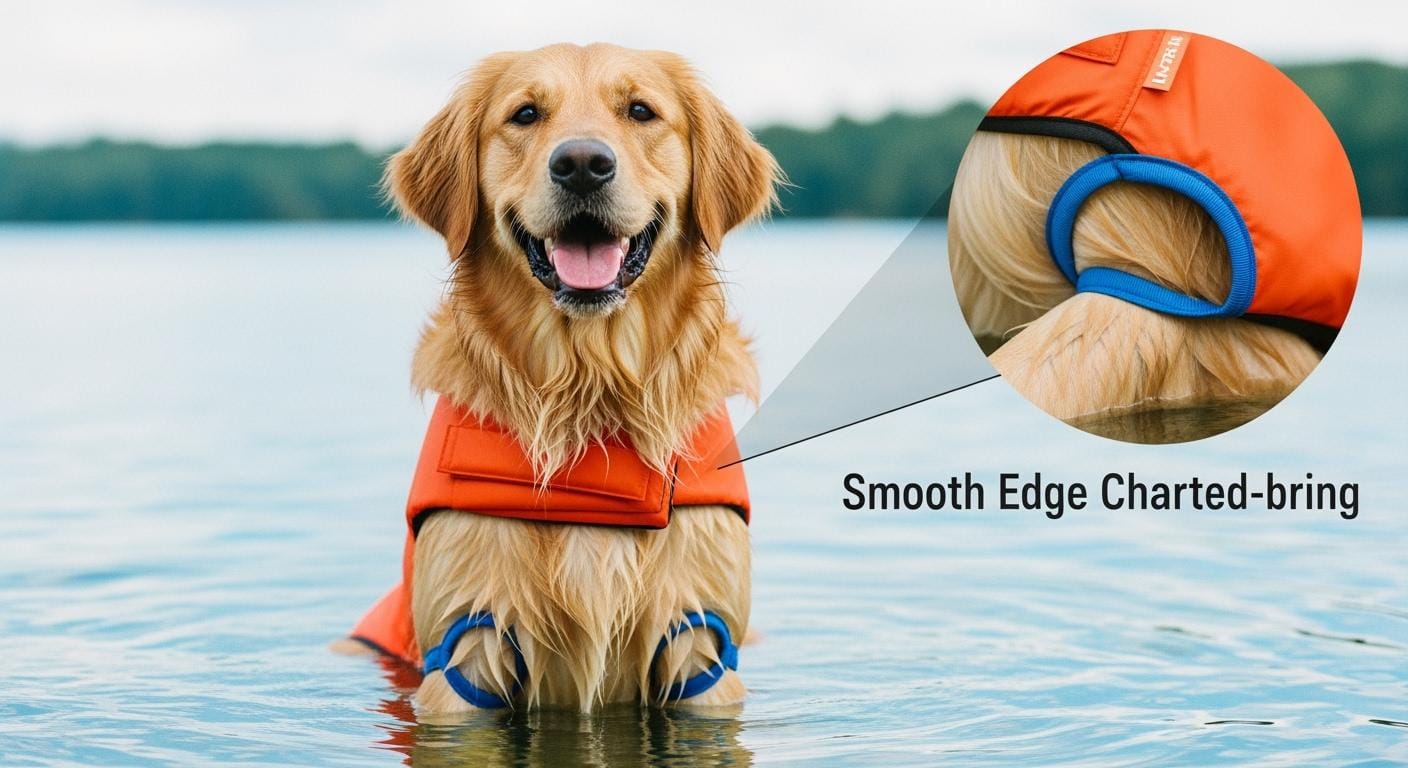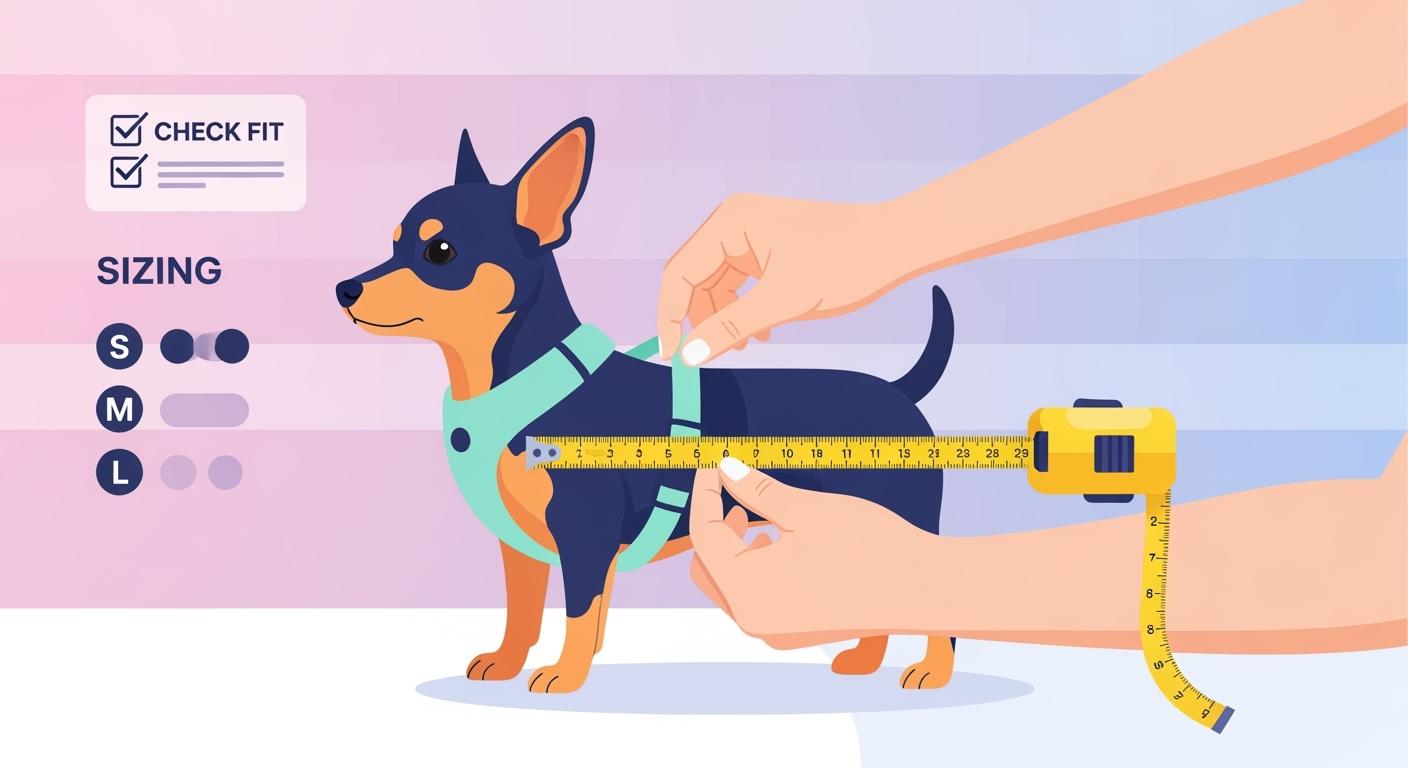
Choosing a harness for a small dog is less about the size label and more about fit on the body that will actually wear it. Small dogs often react quickly to bulky clips, tight neck openings, loose chest straps, and rubbing behind the front legs. A better choice starts with the chest measurement, then continues with a short fit test at home.
This page offers general product-fit guidance for daily walks. It is not medical or behavior advice.
Key Takeaways
- Measure your dog’s chest and neck before you buy a harness. Size names such as XS or small are not enough on their own.
- Start with chest fit first. Then check neck opening, shoulder freedom, underarm clearance, and whether the harness stays centered when your dog moves.
- Do a short indoor or driveway walk before daily use. Recheck the fit after the first few minutes because fur settles and straps can shift.
What to Measure Before You Buy
Before you choose a harness, measure the widest part of the chest just behind the front legs. This is usually the most important number for small-dog harness fit. If the product page also asks for neck size, measure around the base of the neck near the shoulders rather than higher up near the throat.
A soft tape measure works best. Let it rest against the coat without pulling it tight. Write the numbers down and compare them to the chart for that specific harness instead of assuming one brand’s small will match another’s.
Quick measuring routine:
- Measure the chest at the widest point behind the front legs.
- Measure the lower neck only if the size guide asks for it.
- Check whether your dog has a deep chest, very fine frame, or thick coat, because these can affect real-world fit.
How to Check Fit at Home
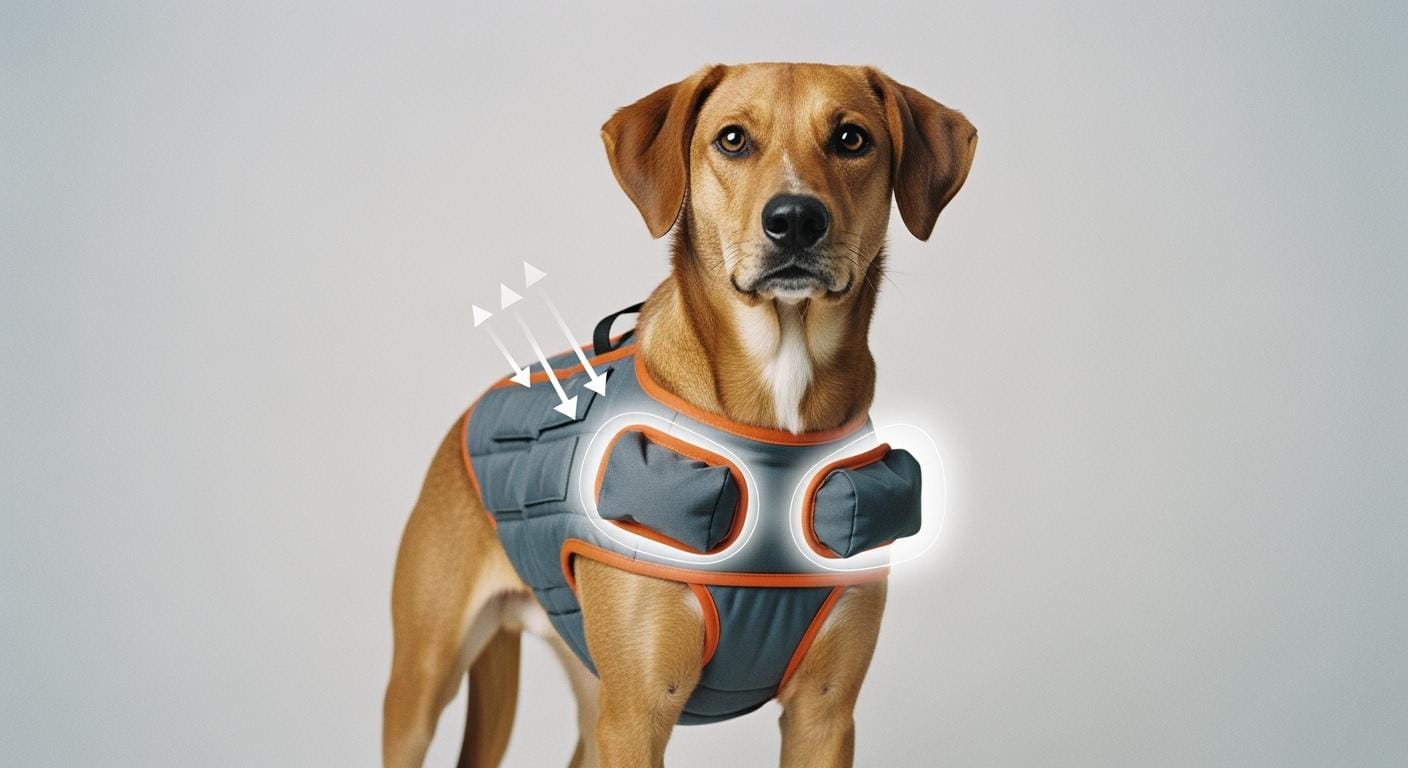
Once the harness is on, adjust the straps so the chest section sits snugly without crowding the front legs. The front area should stay off the soft throat, and the harness should remain centered instead of twisting to one side.
For a practical snugness check, slide one finger under the chest strap with light resistance. If the strap floats away from the body, the fit is usually too loose. If you have to force your finger under the strap or the dog stiffens as soon as the harness is clipped, the fit may be too tight.
| Check | Pass | Fail |
|---|---|---|
| Chest fit | Snug with light one-finger access | Loose gap, rolling, or very tight pressure |
| Neck opening | Sits low and clear of the throat | Rides up or presses forward when the leash tightens |
| Shoulder freedom | Front legs move naturally | Short stepping, hesitation, or rubbing at the shoulder |
| Underarm clearance | No pinching or hot spots after a short walk | Redness, hair flattening, or repeated scratching |
| Back-out risk | Harness stays centered when the dog pauses or backs up | Harness loosens, shifts, or opens a gap at the chest |
Then do three simple movement checks:
- Doorway test: walk through a doorway and look for sideways shifting or clip bulk that catches on the shoulder.
- Short walk test: do a calm indoor or driveway walk and watch for rubbing, hopping, backing out, or frequent stopping.
- Post-walk recheck: touch the underarm area and chest panel after the walk. Look for rub marks, twisted straps, or a neck opening that has crept upward.
If your dog coughs, limps, shows skin irritation, or seems distressed in the harness, stop using it and ask your veterinarian for guidance.
Features That Matter More Than the Size Label
For small dogs, low bulk usually matters more than extra hardware. Large buckles, thick chest panels, or wide straps can feel awkward even when the label says the harness is the right size. Look for a layout that allows easy adjustment without piling too much material around the chest and shoulders.
- Light hardware: clips and rings should feel proportionate to a small frame.
- Stable adjustment points: straps should hold their position after a few walks instead of loosening on their own.
- Low-rub lining: smooth contact areas help reduce rubbing risk during daily use.
- Clear leash position: the attachment point should not pull the neck opening up into the throat.
Step-in and overhead styles can both work. The better choice depends on how easily your dog accepts handling and whether the final fit stays secure around the chest. A style that is easy to put on but loose when walking is still the wrong fit.
Common Small-Dog Fit Mistakes and Quick Fixes
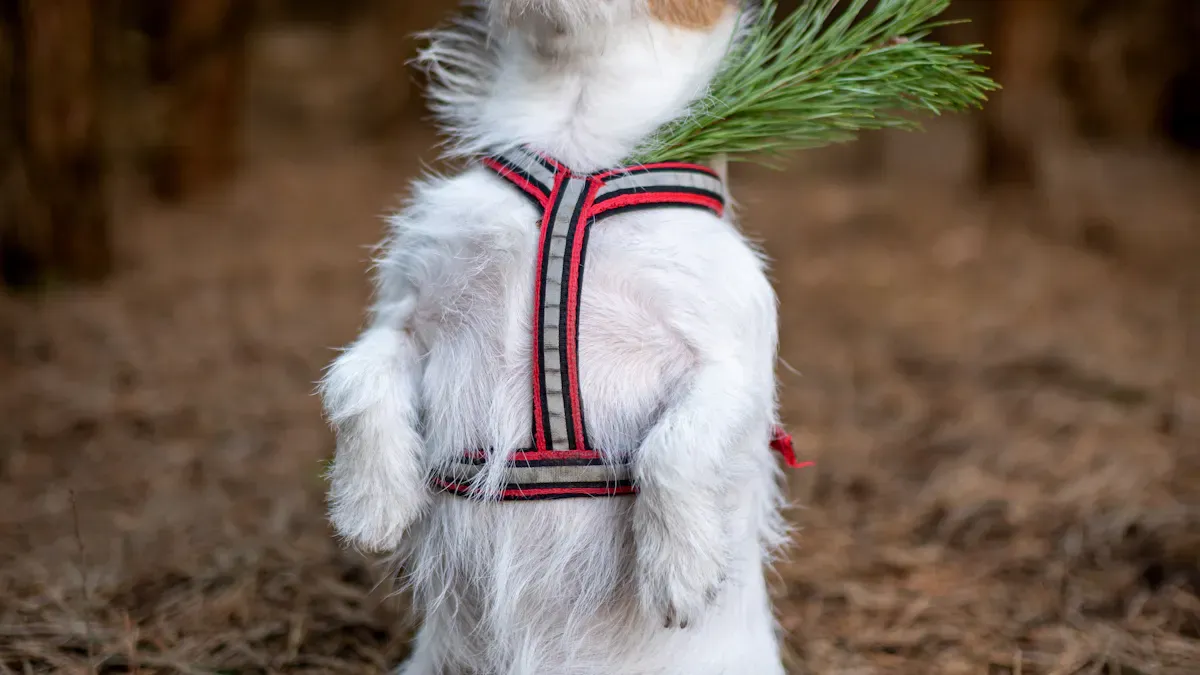
People often make mistakes when picking a harness for a small dog. The most common one is buying by label only. Another is accepting a loose chest fit because the neck opening looks comfortable. Small dogs also tend to feel clip bulk and strap placement more quickly than larger dogs, so a harness that looks fine while standing can still become annoying once the dog starts moving.
- Mistake: buying a small because the packaging says small.
Fix: compare your dog’s actual chest measurement to that product’s chart. - Mistake: choosing the loosest setting to make dressing easier.
Fix: fit the chest first, then recheck ease of entry. - Mistake: skipping a walk test.
Fix: do a short test at home before regular outdoor use. - Mistake: forgetting to recheck after grooming, coat changes, or weight changes.
Fix: repeat the chest and movement checks whenever body shape changes.
FAQ
How snug should a small-dog harness feel?
It should feel secure rather than loose, with light one-finger access under the chest strap. The harness should stay centered and should not ride up into the throat during a short walk.
What should I do if the harness rubs behind the front legs?
Check whether the chest strap is sitting too far back or whether the harness is shifting side to side. If adjustment does not solve the problem, try a lower-bulk layout or a softer contact surface.
Should I choose a step-in or an overhead harness for a small dog?
Either can work if the final chest fit is secure and the dog can move naturally. Choose the layout your dog tolerates best, then confirm fit with a short walk test instead of deciding by style alone.