
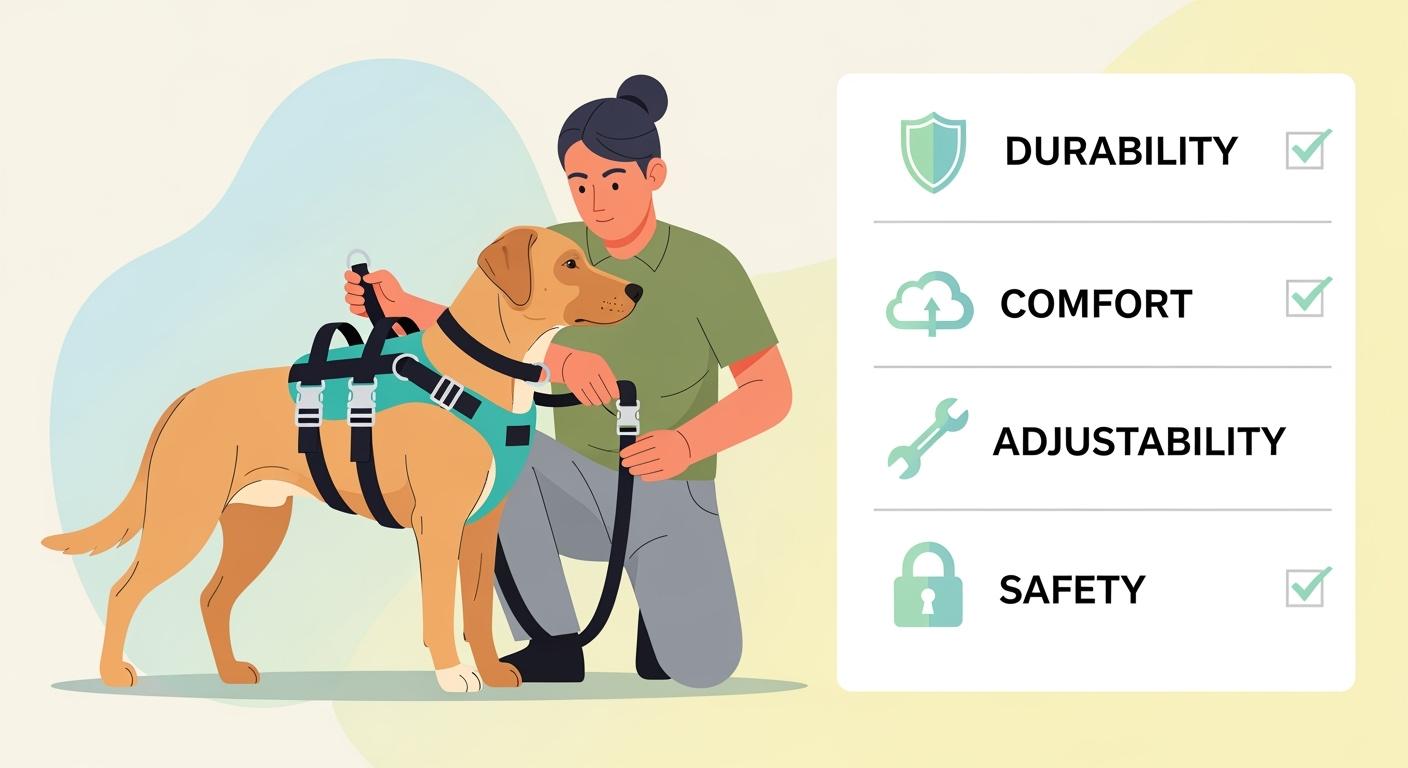
If you are shopping for the best tactical dog harness, start with fit, not styling. A harness can look rugged and still be the wrong choice if it rides too high on the neck, crowds the shoulders, shifts on turns, or traps heat on longer walks. For most dogs, the better buy is the one that stays centered, allows free front-leg movement, gives you a secure top handle for brief close control, and feels easy to adjust and clean.
Tactical-style harnesses often add more coverage, more webbing, and more attachment points than a simple everyday harness. Those details can be useful, but they also add bulk. Before you buy, check whether the layout really suits your dog’s body shape and your usual walking routine. That will reduce rubbing, escape problems, and returns caused by poor fit.
Tip: Tactical styling does not automatically mean better control. The right harness is the one your dog can move in comfortably and predictably.
What to Check Before You Buy
Use this quick list before you commit to a tactical-style harness:
- Measure chest girth and lower neck area instead of buying by appearance or body weight alone.
- Check where the chest panel and belly strap sit so they do not crowd the shoulders or rub behind the elbows.
- Look at the top handle, buckles, and leash points as daily-use parts, not just rugged-looking features.
- Check inner seams, padding, airflow, and cleanup needs if your dog wears the harness often or walks in warm weather.
- Do a short first test at home or on a calm route before you make it part of longer walks.
Fit, Shoulder Freedom, and Escape Risk
Start with chest, neck, and underarm clearance
Measure the widest part of your dog’s chest just behind the front legs. Then measure around the lower neck area where the harness will actually sit. Use those numbers against the brand size chart instead of guessing from labeled sizes like medium or large.
Once the harness is on, adjust the straps until you can slide one or two fingers under them without leaving large gaps. Then check three points: the chest panel should stay clear of the throat, the belly strap should sit behind the elbows instead of cutting into them, and the underarm area should still have comfortable clearance when your dog stands and turns.
If the harness twists, rolls, or leaves obvious gaps during normal movement, it is not a stable fit. If your dog shows rubbing, repeated scratching, or keeps licking the contact points after a walk, the harness may be too bulky, too rough at the edges, or simply the wrong shape.
Watch movement, not just static fit
A tactical harness can feel secure when the dog is standing still and still fail once the dog starts moving. Use a short hallway test or calm outdoor walk to check shoulder freedom, turning, sitting, and backing up. The harness should stay centered without pulling across the shoulder joint or sliding sideways on turns.
Also check back-out risk. Some dogs can reverse out of a loose or poorly balanced harness surprisingly fast. If the neck opening widens too much when the dog backs up, or if the body section shifts off-center, stop and refit before regular use.
Note: This is general product-fit guidance, not medical advice. If your dog shows limping, pain, skin injury, coughing, breathing stress, or major mobility issues, contact your veterinarian.
A good fit protects your k9 and helps you control your dog.
Handle, Hardware, Coverage, and Daily Comfort
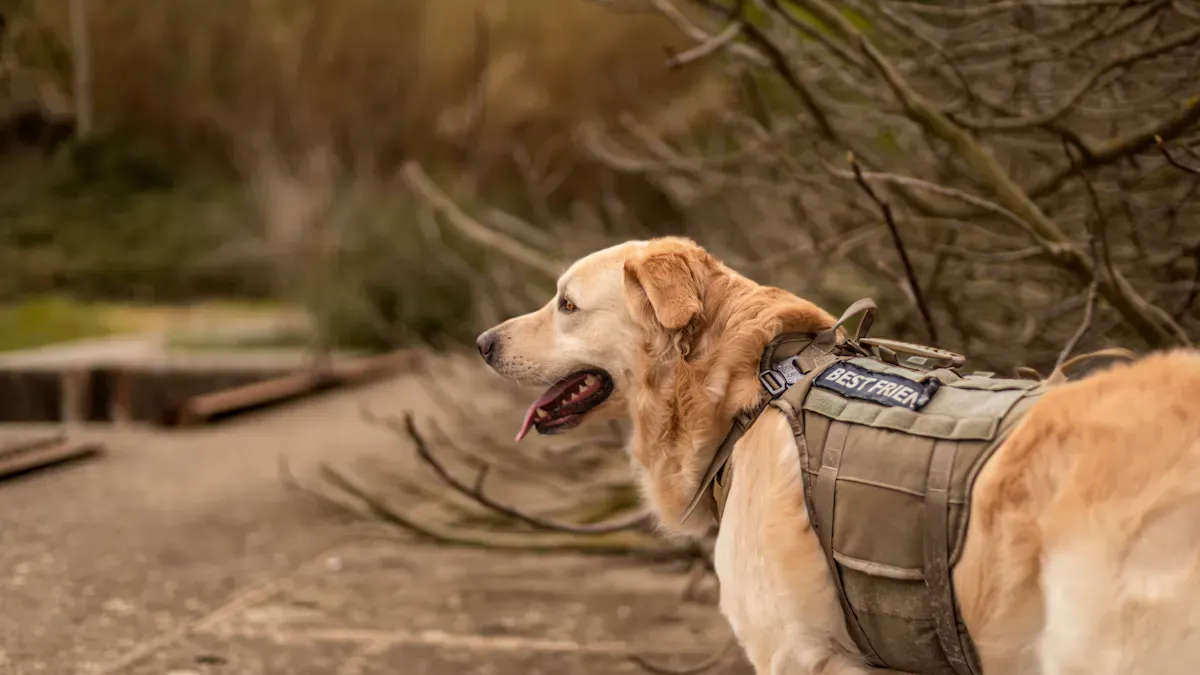
Top handle and leash points
A top handle is helpful for brief close control at doors, curbs, or crowded moments. It should feel secure in your hand and lie flat enough that it does not flop around when unused. Treat it as a control aid, not a lifting handle for your dog’s full body weight.
Leash points should stay stable under normal pull without twisting the whole harness off-center. When you clip a leash on, look at whether the ring sits in a straight, predictable position and whether the harness still lies flat across the chest and back.
Panels, webbing, lining, and cleanup
More coverage is not always better. Large side panels can be useful for patches or gear, but they should not make the harness stiff, hot, or hard to dry after routine cleaning. Check the inner lining, seam finish, and edge softness before buying. Rough edges and bulky folds are common reasons a harness feels fine in the hand but causes rubbing on the dog.
It also helps to think about your real routine. If your dog wears the harness often, walks in warm weather, or gets wet or dirty on everyday routes, pick a layout that is easy to brush off, wipe down, and air dry. Heavy shells and extra layers can hold dirt and moisture longer than simpler constructions.
| What to inspect | Good sign | Watch-out |
|---|---|---|
| Top handle | Feels secure and easy to grab for short control moments | Twists, flops excessively, or encourages lifting use |
| Chest panel | Lies flat and stays clear of the throat | Rides high, crowds the neck, or blocks shoulder motion |
| Belly strap area | Sits behind the elbows with comfortable clearance | Rubs behind the legs or shifts forward during movement |
| Buckles and rings | Close cleanly and stay aligned during leash use | Stick, loosen, or twist off-center |
| Lining and seams | Feel smooth, low-bulk, and easy to clean | Feel rough, thick, or likely to hold heat and dirt |
Check all harness features before you buy if you are deciding between a more rugged layout and a lighter everyday option.
Common Mistakes and First-Use Checks
Most buying mistakes happen because the harness looks strong on the shelf but does not match the dog or the routine. These are the ones to watch first:
- Buying for looks alone and skipping actual chest and neck measurements.
- Choosing too much panel coverage for short daily walks where a lighter layout would be easier and cooler.
- Assuming tactical styling means better safety in the car. A walking harness is not the same thing as a tested travel restraint.
- Using the top handle as a lifting tool instead of a brief close-control feature.
- Skipping the first short walk check and only noticing rubbing after the harness has already been used longer.
| Check item | Pass signal | Fail signal | What to do |
|---|---|---|---|
| Centered fit | Harness stays stable on straight walking and turns | Rolls, shifts, or drifts to one side | Refit straps or try a different size or shape |
| Shoulder movement | Dog walks, sits, and turns normally | Short stride, stiff turn, or obvious resistance | Check chest panel position and overall bulk |
| Skin and coat contact | No hot spots, red marks, or repeated licking | Rubbing, scratching, or coat wear at edges | Look for smoother seams or a different layout |
| Handle and hardware | Easy to grab and clip without twisting | Awkward closure, stuck buckles, or unstable ring position | Switch to a cleaner, easier-to-use design |
| Heat and cleanup | Harness feels manageable for your usual route and weather | Feels heavy, damp, dirty, or overly warm after routine use | Choose a lighter, easier-drying construction |
Tip: After the first short walk, run your hands along the neck, chest, and underarm contact points before you decide the harness is a keeper.
FAQ
How snug should a tactical dog harness feel?
It should feel secure without squeezing. You should usually be able to slide one or two fingers under the straps, and the harness should stay centered when your dog walks and turns.
Can a tactical harness work for daily walks?
Yes, if the fit is stable and the overall build matches your routine. For some dogs, extra coverage and hardware are fine. For others, a lighter everyday harness may feel cooler and easier to wear.
What if my dog gets rubbing or tries to back out?
Stop using the harness as-is. Recheck strap adjustment, shoulder clearance, and neck opening shape. If rubbing or escape attempts continue, try a different size or a different harness layout instead of forcing the fit.






