
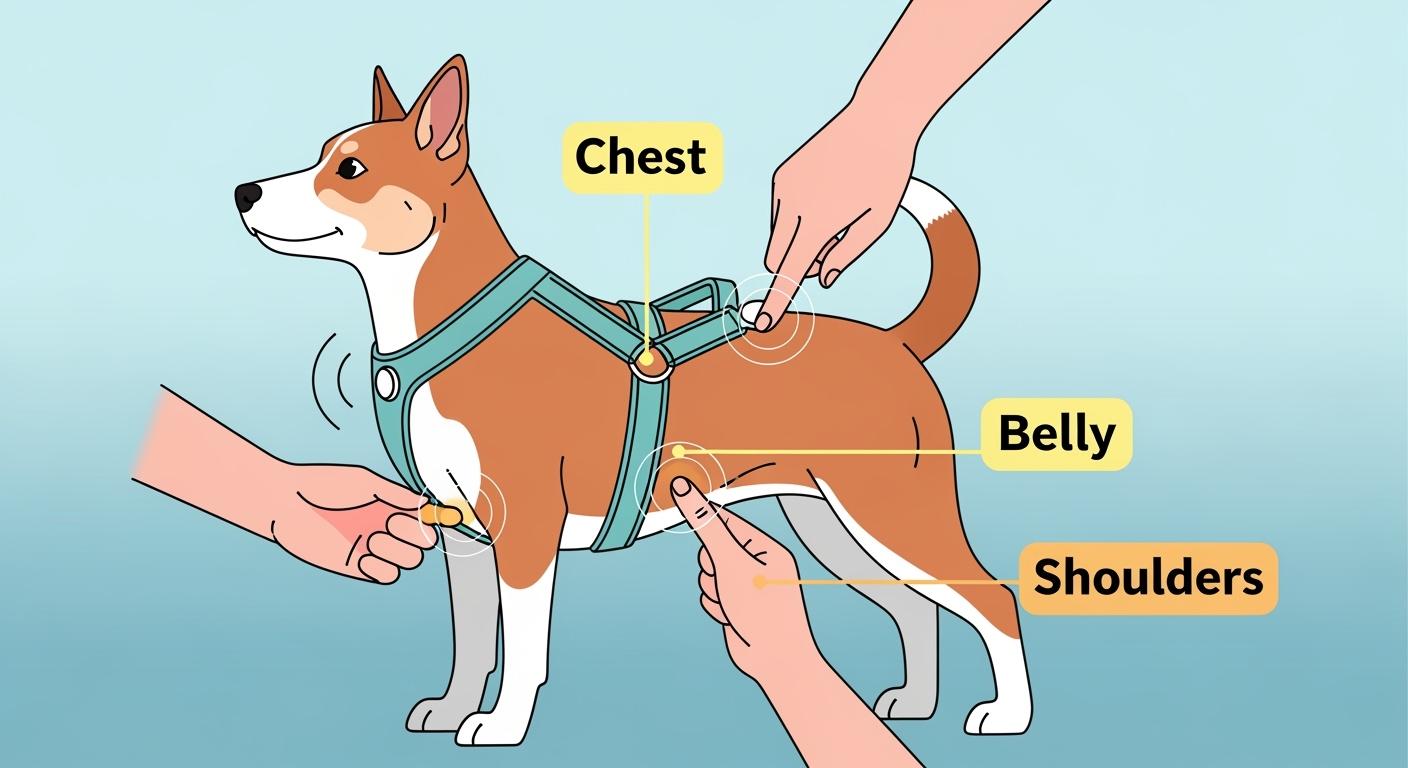
Choosing a dog harness for dogs that pull is not just about picking a product labeled pull control. The better question is whether the harness stays balanced on your dog once real leash pressure starts. A useful harness should sit clear of the throat, stay off the soft area behind the front legs, and remain stable when your dog leans, turns, or restarts after stopping.
This page focuses on everyday walking fit. It does not treat a walking harness as a crash-protection device or promise that one harness will stop pulling on its own. The goal is more practical: help you reduce fit mistakes, discomfort, escape risk, and return-worthy problems before daily use.
Key Takeaways
- Measure your dog’s neck and chest size for a good harness fit. Chest girth usually matters most, but neck opening, belly strap position, and overall balance matter too.
- A good harness for a puller should let the shoulders move cleanly and should not rotate hard to one side when the leash loads.
- Do not choose by breed label, weight alone, or thick padding alone. Those shortcuts often miss the real fit problems.
- Always do a short indoor or driveway test before the first full walk. Motion reveals rubbing, shifting, and escape gaps quickly.
3 Fit Checks That Matter Most
You want your dog harness for dogs that pull to fit your dog well. For strong pullers, three checks matter more than long feature lists: chest and neck fit, shoulder clearance, and escape resistance once the leash gets tight.
1. Chest and neck fit
Start with a soft tape measure. Measure the chest at the widest part, just behind the front legs. Then measure the neck at the base where the harness opening will sit. Compare both numbers with the size chart, but treat chest girth as the main checkpoint unless the harness has a very specific front opening.
Once the harness is on, each strap should sit flat without obvious gaps or bunching. You want a snug fit, not a squeezed one. A loose chest section can let the harness roll and drift. An overly tight neck or chest section can make the whole layout feel crowded during walking.
- Pass: the harness stays flat and centered when the dog stands, sits, and turns.
- Fail: the chest piece slides sideways, the straps twist, or the neck opening rides up.
Tip: Recheck fit after coat changes, weight changes, or the first few uses. A harness that looked fine over fluffy coat can settle differently once the coat compresses on a walk.
2. Shoulder clearance and front movement
A pulling dog needs room to move through the shoulders without the harness crowding that motion. If the front layout cuts too far across the shoulder area, your dog may shorten stride, look stiff on turns, or start fighting the harness instead of walking smoothly.
Check clearance with a simple motion test. Walk a few steps forward, make a slow turn, then let your dog lower the head to sniff. The harness should stay stable without dragging forward into the throat or pinching near the front of the shoulders.
- Pass: the dog moves normally and the front section stays clear of the throat and shoulder area.
- Fail: the front section shifts upward, crowds the chest, or makes the dog look choppy in movement.
3. Escape risk under leash pressure
Many escape problems do not show up when a dog is standing still. They show up when the dog backs up, hits the end of the leash, or twists out of pressure. That is why a static try-on is not enough for dogs that pull.
Clip on the leash and do a short driveway test or hallway test. Watch what happens when your dog steps forward, stops, and backs up slightly. A stable harness should stay centered instead of rotating, sliding backward, or opening visible space around the neck and chest.
- Pass: leash pressure pulls against the harness without major shifting or roll.
- Fail: the harness rotates, the neck opening widens, or the dog can begin to back out.
| Check Point | Pass Signal | Fail Signal |
|---|---|---|
| Chest fit | Snug, flat, and centered | Gaping, rolling, or drifting sideways |
| Neck opening | Sits low and stable at the base of the neck | Rides high or opens up under pressure |
| Shoulder clearance | Dog walks and turns without shortened stride | Front layout crowds motion or shifts forward |
| Belly strap position | Clear of the elbow area and stable in motion | Rubs behind the front legs or slides back |
| Escape resistance | Harness stays balanced in a short backup test | Dog can loosen or rotate the harness by backing up |
Materials, Clip Layout, and Everyday Use
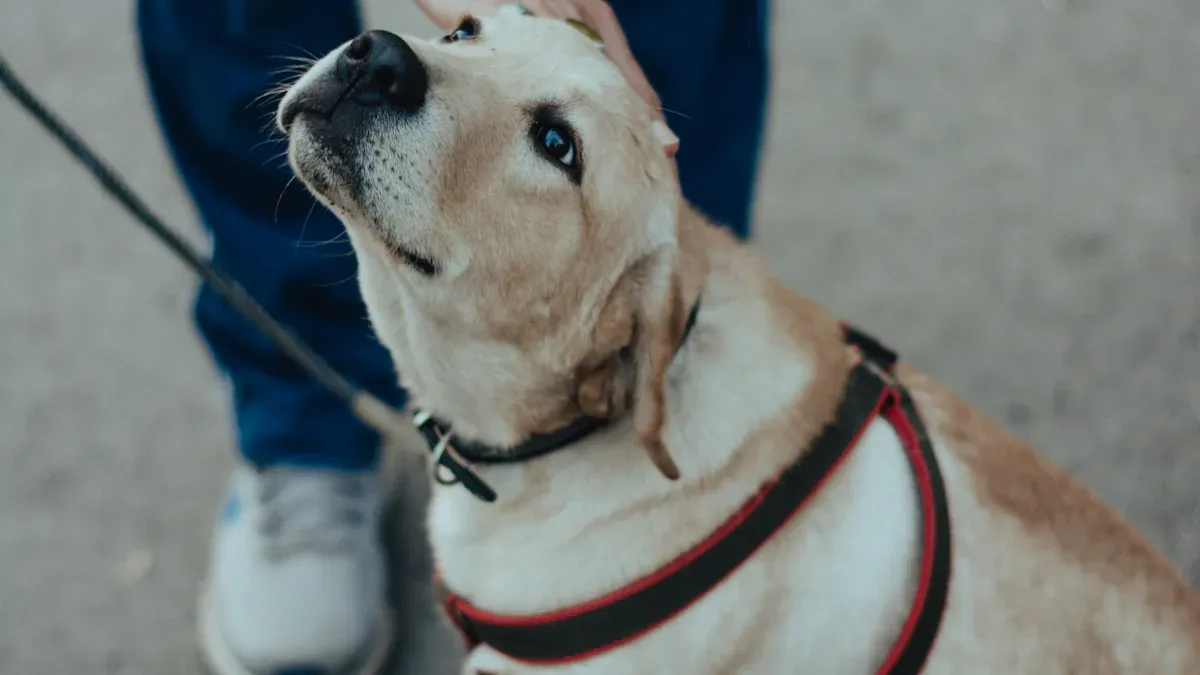
Once fit basics are right, look at the parts that affect daily use: webbing feel, edge finish, hardware stability, and clip layout. These details matter more than big claims on packaging.
Webbing, padding, and hardware
Smooth webbing and clean edges help reduce rubbing. Padding can add comfort, but extra bulk does not fix poor fit. In some cases, thick padding hides instability because the harness still shifts even though it feels soft in hand. Check the buckle closure, the leash ring, and the stitching where the straps join. Those areas take repeated load during daily walks.
Also think about cleanup. A harness used on wet sidewalks, muddy paths, or frequent walks should be easy to rinse and quick enough to dry without staying stiff or unpleasant to handle the next day.
Front clip, dual clip, and layout balance
Clip position changes how the harness feels in use. A front clip can improve steering for some dogs, but only if the front area stays balanced and does not drag low across the chest. A dual-clip layout gives you more options, but it also adds more hardware to check. The best choice is the one that stays centered on your dog and matches how you actually walk and train.
No clip setup replaces fit work. If the harness rotates when the leash goes tight, the issue is usually fit or layout balance first, not the number of clips.
Common Mistakes and a Better First Test
Many returns happen because buyers judge the harness while the dog is standing still for thirty seconds. Pulling behavior exposes problems later, so the first useful test needs motion.
Short test routine
- Indoor on/off check: make sure you can put the harness on without a struggle and that the straps lie flat once buckled.
- Driveway or hallway walk: walk a few steps, stop, turn, and restart. Watch whether the harness stays centered.
- Post-walk recheck: run your hand behind the front legs, across the chest, and around the neck opening. Check for rubbing, heat, shifting, or coat flattening in one obvious spot.
Common buying mistakes
| Mistake | Why It Causes Problems | Better Check |
|---|---|---|
| Buying by breed or weight only | Dogs with the same weight can carry size very differently through the chest and shoulders | Measure chest and neck before comparing sizes |
| Trusting padding instead of fit | Soft materials can still shift, crowd motion, or rub | Check balance, clearance, and post-walk rub points |
| Choosing a no-pull label as the main reason to buy | Control claims do not tell you whether the harness fits your dog cleanly | Focus on stability, clip position, and real movement tests |
| Skipping the backup test | Escape gaps often appear when the dog backs out of pressure | Test light backward pressure in a safe space |
| Treating a walking harness as a car restraint | It confuses everyday walking gear with a different safety use | Keep this choice focused on walking fit and daily control |
This guide covers general product fit and everyday use. It is not medical, veterinary, or behavior diagnosis. If your dog shows pain, coughing, limping, or fear in the harness, stop using it and contact a qualified professional.
FAQ
Can a harness stop every dog from pulling?
No. A harness can improve control and make leash handling cleaner, but it does not replace training. Fit and practice still matter.
How do I know the harness is too loose?
Watch for rolling, sideways drift, a widening neck opening, or a dog that can start backing out when the leash tightens. Those are stronger warning signs than a loose look while standing still.
How tight should the straps feel?
You want the harness snug enough to stay stable but not so tight that it crowds movement or leaves obvious compression marks. Flat contact and balanced movement matter more than making every strap feel very tight.
When should I replace a harness?
Replace it when the buckles no longer close cleanly, the ring or stitching looks worn, the webbing begins to fray, or the harness no longer holds a stable fit after adjustment.
The best dog harness for dogs that pull is the one that fits your dog’s chest and neck correctly, leaves room for natural movement, and stays balanced when real leash pressure starts. Start with measurements, test motion early, and choose the layout that creates the fewest daily-use problems.






