
This guide focuses on everyday rear-seat comfort checks: fit, placement, base grip, harness access, airflow, and cleanup. It does not rate crash protection or replace a secured carrier or crash-tested restraint.
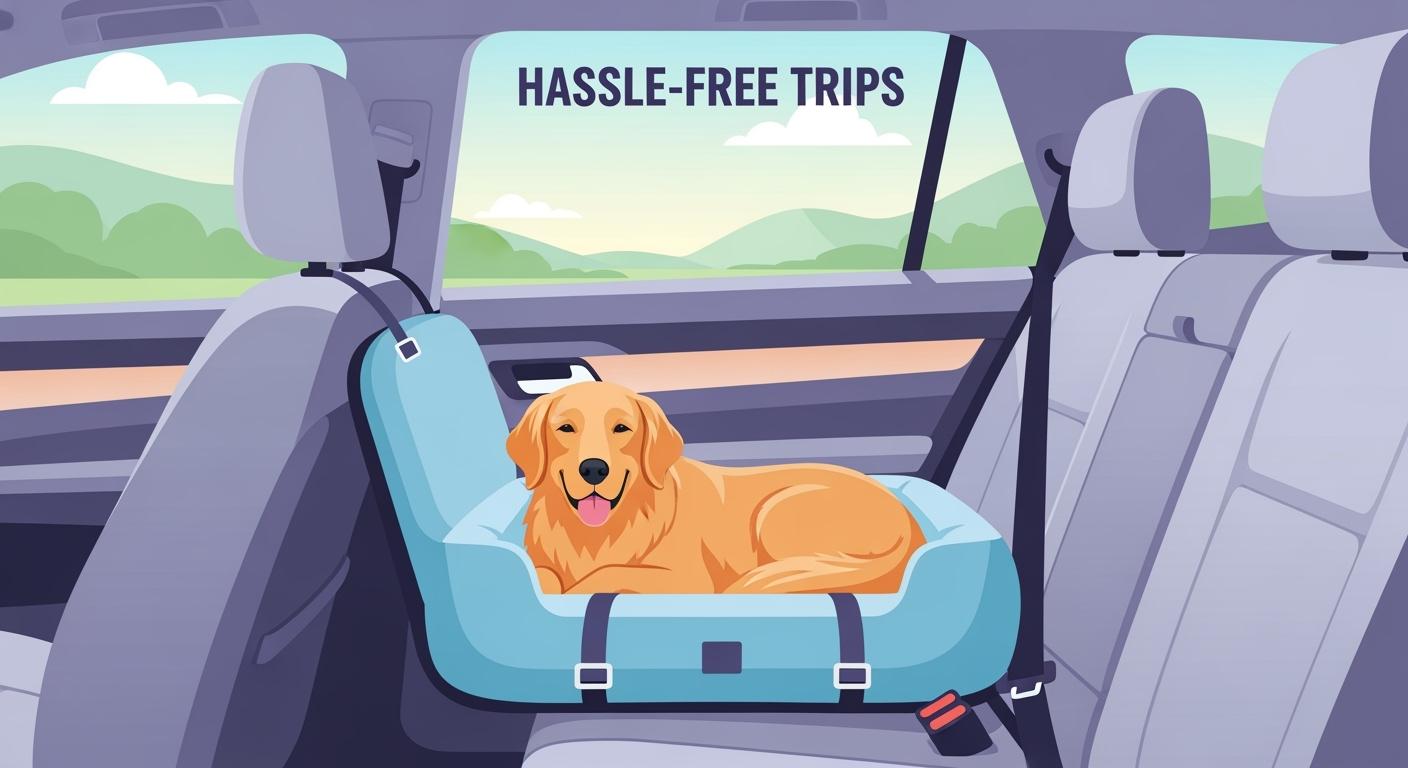
You want a travel dog bed for car that fits well, stays put, and cleans up easily. Start with three checks: your dog’s resting size, the usable rear-seat footprint, and whether the bed still leaves normal harness routing and buckle access. A soft bed can improve comfort, but it should not slide, bunch up, or crowd the entry opening.
Key Takeaways
- Measure your dog’s relaxed length, curled width, and the usable rear-seat area before comparing product dimensions.
- Check usable sleep space, not just the outside size. Thick bolsters can reduce the flat area your dog actually uses.
- Choose stable fill, a grippy base, and a cover that is easy to remove and wash after muddy or hairy trips.
- Do a short driveway or neighborhood test ride before regular use to catch sliding, crowding, or harness-access problems early.
Fit Guide for a Travel Dog Bed for Car
Resting Posture and Usable Sleep Area
Choosing the right travel dog bed for car starts with how your dog actually rests. Watch your dog at home when they settle naturally. Some dogs stretch out with front legs forward. Others curl tightly with the head turned inward. Measure both positions if your dog switches between them.
Write down two numbers: relaxed body length and curled width. Then compare those numbers with the bed’s flat interior area, not only the outer size. A bed can look large on the product page but still feel tight if thick bolsters take up too much room.
Tip: A good fit lets your dog lie down, adjust once or twice, and settle without a paw, shoulder, or hip hanging over the edge.
Bolsters should support the body without forcing an awkward perch. If your dog prefers to lean on one side, check whether the sidewall supports the head and shoulder without pushing the neck forward. If your dog likes to stretch flat, very bulky bolsters may reduce usable space too much.
Rear-Seat Footprint, Entry Opening, and Harness Access
Measure the usable rear-seat area where the bed will sit. Focus on width, depth, and how flat the sitting surface is. A travel dog bed for car should sit flat inside that footprint rather than curling up at the edges or hanging over the seat.
Also check the front opening and nearby seat-belt area. Your dog should be able to step in and turn without catching a paw on a stiff edge. If you use a walking harness for normal travel management, the bed should not bury buckles, block tether routing, or crowd your dog’s chest when they sit up.
- Measure your dog’s relaxed length and curled width at home.
- Measure the rear-seat width and depth where the bed will rest.
- Compare those numbers to the bed’s usable interior area and outer footprint.
- Place the bed on the seat and check whether it sits flat without bunching or tipping.
- Let your dog enter, turn, lie down, and get back out once or twice.
- Take a short supervised ride and recheck sliding, bunching, and entry comfort right after the drive.
Note: The bed should support calm travel, but it should still allow normal rear-seat use and a clear, low-stress entry for your dog.
Materials and Construction That Matter on Real Trips
Cover Fabric, Fill Stability, and Cleanup
Start by checking the cover fabric. Smooth, low-lint surfaces are usually easier to wipe down after dirt, loose hair, or wet paws. A removable cover is often the most practical choice for regular travel because you can wash the part that gets dirty most often without replacing the full bed.
Look closely at how the fill behaves when pressure shifts. Press down where your dog will lie, then release. The surface should settle back without leaving a deep hollow or pushing all the filling to one side. If the center collapses quickly or the bolsters flatten unevenly, the bed may feel less stable after repeated trips and washes.
Low-noise fabric can also matter. Crinkly covers may be easy to wipe clean, but some dogs keep adjusting on noisy surfaces. If your dog is already uncertain in the car, quiet fabric and steady fill can make settling easier.
Base Grip, Bolster Shape, and Edge Details
A non-slip base matters because movement is one of the fastest ways to make a comfortable-looking bed feel wrong in the car. Check whether the underside grips the seat rather than skating across it when you push sideways with one hand. If it shifts easily on the parked car seat, it is more likely to slide when you brake or turn.
Bolsters should add support without blocking the opening or forcing your dog to step too high. A lower front edge often works better for easy entry, while side or back bolsters can help with leaning and body positioning. What matters is balance: enough structure to support the body, but not so much bulk that the bed becomes cramped.
Finish details matter too. Check seams, zipper placement, piping, and trim near contact points. Rough seam ridges or hard zipper ends can rub the chest, elbow, or hip during longer rides. After a short drive, run your hand along the contact zones and look for twisting, edge pressure, or areas where the bed folded under your dog.
Common Mistakes and Quick Checks
Most buying mistakes come from treating a car bed like a regular floor bed. In the car, seat shape, entry angle, movement, and cleanup matter more. These are the issues most likely to cause disappointment or returns:
- Choosing by outer dimensions only and ignoring the flat interior sleep area.
- Skipping rear-seat measurements and ending up with overhang, tipping, or bunching.
- Picking high, bulky sides that make entry awkward for smaller or cautious dogs.
- Assuming a softer bed is always better, even when the fill shifts too much during turns.
- Expecting a comfort bed to do the job of a crash-tested restraint.
| Check Item | Pass Signal | Fail Signal | What to Do |
|---|---|---|---|
| Usable sleep area | Dog can lie down, turn once, and settle naturally | Shoulder, hip, or paws crowd the edge | Look for a larger interior area or less bulky bolsters |
| Seat fit | Bed sits flat with no edge lift or overhang | Bed tips, curls, or bunches on the seat | Recheck the rear-seat footprint and choose a better-matched size |
| Base grip | Bed resists sideways push on the parked seat | Bed slides easily before the trip even starts | Choose stronger grip or a more stable base shape |
| Entry and harness access | Dog steps in easily and the bed does not crowd normal harness routing | Front edge feels awkward or buckles become hard to reach | Choose a lower opening or a layout with more front clearance |
| Cleanup | Cover removes cleanly and surface releases hair and dirt easily | Cover is hard to remove or fabric holds odor and debris | Choose a simpler, washable cover and smoother fabric |
If your main goal is full rear-seat coverage rather than a defined sleeping spot, a hammock-style setup may be easier to clean. If your dog settles better with side support and a familiar nest-like surface, a travel dog bed for car is usually the better fit. Choose the format that matches how your dog rides, not just what looks soft in photos.
FAQ about Travel Dog Bed for Car
How do I choose the right size?
Measure your dog’s relaxed length, curled width, and the usable rear-seat area. Then compare those numbers to the bed’s interior area and outer footprint. The best size lets your dog lie naturally without overhang and lets the bed sit flat on the seat.
How can I tell if the bed will slide too much?
Place it on the parked rear seat and push it sideways with one hand. Then do a short test drive and check whether the bed shifted, twisted, or bunched. Sliding that shows up in the driveway usually gets worse on regular trips.
What should I check for warm-weather trips?
Look for breathable fabric, reasonable bolster height, and a shape that does not trap too much body heat around the torso. After a short ride, feel the surface where your dog was lying and check whether the chest or belly area seems overly warm or damp.
Should the bed go in the rear seat or the front seat?
Rear-seat placement is usually the better starting point for everyday travel. Whatever position you use, the bed should sit flat, allow calm entry, and avoid crowding normal seat-belt areas or forcing your dog into an awkward posture.
Disclaimer: This is a general fit and comfort guide. If your dog shows pain, distress, overheating, limping, or persistent motion-related discomfort, stop the trip and ask your veterinarian for advice.
A good travel dog bed for car should match your dog’s resting shape, fit the rear seat cleanly, stay put during ordinary turns, and be simple to wash after real use. Check the fit in the driveway first, recheck after a short ride, and treat the bed as a comfort accessory rather than crash protection.






