
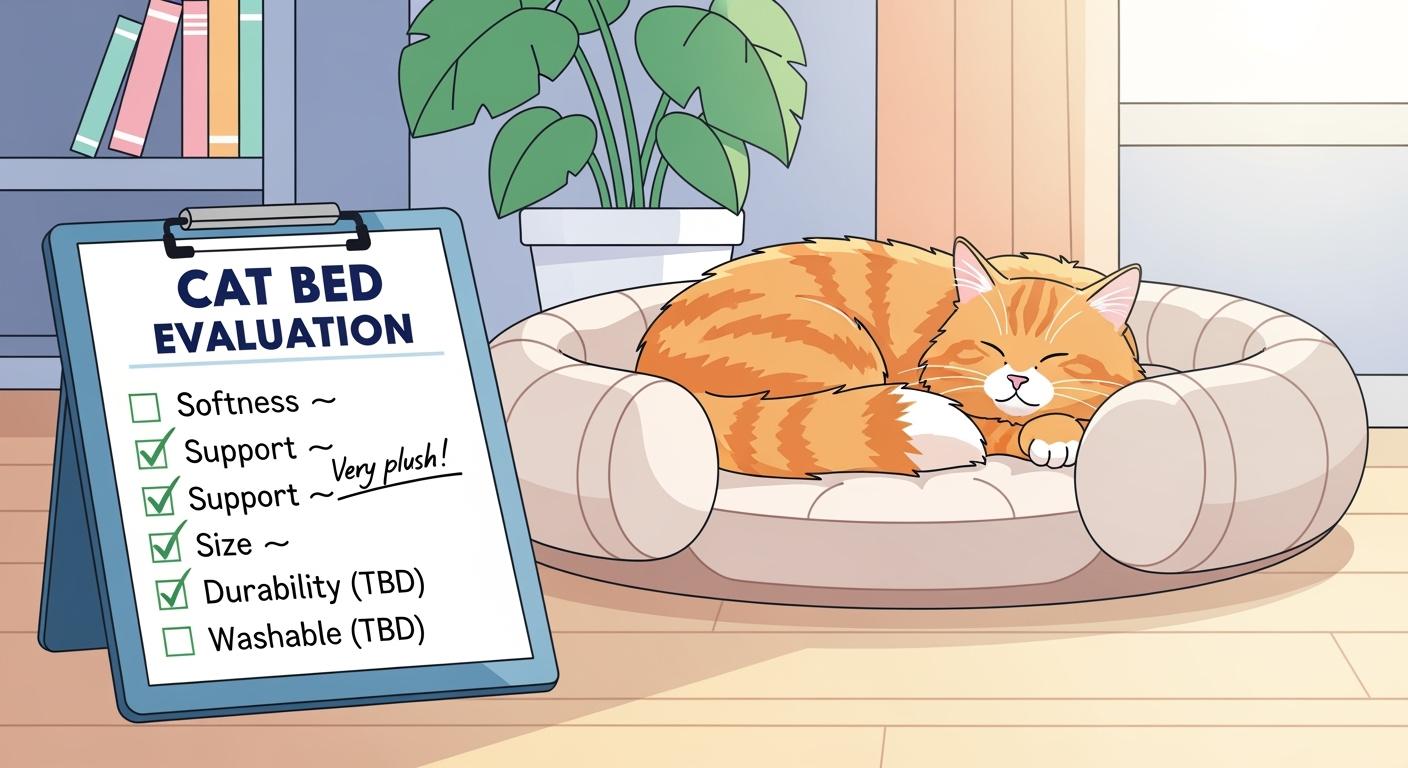
Choosing a bolster cat bed is less about picking the softest look and more about checking whether the shape matches how your cat actually rests. Before you buy, focus on sleep style, entry height, usable interior space, fill stability, washable construction, airflow, and whether the bed stays in place on the floor.
This guide is for everyday fit, comfort, cleaning, and home-use checks. It is not a medical or electrical safety guide, and not every cat will prefer bolsters.
What to check before you buy
A good bolster bed should help a cat settle quickly without feeling trapped, overheated, or crowded. For most homes, the most useful checks are simple and observable:
- Sleep style: Does your cat curl, lean on an edge, or stretch out flat?
- Entry and exit: Can your cat step in, turn, and get out without hesitation?
- Usable space: Do the bolsters support the body without taking away too much sleeping area?
- Fill stability: Does the center stay even, or does it sag and bunch easily?
- Cleaning: Can you remove the cover and wash it without making the bed hard to reassemble?
- Placement: Does the base stay steady on tile, wood, or other smooth floors?
If a bed looks plush but fails these checks, it may create more return risk than comfort. That is especially true when the side walls are bulky, the base slides, or the interior pad loses shape after normal handling.
Fit, entry, and sleep style
Curling, edge contact, and easy entry
Bolsters work best for cats that like light edge contact when they rest. Watch where your cat sleeps now. Some cats tuck their body and lean their back or chin into a cushion. Others prefer a flatter surface with open space around the body. A bolster bed should support the preferred resting style without blocking the face or forcing the shoulders into a tight curve.
Check fit with three simple actions before deciding a bed works:
- Step-in test: Your cat should be able to enter without pawing at a high front wall or stopping at the edge.
- Curl-and-turn test: Once inside, your cat should be able to curl, shift position, and turn without pushing hard into the side walls.
- Get-up test: Your cat should be able to stand and step out in one smooth movement instead of climbing out awkwardly.
If the bed looks roomy from above but the bolsters are thick and push inward, the usable space may be much smaller than expected. That is a common reason a bed gets ignored even when the outer measurements look fine.
Signs of poor fit
You can usually spot a mismatch quickly. A poor-fit bolster bed often leads to hesitation, partial use, or repeated repositioning instead of relaxed sleep.
| Check | Pass | Red flag |
|---|---|---|
| Entry | Cat steps in directly and settles | Cat paws at the edge, hesitates, or turns away |
| Interior space | Cat can curl or shift without pressing into the face | Shoulders, whiskers, or face stay crowded by the bolster |
| Exit | Cat stands and exits smoothly | Cat scrambles, climbs, or catches paws on the edge |
| Floor grip | Bed stays mostly in place as the cat enters | Bed slides, twists, or tips on the floor |
| After-rest behavior | Cat returns to the bed over time | Cat only sits briefly, then chooses another spot |
If your cat consistently stretches outside the bed, sleeps only on top of the front wall, or avoids the bed after a few tries, the shape may be wrong even if the fabric feels soft.
Materials, cleaning, and daily use
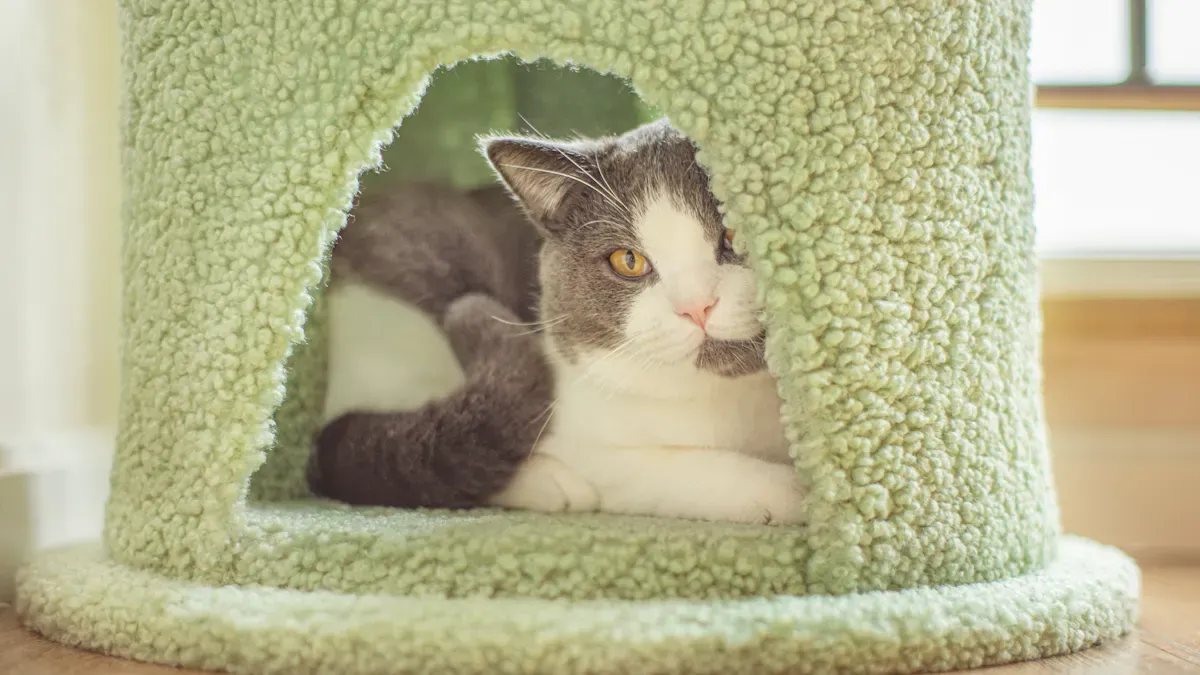
Fabric feel, fill stability, and seam quality
The right materials help your cat relax and make cleaning easier. In practice, that means checking how the surface feels, how much noise it makes, and whether the bed holds its shape after squeezing, lifting, and light daily handling.
- Surface feel: Choose a fabric your cat is likely to stay on, not one that feels slick, scratchy, or noisy.
- Fill stability: Press the center and the bolsters with your hands. The fill should rebound reasonably evenly instead of shifting to one corner.
- Seams and zipper area: Look for tidy stitching, covered zipper placement, and no obvious loose threads where claws can catch.
- Base: A grippy bottom matters on smooth floors because a sliding bed can make even a calm cat avoid it.
Very deep plush can look cozy but may trap hair, hold odor, and feel too warm in some rooms. Very flat fill can look neat but may not provide enough edge definition for cats that like light body contact. The best balance depends on your cat’s rest style and your home conditions.
Washability, airflow, and room conditions
Washability matters because a cat bed is used repeatedly in the same small area. Removable covers are easier to maintain than fully sewn beds, and the cover should go back on without twisting the insert or creating lumpy corners. After washing, check whether the center pad stays level and whether the bolsters still feel even from side to side.
Airflow matters too. In warmer rooms, very enclosed or dense beds can become less appealing even when they seem soft. If your cat often moves to cool tile, open rugs, or window areas, a lower-profile or more breathable bed may work better than a thick donut shape. For cats that avoid bolsters altogether and prefer a more open rest spot, Elevated beds may be a better style to compare before you commit.
For older cats or cats that dislike stepping over a wall, prioritize easy entry and a stable center surface over tall side support. A bed does not need dramatic sides to feel secure if the base is steady and the interior is comfortable.
Common buying mistakes and quick checks
Mistakes that lead to poor daily use
- Choosing by outer size only instead of checking the usable space inside the bolsters
- Picking tall or stiff walls that make entry awkward
- Ignoring floor grip, so the bed shifts during entry
- Buying a fixed-cover bed that is hard to clean after normal shedding or accidents
- Choosing thick plush for a warm room when the cat already seeks cooler places to rest
- Assuming every cat wants a den-like feel when some cats clearly prefer flatter, more open sleep surfaces
Quick checks before you keep the bed
Use these simple home checks in the first few uses:
- Place the bed where your cat already likes to rest, then watch whether the cat enters without prompting.
- After one or two rest periods, check whether the center has flattened unevenly or the bolsters have shifted.
- Run your hand across the interior and edge seams to feel for rough spots, bunching, or trapped hair.
- Pick the bed up and set it back down. A well-made bed should keep its general shape instead of collapsing to one side.
- After washing, make sure the insert sits flat again and the cover does not distort the opening.
A bolster bed should make rest easier, not more complicated. If your cat repeatedly chooses the floor, sofa corner, or a flat mat over the new bed, take that as useful fit feedback rather than assuming the cat just needs more time.
FAQ
How do you know if your cat likes a bolster bed?
Look for relaxed settling, repeated return use, and natural edge contact. If your cat steps in, circles once, and rests with the body supported by the side wall, the shape is probably working. If the cat avoids the bed or only perches on the edge, it may not be the right style.
What features matter most for daily home use?
Focus on easy entry, stable fill, a washable cover, quiet fabric, and a base that stays in place. These features affect daily comfort more than decorative details.
Can you machine wash a bolster cat bed?
Many beds with removable covers are easier to machine wash, but care methods vary by construction. Check whether the insert and the cover can be cleaned separately, and make sure the bed dries fully before reuse.
When is a flat bed better than a bolster bed?
A flat bed is often better for cats that stretch out, dislike edge pressure, avoid stepping over side walls, or prefer cooler and more open resting spots. If mobility or pain seems to be affecting rest, ask your vet what type of support makes sense for your cat.






