
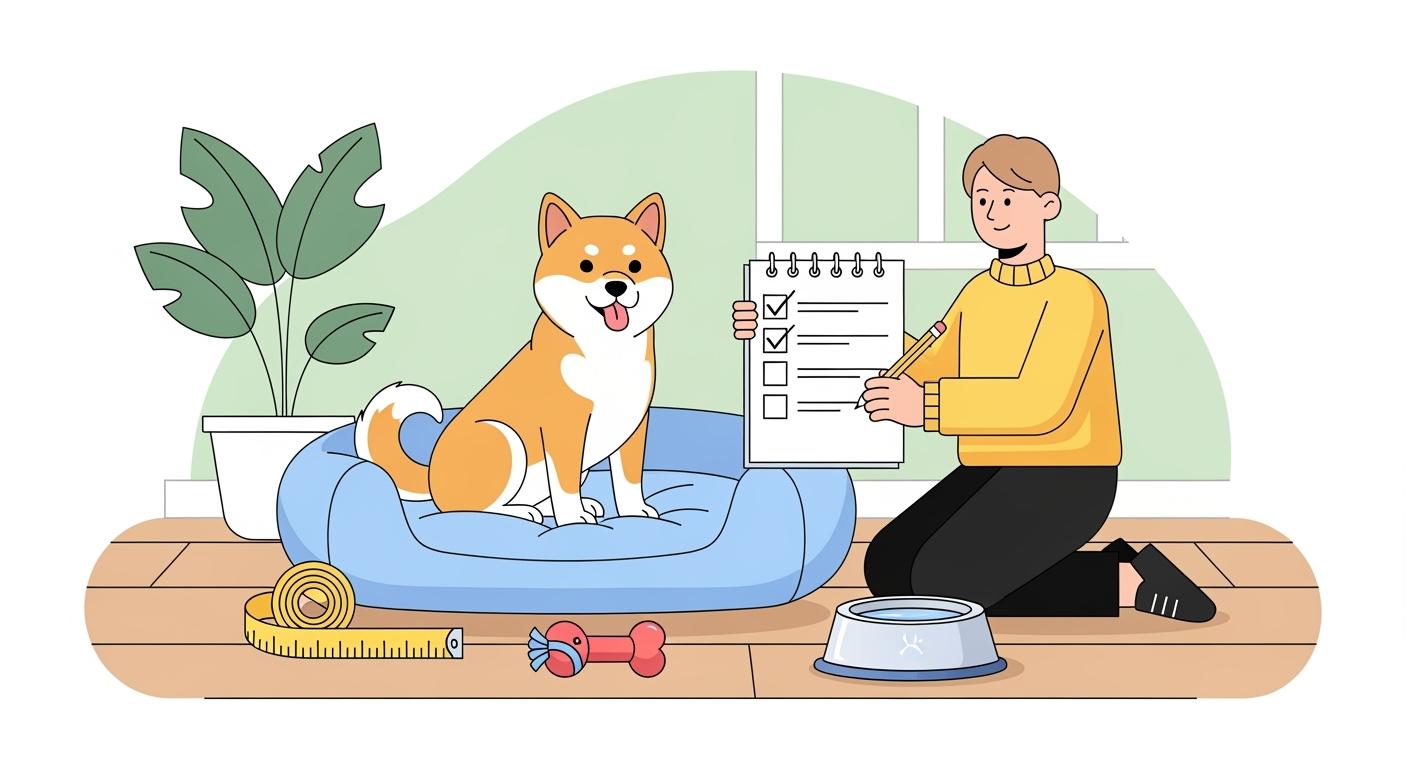
Buying a dog bed for a medium dog sounds simple until you compare real sleeping space, side height, fill stability, and cleaning details. A “medium” label can still feel too short, too deep, too slick on the floor, or too soft after a few washes. The safest way to choose is to measure your dog in a relaxed sleeping position, compare that with the usable sleep area, and then check whether the bed matches how your dog actually gets in, turns, and settles.
Key Takeaways
- Measure your dog while resting, then compare those numbers with the bed’s usable inner space, not just the outer size.
- Match the bed to sleep style. Curled sleepers often like supportive edges, while stretchers need a flatter open surface.
- Choose support based on entry ease, body stability, and daily cleaning needs. For dogs that seem stiff, older, or hard to settle, Orthopedic beds are ideal for older dogs or those with joint issues.
How to size a dog bed for a medium dog
Start with your dog, not the size label. Medium dogs vary a lot in body length, shoulder width, coat bulk, and sleeping posture. A bed that looks big enough on paper can still feel cramped once raised walls, thick padding, or deep bolsters reduce the usable surface.
Measure the sleeping position, not the standing body
Ask your dog to settle naturally or wait until nap time. Measure from the front of the chest to the base of the tail in the position your dog uses most often. Then measure the widest area when resting, usually across the shoulders or hips. Write both numbers down before you compare products.
Quick check: Once your dog lies down, the bed should still leave visible room for a small shift in position. If paws, hips, or the head keep reaching the edge, the usable sleep area is probably too small.
You can compare those measurements with a dog bed listing, but always look for the real sleeping surface. Thick outer walls can make a bed look roomy while the inside feels narrow.
Watch how your dog enters, turns, and settles
Size is only part of fit. Some medium dogs step in carefully, circle twice, then curl up. Others flop down on their side and stretch long. A bed fits well when your dog can step on, turn without fighting the side walls, and settle without half the body hanging off the edge.
A useful dog bed size guide should help you check three things first:
- Sleeping length in a relaxed position
- Sleeping width at the widest resting point
- Whether your dog curls, sprawls, leans, or changes position often
Then do a simple doorway-to-bed test at home: place the bed where it will actually be used, let your dog step in from a normal walking pace, and watch whether the bed slides, bunches, or tips when weight shifts onto one side.
What to look for: A good fit should feel easy at entry, stable during turning, and calm once your dog settles. Repeated scratching, stepping off, or circling without lying down often means something about size, side height, surface feel, or placement is off.
What to check in support, surface, and cleaning

The best bed for a medium dog is not always the thickest one. In everyday use, support is really about whether the bed stays even under the body, whether your dog can get on and off easily, and whether the cover and fill still work after regular washing.
Choose support by sleeping style and ease of entry
Flat foam beds usually give a more open surface for side sleepers and dogs that like to stretch out. Bolster beds can feel more contained for dogs that lean or curl against an edge. Softer fiber-filled beds may feel cozy at first, but they can bunch up or lose shape faster if the fill is not stable.
If your dog is older, slow to lie down, or reluctant to step onto a taller bed, pay attention to entry height and surface stability before you focus on thickness. A lower, more even surface is often easier to use than a deeper bed with soft sides that collapse.
| Bed style | Usually works best for | What to check before buying |
|---|---|---|
| Flat foam | Dogs that stretch out or want easy entry | Look for even support and no quick sagging in the middle |
| Bolster | Dogs that curl up or rest against an edge | Make sure the inner space is still large enough after the walls are counted |
| Fiber-filled | Dogs that like a softer, nest-like feel | Press the surface and check whether the fill shifts, bunches, or leaves hollow spots |
Check the cover, grip, and wash routine
For daily use, the cover matters almost as much as the fill. A washable cover is easier to live with than a bed that traps hair, stays damp, or takes too long to dry. Hidden zippers, stronger seams, and a base that grips the floor usually reduce frustration after purchase.
Do a simple hand test before committing: press one corner, drag your hand across the surface, and lift the edge slightly. You are checking for three common problems at once-slippery fabric, weak stitching, and fill that shifts away from pressure.
Cleaning check: If the cover looks hard to remove, the zipper feels exposed, or the filling seems likely to stay damp after washing, expect more maintenance trouble later.
Replace or reconsider a bed if it develops a permanent dip, stays musty after normal cleaning, or no longer feels stable when your dog steps in and turns. Those problems usually lead to bed avoidance, not better rest.
Pass or fail checklist before you buy
Most buying mistakes happen when shoppers rely on the size label, outer dimensions, or a soft first impression. A better method is to check whether the bed passes a few simple at-home questions that match real use.
| Checkpoint | Pass signal | Fail signal | What to do |
|---|---|---|---|
| Usable size | Your dog can curl, stretch, and shift without reaching the edge right away | Head, hips, or paws regularly hang over the sleeping area | Check inner dimensions and move up in usable surface, not just label size |
| Entry and exit | Your dog steps on and off without hesitation | Your dog pauses, climbs awkwardly, or avoids the bed | Choose a lower or more open design |
| Turning space | Your dog can circle and settle without pushing the bed out of place | Side walls block movement or the bed twists under weight | Choose more inner space or a more stable base |
| Surface support | The top feels even and returns after pressure | The middle collapses, bunches, or leaves a hollow spot | Choose more stable fill or firmer support |
| Cleaning | Cover removes easily and the bed dries without staying damp | Zipper is awkward, seams look weak, or the filling stays wet | Pick a simpler washable design |
| Floor grip | The bed stays put on the floor you actually use | The bed slides when your dog steps on one side | Look for better grip or change placement |
Common mistakes that lead to returns
- Buying by label size without checking usable inner space
- Choosing high bolsters for a dog that prefers easy entry and open turning space
- Assuming a thicker bed always means better support
- Ignoring the floor surface, then discovering the bed slides during entry
- Choosing a cover that is harder to remove and wash than your routine allows
Ask these three questions before you buy:
- Did you compare your dog’s resting size with the bed’s real sleep area?
- Can your dog step in, turn, and settle without struggling?
- Will the cover, fill, and base still work for your normal cleaning routine?
For dogs with ongoing pain, major stiffness, or sudden changes in sleep behavior, speak with your veterinarian. This page is general buying guidance, not individual medical advice.
FAQ
How do you know whether a dog bed fits a medium dog well?
A good fit lets your dog get in easily, turn without fighting the side walls, and rest without body parts constantly falling over the edge. Always judge the usable sleep area, not the outer frame.
What should you do if your dog avoids the new bed?
- Check whether the bed slides or tips during entry.
- Check whether the side walls reduce the sleeping area too much.
- Place the bed where your dog already likes to rest and watch one full settle-down cycle.
When is a firmer bed worth considering?
A firmer, more even surface can be easier for dogs that dislike deep sinking, seem stiff when lying down, or need a bed that keeps its shape better through daily use.
What makes a washable bed easier to live with?
Look for a cover that removes without a struggle, seams that stay neat after washing, and filling that dries fully instead of holding dampness and odor.






