
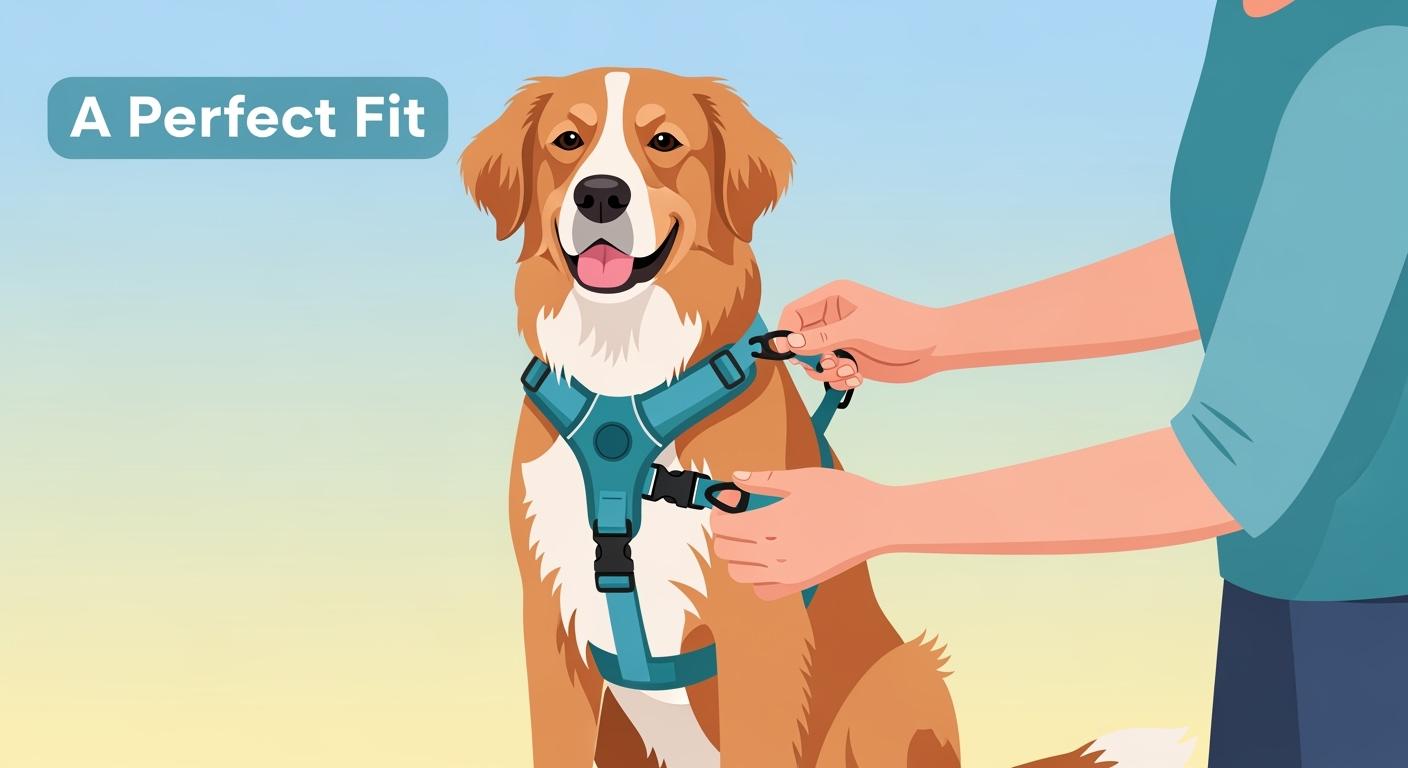
A big dog no pull harness should do more than feel comfortable while the dog is standing still. For a strong dog that pulls, the real test is whether the harness stays centered under leash tension, keeps the front or back clip aligned, avoids riding up toward the throat, and reduces rubbing around the chest and armpit zones. Use this page to check how fit, clip position, strap placement, and material structure affect pulling control on large and extra-large dogs.
- Inspect harness fit before each outing
- Adjust as your dog movesAlways follow local rules and ask a vet for health concerns.
Key Takeaways
- Always check your dog’s harness before each walk. Use the two-finger rule to make sure it fits. This keeps your dog safe and comfortable.
- Try a front-clip harness for more control. It helps you train your dog not to pull. Use rewards to help your dog learn faster.
- Look at the harness often to see if it is damaged. Adjust the straps so it fits well. A good harness stops rubbing and makes walks better for your dog.
Big Dog Harness No Pull: What It Means
Redirecting Force vs Stopping Pulling
A big dog no pull harness does not magically stop pulling. It changes how leash force enters the harness. When a large dog surges forward, a front clip can help redirect the chest, while a back clip often feels smoother for calmer walking. The important detail is whether the harness stays centered when the leash loads. If the chest panel twists, the belly strap loosens, or the clip pulls the whole harness sideways, control becomes uneven and rubbing usually follows.
Note: Front-clip harnesses can help redirect pulling, but they work best when you pair them with consistent, reward-based training.
Front-Clip, Back-Clip, Dual-Clip Explained
There are three main kinds of no pull harnesses.
- Front-clip harnesses connect at the chest and can help turn a pulling dog before full forward force builds. They need a stable chest panel, or the harness may rotate to one side.
- Back-clip harnesses connect at the top and usually feel smoother for relaxed walking, but they give less steering control when a big dog pulls hard.
- Dual-clip harnesses let you adjust control by situation. They work best when both clip points stay aligned and the body straps do not ride up under load.
Here is a table comparing traditional and no pull harnesses:
| Feature | Traditional Harness | No-Pull Harness |
|---|---|---|
| Neck Pressure | Moderate-tightens a bit when pulled | Low-spreads pressure over chest and back |
| Pulling Deterrence | Low-does not correct pulling much | High-front clip stops forward movement |
| Handler Control | Moderate-uses neck to guide dog | High-turns dog naturally |
| Risk of Injury | Moderate-can strain neck if pulled hard | Low-lowers risk if used right |
| Suitability for Training | Limited-not made for behavior change | Strong-works well with reward training |
Fit and Handling for Safety
Check fit while the dog is standing, then check it again after a short pull, turn, and step-up. The harness should stay centered, clear the armpits, and sit low enough on the chest to avoid throat pressure. A fit that looks correct before the walk can still fail under load if the front section twists, the girth strap slides, or the back panel rides forward.
- Trainers say no pull harnesses make walks easier by stopping pulling.
- Always follow local rules and ask a vet if you have health questions.
A no pull harness helps with training. Look for control, comfort, and a good fit. Do not trust marketing words alone.
Best Dog Harness Materials and Comfort Checks
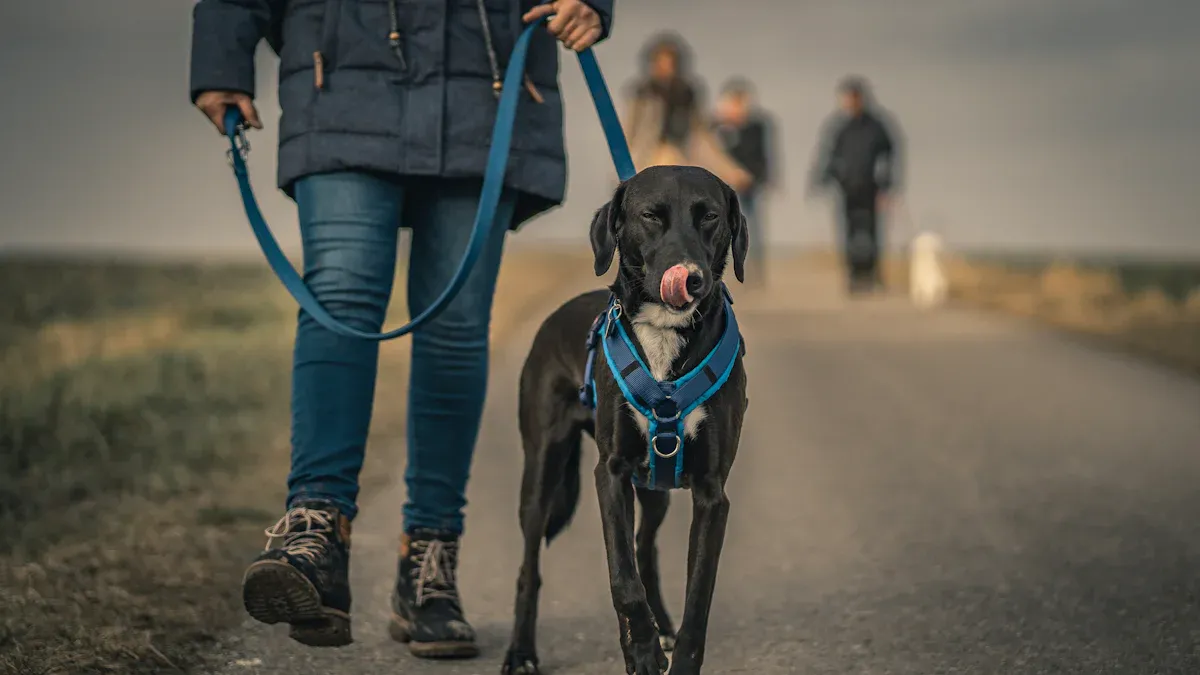
Picking the right harness material helps keep your big dog safe. It also makes your dog happy. Always check the harness before you walk your dog. Look for any damage or worn spots. Make sure the harness fits your dog well. If you see fraying, cracks, or broken parts, stop using the harness right away.
Webbing, Stitching, Reinforcement Zones
You need strong webbing and good stitching in your harness. Some harnesses mention lab strength testing for webbing and stitching. The webbing can handle a big dog pulling hard. Check the stitching at every spot where parts connect. If the stitching is weak, the harness could break if your dog pulls.
- Most harnesses break at the stitching or hardware spots. Always look for loose threads or gaps in these places.
- The chest and leash clip areas need the most reinforcement. These spots get pulled on the most.
- Good harnesses use strong stitches and extra layers in these areas.
- Even stitching and extra support help stop weak spots that could break.
If you see any damage, do not use the harness. Get a new one to keep your dog safe.
Padding Placement and Rub Zones
Padding helps only when it sits in the right contact zones. For big dogs that pull, the main rub points are usually behind the front legs, along the chest edge, and where straps shift during turns. Padding should lie flat, stay away from the armpit crease, and not bunch when the leash tightens. If the harness rotates, even soft padding can turn into a friction point.
Check under the armpits and around the chest for rub spots. The harness should not dig into soft spots or cause hair loss. If you see red skin or your dog scratches at the harness, fix the fit or try a new style. Padding should stay smooth and not get too hot. Breathable fabric helps your dog stay cool on long walks.
Hardware Layout and Stability
The harness hardware includes rings, buckles, and clips. These parts must be strong and easy to use. Metal D-rings and quick-release buckles make the harness safer and last longer. Check that all hardware works well and does not pinch your dog’s skin.
- Two tethers can help keep your dog steady if they pull. This spreads out the force and stops your dog from jumping forward.
- Good hardware lets your dog move easily but stay safe. Your dog should be able to sit, lie down, and turn with no trouble.
- A good harness is easy to put on and take off. This makes walks easier for you and your dog.
You should be able to adjust the straps for a snug fit. The harness should not squeeze your dog. This spreads pressure over the chest and shoulders and helps prevent injury. Many harnesses use breathable fabric and reflective strips for comfort and safety.
Here is a table of things to check when picking a harness for your big dog:
| Factor | Description |
|---|---|
| Durable Materials | Neoprene and polyester are strong and bendy. They are good for daily walks and active dogs. |
| Safety Features | Metal D-rings and quick-release buckles make the harness safer and last longer. |
| Comfort and Usability | Padded fabric stops rubbing and gives a snug fit. It does not stop your dog from moving. |
| Hypoallergenic Materials | Non-toxic fabric helps keep sensitive dogs from getting allergies. |
| Mold and Mildew Resistance | Needed for dogs that swim. It keeps the harness safe and strong even when wet. |
Tip: Always follow local rules and ask your vet if you have questions about your dog’s health or harness use.
No Pull Harness Fit and Movement Setup
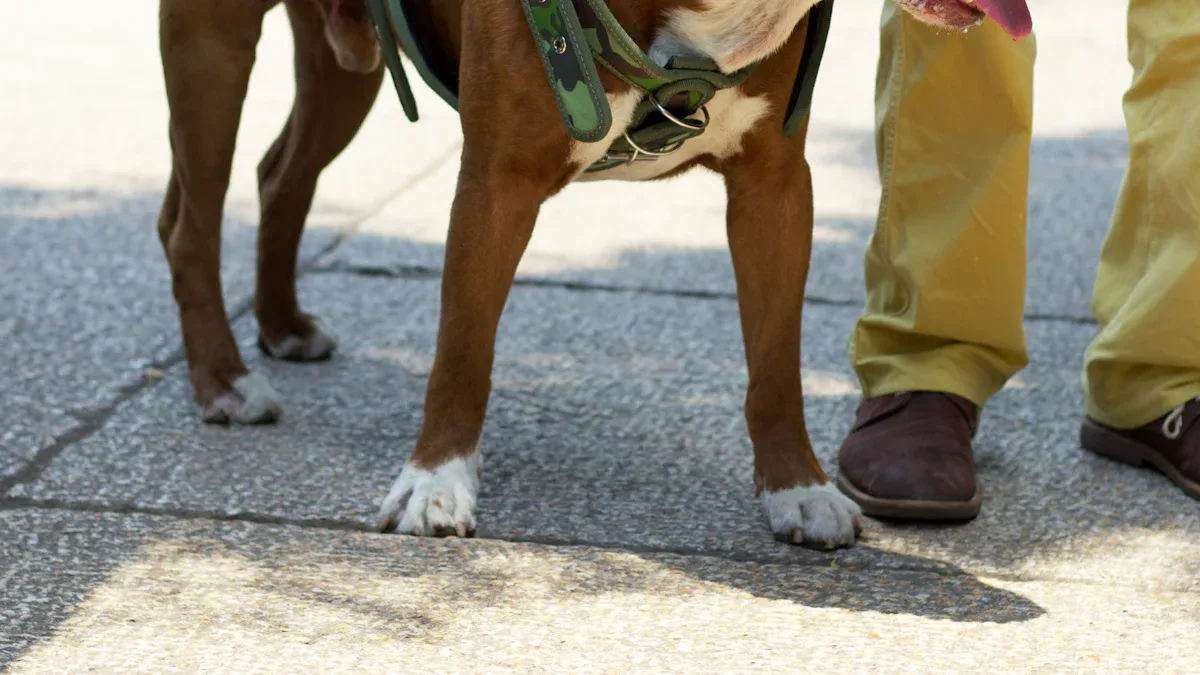
Pre-Adjust and Donning Steps
You want every walk to start with a safe and comfortable setup. Before you put the no pull harness on your dog, lay it flat and check for twists in the webbing. Make sure all buckles and rings work smoothly. Look for any fraying, cracks, or loose stitching. If you see damage, do not use the harness.
Before You Clip In: Quick Checklist
- Check webbing for twists or wear.
- Inspect buckles and rings for cracks or sharp edges.
- Confirm all straps are untangled and facing the right direction.
- Lay the harness out so you can see which part goes on the chest and which goes on the back.
Donning and Adjustment Sequence
- Ask your dog to stand calmly.
- Slide the harness over your dog’s head or step their legs through, depending on the design.
- Fasten all buckles. Make sure you hear a click.
- Adjust each strap so the harness sits flat against your dog’s body.
- Use the two-finger rule: Slide two fingers under each strap. The fit should feel snug but not tight. If you cannot fit two fingers, loosen the strap. If you can fit more than two fingers, tighten it.
Tip: Repeat these steps every time you use the no pull harness. Consistent setup helps your dog feel secure and keeps the harness working as designed.
Strap Placement: Sternum, Armpit, Symmetry
Proper strap placement is key for safety and comfort. The chest strap should rest on the bony part of the sternum, not the soft tissue below the neck. Straps should never press into the armpit area. This prevents rubbing and skin irritation.
Check for Symmetry
- Both sides of the harness should look even.
- The harness should sit centered on your dog’s body.
- The leash attachment point should line up with your dog’s spine or chest, depending on the clip you use.
Table: Strap Placement Quick Reference
| Area | What to Check For | What to Avoid |
|---|---|---|
| Sternum | Strap sits on bone, not throat | Strap pressing on neck |
| Armpit | No strap contact in armpit zone | Straps rubbing soft tissue |
| Symmetry | Harness looks even on both sides | Harness twisted or offside |
If you notice the harness shifts or rotates during use, stop and adjust. A well-fitted no pull harness stays in place and does not cause discomfort.
Movement Check: Walk, Turn, Step-Up
After you adjust the harness, watch your dog move. A good fit allows your dog to walk, turn, and step up naturally. This supports a calm and enjoyable walk for both of you.
Movement Check Routine
- Walk your dog a few steps. Watch for a smooth, natural stride.
- Ask your dog to turn left and right. The harness should not pinch or restrict movement.
- Let your dog step up onto a curb or low step. The harness should not pull tight or shift out of place.
If your dog shortens their stride, hesitates, or tries to scratch at the harness, stop and check the fit. Adjust as needed. A no pull harness that fits well will not pinch or restrict your dog’s movement. This helps your dog stay comfortable and focused during walks.
Note: Always follow local rules and consult your veterinarian if you have questions about your dog’s health or harness use.
Key Points to Remember
- Check fit and hardware before every walk.
- Use the two-finger rule for all straps.
- Watch your dog move and adjust as needed.
- Repeat the setup steps each time for safety and comfort.
A safe and comfortable no pull harness setup helps you and your dog enjoy every outing together.
Common Mistakes and Troubleshooting
Chafing, Rotation, Backing Out, Pulling Issues
Most no-pull problems show up after the harness is under load. Chafing often means the strap path is too close to the armpit or the panel is moving during each stride. Rotation means the leash force is pulling the harness off center. Riding up usually points to loose belly adjustment, poor chest balance, or a front section that cannot stay low on a strong puller. These are product-fit failures, not just training problems.
Common Mistakes and Fixes:
- Using only weight charts-always measure your dog for a proper fit.
- Over-tightening straps to prevent escape-choose escape-proof designs instead.
- Skipping movement checks-watch your dog walk, turn, and step up.
- Attaching the leash to a neck collar for lunging dogs-use the harness clip.
- Allowing full leash extension-shorten the leash in crowded areas.
Safety Tip: Always reassess the fit as your dog grows or changes. If you see redness, sores, or hear coughing, stop and check the harness.
Troubleshooting Table: Symptoms and Fixes
| Symptom | Likely Cause | Fast Check | Fix |
|---|---|---|---|
| Worse pulling | Wrong clip or loose straps | Check leash attachment | Use front clip, tighten straps |
| Leash twisting | Harness rotation | Inspect harness position | Center harness, adjust straps |
| Chafing | Strap rubbing under arms | Look for redness or hair loss | Loosen straps, add padding |
| Harness riding up | Loose belly or chest strap | Check strap placement | Adjust straps, reposition harness |
| Backing out | Loose neckline | Try to slip harness off | Tighten neckline, measure fit |
| Refusal to move | Pinching or restriction | Watch gait and stride | Loosen straps, check movement |
| Hard-to-reach clip | Misaligned hardware | Try attaching leash | Reposition harness, check symmetry |
FAQ: Pullers, Escape Artists, Comfort, Gait
- Why does my dog try to escape the no pull harness?
Gaping at the neck or loose straps increase escape risk. Measure and adjust for a snug fit. - My dog seems uncomfortable. What should I check?
Pressure on the lower back or straps rubbing under the arms cause discomfort. Look for redness or limping. - Will a no pull harness affect my dog’s gait?
Restricted shoulder movement makes walks less enjoyable. Always check for natural stride and adjust as needed. - How often should I check the harness fit?
Reassess every few weeks, especially for puppies or dogs with changing weight.
Note: Always follow local rules and consult your veterinarian for health concerns. This guide does not replace medical advice.
Owner Checklist and Use Case Tables
Pass/Fail Comfort Check Table
Check your dog’s harness before and after every walk. Use this table to see if the harness is safe and comfortable. If you find a problem, fix it before you go outside.
| Check Item | Pass (✅) | Fail (❌) | Fix Needed |
|---|---|---|---|
| Harness stays centered | Adjust straps for symmetry | ||
| Dog cannot back out | Tighten neckline, check fit | ||
| No armpit rubbing | Loosen straps, add padding | ||
| Free shoulder movement | Reposition chest strap | ||
| Handler grip is safe | Change leash hold, shorten leash |
Tip: Always look for fraying, loose stitches, or broken parts before each walk.
Comparison Table: Harness Styles and Risks
This table helps you compare harness types. You can see which harness is best for your big dog and what risks each one has.
| Harness Style | Control Level | Comfort | Risk of Chafing | Escape Risk | Best For |
|---|---|---|---|---|---|
| Front-clip | High | Good | Low | Low | Training, strong pullers |
| Back-clip | Moderate | High | Very Low | Moderate | Calm walks, daily use |
| Dual-clip | Very High | Good | Low | Low | Versatile activities |
| Step-in | Moderate | Moderate | Moderate | High | Quick walks, easy on/off |
Note: Front-clip harnesses can help redirect pulling, but they work best when you pair them with consistent, reward-based training.
Use-Case Matrix: Walking, Training, Hiking
Pick harness features that match your dog’s size and activity. This helps your dog stay safe and comfortable.
- Designs that spread force over the chest and back keep your dog safe.
- Wide, padded straps (at least 1 inch) stop rubbing.
- Two leash clips make the harness more useful.
- Strong metal parts help the harness last longer.
- Many adjustment points let you fit the harness just right.
- Breathable fabric keeps your dog cool.
| Activity | Key Features Needed | Why It Matters |
|---|---|---|
| Walking | Padded straps, breathable fabric | Stops rubbing, keeps your dog cool |
| Training | Front clip, adjustability | Gives you control, helps your dog learn |
| Hiking | Double clips, heavy-duty hardware | Handles pulling, keeps your dog safe |
Note: Always follow local rules and ask your vet if you have health questions. This guide does not replace medical advice.
You want your big dog harness no pull to stay safe and comfortable. Use the two-finger fit rule and check movement every time. Review this table to keep your big dog harness no pull in top shape:
| Check Frequency | Purpose |
|---|---|
| Before every walk | Ensure optimal fit and comfort |
| After the first few uses | Confirm continued fit and comfort |
Follow these steps for your big dog harness no pull:
- Measure your dog’s chest and neck for proper fit.
- Adjust straps for snug but comfortable wear.
- Check hardware regularly to ensure safety.
- Combine with training techniques for optimal walking behavior.
- Look for padded straps, breathable fabrics, and flexible design.
Always follow local rules and consult your veterinarian for health concerns.
FAQ
Does a no pull harness stop pulling?
You redirect your dog’s force with a no pull harness. It does not stop pulling instantly. Training and consistent use help reduce pulling over time.
Should you clip to the front or back?
You clip to the front for control and training. You use the back clip for relaxed walks. Choose based on your dog’s behavior and activity.
Can your dog wear a harness all day?
You should not let your dog wear a harness all day. Remove it after walks to prevent rubbing and allow your dog’s skin to breathe.
Note: Always follow local rules and consult your veterinarian for health concerns. This guide does not replace medical advice.






