
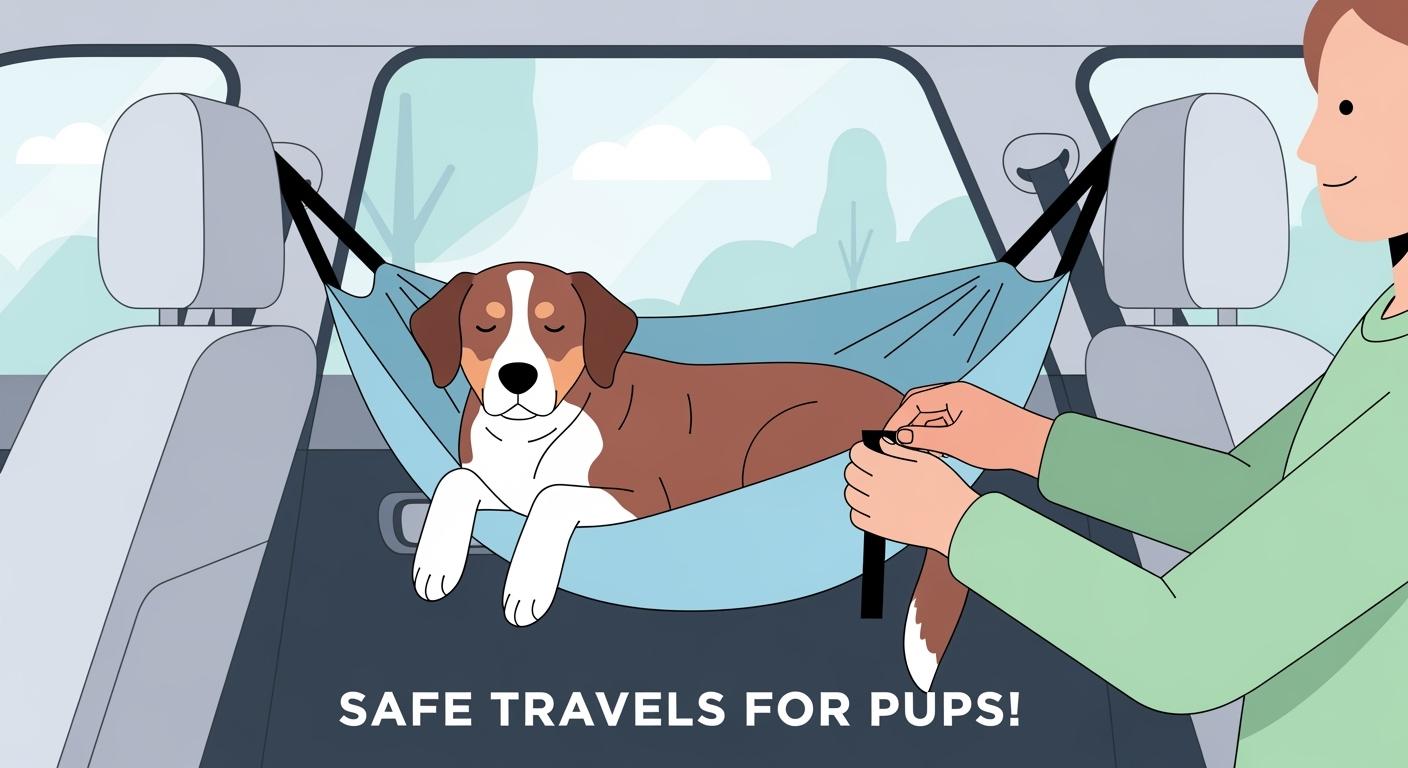
In car-search language, a “dog hammock bed” is often a hammock-style back seat dog cover that bridges the footwell to create a flatter, safer space for your dog to lie down. The right fit prevents sliding, keeps seat belts usable, and makes cleanup less stressful after muddy paws.
Key takeaways
- Measure your rear bench and footwell first; “one size” rarely fits every car.
- A good hammock fit stays taut across the seat and does not cover the buckle paths you need.
- Use anchors, non-slip backing, and correct strap routing to prevent sliding.
- For easy cleanup, look for a true waterproof barrier plus wipe-clean surfaces.
What a dog hammock bed means for car rides
Unlike a flat seat protector, a hammock-style cover typically attaches to the rear headrests and hangs down to the front seat headrests, forming a sling across the footwell. This reduces the chance your dog steps into the gap and helps many dogs settle more calmly on longer rides.
If you want to pick the right type, material, and size without guessing, start by matching the cover style to your car’s seat shape (split bench vs full bench) and your dog’s ride habits (lying down vs turning often).
Size and fit checks before you install
Measure the seat area first
- Bench width: confirm the cover reaches the left/right edges of your rear seat, including side bolsters if you want them protected.
- Seat depth: a cover that is too short lets claws contact the upholstery at the front edge.
- Footwell span: the hammock panel should bridge the gap without sagging into the footwell under your dog’s weight.
- Headrest compatibility: straps should sit flat and tighten without twisting; if your rear headrests are fixed or small, check strap routing carefully.
Fit checks after install
- Tension check: push down in the center; it should feel supported, not like a loose hammock that “funnels” your dog.
- Buckle access: locate seat belt buckles and confirm they are reachable without forcing the cover out of place.
- Door and trim coverage: if your dog paws at doors, confirm side flaps (if included) actually reach the door panel area you want protected.
Safety checks that prevent slipping and tangles
Anchors, straps, and non-slip backing
- Seat anchors: insert anchors into the seat crack so the cover cannot migrate forward as your dog shifts.
- Strap routing: straps should not cross sharp edges or pinch points where they can fray over time.
- Non-slip base: confirm the underside grips the seat; if it slides when you pull sideways, expect worse performance on turns.
Seat belts, harness tethers, and airbags
- Buckle paths stay usable: do not bury buckles under thick layers that make them hard to click.
- Tether routing: if you use a harness tether, route it so it does not wrap around your dog’s legs when they turn.
- Side-airbag awareness: many cars have side airbags in the seat or pillar areas; avoid obstructing deployment zones and follow vehicle guidance.
Cleaning, waterproofing, and quick FAQs
“Waterproof” can mean anything from a water-resistant top fabric to a true barrier layer that stops liquids from soaking into the seat. If spills and accidents are your main concern, start with this waterproof dog seat cover fit and cleaning guidance, then confirm your cover’s seams and stitching do not wick moisture through.
Troubleshooting
- The cover slides on turns: re-seat the anchors deeper into the crack, tighten straps evenly, and check the underside grip.
- My dog won’t lie down: reduce slack (more tension), add a thin washable pad for traction, and start with short rides.
- Buckles are hard to reach: re-position the cover so buckle openings align; avoid forcing buckles through fabric.
- Odor builds up: wipe down after wet trips, wash on schedule, and fully dry before reinstalling to prevent mildew.
FAQ
Does a hammock-style cover work in every vehicle? It fits best when you have accessible headrests and a stable rear bench. For unusual layouts, confirm strap routing and buckle access before relying on it.
Will it protect the footwell completely? It reduces the gap, but sag can happen if the cover is too large or not tensioned; the fit checks above help prevent that.
Is “hammock bed” the same as a dog bed? In car contexts, people use “hammock” to describe the back seat cover shape. It is not a sleeping bed for home use.






