
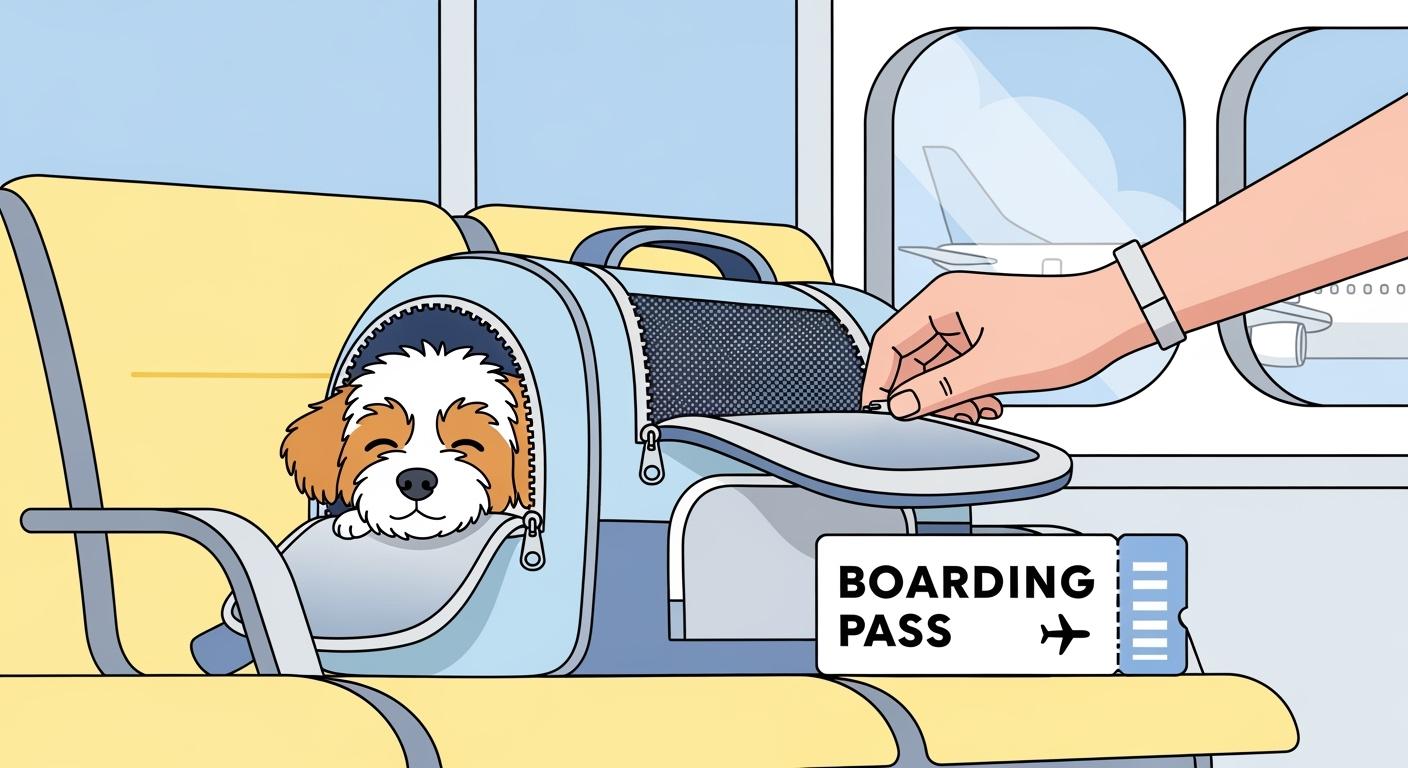
Refund triggers for a dog carrier for plane travel can include a bad fit, insufficient air flow, or cleaning issues. It’s essential to use a checklist to ensure you comply with airline regulations and provide for your dog’s needs. Before you embark on your journey with your dog, review the list for proper fit, adequate air flow, and any necessary documentation.
Key Takeaways
- Check your airline’s current in-cabin pet policy for carrier size, weight limits, and where the carrier must stay during the flight.
- Test comfort at home: your dog should be able to sit, lie down, and turn without slumping or twisting, and the carrier should stay upright.
- Use a pre-flight packing list for documents, hygiene, and calm set-up so you don’t improvise at the airport.
Airline-Friendly Dog Carrier for Plane Travel: What Matters Most
Trip-Specific Airline Rules and Seat Space
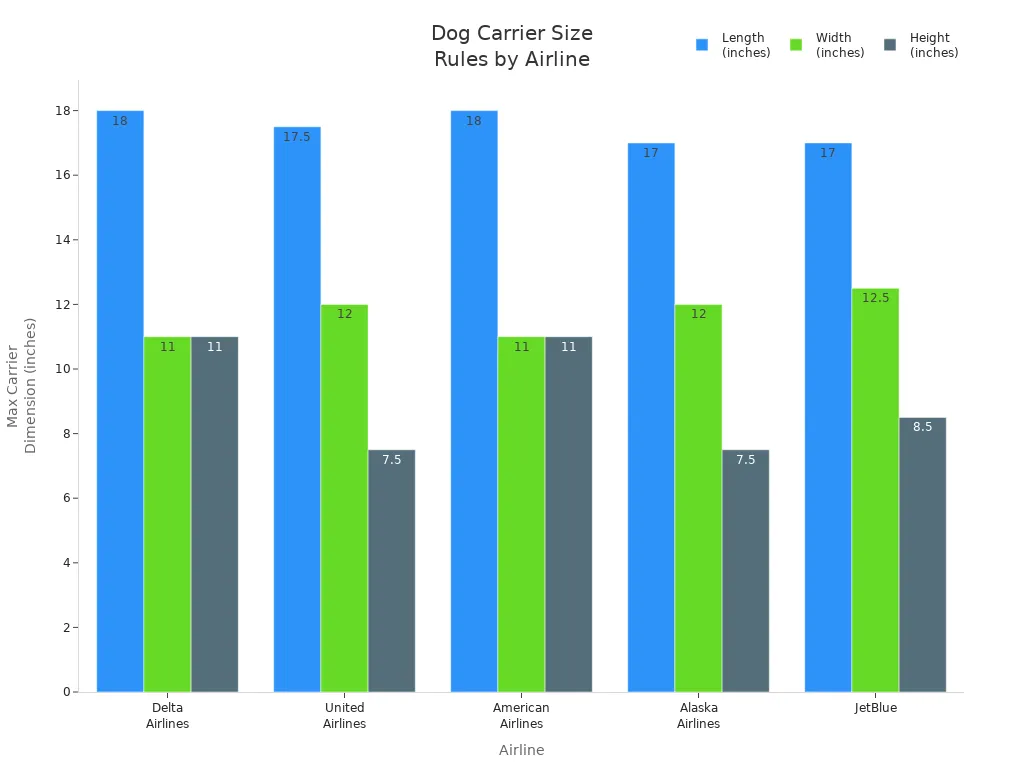
Look up the rules for the airline and aircraft you’re actually flying. In-cabin pets typically must stay in a carrier that fits under the seat in front of you. Policies vary by airline, route, and seat configuration, so validate each trip.
| Example Policy | Max Carrier Dimensions (inches) | Notes |
|---|---|---|
| Example A | 18” x 11” x 11” | Must fit under the seat and stay fully closed |
| Example B | 17.5” x 12” x 7.5” | Some flights accept soft-sided carriers only |
| Example C | 18” x 11” x 11” | Carrier must remain stowed during taxi, takeoff, and landing |
| Example D | 17” x 12” x 7.5” | Advance notice or limited pet slots may apply |
| Example E | 17” x 12.5” x 8.5” | Some airlines keep an approved-carrier list |
Common Surprises: Fit, Structure, and Closures
A kennel or carrier might seem fine at home but not at the airport. Airlines want to see a strong structure and safe closures. If the carrier falls down or the zipper opens by itself, you could get complaints or need a refund. Try the carrier before your trip and watch for things like pawing, slumping, or twisting.
Setting Realistic Expectations for Your Trip
“Airline-friendly” doesn’t guarantee approval on every flight. Policies differ by airline, aircraft, and seat space, so confirm the rules for each trip and avoid assumptions.
Dog Packing List and Pre-Flight Checklist
Fit and Comfort: Supported Posture and Usable Space
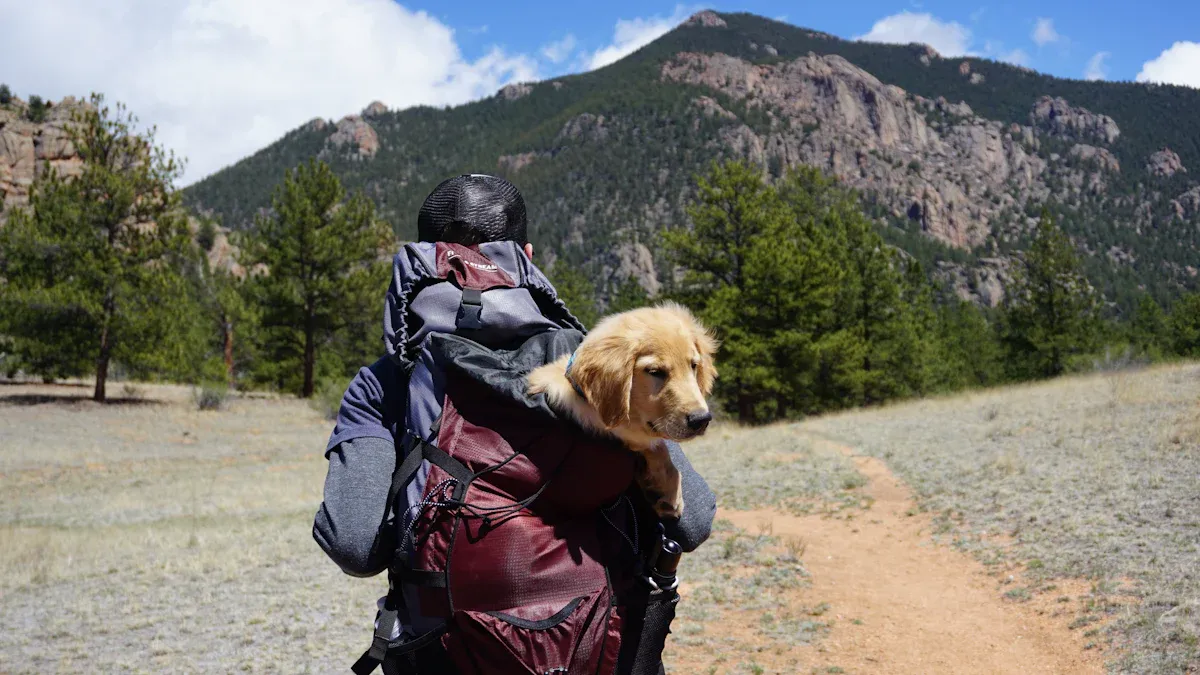
Check how your dog sits and lies in the carrier. Your dog should rest without slumping or twisting. The space inside matters more than outside size. If your dog cannot relax, you might get complaints or refunds. Watch for pawing or your dog not settling down. Test the carrier at home before your trip. Comfort comes from a steady carrier and enough room to turn and lie down.
Under-Seat Fit and Airline Size Rules
Airlines can be strict about what fits under the seat. Start by measuring your dog and the carrier, then compare those to your airline’s current limits and your seat’s usable space. Avoid “universal under-seat fit” claims—validate each flight.
Check the seat space for every trip, then pack based on what will actually fit and stay breathable.
Security and Ventilation Essentials
Airlines want secure closures and good ventilation. Check for leak-proof floors and strong fasteners. Ventilation should be on many sides of the carrier. Do not block airflow with thick inserts. Label your carrier so it is easy to find. Security and ventilation stop escapes and overheating. Check these features before you travel with your dog. Short-nosed dogs can be more sensitive to heat and stress, so be extra conservative about airflow and temperature.
Tip: Always test closure security and ventilation before packing for air travel. This lowers refund risks.
Packing List for Your Dog: Documents and Travel Essentials
Make a packing list for your dog before every flight. This list helps you pack for air travel and avoid problems. Include travel essentials and all needed documents. Airlines often ask for a vet certificate, microchip record, and proof of shots. Pack these papers in a waterproof pouch. The packing list also has items for comfort and hygiene.
- Training pads for accidents during the flight
- Harness and short leash for walking in the airport
- Dog ID tag for identification
- Travel water bottle to keep your dog hydrated
- Poop bags for bathroom needs during travel
- Treats to reward and calm your dog
- Wet wipes for cleanups in case of accidents
Check each item before you leave home.
Airport Security Screening: What to Expect
At security, you’ll usually remove your dog from the carrier while the empty carrier is screened. Use a secure harness and keep your dog leashed so you stay in control during the walk-through.
Checklist Table: Pass/Fail Signs and Buyer Notes
Use this checklist to spot refund triggers and packing mistakes. Each row shows an item, pass/fail signs, and buyer notes. Review this before packing for your dog and before every trip.
| Check Item | Pass Mark | Fail Mark | Buyer Notes |
|---|---|---|---|
| Under-seat fit statement | Trip-specific validated | Universal claim only | Match carrier to seat space for each flight |
| Usable internal space | Dog settles easily | Dog slumps or twists | Test at home before packing |
| Posture support | Stable, upright posture | Slumping or pawing | Supported posture prevents complaints |
| Ventilation layout | Multiple sides open | Blocked or limited vents | Avoid thick inserts during packing |
| Closure security | Zippers and fasteners lock | Zippers open or gaps | Check all closures before packing |
| Carry stability | Carrier stays upright | Carrier tips or collapses | Stable carry reduces refund risk |
| Pocket volume and shape risk | Pockets flat, not bulky | Bulky or protruding pockets | Avoid overpacking pockets |
| Leak-proof and cleaning reality | Fast-dry liner, easy clean | Odor or hair buildup | Use realistic cleaning methods |
| Process readiness | Screening, boarding, stowage, settling checked | Steps missed | Review process before packing for your dog |
Check each item in this table when packing for your dog. Following this checklist helps prevent refunds and complaints.
Refund Triggers and Fast Fixes for Dog Carrier for Plane Travel
Sizing, Structure, and Fit Mistakes
You can stop most refund triggers by checking the carrier’s size, structure, and fit before packing. Many buyers believe “airline-friendly” claims without checking for each trip. This mistake can mean you are not allowed to board and must ask for a refund. Measure your dog’s posture and compare it to the crate’s space. If the crate is too big, it can sag and lose shape. Picking by weight only ignores how your dog’s body fits and feels. If your dog slumps or twists inside, you may get complaints or refunds.
Check the carrier’s base to make sure it is steady. Weak structure or bad fasteners can make the crate tip over or collapse. Strong zippers and closures help keep your dog from escaping. Use a harness and tether inside for safety. Do not use a collar because it can choke your dog if the crate moves. Try the carrier at home for a short time to see if your dog is comfortable. If your dog will not settle, change the fit or pick another crate.
Tip: Always check the fit for every trip. Do not trust claims that say all carriers fit under any seat.
Airflow, Heat, and Cleaning Issues
Ventilation is important for your dog’s safety and comfort. Some carriers block airflow with thick padding or decorations. This mistake can make your dog too hot. Look for mesh panels on many sides of the crate. Do not fill pockets too much, as this can change the carrier’s shape and block vents.
Heat builds up fast in airports and planes. Plan breaks and do not pack thick inserts. Cleaning problems also cause refunds. Bad smells, hair, and hard-to-clean liners lead to complaints. Fast-dry liners and easy cleaning help keep things clean. Follow cleaning tips for the crate after each trip.
Note: Ventilation does not make the crate cooler than the air around it. Always check airflow before you travel with your dog.
Security, Escape, and Odor Triggers
Security matters for safe travel. Weak zippers or gaps can lead to escapes and refund claims. Before you leave, check every zipper, clip, and internal tether. Keep the carrier upright and balanced while you walk through the terminal, and avoid overloading pockets that change the carrier’s shape.
Odor and leaks also drive returns. Use an absorbent pad, clean and dry the liner after each trip, and keep vents clear by packing lightly. A carrier that dries fast and wipes clean is easier to live with.
Alert: Lock all zippers and fasteners, and re-check closures after every transfer (car → terminal → gate).
Mistakes Table: Causes and Buyer Guidance
| Mistake | Cause | Problem Caused | Better Buyer Guidance |
|---|---|---|---|
| Trusting ‘airline-friendly’ claim | No trip validation | Denied boarding, refund requests | Validate fit for each airline and seat |
| Sizing by weight only | Ignoring body shape and posture | Dog slumps, comfort issues | Measure posture, check usable space |
| Oversize causing sag/deformation | Too large crate | Structure collapse, complaints | Match crate size to dog and seat |
| Thick padding blocking airflow | Overpacking inserts | Heat risk, ventilation blocked | Use thin liners, check mesh panels |
| Overfilled pockets deforming carrier | Packing too many items | Carrier shape changes, vents blocked | Limit pocket use, avoid bulky items |
| Weak zipper design | Poor quality fasteners | Escape risk, refund claims | Check zippers, use internal safety tethers |
| Universal under-seat fit claims | Not checking seat space | Carrier does not fit, denied boarding | Validate fit for each trip |
Sizing and Fit Checklist Table
| Checkpoint | Pass ✅ | Fail ❌ | Improvement Actions |
|---|---|---|---|
| Supported, stable posture | ✅ | ❌ | Adjust base, reduce extra space, check sizing |
| No chest or neck collapse | ✅ | ❌ | Refit harness, check internal tether system |
| Clear ventilation | ✅ | ❌ | Open mesh panels, reposition carrier |
| Secure fasteners and closures | ✅ | ❌ | Check zippers, clips, and internal tethers |
| Balanced carry, minimal sway | ✅ | ❌ | Adjust straps, use hip belt, check balance |
| Dog can turn 180° inside | ✅ | ❌ | Recheck carrier width, avoid oversizing |
| Owner comfort and support | ✅ | ❌ | Add padding, adjust straps, check back panel |
Common Refund Triggers and Buyer Guidance
- Setting fit expectations too high for the dog carrier for plane travel causes complaints.
- Ignoring material quality leads to safety problems and refund requests.
- Forgetting travel-friendly features can mean you cannot board.
- Picking the wrong crate size makes refunds more likely.
- Not securing the carrier during travel lets your dog escape.
- Not cleaning the crate right causes bad smells and hygiene complaints.
Measure your dog’s posture, check carrier materials for strength, and confirm travel-friendly features. Always secure the crate with a seatbelt and clean it after each trip. These steps help you lower refunds and make travel safer and more comfortable for your dog.
Reminder: Use checklists and tables to find mistakes before you travel. This helps you avoid refund triggers and keeps buyers happy.
Troubleshooting and Dog Travel Essentials FAQ
Troubleshooting Table: Issues and Quick Fixes
You might have problems when you travel with your dog. The table below lists common problems, what causes them, quick fixes, and how to stop them from happening.
| Problem | Possible Cause | Immediate Fix | Prevention |
|---|---|---|---|
| Dog can’t settle | Carrier too small or unstable | Adjust padding, check posture support | Test fit at home, measure posture |
| Carrier sags | Weak structure or oversize | Add support rods, reduce size | Choose stable carrier, avoid oversizing |
| Dog scratches zipper | Loose closure or escape risk | Lock zippers, use internal tether | Inspect closures, train dog |
| Overheating in warm space | Blocked vents, thick inserts | Remove inserts, open mesh panels | Limit padding, check ventilation |
| Odor after one trip | Hard-to-clean liner, accidents | Replace liner, clean with wipes | Use fast-dry liner, clean after travel |
| Fits weight but too small | Ignoring posture and body shape | Recheck internal space, adjust carrier | Measure usable space, not just weight |
| Can’t fit under seat | Carrier too tall or wide | Try soft-sided carrier, repack lighter | Validate fit for each flight |
Copy-Ready Warnings and Expectation Lines
- Approval for each trip is more important than general claims.
- Inside space helps your dog’s posture, not just outside size.
- Good posture stops your dog from slumping or twisting.
- Mesh panels and open sides help with ventilation.
- Padding should be thin and dry fast.
- Secure closures and tethers keep your dog from escaping.
- Too much in pockets can block vents and change the carrier’s shape.
- Watch for signs like pawing, slumping, or not settling.
- Always check if the carrier fits under the seat before every flight.
- Cleaning after each trip stops bad smells and complaints.
- Use a checklist to find refund triggers before you travel with your dog.
- Avoid sedating your dog for flying unless a veterinarian specifically advises it for your dog.
Dog Travel Essentials and FAQ Block
You should get your dog travel essentials ready before every trip. Here are answers to questions people often ask about traveling with their dog.
FAQ
- What does “airline compliant” mean for a dog carrier?
- It means the carrier follows the airline’s size and safety rules for in-cabin travel.
- How do I check under-seat space expectations?
- Measure the space under your seat and compare it to the carrier’s size.
- How can I judge internal space for my dog?
- Watch your dog inside. Your dog should rest without slumping or twisting.
- How do I reduce zipper risk?
- Lock the zippers and use tethers inside to stop escapes.
- How do I introduce my dog gently to the carrier?
- Let your dog look at the carrier at home and give treats for calm behavior.
- What should I do about ventilation in warm terminals?
- Open mesh panels and do not use thick inserts to keep air moving.
- How do I clean and deodorize the carrier after travel?
- Use fast-dry liners and wipes. Clean the carrier after each trip to stop bad smells.
- When is a carrier not suitable for travel?
- If your dog cannot settle or the carrier does not fit under the seat, pick a different one.
- What triggers refunds for dog carriers?
- Bad fit, blocked airflow, escape risk, and cleaning problems can cause refunds.
- What if my dog cannot adapt to the carrier?
- Try gentle training at home. If your dog still will not use it, choose another carrier.
You can avoid refund triggers when traveling with your dog by following these steps:
- Check airline rules for carriers.
- Make sure your dog fits comfortably.
- Verify travel-friendly features.
- Prepare your dog and carrier before travel day.
- Use the checklist and packing list for your dog.
Double-check requirements, test the carrier, and enjoy traveling with your dog.






