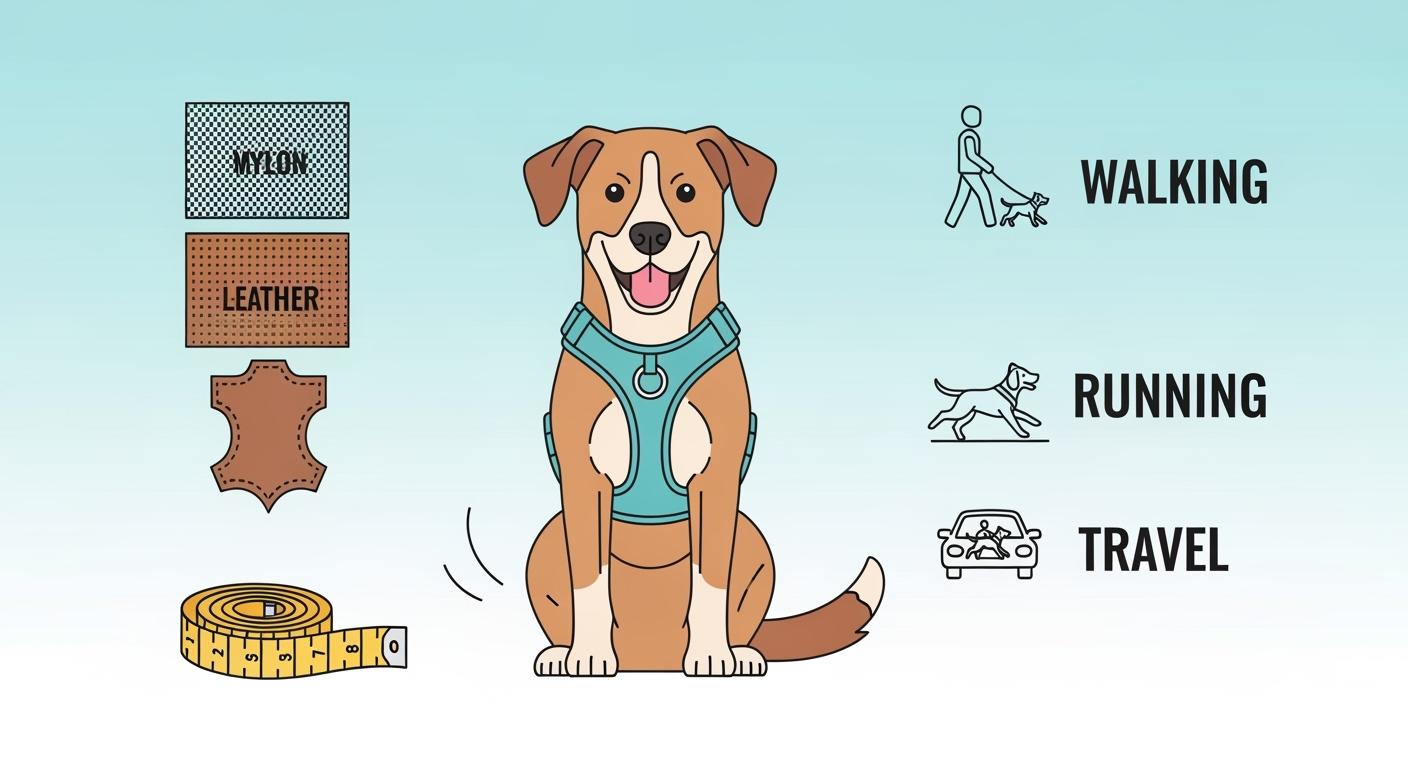
The best dog harnesses are not only comfortable in a product photo. They need to stay centered, avoid throat pressure, keep the shoulders moving, and hold the leash connection in the right place during real walks. A harness can look secure on the shelf and still fail when a dog pulls, turns, shakes, or backs out.
This guide focuses on the product problems that decide whether a harness works in daily use: strap position, shoulder clearance, clip placement, material stiffness, padding, adjustment range, and the body shapes each design fits best. For daily walking and control, these details matter more than a broad “best harness” label.
A harness also needs to fit the walking setup around it. The leash angle, attachment point, and handling routine can change how pressure moves through the harness. That is why daily walking control should be judged together with harness structure, not as a separate issue.
Why many dog harnesses fail during daily walks
Harness failure usually starts with movement. A dog pulls forward, turns sideways, lowers the head, jumps, or backs up. If the harness is too loose, it shifts. If it is too tight, it rubs. If the front panel is too high, it presses into the throat. If the shoulder area is blocked, the dog shortens its stride or resists the harness.
| Real-use problem | Common cause | Better product direction |
|---|---|---|
| Harness slides to one side | Loose chest strap, weak body contour, or poor D-ring balance | More stable chest coverage, balanced leash point, and wider adjustment range |
| Rubbing behind the front legs | Strap sits too close to the armpit or edge binding is too rough | Cleaner strap angle, softer edge finish, and better spacing behind the elbow |
| Dog coughs or resists forward movement | Front panel rides too high toward the throat | Lower chest placement and a neckline that avoids trachea pressure |
| Shoulder movement looks shortened | Wide front panel blocks the shoulder path | Y-shaped or open-shoulder structure for freer front-leg movement |
| Dog backs out of the harness | Neck opening and chest girth do not control reverse movement | More secure multi-point adjustment and better size grading |
A good dog harness should solve these problems through structure, not only through thicker straps or stronger clips. A stronger harness that sits in the wrong place can still rub, twist, or make control worse.
Harness structures and where each one works best
Different harness structures solve different walking problems. The right choice depends on how the dog moves, where leash pressure needs to go, and whether the harness is mainly for calm walking, pulling control, running, or escape resistance.
| Harness structure | Works better for | Where it can fail |
|---|---|---|
| Back-clip harness | Calm daily walks and dogs that do not pull hard | May encourage forward pulling if the dog already leans into the leash |
| Front-clip harness | Dogs that need more turning control during walks | Can twist sideways if the chest panel and girth strap are not stable |
| Dual-clip harness | Walks that switch between guidance and relaxed movement | Can feel bulky if the design adds too much hardware or padding |
| Step-in harness | Dogs that dislike gear pulled over the head | Can sit too close to the armpit if the strap geometry is shallow |
| Y-shaped harness | Daily walking where shoulder freedom matters | Still needs correct chest depth and strap length to avoid shifting |
| Escape-resistant harness | Narrow-bodied or backing-out dogs | Can become hot, heavy, or restrictive if coverage is excessive |
For daily walking, a harness should not be judged only by the leash clip. The front panel, neck opening, belly strap, back panel, hardware position, and size range all decide whether the clip can actually work as intended.
Fit and sizing details that decide comfort and control
Harness sizing often fails when the size chart depends too much on weight. Two dogs with similar weight can have very different chest depth, neck size, shoulder width, and body length. A harness that fits one medium dog can slide, rub, or sit too high on another.
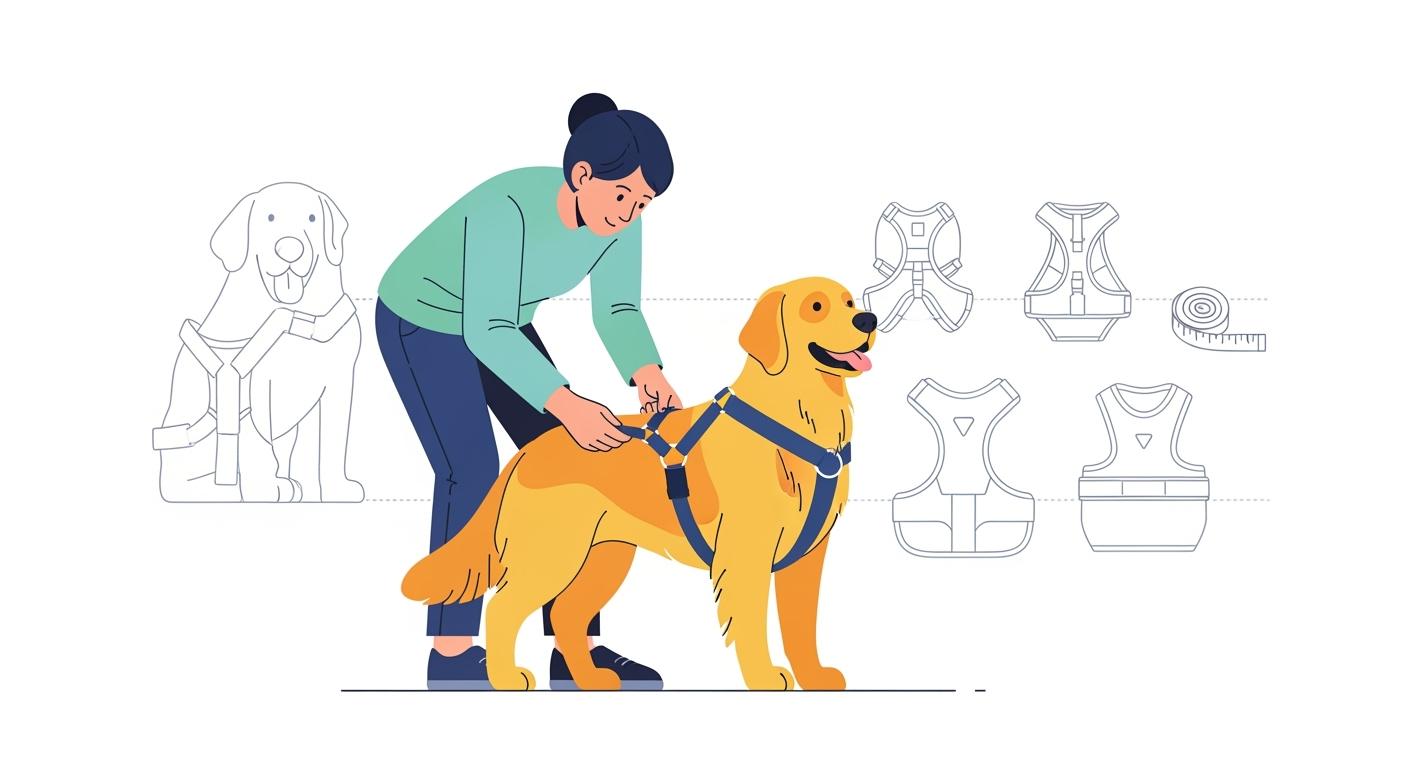
For a more reliable fit, the main measurements should include chest girth, neck opening, body length, and the space behind the front legs. The product also needs enough adjustment range to handle coat changes, grooming, and normal body variation. For full walking setups, a dog harness and leash set should keep the leash angle compatible with the harness attachment point.
| Fit area | What should happen | Warning sign |
|---|---|---|
| Neck opening | Stays low enough to avoid throat pressure | Harness rides up when the leash tightens |
| Chest girth | Holds the harness stable without squeezing | Vest rotates, gaps, or leaves pressure marks |
| Shoulder path | Allows front legs to move naturally | Dog shortens stride or pulls the elbows outward |
| Behind the elbows | Leaves enough clearance for repeated walking motion | Hair loss, redness, scratching, or rubbing |
| Back panel | Keeps the D-ring centered during turns | Leash pulls the harness sideways |
The common two-finger check can help users avoid an obviously tight fit, but it cannot replace movement testing. A better check is to let the dog stand, walk, turn, sit, and lower the head while watching for strap movement, shoulder restriction, and pressure points.
Materials, padding, and hardware that change long-term use
Material choice affects more than appearance. A daily walking harness must handle pulling force, sweat, rain, washing, dirt, and repeated adjustment. The wrong material can stretch, trap moisture, rub at the edges, or make the harness too stiff for natural movement.
| Material or part | Where it helps | What to watch |
|---|---|---|
| Nylon webbing | Lightweight strength and fast drying | Edges need smooth finishing to prevent rubbing |
| Mesh panels | Better airflow for warm-weather walking | Weak mesh can stretch or lose shape under load |
| Neoprene or soft padding | Reduces pressure at contact points | Can hold moisture if drying is slow |
| Reflective trim | Improves visibility in low light | Should not replace structural strength |
| Buckles and adjusters | Make fitting faster and more consistent | Low-quality hardware can loosen, crack, or slip |
| D-rings and leash points | Transfer leash force into the harness body | Poor placement can twist the harness or concentrate pressure |
Padding should solve a pressure problem, not hide a poor structure. If padding is too bulky, it may make the harness hotter, slower to dry, or harder to fit. If there is no padding at all, repeated pressure can create rubbing on thin-coated dogs or high-contact areas.
Which harness direction fits each walking problem
The best dog harness depends on the problem the harness needs to solve. A calm dog does not need the same structure as a strong puller. A narrow-bodied dog does not need the same coverage as a broad-chested dog. A running setup does not need the same leash point as a city walking setup.
| Dog or use case | More suitable direction | Avoid when |
|---|---|---|
| Strong puller | Stable front-clip or dual-clip harness with low chest control | The harness twists, rides high, or concentrates force at the neck |
| Calm daily walker | Light back-clip or Y-shaped harness | The dog starts leaning forward and the back clip increases pulling |
| Escape-prone dog | Secure multi-strap structure with better reverse-movement control | The extra coverage causes heat, stiffness, or rubbing |
| Puppy or growing dog | Lightweight, adjustable harness with easy size rechecks | The product has limited adjustment or heavy hardware |
| Senior dog | Soft contact points, easy on-off structure, low neck pressure | The harness is stiff, heavy, or difficult to put on |
| Running or active walks | Shoulder-friendly structure and stable back leash point | The front panel blocks stride or the harness shifts during speed changes |
This is why a strong harness category should not be built around one universal model. A more useful product range separates daily walking, pulling control, escape resistance, lightweight comfort, and active outdoor use by structure and fit logic.
FAQ
What is the most important feature in the best dog harnesses?
Stable fit comes first. If a harness slides, twists, rubs, or blocks shoulder movement, stronger fabric or extra hardware will not solve the core problem.
Is a front-clip harness always better for pulling?
No. A front-clip harness can help with turning control, but it must stay centered. If the chest panel is unstable, the leash can twist the harness sideways and create rubbing.
Why do some harnesses rub behind the front legs?
Rubbing usually comes from strap angle, poor armpit clearance, rough edge binding, or a size that pulls the harness too far back during movement.
Should daily walking harnesses be heavily padded?
Not always. Padding can reduce pressure, but too much padding can add heat, bulk, and drying problems. The better goal is clean structure plus padding only where pressure actually occurs.
How should users check comfort after switching harness types?
They should test standing, walking, turning, sitting, and head-lowering. They should also check skin and coat contact after use. For broader comfort questions, keep the original comfort check link available for users who need more support.