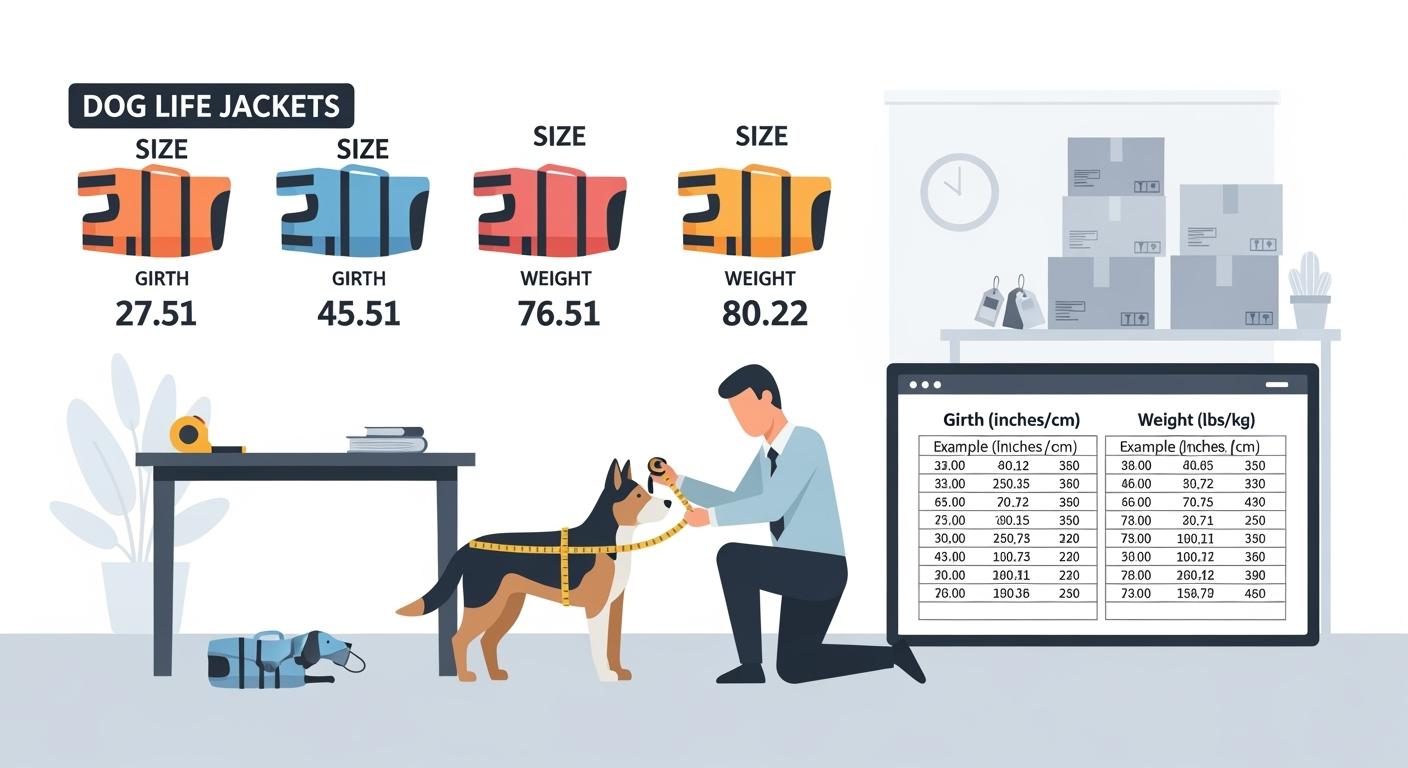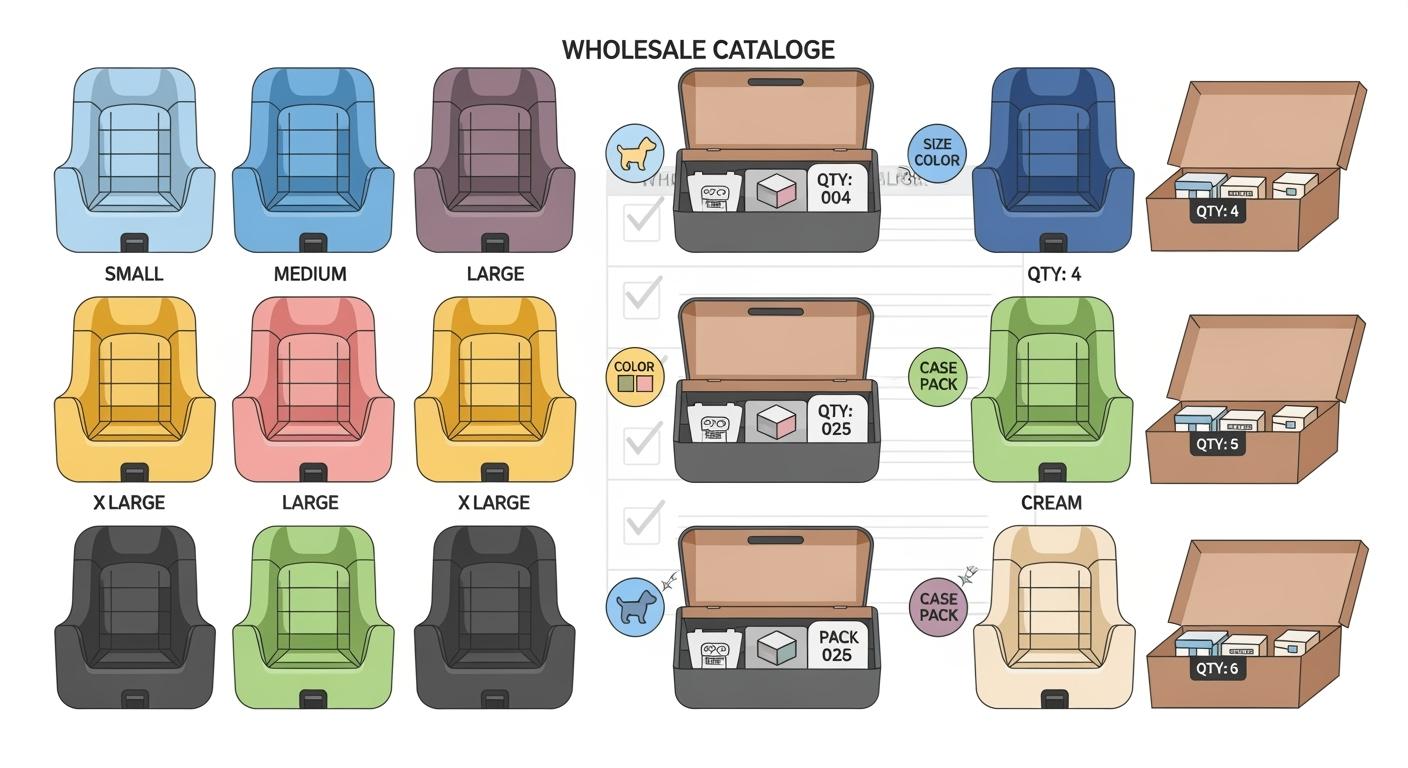
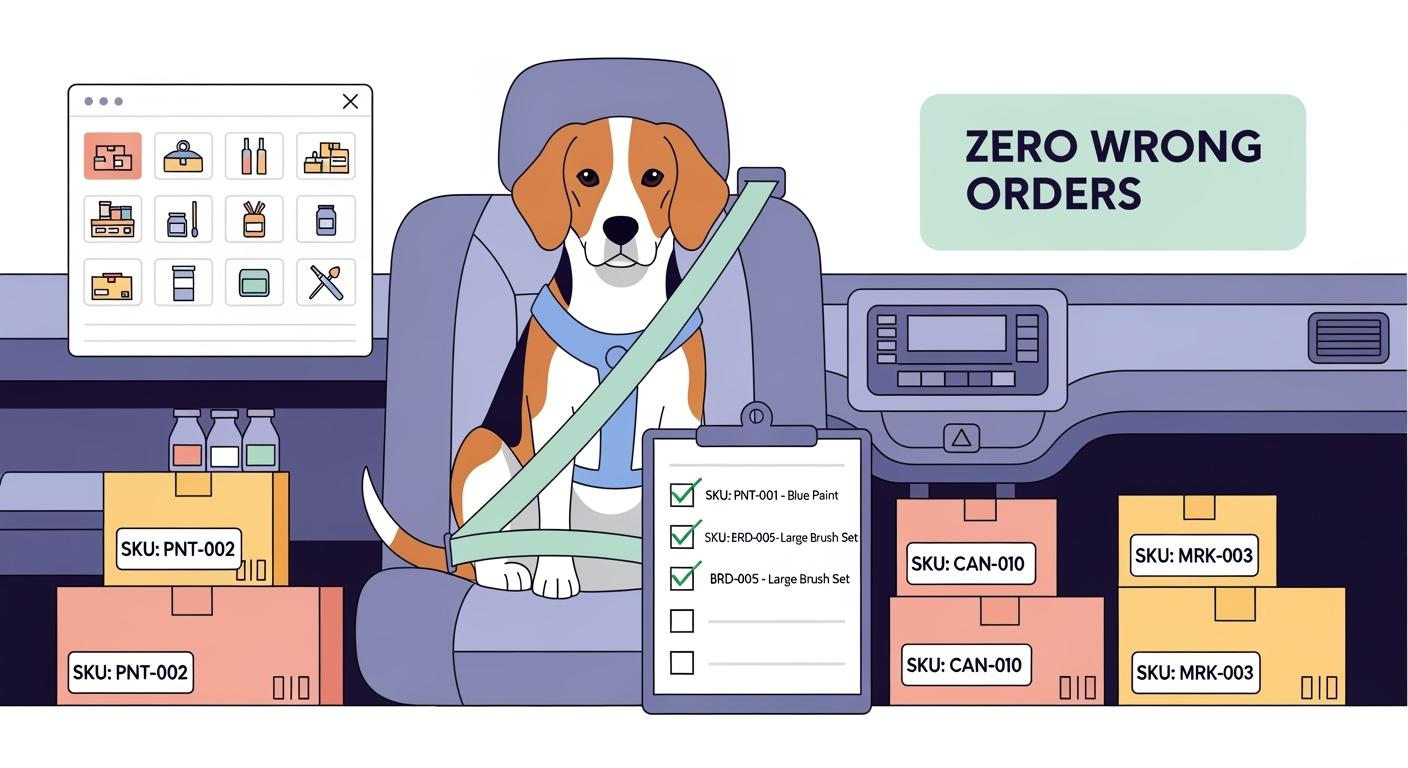
A dog seat belt keeps your pet safe in the car. It does not teach your dog or change how it acts. Shoppers get confused when listings are not clear. Some listings mix up which dogs the seat belt fits. You can stop wrong orders by giving each product its own ID. Group different types by things they have in common. Use honest words that focus on safety. Watch amazon reviews and returns to make your pet supply list better. Use correct safety rules and ai tools to know what people want. This helps keep customers safe and happy.
Key Takeaways
Use simple and truthful words in product listings. This helps stop confusion about dog seat belts. – Make a special product ID for each seat belt. This lowers wrong orders and returns. – Use the same naming style for SKUs every time. This helps customers find the right product fast. – Give clear details about what the seat belts fit. This lets customers know which dogs and cars work with them. – Check your catalog often for mistakes and safety rules. This keeps customers trusting your store.
Dog Seat Belt Listing Issues
Common Shopper Misunderstandings
You want buyers to feel sure about their dog seat belt. Many people do not know what a dog seat belt does. It keeps pets safe in the car. It does not train dogs or take the place of a harness. Confusion happens when product names are not clear. Sometimes, pet supply listings mix up details. If you use unclear words or leave out facts, customers may not know if the seat belt fits their car or pet.
Shoppers sometimes think one seat belt works for every car and dog. This is not true. Car seat belt receivers and buckle shapes are different. Some listings say “universal fit,” but this causes mistakes. If you do not explain dog fit and car fit, wrong orders can happen. You need to use clear words and follow safety rules. This helps buyers pick the right seat belt.
Buyer Mistakes Leading to Returns
If you do not give clear steps or correct details, you get more returns and complaints. Customers might put the seat belt on wrong or choose the wrong size. These mistakes can be unsafe and make buyers unhappy.
You can see common listing mistakes and what they cause in the table below:
Common Issues | Impact on Customer Complaints | Impact on Return Rates |
|---|---|---|
Incorrect belt routing | Makes people think the product is broken | More returns |
Loose bases | Makes travel unsafe | More returns |
Unclear instructions | Causes mistakes when installing | More returns |
To lower returns, use clear product IDs, honest fit notes, and simple instructions. Use ai tools to find patterns in amazon reviews and returns. This helps you change your listings to match what people want and keep pets safe. When you do these things, you make buyers happy and build trust in your pet supply store.
SKU Naming and Taxonomy for Pet Products
A clear SKU naming system helps you sort pet supplies. It makes it easy for people to find the right dog seat belt. This also lowers the chance of wrong orders and returns. A good taxonomy lets customers look through categories and subcategories. They can filter by color, size, or material. This helps them find what they want faster. You make search results better and stop confusion.
Naming Formula for Dog Seat Belts
You need a simple way to name each dog seat belt SKU. Use a pattern that shows the main features. Add the type, color, size, and any special design. Do not use codes only your team knows. Make sure each SKU name matches the product title and description.
Here is a table with good and bad SKU names:
Scenario | Good SKU Name | Bad SKU Name | Why it fails |
|---|---|---|---|
Standard adjustable belt, black | DogSeatBelt-Adjust-Black-M | DSBA1 | Too vague, lacks key attributes |
Small dog, pink, clip-on style | DogSeatBelt-Clip-Pink-S | PinkDogBelt | Missing style and size |
Dual-attachment, large, gray | DogSeatBelt-DualAttach-Gray-L | BeltL | No product type or color |
Patterned, medium, paw print | DogSeatBelt-Pattern-Paw-M | PawM | No belt type or pattern clarity |
Good SKU names give clear details. This stops confusion for your team and customers.
Tip: Use the same naming formula for all pet seat belts. This makes catalog updates and planning easier.
Forbidden Words and Claims
You must not use some words in product titles and descriptions. Do not say “universal fit” or “guaranteed to fit all cars.” Car seat belt receivers and buckle shapes are not the same. You cannot promise a fit for every car or pet. Do not use words like “best,” “perfect,” or “miracle.” These words do not meet safety rules and can trick customers.
Forbidden words and claims are:
Universal fit
Guaranteed fit
Best ever
Miracle solution
One-size-fits-all
Use honest words. Focus on safety and clear fit. Tell customers what the seat belt fits and what it does not fit.
Synonym Map for Pet Accessories
You need to use the same words for pet accessories. This helps your team and customers understand your listings. Use the same words for attachment method, adjustment points, and carry system. Do not mix up synonyms in your catalog.
Here is a simple synonym map:
Attribute | Approved Term | Avoid Using |
|---|---|---|
Attachment | Clip-on | Snap, Hook |
Adjustment | Adjustable | Stretch, Expand |
Carry System | Harness | Strap, Sling |
Pattern | Paw Print | Animal, Spot |
Size | Small, Medium, Large | Tiny, Big, Huge |
Using the same terms keeps your catalog neat. It helps customers compare products and choose better.
Note: Standard terms help with amazon listing rules and make customers happier.
Guidelines for Standardizing Titles and Descriptions
Product titles and descriptions must match your SKU names. Use clear, simple words. Do not use sales phrases or extra punctuation. Make sure the title matches the landing page name. Add key features in the title for each version. This helps customers tell the versions apart.
Follow these steps:
Start with the product type (dog seat belt).
Add main features (adjustable, clip-on, color, size).
Do not use all-caps or special characters.
Use plain English and focus on safety.
Match the title to the product page and SKU.
You make your catalog more accurate and lower wrong orders when you follow these rules.
Safety-first words build trust and meet safety rules.
OEM and ODM Definition
OEM means Original Equipment Manufacturer. You buy products made by another company and sell them with your brand. ODM means Original Design Manufacturer. You work with a company to design a new product, and they make it for you. You need to know these words when you set up your pet supplies catalog.
Clear SKU naming and taxonomy help you manage OEM and ODM products without mix-ups.
Dog Seat Belt Variant Rules

When you set up your catalog, you need clear rules for grouping and naming each version of a dog seat belt. These rules help you keep your listings clean and easy to understand. You lower mistakes and make it easier for customers to find the right product. You also meet safety standards and reduce returns.
Allowed and Not Allowed Variant Attributes
You should only group products as variants if they differ by standard attributes. These include color, size, pattern, material, age group, or gender. For example, you can group a black, medium seat belt and a red, medium seat belt as variants. You can also group small, medium, and large sizes if the design stays the same.
You should not group products as variants if they have different attachment methods, safety systems, or compatibility scopes. If one seat belt uses a clip-on and another uses a buckle, you must list them as separate products. If one version fits only certain car models, you must give it a new SKU. This keeps your catalog clear and helps customers pick the right item.
Note: You should always check the latest amazon guidelines for allowed variant attributes. This helps you avoid listing errors and keeps your catalog in demand.
Edge Cases in Variant Grouping
Sometimes, you will find products that do not fit neatly into standard groups. These edge cases need special care. For example, you may have two seat belts that look the same but use different materials. If the material changes the strength or safety, you must create a new SKU. If you add a new safety feature, you must not group it with older versions.
You may also see products with small design changes, like a new stitching pattern or a different buckle shape. If these changes affect how the product works or fits, you must treat them as new products. You should not group them as variants. This helps you avoid confusion and keeps your listings honest.
Here is a table to help you decide when to group products as variants or create new SKUs:
Change Type | Same Variant Family? | New SKU Needed? | What to Say in the Listing |
|---|---|---|---|
Color only | Yes | No | List color as a variant |
Size only | Yes | No | List size as a variant |
Attachment method | No | Yes | List as separate product |
Safety system | No | Yes | List as separate product |
Material change (affects safety) | No | Yes | List as separate product |
Pattern only | Yes | No | List pattern as a variant |
Pack size (single vs. 2-pack) | No | Yes | List as separate product |
Compatibility scope | No | Yes | List as separate product |
You can use this table to check your catalog and prevent mistakes.
Parent/Child SKU and Duplicate Prevention
You must use parent and child SKUs to organize your variants. The parent SKU is not a sellable item. It groups all the child SKUs that share the same core design. Each child SKU must have a unique identifier. You should not create duplicate SKUs for the same product. This keeps your catalog clean and helps with forecasting.
If you change a product in a way that affects safety or fit, you must create a new child SKU. You should not reuse old SKUs for new designs. This helps you track sales and returns. It also helps you meet safety standards and improve customer satisfaction.
Tip: You should review your catalog often. Check for duplicate SKUs and make sure each product has the right parent and child structure. This helps you keep your listings accurate and ready for pet safety audits.
You can use these rules to build a catalog that meets customer needs and supports your business goals. You help customers find the right dog seat belt, reduce wrong orders, and improve your reputation in the pet market.
Pet Compatibility Language
Using clear words about compatibility helps stop wrong orders. You need to tell customers which seat belt fits their pet. Many people think all seat belts fit every car and dog. This is not correct. You must explain dog fit and car fit are different. Do not say “universal fit.” Honest and direct words help customers stay safe.
Compatibility Statement Template
You can use a simple template to show what fits. Start with pet size and weight. Then, say which cars the seat belt works with. Always tell about any limits or special needs. Here is an example:
“Fits dogs up to 50 lbs. Works with most standard rear-seat belt anchors. Check anchor shape before buying.”
This template gives clear facts to customers. It helps them check their car and pet before buying. You follow safety rules and get fewer returns.
Exclusion and Uncertainty Language
You must tell customers what does not fit. Use words that show you are not sure when you cannot promise a fit. Do not make strong promises. For example, say “May not fit all vehicles with non-standard anchors” or “Not for use with front seats.” These words set clear limits and help with amazon planning. You build trust by being honest about what the seat belt can do.
Here is a table with good phrases and ones to avoid:
Situation | Approved Phrase | Avoid Saying | Reason |
|---|---|---|---|
Movement Limitation | Limits roaming in the cabin | Prevents all movement | Safety-first, avoids absolutes |
Position Control | Keeps dog in back seat | Works in any seat | Focuses on rear-seat safety |
Reduced Roaming | Supports distraction control | Stops all distractions | Honest about product limits |
Rear-Seat Use | Install in back seat for safety | Use anywhere in car | Meets safety guidelines |
Anchor Compatibility | Check anchor compatibility before buying | Universal fit | Avoids unsupported claims |
US/EU Phrasing Rules
You need to use the same words for seat belt features in every country. Use both inches and centimeters for sizes, like “18 inches (46 cm).” Use standard words for how the seat belt attaches and adjusts. This helps people in the US and EU understand your listings. You keep your catalog neat and ready for buyers everywhere.
Tip: Always explain pet fit and car fit separately in your product copy. This makes your listings clear and helps customers pick the right seat belt.
Marketplace Attribute Checklist
A marketplace attribute checklist helps you keep your dog seat belt listings clear and correct. You use this checklist to make sure each product is safe and matches what buyers want. When you follow these steps, you make fewer mistakes and your catalog is easier to handle.
Core Product Attributes
You need to set main product details for every dog seat belt. These details help shoppers compare items and pick the best one. You should include:
Product type (dog seat belt)
Size (small, medium, large)
Color and pattern
Material
Attachment method
Adjustment points
Pack size
Here is a table to help you sort core details:
Attribute | Example Value | Why It Matters |
|---|---|---|
Product Type | Dog seat belt | Tells what the item is |
Size | Medium | Helps with pet fit |
Color | Black | Affects shopper choice |
Material | Nylon | Shows durability |
Attachment Method | Clip-on | Explains installation |
Pack Size | 2-pack | Matches demand |
You should check these details before you post any listing.
Image and Packaging Consistency
Pictures and packaging must match the product details. You need to show the real product, not a random photo. Use clear pictures that show the color, size, and how it attaches. Make sure the packaging matches what you show online. If you change the design, update your pictures and packaging right away.
Tip: Use the same background and lighting for all product photos. This helps shoppers trust your listings and makes your catalog look neat.
QA and Receiving Checks
Quality checks and receiving checks help you find mistakes before customers get the product. You should look at each shipment for correct labels, packaging, and features. Check that the product matches the listing and follows safety rules. Use a simple checklist for every batch:
Make sure SKU and barcode match the listing
Check product size and color
Look at attachment method and adjustment points
Review packaging for accuracy
Test product for basic safety
You make forecasting better and keep your pet supply catalog popular when you use these checks. You help amazon teams and customers get the right product every time.
Copy Blocks for Pet Listings
Feature and Boundary Bullets
You help customers make better choices when you use clear feature and boundary bullets. These bullets show what the dog seat belt does and what it does not do. You should use bold headlines and number the benefits. This makes it easy for people to read and compare. You can target sub-niches by listing features for small dogs, large dogs, or special car types.
Sample Feature and Boundary Bullets:
Keeps your pet secure: Limits roaming in the back seat for safer travel.
Adjustable fit: Works for dogs from 15 to 50 lbs.
Easy to install: Attaches to most rear-seat belt anchors.
Not for front seats: Use only in the back seat for safety.
Check your car’s anchor shape before buying.
Compatibility FAQ Block
A good FAQ block answers common questions and reduces confusion. You can use this block to explain fit, installation, and what to check before buying. Numbered answers help customers find information fast.
Sample Compatibility FAQ:
Question | Answer |
|---|---|
Will this seat belt fit my car? | Fits most standard rear-seat belt anchors. Check your car’s anchor shape before buying. |
Is this seat belt safe for all dogs? | Designed for dogs from 15 to 50 lbs. Not for very small or very large breeds. |
Can I use this in the front seat? | No. Use only in the back seat for safety. |
Does it stop all movement? | Limits roaming but does not prevent all movement. |
Returns Prevention Block
You can lower returns by setting clear boundaries and instructions. Use packaging to highlight unique features and limits. Add a short checklist for customers to review before they buy.
Before you order, check:
Your dog’s weight and size
Your car’s rear-seat anchor shape
That you want a back seat solution
Copy Block Library
You can use these ready-to-paste snippets for your listings:
Product Title: Dog Seat Belt – Adjustable, Clip-On, Black, Medium
Feature Bullets: See above sample bullets
Compatibility Note: Fits dogs 15–50 lbs. Works with most rear-seat belt anchors. Not for front seats.
FAQ Answer: See above FAQ table
You improve safety, meet amazon standards, and support better forecasting when you use these copy blocks. You also match demand and help customers choose the right pet product.
When you use clear SKU rules, your dog seat belt listings get better. Customers can find the right product more easily. This means fewer wrong orders happen. Safety becomes more important for everyone. You also help with planning and sales on amazon. If you check your catalog often and train your team, your listings stay neat. Use checklists and templates to keep things correct as time goes on.
Checklist Item | Description |
|---|---|
RFQ Checklist | Makes sure you and suppliers talk clearly about product details. |
Supplier Scorecard | Lets you compare suppliers by important scores. |
Quality Checks | Checks if products are safe and easy to use. |
Cleaning Instructions | Helps keep products clean and last longer. |
Links to Supplier Resources | Gives quick access to new info and help. |
FAQ
What does a dog seat belt do?
A dog seat belt keeps your pet secure during car rides. It attaches to your vehicle’s seat belt anchor. It does not train your dog or replace a harness.
How do you choose the right size for a dog seat belt?
Check your dog’s weight and chest size. Use the product’s size chart. Pick a seat belt that matches your pet’s measurements for a safe fit.
Can you use any dog seat belt in every car?
No. Car seat belt anchors and buckles differ. Always check your car’s anchor shape before you buy. Avoid products that claim “universal fit.”
What product details should you check before listing?
Attribute | Why It Matters |
|---|---|
Size | Ensures pet safety |
Attachment Method | Matches car anchors |
Material | Shows durability |
Pack Size | Meets shopper needs |
How do you prevent wrong orders and returns?
You write clear product titles and descriptions. You use honest compatibility notes. You add a checklist for buyers to review before ordering. You update images and packaging when designs change.