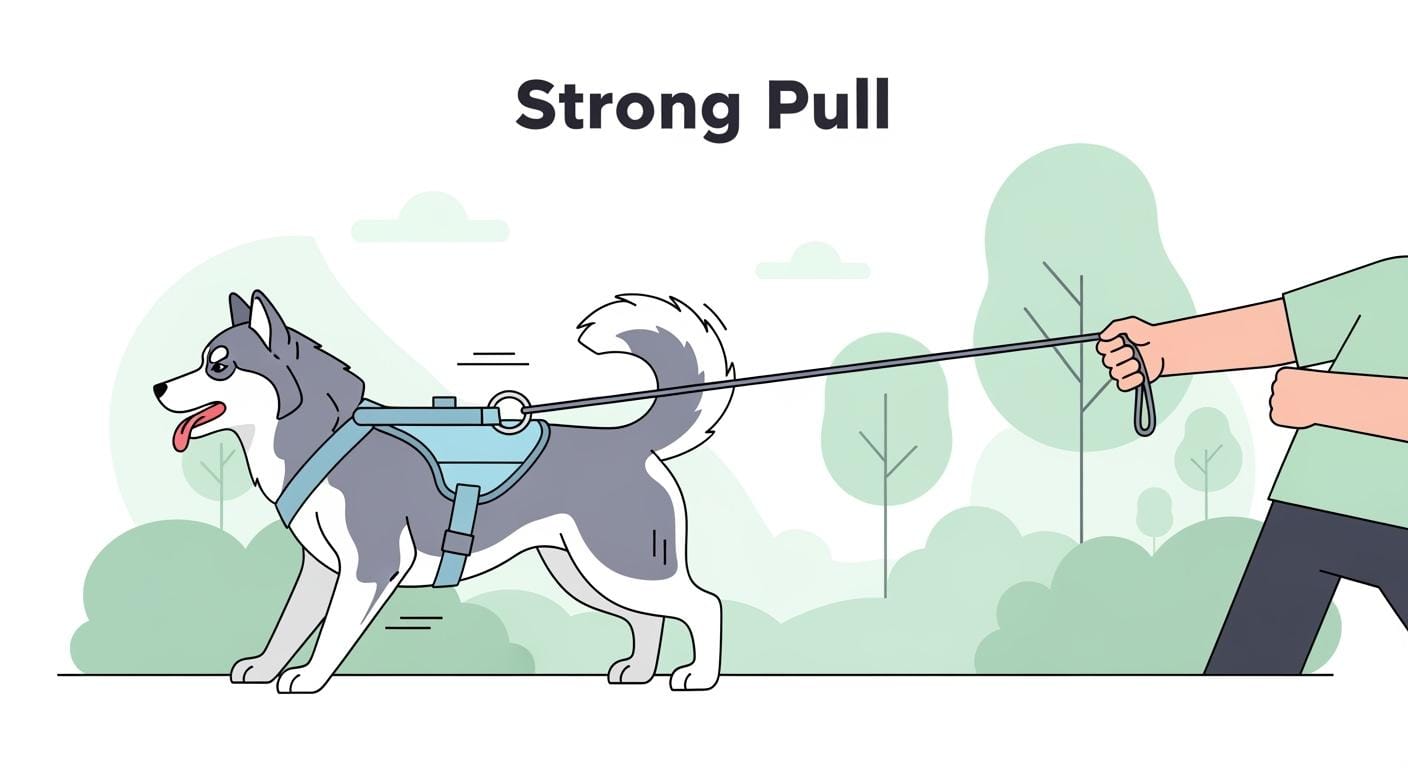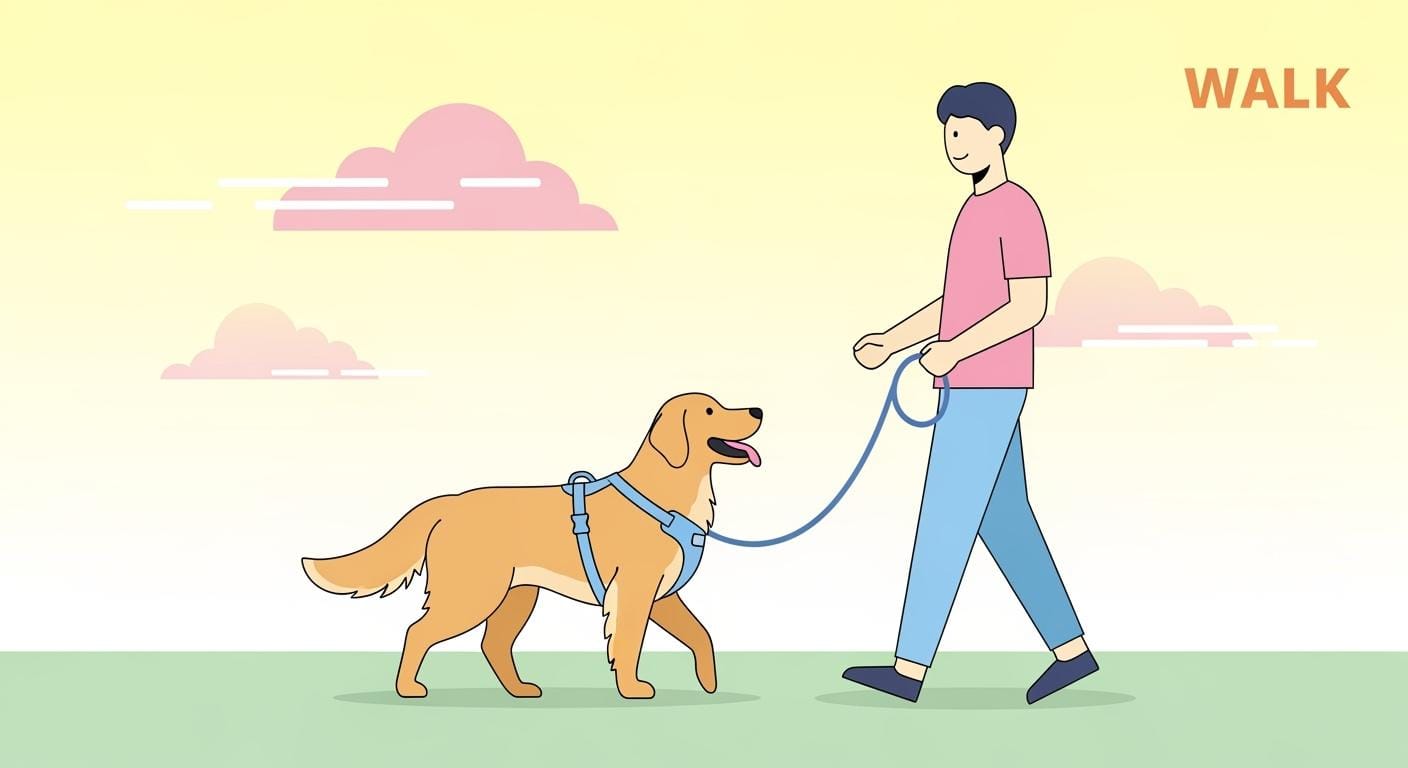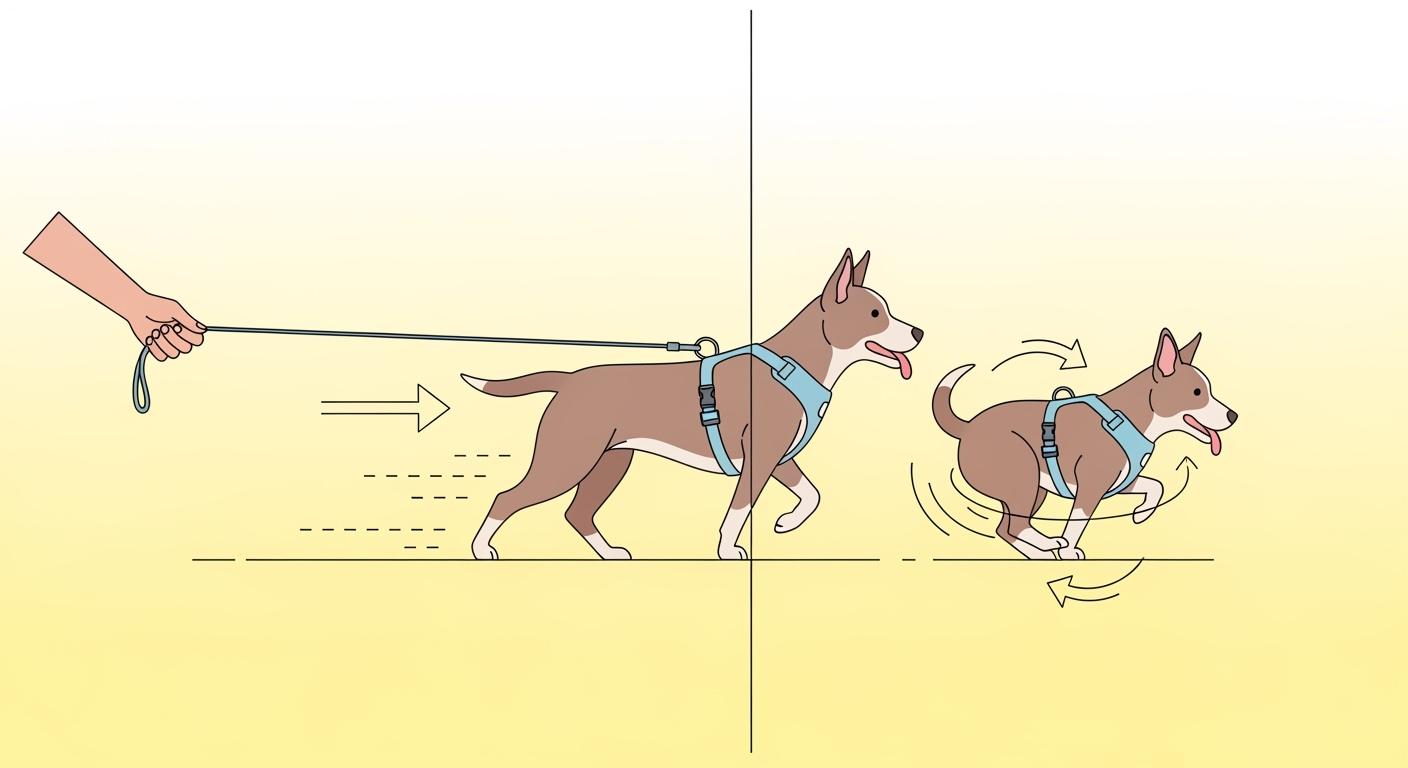
A front harness dog setup changes the walk because the leash attaches at the chest instead of the shoulders. When the dog surges forward, that front attachment changes the direction of the body rather than letting the dog lean straight through the pull.
That sounds simple, but the result depends heavily on fit. If the chest ring drifts, the belly strap sits too close to the elbow, or the leash path keeps crossing a leg, the harness loses the control you expected and starts creating new problems instead. Consistent front-clip harness training steps still matter, but the equipment works much better when the chest attachment stays where it should.
Disclaimer: A front-clip harness is a management tool, not a substitute for training. If pulling is linked to fear, pain, reactivity, or airway problems, speak with a qualified trainer or veterinarian before changing equipment again.
Das Wichtigste in Kürze
- A front harness dog setup usually works best when the chest ring stays centered on the sternum and the straps do not interfere with the shoulders.
- Twisting, chest drift, rubbing, and poor steering usually start with fit, not with the idea of the front clip itself.
- If the harness keeps rotating after careful adjustment, the shape of the harness may not match the dog’s build.
When a Front Harness Dog Setup Actually Helps
A front clip is most useful when you need steering more than simple restraint. It does not remove the dog’s desire to pull, but it can make forward pulling less efficient and give you a clearer moment to redirect before the dog settles into a full lean.
Why the front clip feels different on a walk
With a back clip, many dogs can push straight into the leash. With a front clip, the leash attachment point sits at the chest, so forward force changes the body’s direction sooner. That difference is why handlers often feel more steering control right away.
Which dogs usually benefit most
Dogs that pull steadily, dogs still learning loose-leash walking, and many dogs that do better with clearer directional feedback often respond well to a front-clip setup. The fit still has to stay clean under movement, especially on dogs with unusual proportions.
| Dog Type | Why It Often Helps | What to Watch |
|---|---|---|
| Small dogs that pull | Moves leash pressure off the neck and makes turning easier | Small chest size can make drift show up quickly |
| Strong, heavy dogs | Interrupts straight-ahead force earlier | Strong dogs can still overwhelm weak hardware |
| Barrel-chested dogs | Can spread pressure better than a collar | Belly strap may sit too close to the elbows |
| Long-backed dogs | Moves leash force away from the neck | Fit can change along a longer torso |
| Flat-faced breeds | Often feels better than collar pressure at the neck | Any chest pressure still needs careful watching |
Front-clip, back-clip, and dual-clip do not solve the same problem
Clip position changes what the harness is actually doing. A front clip usually gives more steering. A back clip usually feels freer but offers less interruption to pulling. A dual-clip design can help when the same dog behaves differently in different places. That becomes easier to judge when dog training harness fit and sizing is checked against real movement rather than weight alone.
| Harness Type | Steering Control | Comfort | Usually Best For | What to Watch |
|---|---|---|---|---|
| Front-clip | High | Good when fitted well | Pullers and early leash training | Can drift or twist if the chest ring sits too low |
| Back-clip | Low | Very comfortable for many dogs | Calm walkers and easier routes | Often lets strong pullers lean harder |
| Dual-clip | Medium to high | Good | Mixed environments and transition stages | Results change with the clip actually in use |
Across a broader dog harness range, the biggest difference is often not the label on the packaging but where the chest ring lands and how independently the side straps adjust.
What Usually Causes Twist, Chest Drift, and Awkward Leash Paths
A harness can look centered when the dog is standing still and still fail once the walk starts. Movement exposes problems that static fitting hides, especially when the dog turns sharply, pulls suddenly, or keeps shifting weight from side to side.
Why a harness that looks fine at rest can still fail outside
If the belly strap sits too close to the elbow, each stride can push the harness sideways. If the chest ring sits too low, the leash angle stops feeling clean and starts dragging across a leg or shoulder. If the left and right sides are not balanced, the harness usually rotates to the shorter side once tension builds.
Common problems and quick fixes
| Symptom | Mögliche Ursache | Fast Check | Beheben |
|---|---|---|---|
| Harness twists during the walk | Belly strap too low or overall fit too loose | Watch whether the chest ring rotates within the first 20 steps | Raise the belly strap and re-balance the side straps |
| Leash drags across a leg | Chest ring too far back or too low | Watch the leash path right after clipping on | Reposition the chest ring so it stays centered at the sternum |
| Redness behind front legs | Strap too close to the armpit | Check skin immediately after the walk | Loosen and raise the girth area if possible |
| Dog resists turning | Shoulder clearance is poor or the harness is restricting stride | Compare foreleg extension before and after the harness goes on | Raise the front section and recheck the shoulder line |
| Chest ring drops below the sternum | Wrong size or uneven side tension | Check left and right strap length after fitting | Equalize the straps or size down if drift keeps repeating |
Tip: If the chest ring is off-center within the first block of walking, do not just tighten one buckle and hope for the best. Re-check the whole strap path from the chest outward.
Signs the Current Setup Is Not Working
The earliest signs are usually mechanical, not dramatic. The dog shortens the stride, braces into the turn, or starts moving differently before obvious rubbing appears. That is why it helps to watch the dog in motion and inspect the contact points as soon as the walk ends.
What discomfort usually looks like
- Shorter front steps than usual
- Head-tossing or repeated resistance to turning
- Harness ring drifting off-center during normal walking
- Redness or hair flattening behind the front legs
- Dog freezing, backing up, or stiffening when clipped in
When the same contact point keeps warming up or thinning after active walks, it usually becomes a no-pull harness chafing problem rather than a one-time rub.
Pass or fail checks after a fit adjustment
| Artikel prüfen | Signal weiterleiten | Fehlermeldung | Beheben |
|---|---|---|---|
| Chest ring position | Stays centered on the sternum | Twists or drifts to one side | Equalize side straps and recheck size |
| Leash path | Runs forward cleanly without touching the legs | Drags across a leg or shoulder | Shorten the leash and reposition the front section |
| Skin condition | No redness or hair wear after the walk | Warm spots, redness, or thinning fur | Refit the rubbing area or change the harness shape |
| Stride quality | Forelegs move evenly and fully | Shortened or uneven steps | Improve shoulder clearance or stop using that design |
| Steering response | Dog turns with light leash guidance | Dog braces and keeps pulling through the turn | Recheck chest ring height and overall fit |
If repeated adjustments still do not stop the twisting or the brace-into-the-turn feeling, the harness shape is probably not matching the dog’s proportions well enough.
Disclaimer: If your dog shows persistent gait changes, coughing, breathing difficulty, or strong distress in the harness, stop using it and speak with your veterinarian before continuing.
How to Test a Front Harness Dog Setup Over the First Few Walks
A single good walk does not prove the setup is right. Small fit problems often show up only after several outings, once the straps settle and the dog starts moving more naturally in the harness.
Start with a short three-step check
- Indoor check: Put the harness on while the dog is standing still and make sure the chest ring sits centered on the sternum.
- Twenty-step walk: Walk in a straight line and watch whether the ring stays centered and the leash path stays clear.
- Post-walk inspection: Check the armpits, sternum, and any point that looked stressed during the walk.
Record what changes over several walks
For the first week, it helps to note whether the ring stayed centered, whether the dog’s stride looked normal, whether the leash path stayed clean, and whether any skin irritation showed up afterward. That pattern usually tells you whether you are fixing a strap issue or working against the wrong harness shape altogether.
Häufig gestellte Fragen
How do you know if a front-clip harness fits correctly?
The chest ring stays centered, the harness does not rotate under tension, the leash path stays clear of the legs, and the dog’s stride still looks normal.
Can puppies use a front-clip harness?
Yes, but the fit needs frequent rechecking because puppies change shape quickly.
How often should you clean a dog harness?
Regular washing and a quick hardware check are usually enough, especially after muddy or sweaty walks.
Is a front-clip harness cruel?
A properly fitted front-clip harness is not designed to cause pain. Problems usually come from poor placement, twisting, rubbing, or shoulder interference.
A front harness dog setup works best when the chest ring stays centered, the leash path stays clean, and the dog can still move normally while you gain better steering. If the harness keeps twisting, rubbing, or dropping below the sternum, the shape is usually the next thing to change, not just the buckle tension.