If your Husky keeps leaving the bed for the floor, the real problem is usually heat buildup, weak support, or a surface that does not stay comfortable after a full nap.
The best dog bed for a Husky usually has to do three things at once: stay cool enough to compete with tile or wood, hold its shape under a larger body, and clean up fast through heavy shedding. A bed for husky dog use often starts going wrong in the same place that a cooling mat versus plush bed comparison usually does, which is surface warmth rather than softness alone.
Note: A better bed can improve comfort and sleep quality, but it does not replace veterinary care when overheating, limping, joint pain, or sudden changes in rest behavior are present.
Das Wichtigste in Kürze
- Most Huskies leave the bed for the floor because the surface runs too warm or loses support too quickly.
- Elevated beds usually win on cooling and cleanup, while orthopedic beds usually win on cushioning and support.
- The right choice depends on how your Husky actually sleeps, not on which bed looks thickest or softest.
Why Many Huskies Keep Choosing the Floor
Huskies are often very clear about temperature. A padded bed that feels cozy to another dog can feel hot to a double-coated dog after only a short rest. That is why a Husky may step onto the bed, test it, and then move back to the coolest part of the room.
Surface heat usually matters first
A warm sleeping surface usually loses to tile, wood, or other cooler flooring. Plush tops, dense foam, and thick fill can all trap more heat around the body than many Huskies want, especially indoors.
Shape still matters too
Some Huskies curl tightly, while others stretch out fully. A bed that is too short, too narrow, or too boxed in often gets ignored even when the material itself is acceptable.
Support problems show up later
A bed that starts out fine can still fail after a few weeks if the center stays flattened after sleep. Once that happens, the surface stops feeling supportive and the floor starts winning again.
| Feature | Cooler Flat Bed | Plush Padded Bed | Hard Floor |
|---|---|---|---|
| Cooling surface | Usually yes | Usually no | Yes |
| Joint support | Moderate to good | Good when fill holds shape | Poor |
| Fur trap risk | Lower | Higher | None |
| Easy cleanup | Usually easy | Usually harder | Very easy |
| What to watch | Some dogs dislike a firmer feel | Heat buildup and center collapse | No cushioning for elbows or hips |
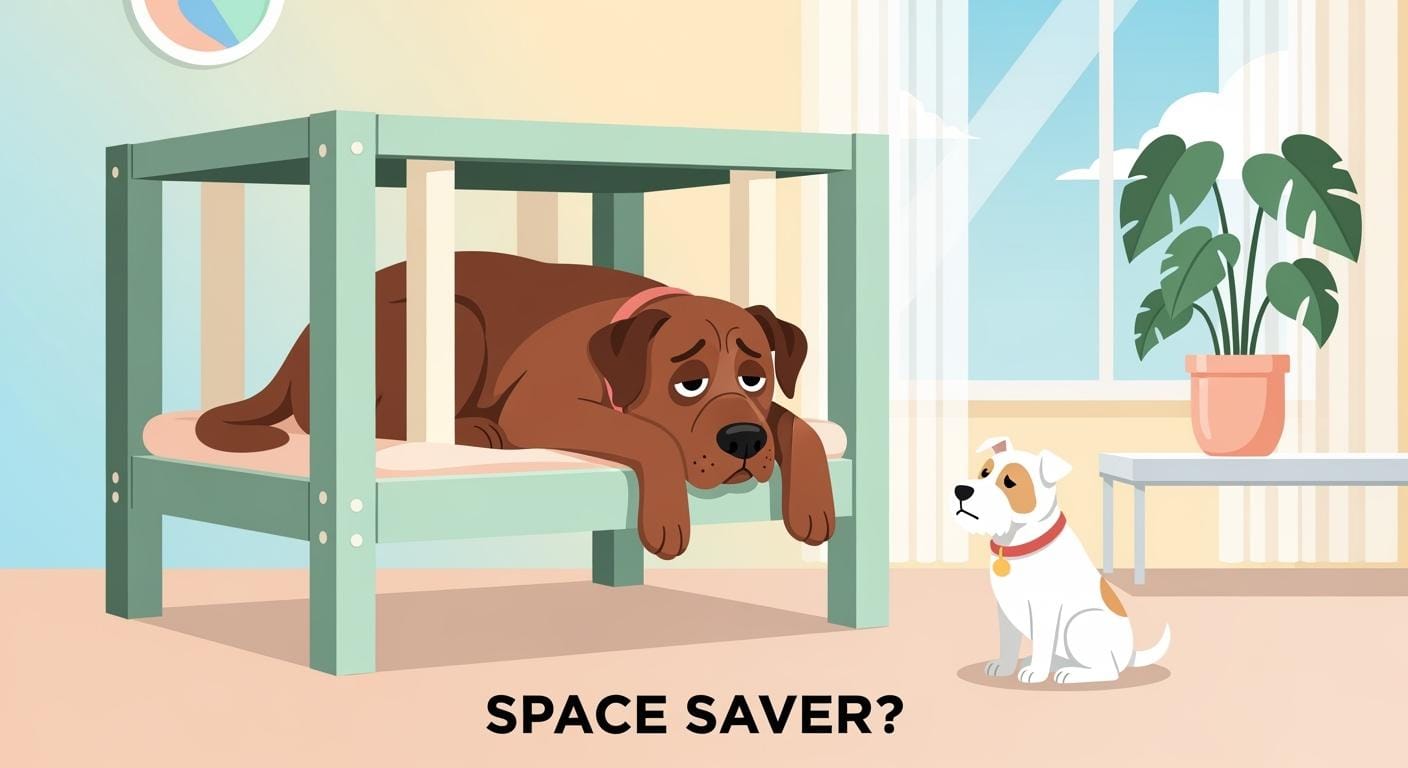
That is also why many Huskies do better once the sleeping surface gets off the floor and airflow improves. An elevated bed dog setup can still fail if the feel is too unfamiliar or too firm, but cooling is usually the reason it stays in the conversation for this breed longer than a plush bed does.
What the Best Dog Bed for a Husky Usually Needs
The best dog bed for a Husky usually works because it balances cooling, support, and cleanup instead of trying to maximize one thing only. Thick padding alone is not enough, and a cool surface alone is not always enough for an older or heavier dog.
Cooling still has to compete with the floor
If the bed holds more heat than the floor, the floor often keeps winning. Breathable surfaces, lifted frames, and covers that do not trap warmth too quickly usually perform better in normal indoor rooms.
Support has to survive repeated use
Large dogs expose weak fill quickly. A bed that looks supportive on day one but stays sunken in the middle after sleep usually does not last long in real use.
Cleanup matters more than many owners expect
A Husky coat fills seams, plush surfaces, and weak covers fast. Beds that trap fur deeply or keep odor after washing usually become frustrating long before they become unusable.
- A cooler surface that does not trap body heat too quickly.
- Support that stays level after repeated rest.
- A cover or surface that cleans easily through heavy shedding.
- Enough space for a full stretch or a tight curl.
- Material that handles scratching, digging, and daily use better.
Tip: Watch where your Husky chooses to rest when nobody is guiding the choice. That default spot usually tells you more than the packaging ever will.
Which bed type usually fits which Husky
| Bed Type | Usually Best For | Main Strength | What to Watch |
|---|---|---|---|
| Orthopedic bed | Older Huskies or dogs needing more support | Better pressure relief and cushioning | Can run warm if the cover is not breathable |
| Elevated bed | Dogs that overheat or prefer firmer surfaces | Better airflow and easier cleanup | Less cushion for sore elbows or hips |
| Calming donut bed | Dogs that curl tightly in cooler rooms | Softer feel and enclosed outline | Usually traps more heat and compresses faster |
When the frame feel is right but the surface still feels too bare, a metal dog bed with added comfort often works better than replacing the whole idea of a raised bed. For indoor setups that need easier cleanup and steadier all-season use, the broader dog home and comfort approach usually comes down to breathable surfaces and materials that do not hold onto fur and odor too aggressively.
How to Tell If the Current Bed Is Actually Working
Before replacing the bed, it helps to watch how your Husky uses it for a few days. Fast replacement sometimes hides whether the real problem is the bed, the room, or a cleaning-related scent change.
Start with where the bed is placed
Put the bed where your Husky already likes to rest. A good bed in the wrong part of the room can still lose to a cooler, more familiar spot nearby.
Check the surface after real use
After a full nap, touch the center of the bed. If it feels noticeably warm or slightly damp, heat retention is probably part of the problem.
Check the shape the next morning
If the center stays low after overnight use, the bed is probably losing support too quickly. Repeated flattening usually matters more than how thick the bed looked when new.
| Artikel prüfen | Signal weiterleiten | Fehlermeldung | Next Step |
|---|---|---|---|
| Dog stays for full naps | Settles and returns to it later | Leaves for the floor within minutes | Test a cooler or firmer surface |
| Surface temperature after use | Neutral or cool to the touch | Warm or damp | Switch to a more breathable bed |
| Shape retention | No lasting sag in the center | Center stays flat or sunken | Upgrade the support core |
| Fur cleanup | Fur lifts out with normal cleaning | Fur embeds and odor returns quickly | Use a removable washable cover |
| Surface durability | Handles scratching and turning with minor wear | Rips, weak seams, or exposed fill | Move to a stronger construction |
Why a Husky still prefers the floor
| Symptom | Mögliche Ursache | Fast Check | Beheben |
|---|---|---|---|
| Sleeps on floor instead of bed | Bed runs too warm or too soft | Touch the bed after a nap | Try a cooler or firmer surface |
| Circles but does not settle | Wrong size or shape for sleep style | Compare dog length with usable sleep area | Choose a flatter or larger bed |
| Scratches or chews the bed | Heat, boredom, or weak material | Notice whether the pattern is occasional or constant | Use a sturdier, cooler setup |
| Uses bed only with added blanket | Surface feels unfamiliar or too cool at that moment | Remove the blanket briefly and compare | Adjust cover texture or room placement |
| Avoids bed after washing | Scent changed too much | Smell the cover after cleaning | Use unscented detergent and reintroduce slowly |
Disclaimer: If your Husky shows heat stress, persistent limping, or a sudden change in rest behavior, speak with your veterinarian before assuming the bed is the only problem.
Common Mistakes When Choosing a Husky Bed
The most common mistake is buying the softest or thickest bed in the store and assuming that more padding means more comfort. For Huskies, that often backfires because thicker plush surfaces usually trap more heat and hold more fur.
Another common mistake is treating bed avoidance like stubbornness. A Husky that approaches the bed, hesitates, and walks away is usually telling you something practical about heat, support, smell, or surface feel. Forcing the dog back onto the bed rarely fixes that.
- Choosing thickness before checking cooling.
- Choosing plush fabric before thinking about shedding and cleanup.
- Replacing the bed before checking room placement and surface temperature.
- Ignoring center collapse because the cover still looks new.
- Treating repeated floor preference as behavior instead of feedback.
Tip: The thickest bed is not automatically the best dog bed for a Husky. If it runs warm, it usually loses to the floor no matter how soft it feels at first touch.
Häufig gestellte Fragen
What bed size works best for a Husky?
A bed large enough for a full stretch usually works best, especially for Huskies that alternate between curling up and lying out flat.
How often should you clean a Husky’s bed?
Weekly vacuuming and regular cover washing usually keep fur and odor from building up too far ahead of you.
Why does a Husky dig or chew the bed?
Heat, boredom, weak materials, and surface frustration can all contribute, especially when the bed does not feel right under the body.
Is an orthopedic bed better than an elevated bed for a Husky?
Orthopedic beds usually win on cushioning, while elevated beds usually win on cooling. The better choice depends on whether support or temperature is the bigger daily issue.
The best dog bed for a Husky usually wins on temperature first, support second, and cleanup third. If your dog keeps choosing the floor, start by checking whether the bed feels warmer than the room around it. That answer usually tells you where to fix the problem first.