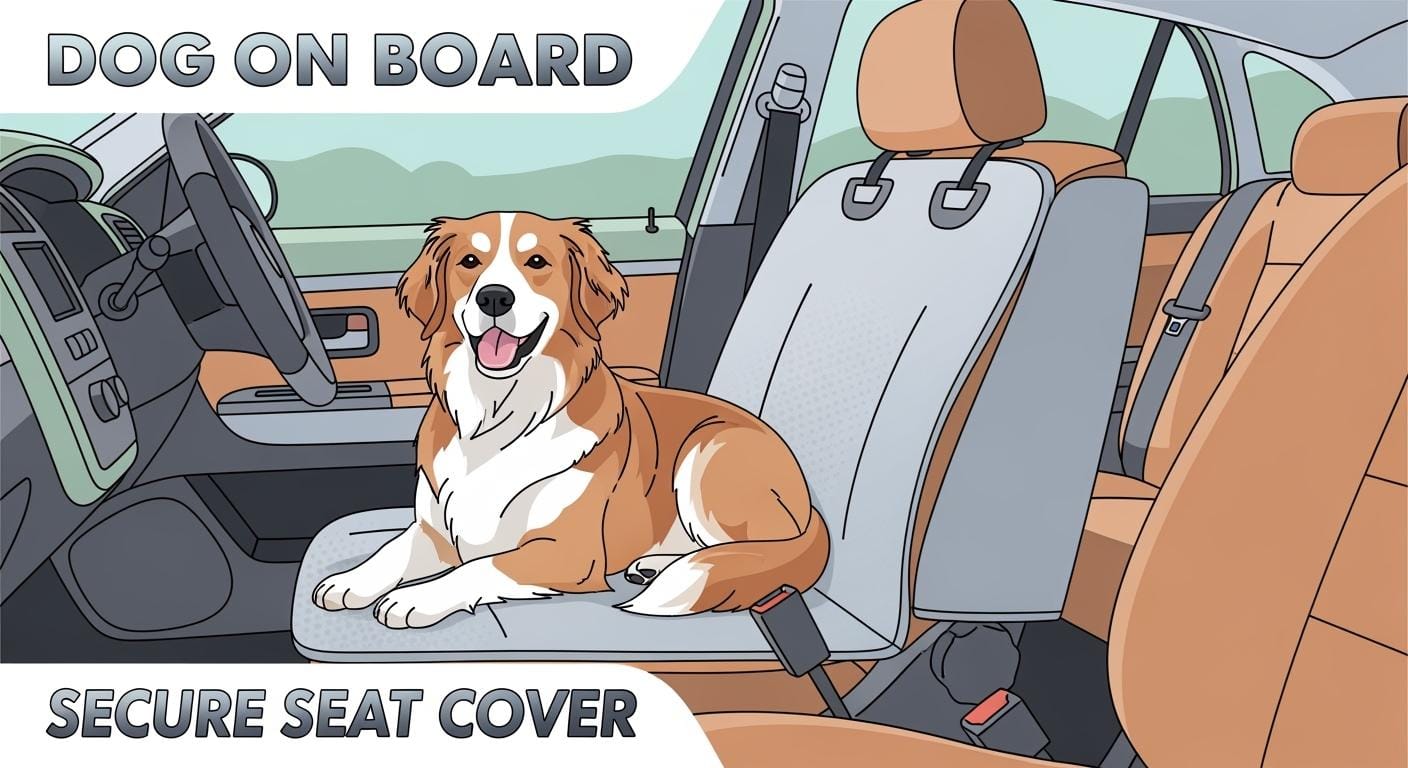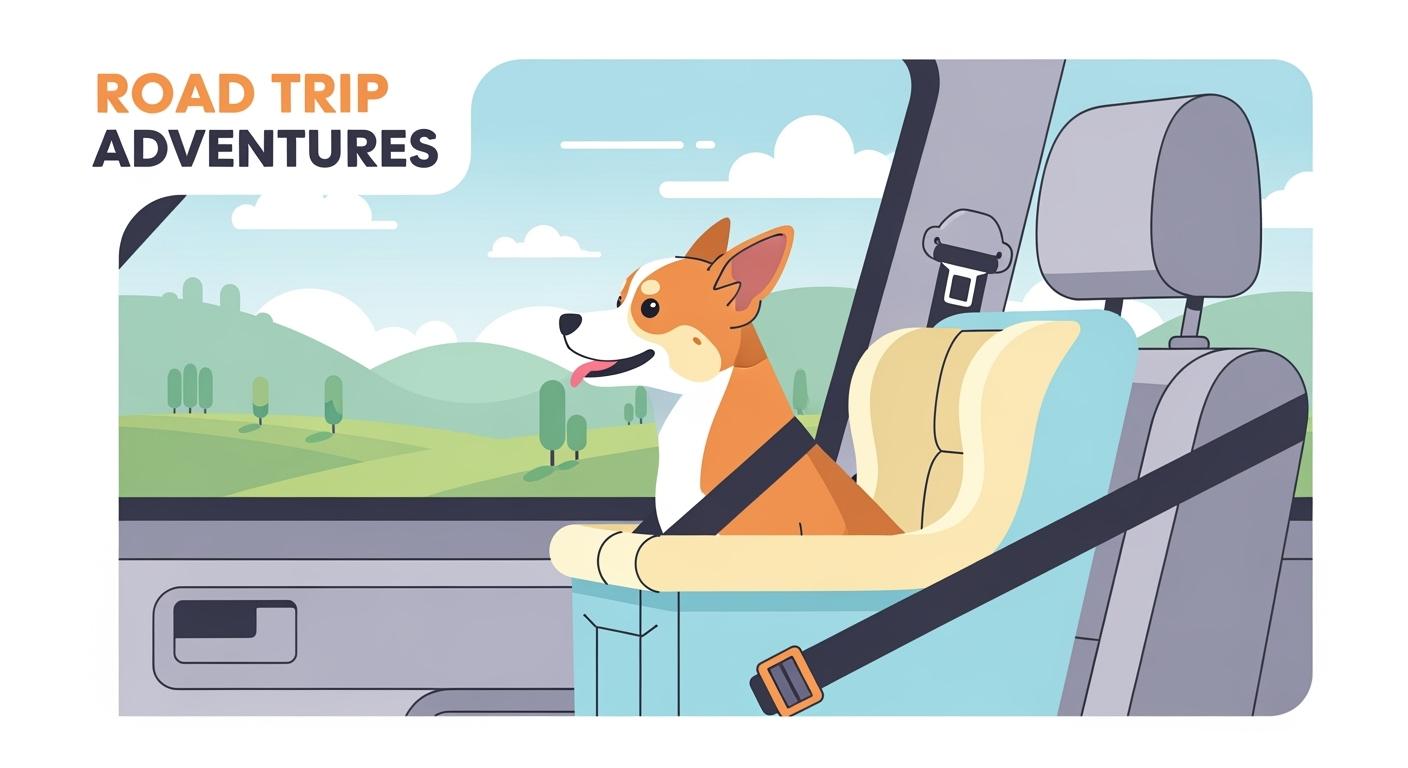
A dog booster car seat makes a simple promise: lift a small dog high enough to see out the window, and the dog stays calm. The problem is that height, by itself, often does the opposite. Raise a dog’s center of gravity without also providing enough sitting depth and lateral support, and the dog spends the entire ride standing, bracing, or leaning — fighting the very instability the seat introduced.
This is not a sizing problem. It is a geometry problem. And it explains why two booster seats with the same listed dimensions can produce completely different behavior in the same dog.
The difference comes down to three design decisions: the ratio of sitting depth to booster height, the rigidity and height of the side walls, and where the harness tether anchors relative to the dog’s center of mass. Get any one of these wrong, and the dog stands. Get all three right, and the dog settles.
Why Booster Height Alone Creates the Problem It Claims to Solve
Most small-dog booster seats add 6 to 10 inches of elevation. That extra height shifts the dog’s center of gravity upward. On a flat platform with short or soft side walls, the dog now has a longer moment arm between its center of mass and the seat base. Every turn, every brake tap, every acceleration applies a rotational force the dog must actively resist.
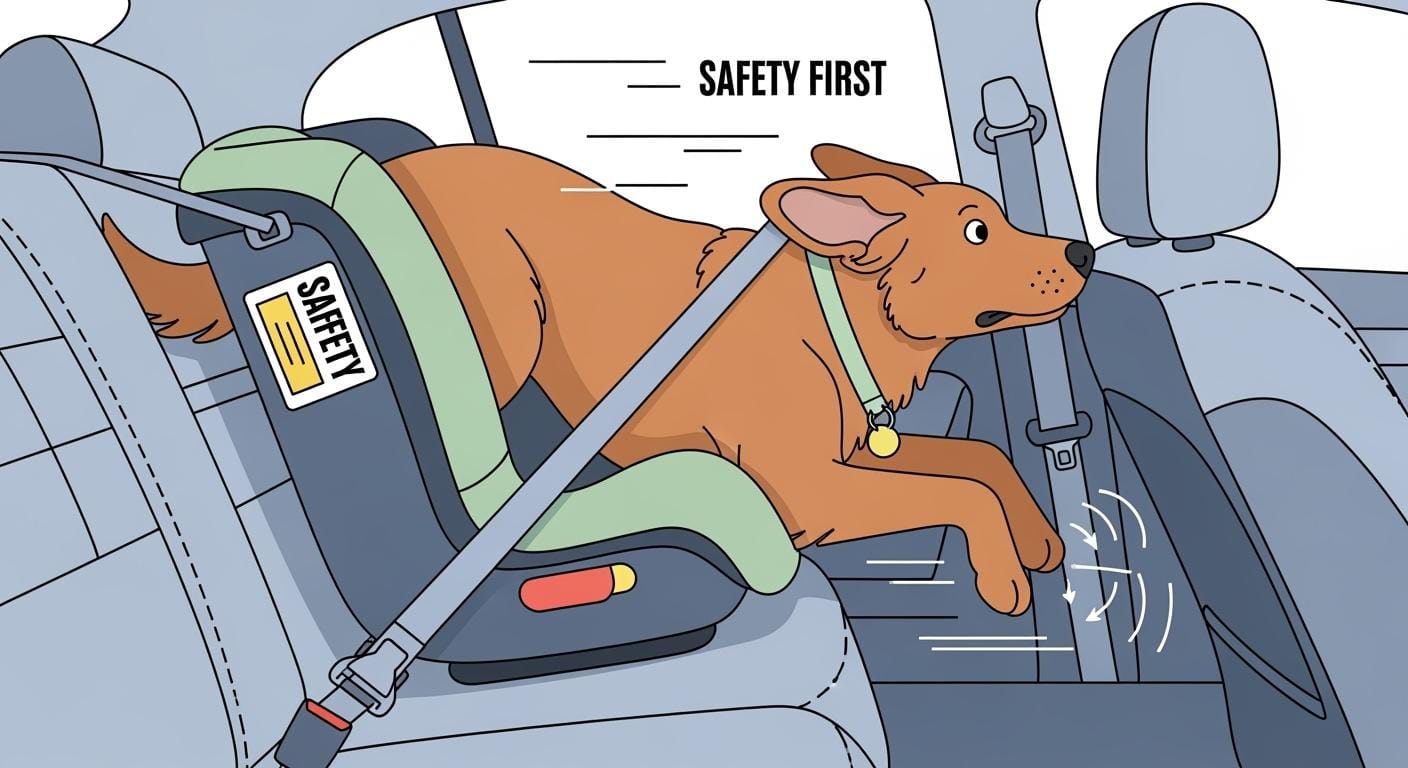
Here is the causal chain: a higher center of gravity means lateral acceleration during a turn produces a larger tipping moment. The dog’s proprioceptive system detects the shift. The dog stands — widening its base of support to regain stability. But standing on a small raised platform further destabilizes the dog. So the dog braces a shoulder against a side wall. Or leans over the front edge. Or paws at the window, seeking a fixed reference point. None of these behaviors are about anxiety or poor training. They are physics.
A seat that lifts a 12-pound dog 8 inches but provides only 4 inches of usable sitting depth has effectively traded a calm, low-riding dog for an elevated, unstable one. The height and depth dimensions interact as a ratio, not as independent numbers. A booster with a 1:1 height-to-depth ratio behaves very differently from one with a 2:1 ratio, even if both list the same maximum height.
| Design Difference | Why it matters | Where it falls short |
|---|---|---|
| Height-to-depth ratio near 1:1 | Dog can sit with all four paws on the seat floor; center of gravity stays low relative to base dimensions | May not give enough window clearance for very short-legged breeds in deep-doored vehicles |
| Height-to-depth ratio near 2:1 or higher | More window visibility for the dog | Dog stands to compensate for reduced passive stability; bracing and leaning increase |
| Shallow seat pan with soft foam | Lighter weight, easier to move between vehicles | Foam compresses under the dog’s weight, effectively making the sitting area even shallower during use |
The Three Design Features That Determine Whether a Dog Stays Seated
Seat Pan Depth and the Difference Between Static and Dynamic Fit
A dog that fits the seat sitting still in a driveway may not fit the same seat 10 minutes into a drive on winding roads. Static fit — “the dog can sit in it” — is not the same as dynamic fit, which asks whether the dog can stay seated without active correction through turns, stops, and speed changes.
The seat pan needs enough depth for the dog to plant all four paws on a stable surface. When the pan is too short front-to-back, the dog’s hind legs end up near the edge. During braking, the dog slides forward. The front paws hit the front wall. The dog stands to reset position. This cycle repeats every few minutes.
An observable check: after a 15-minute drive that includes turns and at least one full stop, look at where the dog is positioned relative to the seat center. A dog that has shifted to one corner and stayed there is compensating for insufficient depth — the corner provides two contact surfaces instead of one. A dog centered and relaxed, with weight evenly distributed, is in a seat deep enough for its body length.
Side Wall Rigidity and Passive Lateral Support
Side walls do two jobs. The obvious one is containment — keeping the dog inside the seat. The less obvious one, and the one that matters more for whether a dog stays seated, is passive lateral support. When a car turns, a dog’s body wants to continue in a straight line. A rigid side wall intercepts that motion before the dog’s muscles have to.
Soft or low side walls fail at this. The dog feels the lateral shift, the wall gives way or sits below the dog’s shoulder, and the dog activates its own postural muscles to resist. That muscle activation is what keeps the dog standing — once the dog is already using its legs to stabilize, sitting back down requires voluntarily giving up that stability. Most dogs will not.
An observable check: from outside the car, watch the dog during a moderate turn. If the dog’s shoulder or hip presses into the side wall and the wall holds firm without deforming, the wall is load-bearing — it is doing the stabilization work. If there is a visible gap between the dog and the wall during the turn, or the wall buckles outward, the dog is self-stabilizing and will likely stay standing.
From a manufacturing standpoint, side wall rigidity is a material and construction choice. Dense closed-cell foam panels hold their shape under repeated lateral loading; polyester fiberfill compresses over time and loses support where it is needed most. The difference is visible within weeks of regular use.
Tether Anchor Position and Why Off-Center Pull Creates Bracing
The harness tether is the connection point between the dog and the seat. Where that anchor sits relative to the dog’s midline determines whether the tether stabilizes or destabilizes the dog during vehicle movement.
An off-center tether anchor pulls the dog toward one side during turns. The dog feels asymmetric tension, braces against it, and shifts weight to the opposite corner of the seat. That corner becomes the dog’s default position — not because it is comfortable, but because it counterbalances the tether’s pull. A centered anchor, positioned at or slightly below the dog’s shoulder height, distributes restraint force evenly across the harness. The dog can sit facing forward without fighting an off-axis load.
The tether also needs to be short enough to prevent the dog from reaching the seat edge but long enough to allow sitting, turning, and settling. Too short, and the dog cannot reposition. Too long, and the tether provides no stability benefit — the dog must self-stabilize before the tether ever engages.
When the seat base, side walls, and tether anchor work as a system, the dog does not need to brace. Stability comes from the seat, not from the dog’s leg muscles. That is the difference between a dog that rides seated and one that stands for the entire trip.
When a Booster Seat Is the Wrong Choice
A booster car seat is a specific solution for a specific dog profile. It works best for dogs under roughly 25 pounds with a rectangular body shape — relatively level topline, moderate chest depth, legs long enough to sit comfortably with paws on a flat surface.
The design becomes a worse fit under several conditions. Dogs with barrel chests or very deep keels — common in some bully breeds and Dachshunds — may not match the seat pan geometry these seats are patterned for. The chest presses into the front wall before the hindquarters have enough depth to settle. The dog ends up half-perched, never fully seated.
Dogs that prefer to lie flat during car rides will not use a booster as intended. The raised platform prevents full-body stretching. Some dogs tolerate this; others spend the entire ride trying to curl into a position the seat geometry does not allow. A flat car safety seating setup with a secured bed or mat may serve these dogs better.
Vehicle compatibility also matters. Deep bucket seats create an angle that tilts the booster base forward. The dog slides toward the front wall. Contoured rear seats with pronounced bolsters can leave the booster base unevenly supported. In both cases, the instability is not a seat design failure but a mismatch between seat base geometry and vehicle seat contour.
Disclaimer: The fit checks described here assume a dog with a relatively rectangular body shape and a smooth or short coat. Double-coated breeds may show subtler signs of poor fit — rub marks and pressure points can be harder to spot through dense fur and may require hand-checking rather than visual inspection alone. If the dog’s chest shape falls outside the breed norms this booster geometry was patterned for — particularly barrel-chested dogs or those with a very deep keel — the observable checks above may not catch every pressure point.
What looks like a behavioral problem — the dog that will not settle, the dog that keeps standing, the dog that braces in one corner — is often just a geometry mismatch. The right question is not “why will not my dog sit?” but “what is this seat asking my dog’s body to do, and does the design support that?” When the answer to the second question is no, a different restraint strategy usually produces better results than a different booster model.
Häufig gestellte Fragen
Why does my dog stand up immediately after I place them in a booster seat?
Standing within seconds of placement usually signals that the seat pan is too shallow or the booster height is too aggressive relative to the sitting depth. The dog’s hind legs cannot find a stable plant, so standing becomes the default. Check whether the dog can sit with all four paws on the seat floor without the chest pressing into the front wall. If not, the depth is insufficient for that dog’s body length.
Does a higher booster seat give a better experience for the dog?
Not necessarily. More height means a higher center of gravity and a longer moment arm during turns. The benefit of a better view only materializes if the dog can stay seated to enjoy it. A moderately elevated seat with enough depth and side support tends to produce calmer behavior than a taller seat that forces the dog to self-stabilize. Window height that forces standing defeats the purpose of the booster design.
How do I know if the side walls are supportive enough?
Watch the dog during a moderate turn. If a shoulder or hip contacts the side wall and the wall holds its shape, it is providing passive support. If there is a visible gap, or the wall buckles, the dog is doing its own stabilization work. Soft walls that deform under body weight are the most common reason a dog leans over the edge instead of sitting centered — the wall gives way before it can provide meaningful lateral resistance.
Should the harness tether be tight or loose?
The tether should be short enough to prevent the dog from reaching the front or side edges of the seat, but long enough that the dog can sit, turn around, and settle without tension restricting natural movement. If the dog cannot shift position at all, the tether is too short. If the dog can lean over the edge before the tether engages, it is too long. A centered anchor point that keeps the dog within the seat footprint without pulling off-axis during turns is the target.
What if my dog simply prefers lying down in the car?
Then a booster seat is the wrong tool. A booster inherently prevents full-body stretching. A dog that wants to lie flat needs a restraint system designed around that position — typically a secured bed or mat combined with a harness and seatbelt tether on the rear seat. Forcing a dog that prefers lying down into a seated booster position creates exactly the standing-and-bracing cycle the design is meant to prevent.
A dog booster car seat is not a one-size solution. The core geometry — how high the platform sits relative to how deep it is, how rigid the side walls are under lateral load, where the tether anchors — determines whether a dog rides seated or spends the trip fighting the seat. Checking these three design dimensions against a specific dog’s body shape and vehicle seat contour tells you more than any size label or feature list ever will.