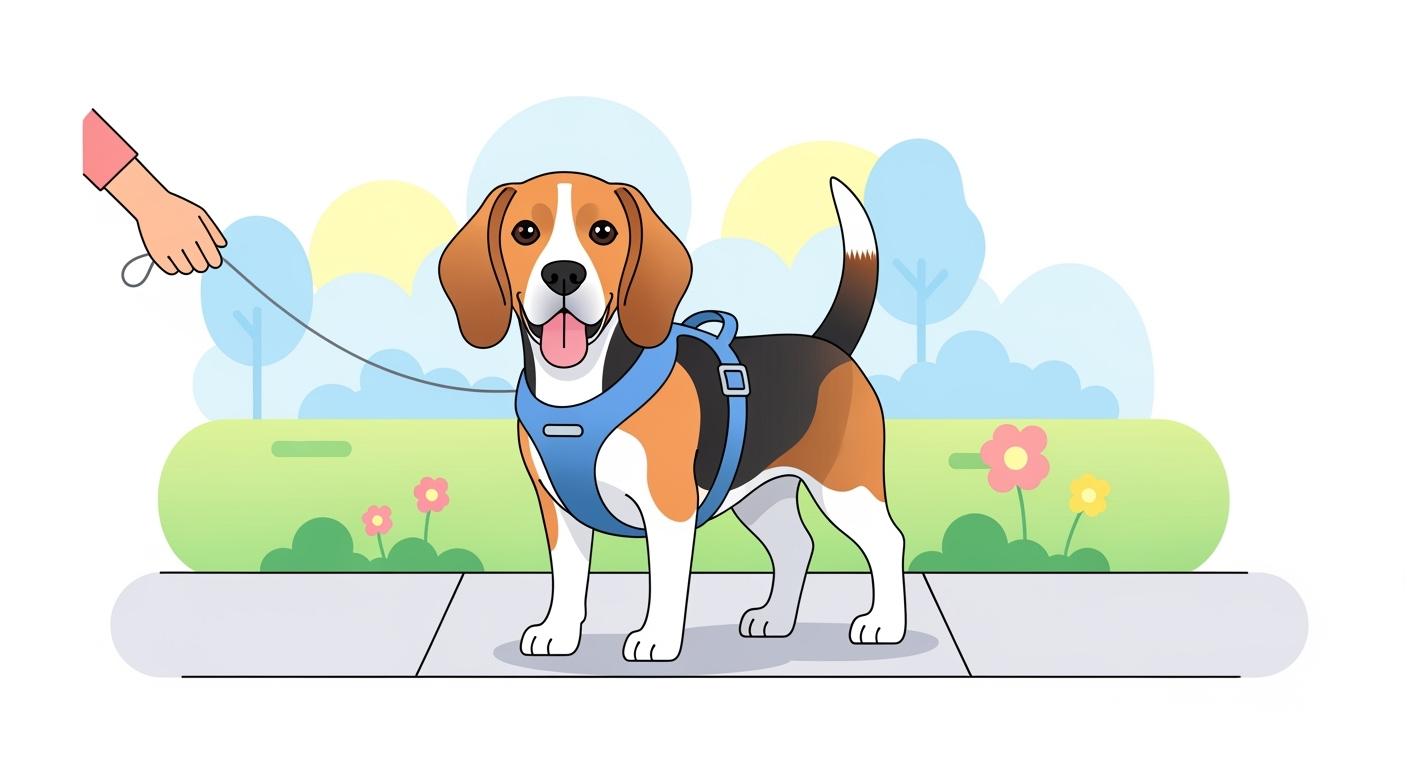
Beagles usually walk nose first. The moment the leash clips on, many of them are already tracking scent, checking the ground, and leaning into the next interesting trail. That is why the best dog harness for Beagles is rarely just the one with the most features. It is the one that lets the dog move naturally, keeps the fit stable when the nose drops low, and still gives you enough control when the walk suddenly gets busy.
The wrong harness usually shows its problems quickly. It rides up toward the throat, shifts sideways under a pull, crowds the shoulders, or loosens enough that a determined Beagle starts testing how to back out of it. A good harness feels quieter than that. It stays centered, gives the dog room to sniff, and does not turn every walk into a tug of war.
Note: This article focuses on harness choice and fit for everyday Beagle walks. It does not replace veterinary advice when pain, breathing problems, or major behavior issues are involved.
Das Wichtigste in Kürze
- Back-clip and secure-fit styles usually work better for open sniff walks and calmer routes.
- Front-clip styles usually help more when you need steering in crowded or unpredictable places.
- A stable fit matters more than any single harness label or feature list.
When Sniffing Freedom Matters More, and When Control Matters More
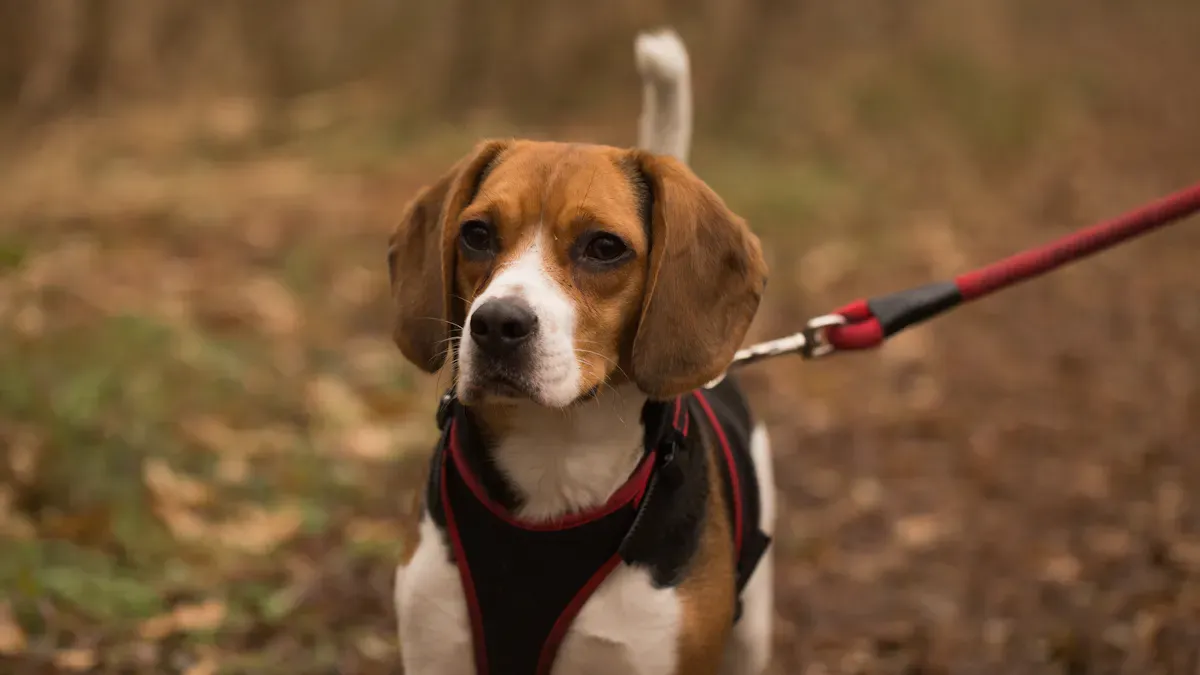
Beagles often settle best when the walk gives them room to investigate scent instead of being hurried past everything. That does not mean every Beagle should be in the loosest or least structured harness. It means the harness has to match the walk you are actually having.
Sniff walks usually need room at the shoulders
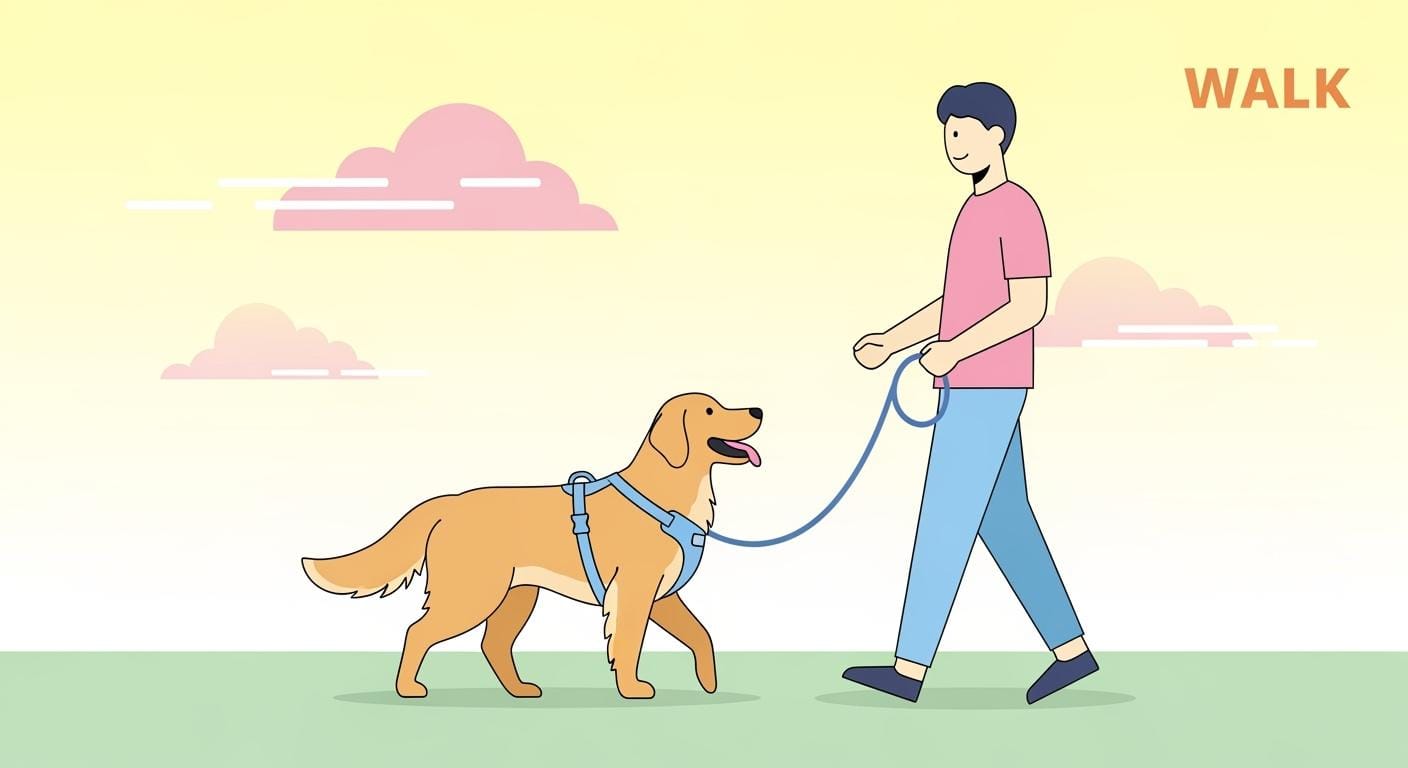
When a Beagle drops the nose low and moves through scent naturally, the front end needs to stay free. A harness that crowds the shoulder line or pulls too high at the neck can make that movement feel stiff or frustrating. For calmer routes, a back-clip or secure-fit harness often gives the most natural feel because it interferes less with the dog’s normal body position while sniffing.
Busy routes often need more steering
Sometimes freedom is not the main need. If your Beagle surges toward dogs, people, food on the ground, or every strong scent in a crowded area, more steering usually matters. In those situations, a front-clip design often gives a more workable leash angle because the dog cannot drive straight through the pull as easily. That same handling change shows up in front-clip harness training steps, where equipment and loose-leash work support each other instead of competing with each other.
No single harness type wins every Beagle walk
A Beagle that is calm on open trails may do very well in a back-clip or secure-fit harness and still need more control in a crowded neighborhood. The useful question is not which style is universally best. It is which style matches the walk in front of you.
| Harness Type | Sniffing Freedom | Steering and Control | Escape Risk | Usually Best For | What to Watch |
|---|---|---|---|---|---|
| Back clip | High | Low | Medium | Open sniff walks and calmer routes | Does not redirect pulling when the dog surges |
| Front clip | Medium | High | Low to medium | Busy environments and stronger steering needs | Chest area must not crowd the shoulders |
| Secure fit | High | Medium | Low | Everyday walks and escape-prone dogs | More adjustment points mean more to recheck |
That is also why fit and sizing checks for everyday walks matter before deciding that one harness style failed. Sometimes the design is wrong. Sometimes the adjustment is.
What Usually Goes Wrong on a Beagle Frame
Beagles often have enough chest depth and enough determination that a harness which looks fine indoors starts misbehaving as soon as real motion begins. Most problems fall into a few repeat patterns.
Throat rise starts when the front sits too high
If the harness already sits close to the base of the neck before the walk begins, it usually climbs more once the dog leans into scent or surges forward. That is where throat pressure starts.
Shoulder crowding shows up as shorter steps
Some harnesses interfere with the front stride more than owners notice at first. A Beagle that usually moves freely with the nose low may start taking shorter steps, pausing, or losing that smooth sniff-walk rhythm when the shoulder area is being crowded.
Side shift usually means the fit is not staying balanced
If one side is shorter than the other, or if the chest and belly sections are not holding the harness in place, it often starts twisting once the dog pulls at an angle. Deep-chested dogs reveal that problem quickly.
Escape attempts usually follow slack, not bad intentions
When a Beagle backs out, the problem is usually not that the dog is unusually clever. It is that the fit left enough room at the chest or belly area for the dog to reverse out once the body angle changed.
Pass or fail harness check before the walk gets going
| Artikel prüfen | Signal weiterleiten | Fehlermeldung | Beheben |
|---|---|---|---|
| Harness stays centered | Does not twist or drift in the first few minutes | Slides to one side quickly | Rebalance strap length on both sides |
| Neck area stays low and clear | No pressure rising into the throat | Front section rides upward during pulling | Lower and refit the front section |
| Shoulders move freely | Dog sniffs and walks with a normal stride | Dog shortens steps or hesitates | Use a lower-bulk or better-shaped front section |
| Harness stays behind the front legs | Chest and belly sections hold position | Harness slips forward toward the shoulders | Refit the chest and belly straps |
| Dog settles into the walk | Sniffs and moves without repeated resistance | Surges, resists, or keeps trying to back out | Recheck fit and reassess harness style |
Common problems and quick fixes
| Symptom | Mögliche Ursache | Fast Check | Beheben |
|---|---|---|---|
| Harness twists during the walk | Uneven strap adjustment | Compare both sides before clipping on | Match the strap lengths again |
| Dog backs out | Loose chest or belly area | Try a gentle backward pull before leaving | Tighten the fit or move to a secure-fit style |
| Rubbing behind the front legs | Leg area sits too far forward or fit is drifting | Check skin after the walk | Reposition the contact area or change structure |
| Harness rides up at the neck | Front sits too high or too loose | Watch the throat when the leash goes taut | Lower and rebalance the front section |
| Dog resists the harness at the start | Fit discomfort or poor past experience | Watch posture when the harness appears | Slow the process down and reassess comfort |
Tip: One of the most common mistakes is choosing a harness that looks good on a standing Beagle and never testing how it behaves once the nose drops and the pulling angle changes.
If escape prevention is the bigger concern, the same body-shape issue often becomes clearer in an escape-proof harness sizing and fit checklist, because many near-escapes start with the harness leaving center long before the dog is actually out of it.
No-Pull Styles, Pulling Changes, and Real Walk Behavior
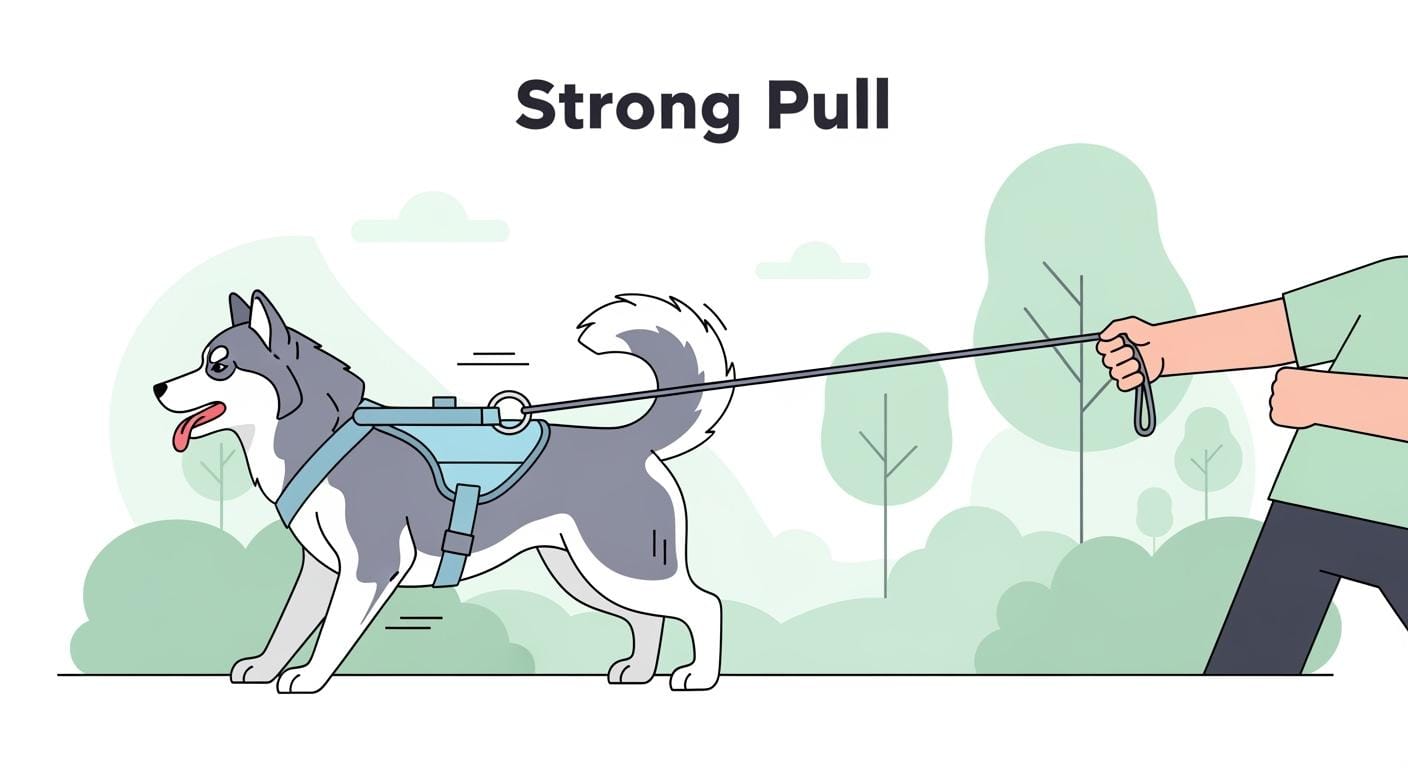
A front-clip harness can change the feel of a Beagle walk quickly, especially when the dog tends to surge hard toward scent or distraction. The leash angle interrupts straight-ahead pulling more clearly than a back clip does. That does not mean every Beagle should live in a front-clip harness full time. It means the style can be useful when the walk needs more steering than freedom.
Why some Beagles pull less in a front-clip harness
When the dog surges forward, the leash connection at the chest changes the direction of force sooner. That usually makes straight-line pulling less effective. For many dogs, that is enough to make the handler feel a real difference immediately.
The same contrast is easy to see in steady pullers versus sudden lungers, because not every Beagle pulls in the same way even when the breed tendency toward scent-driven surging looks similar from the outside.
Fit still matters more than the no-pull label
A front-clip harness worn loosely can still twist, rub, or sit too high. A secure-fit harness worn correctly may actually do more to prevent escape than a loose front-clip style ever will. That is why fit quality usually matters first and clip position second when escape risk is the main concern.
Appearance is a poor way to choose a Beagle harness
Beagles often expose the weakness of style-first buying. A harness can look sleek, padded, or simple and still fail because it does not sit correctly on a chest-to-waist shape like this one.
| Fehler | What Goes Wrong | Better Approach |
|---|---|---|
| Choosing by appearance | Harness does not match chest and waist proportions | Measure first and watch movement second |
| Assuming one size always works | Different harness types sit differently on the same dog | Check each style against real proportions |
| Tightening for extra safety | Breathing and shoulder movement become restricted | Aim for snug, even contact without compression |
| Letting the harness sit too high | Throat pressure appears during pulling | Keep the front section below the base of the neck |
| Skipping a real walk trial | Problems only appear once the dog starts sniffing and pulling | Test the setup on a short normal walk first |
Disclaimer: If your Beagle shows coughing, labored breathing, skin irritation, sudden gait changes, or obvious stress in the harness, stop using it and speak with your veterinarian before continuing.
Failure Signs That Matter on a Beagle Walk
You can usually tell quickly when the harness is working against the dog instead of with the dog. The earliest signs often show up in the way the Beagle moves and sniffs, not just in obvious marks on the skin.
- Harness rides up into the throat during a pull
- Dog shortens the stride or stops dropping the nose normally
- Harness twists or drifts sideways under tension
- Dog nearly backs out or fully backs out of the setup
- Skin behind the front legs shows repeated irritation
A simple two-finger fit check still helps, but the real test is how the harness behaves once the walk starts. The underlying proportions become clearer in a dog harness size guide with fit checks, especially for dogs that seem close to the right size until motion exposes the problem.
Quick fixes that help most often
| Problem | Quick Fix | Why It Helps |
|---|---|---|
| Harness twists to one side | Match both sides and snug the fit slightly | Uneven strap length is a common cause of drift |
| Dog walks sideways or crabs | Center the chest area and recheck symmetry | Uneven pressure often changes body alignment |
| Rubbing behind the front legs | Re-check leg area placement and overall balance | Rubbing usually comes from drift or poor contact points |
| Dog still pulls hard | Keep sessions short and reward slack quickly | The harness changes mechanics but not the habit by itself |
| Dog dislikes overhead entry | Use a style that clips together more easily | Some dogs resist the entry method more than the walk itself |
What to Check Before Every Beagle Walk
The best dog harness for Beagles is usually the one that matches the route, the dog’s pulling pattern, and the way the dog wants to move. A calmer Beagle on an open route often does best in a back-clip or secure-fit style. A Beagle that surges in crowded places often needs the clearer steering of a front-clip design. Across the broader dog harness range, those tradeoffs matter much more than whichever model looks simplest or strongest at first glance.
- Check that the harness is centered before you leave.
- Make sure the neck area stays low and clear.
- Watch for full shoulder movement in the first few minutes.
- Confirm the harness is not slipping backward or riding upward.
- Track the same setup across at least three walks before deciding it has truly failed.
Tip: Beagles often tell you whether the harness is right by how quickly they settle into normal sniffing. When that rhythm disappears, the fit usually deserves another look.
Häufig gestellte Fragen
How often should you check a Beagle’s harness fit?
Before every walk is safest, especially because small body-condition changes and strap movement can affect how the harness sits.
Can a harness help prevent a Beagle from escaping?
Yes, but usually because the fit is secure and balanced, not because one clip position magically prevents escape on its own.
What is the best way to clean a Beagle’s harness?
Most fabric harnesses do well with mild soap, cool water, and care-label cleaning rather than harsh washing or heat.
The best dog harness for Beagles depends on whether your dog needs more room to sniff or more help staying manageable in busy places. The right setup stays centered, keeps the neck clear, lets the shoulders move, and does not turn a scent-driven walk into constant equipment correction.