A dog harness escape proof label can sound reassuring, but most slip-outs do not happen because the harness is weak. They happen because the neck opening is too wide, the chest panel drifts, the belly strap sits in the wrong place, or the harness loosens once the dog starts backing up, twisting, or lowering the head.
The better question is not whether a harness can be called escape proof. The better question is whether the product shape, size range, strap layout, edge finish, and adjustment system reduce the common ways a dog backs out during real walks.
This guide focuses on the product details that matter before choosing a dog harness: where escape risk starts, why secure-looking harnesses fail, and what structure makes the fit more stable without creating rubbing or shoulder restriction.
Why dogs still slip out of secure-looking harnesses
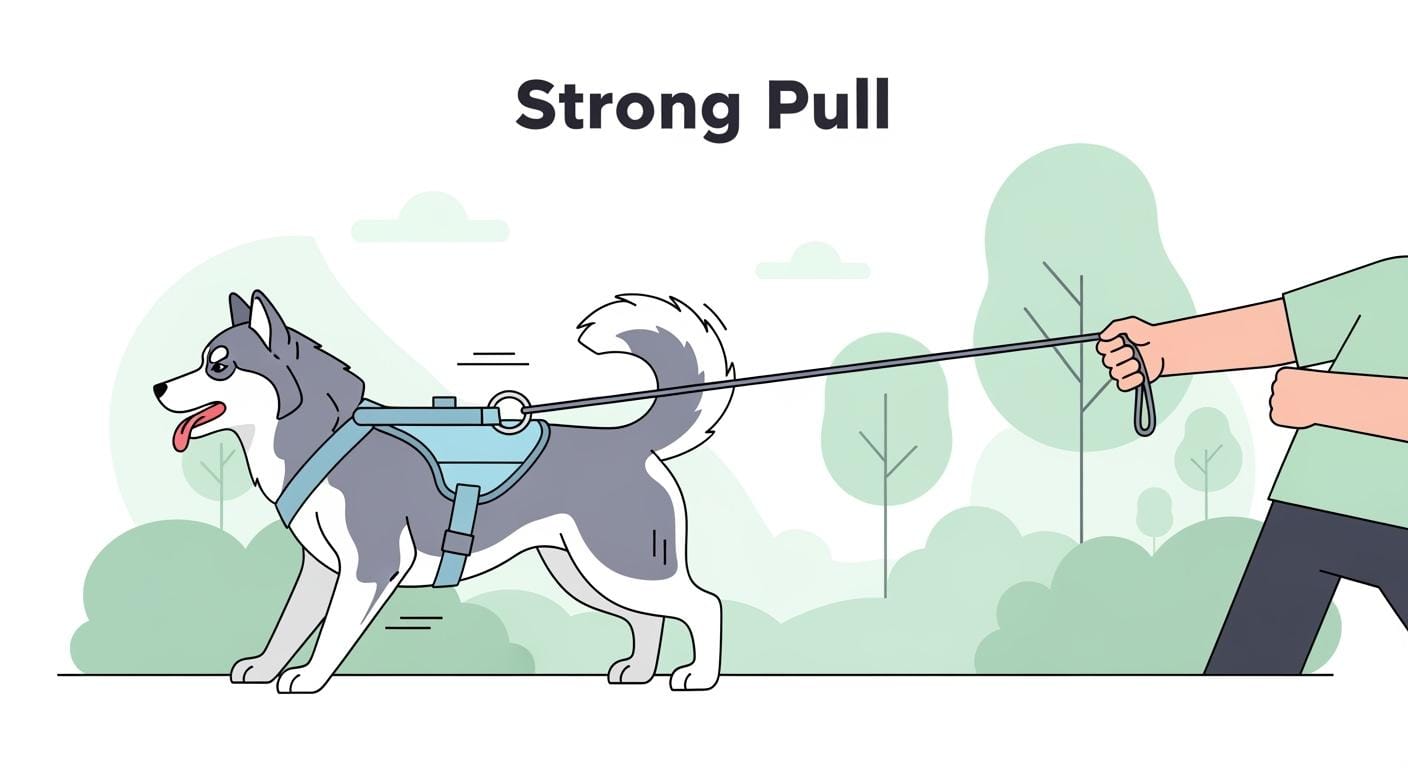
A harness can look strong at rest and still fail under movement. The dog may stop suddenly, pull backward, twist sideways, or lower the head. Each movement changes how the neck opening, chest panel, and belly strap carry force.
Slip-out risk usually comes from a mix of fit and structure. If the front opening leaves too much room, the dog can create a reverse path through the harness. If the chest panel is too narrow or too soft, the harness may rotate instead of staying centered. If the belly strap is too far back, the harness can slide toward the ribs and lose control of the front body.
| Real-use problem | Why it happens | Product detail that helps |
|---|---|---|
| Dog backs out when it freezes | The neck opening lifts and widens under reverse pressure. | A closer neck-base shape with enough adjustment range. |
| Harness rolls to one side | The chest panel is too narrow, soft, or poorly centered. | A stable front panel and balanced strap geometry. |
| Belly strap slides backward | The strap sits too far from the front legs or loosens in motion. | A strap position that holds the body without pinching elbows. |
| Fit becomes loose after a short walk | Coat compression, strap slip, or hardware movement changes tension. | Reliable adjusters, flat hardware, and post-walk fit checks. |
| Dog resists the harness | The secure fit also creates rubbing, pressure, or heat. | Smooth edges, breathable panels, and shoulder clearance. |
This is why an escape-resistant harness cannot rely on one feature. A stronger buckle does not solve a wide neck opening. A padded chest panel does not solve poor strap placement. A tight fit does not solve poor shoulder clearance.
Fit points that decide whether the harness can hold position
The neck opening is the first place to check. It should sit close to the base of the neck, not high against the throat and not so wide that the dog can pull the shoulders backward through the front. A very open neckline may feel comfortable at first, but it can become the escape path when the dog reverses.
The chest section should stay centered when the dog stands, turns, and walks. If it shifts to one side, the leash load will not travel through the body evenly. That can create both escape risk and rubbing risk.
The belly strap should sit behind the front legs without cutting into the elbows. Too close to the legs and it rubs. Too far back and the harness loses its hold over the front body. This balance is one reason body-weight sizing alone is not enough.
| Fit area | Good sign | Warning sign |
|---|---|---|
| Neck opening | Sits close at the neck base without choking. | Lifts, gaps, or widens when the dog backs up. |
| Chest panel | Stays centered during turns and short walks. | Slides sideways or pulls the harness off line. |
| Belly strap | Holds the body without rubbing the elbows. | Cuts forward into the legs or drifts toward the ribs. |
| Shoulder area | Allows normal stride length and front-leg reach. | Short steps, stiff movement, or repeated resistance. |
| Hardware | Stays flat and keeps strap tension consistent. | Twists, loosens, or pulls the panel sideways. |
If you need broader background on harness categories, the strong harness guide explains how different harness shapes affect control and everyday use. For escape risk, the key is narrower: the harness must hold position during backward and side-to-side movement, not only look secure when the dog stands still.
How sizing mistakes create escape risk

Many escape problems begin before the harness is ever worn. A size chart based only on weight can place two very different dogs in the same size. One dog may have a deep chest, another may have a narrow front, and another may have a heavy coat that changes strap tension after a few minutes outside.
Before comparing sizes, measure your dog while standing naturally. The two measurements that matter most for this type of harness check are the neck base and the widest part of the chest. The size should leave enough adjustment room for coat changes, but not so much extra strap that the harness depends on over-tightening to stay in place.
A harness that sits at the edge of the chart should be treated carefully. If the neck measurement is near the lower end while the chest is near the upper end, the harness may be hard to balance. If the chest fits but the neck opening is loose, the product may still create back-out risk.
Structure and material choices that make the harness more stable
Escape-resistant performance comes from the whole build. The harness needs a shape that controls movement, materials that do not collapse under tension, and edges that remain comfortable enough for daily use.
A front panel with moderate structure can help the harness stay centered. A fully soft front may twist too easily. A very stiff front may feel secure but create pressure points. The better design direction is controlled structure with enough flexibility for normal movement.
Straps should adjust cleanly and hold their setting. If the webbing slips through the adjuster, the fit that looked correct indoors may loosen outdoors. Buckles should sit flat and close fully without sitting under constant tension. Leash attachment points should align with the body so they do not pull the chest panel sideways with every step.
| Product detail | What it should do | What goes wrong when it fails |
|---|---|---|
| Front structure | Keep the harness centered without blocking stride. | Rotation, pressure points, or shoulder restriction. |
| Adjustment range | Fine-tune neck and chest fit across real body shapes. | Loose openings, over-tightened straps, or unstable fit. |
| Webbing and adjusters | Hold strap tension after movement starts. | Fit drift after the first few minutes outdoors. |
| Edge finish | Reduce rubbing at the neck, chest, and elbow areas. | Hot spots that make users loosen the harness too much. |
| Panel breathability | Keep the secure fit wearable in normal weather. | Heat buildup, refusal, or short wear time. |
A harness that cannot stay comfortable will often be worn incorrectly. Users loosen it to stop rubbing, then the escape risk returns. Comfort is not separate from security. It is part of whether the harness can be used at the correct tension.
Walk checks that reveal problems before daily use
The standing check is not enough. A harness can pass when the dog is still and fail as soon as the dog moves. The first test should include walking, turning, lowering the head, and one gentle backward check in a calm space.
During the test, watch the harness instead of only watching the dog. Does the chest panel stay centered? Does the neck opening lift? Does the belly strap move forward into the elbows or backward toward the ribs? Does the dog shorten stride or freeze?
| Check | Pass signal | Fail signal |
|---|---|---|
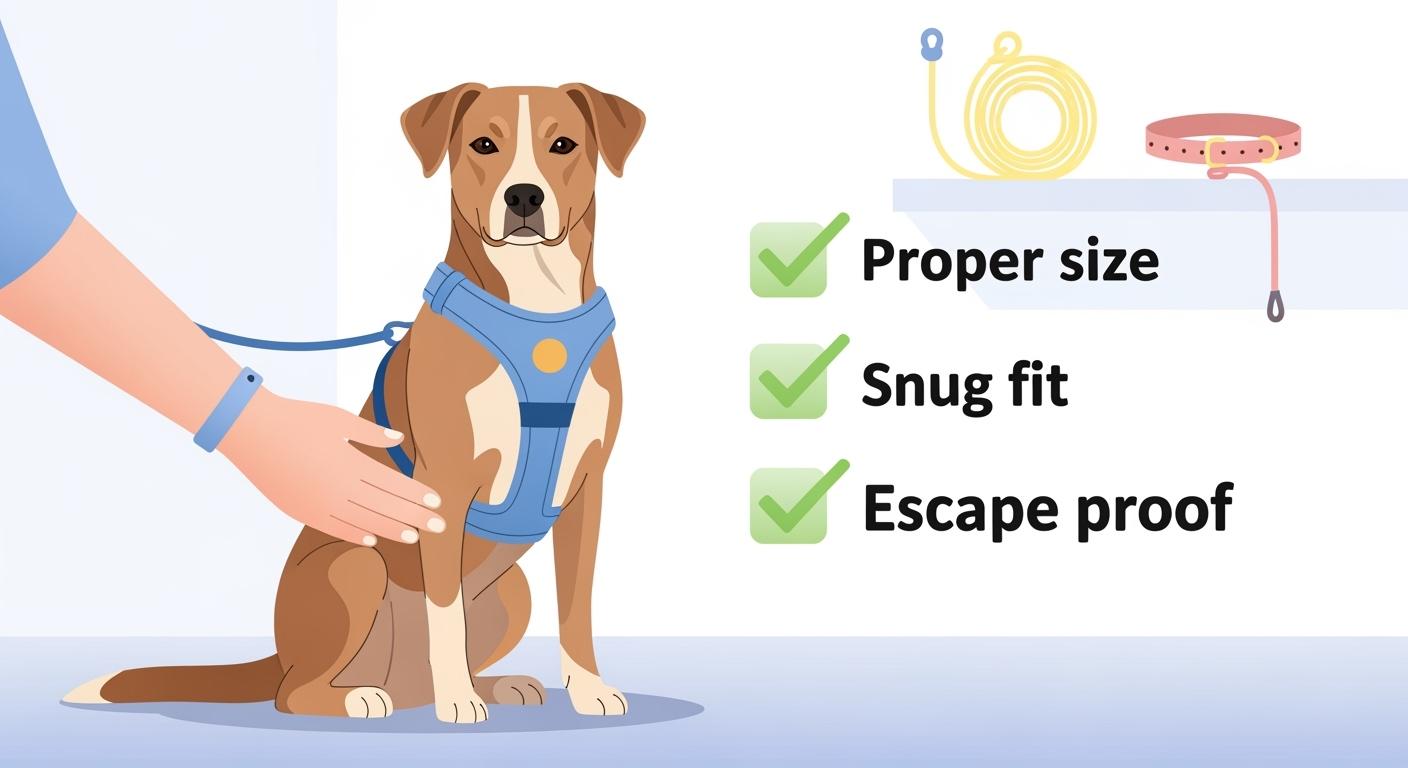
| Buckle and strap check | Buckles close fully and straps stay flat. | Twisting hardware or loose strap tails. |
| Snugness check | Close fit without pinching. | Large gaps or pressure marks. |
| Short walk check | Harness stays centered after movement. | Chest panel drifts or strap tension changes. |
| Gentle backward check | Neck opening stays close to the body. | Harness lifts, widens, or starts sliding forward. |
| Post-walk skin check | No repeated rubbing or hot spots. | Redness, flattened fur, or irritation at one point. |
These checks matter most for dogs that freeze at doors, reverse when startled, twist during sniffing, or pull away from pressure. If a harness shifts during a calm test, it will not become more stable during a stressful walk.
Common product failures to avoid
The most common mistake is treating “escape proof” as a single promise. It is safer to treat it as a product direction: lower back-out risk through controlled fit, stable structure, and repeatable adjustment.
- Too much room at the neck: The dog can create a reverse path through the opening.
- Chest panel too narrow: The harness rolls when leash pressure changes direction.
- Belly strap too far back: The front body is no longer held securely.
- Over-tightened straps: Rubbing increases, so users loosen the harness and lose security.
- Weak adjuster hold: The correct fit does not last through real movement.
- Poor edge finish: The harness may be secure but uncomfortable enough to fail daily use.
The best dog harness escape proof setup is not the stiffest, tightest, or heaviest option. It is the one that keeps the front body controlled while still allowing the dog to walk, turn, breathe, and move normally.
Häufig gestellte Fragen
Is any dog harness truly escape proof?
No harness can guarantee zero escapes in every situation. A better goal is lower slip-out risk through better neck fit, chest stability, strap placement, and movement checks.
What part of the harness causes most slip-outs?
The neck opening is often the first place to check. If it widens when the dog backs up, the dog may be able to reverse out even if the rest of the harness feels snug.
Should a secure harness be very tight?
No. Over-tightening can create rubbing, pressure, and refusal. The harness should sit close enough to hold position while still allowing normal movement and breathing.
Why does a harness fit indoors but slip outdoors?
Movement, coat compression, leash angle, and strap slip can change the fit after a few minutes. That is why a standing check should always be followed by a short walk check.
What design is better for dogs that back out?
Look for a close neck-base shape, stable chest section, reliable adjusters, flat hardware, and a belly strap position that holds the front body without rubbing the elbows.