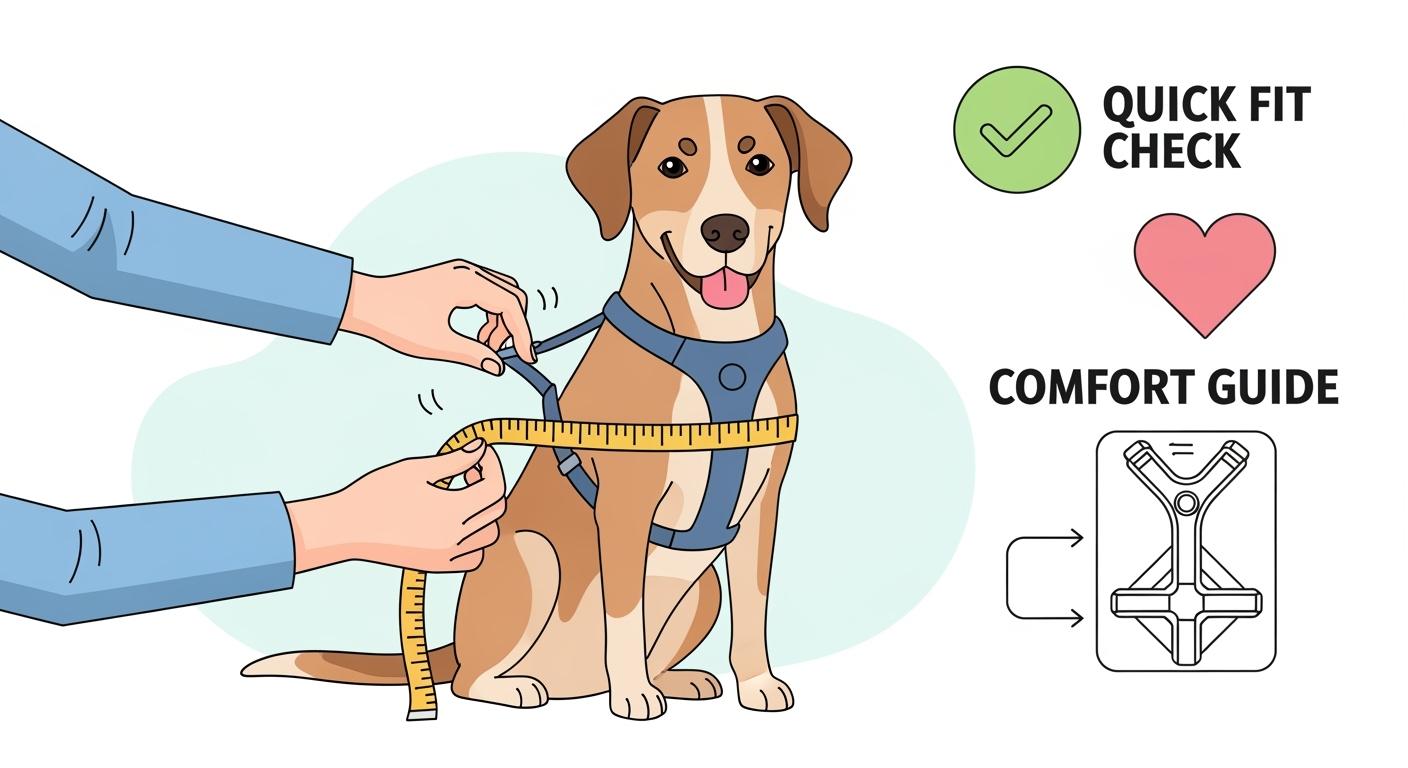
Many harness problems do not start with a bad tape measurement. They start when the harness looks correct on paper, then rides up, twists, rubs, or opens small gaps once the dog begins moving. That is why a dog harness size guide is only the starting point. If the harness still feels wrong after careful measuring, the problem is often shape, strap path, or movement behavior rather than the size number alone.
When the size looks right but the harness still acts wrong
A harness can match the chest and neck numbers and still perform badly once your dog walks, turns, stops, or backs up. Sizing tells you where to start, but it does not guarantee that the front section sits low enough on the chest, that the strap path clears the shoulders, or that the whole harness stays centered during movement.
The most common signs of a “measured right but still wrong” fit are easy to spot:
- The harness rides upward toward the throat after a few minutes of walking.
- One side starts pulling harder and the harness twists during turns.
- The belly strap sits close enough to the elbows to create rubbing.
- The harness feels secure standing still but opens gaps when the dog backs up.
- Your dog shortens stride, hesitates, scratches at the gear, or looks less natural in movement.
These are not always size-chart mistakes. Very often they are shape-match problems. A dog with a deep chest, broad shoulders, narrow waist, or short body can fall inside the chart range and still need a different harness layout.
How to tell whether the problem is size, adjustment, or harness shape
Start with the simplest question first: is the harness evenly adjusted and sitting where it should? If one strap is longer than the other, or the front section starts too high, the harness can behave badly even when the chosen size was reasonable. But if you re-even the straps and the same problem keeps coming back, the issue usually goes deeper than adjustment.
Use these checks to separate the three problems:
It is mostly a size problem when
- you cannot get safe finger room without the harness looking obviously too loose or too tight,
- the chest area gaps even after even strap adjustment,
- the neck opening cannot stay secure without crowding the throat,
- the size range leaves almost no useful adjustment room.
It is mostly an adjustment problem when
- the harness sits off-center because left and right straps are uneven,
- the chest section started too high and improved after repositioning,
- minor drift disappears after a short re-fit,
- the dog moves normally again once the strap path is corrected.
It is mostly a shape problem when
- the harness keeps twisting even after careful re-adjustment,
- the front section repeatedly rides toward the throat,
- the harness always crowds the shoulders on your dog’s body type,
- you can only fix one problem by creating another, such as reducing gaps but causing rubbing.
If you want a broader guide before you narrow the problem down, start with the best dog harness guide. It helps separate general sizing and harness-type decisions from the more specific “measured right but still wrong” fit problems this page focuses on.
Why harnesses twist, rub, gap, or ride up after measuring
Most post-measurement harness problems follow a small set of repeat patterns. Once you know which pattern you are seeing, the next decision becomes much easier.
The harness twists to one side
This usually points to uneven adjustment, a chest section that does not sit stably on your dog’s body, or a harness shape that does not match the shoulder and rib structure. If it keeps twisting after you correct strap symmetry, treat that as a shape mismatch rather than a minor fitting flaw.
The harness rides up toward the throat
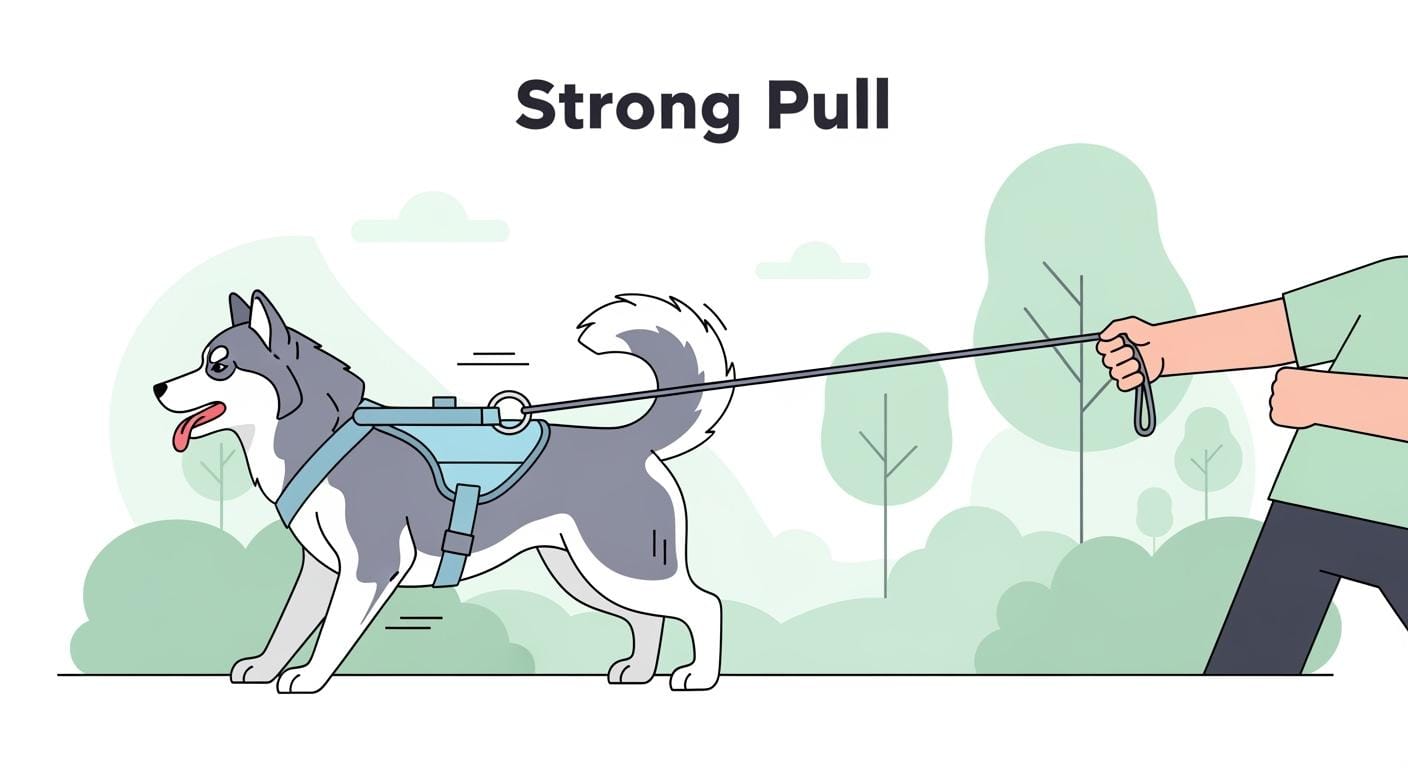
This often means the front section sits too high from the start or the structure is being pulled upward when your dog walks into tension. A proper fit should stay lower on the chest instead of creeping upward every time leash pressure increases.
The harness rubs behind the elbows
This is usually caused by strap placement, not just tightness. A harness can have acceptable finger room and still sit too close to the moving joints. If rubbing keeps returning after re-positioning, the layout is wrong for your dog.
The harness seems fine until the dog backs up
This is the classic back-out warning. Some harnesses feel safe while moving forward but lose security once the dog reverses or turns sharply. If the opening starts loosening around the shoulders during backward movement, that is not something to ignore.
The harness leaves redness after a short walk
Redness after only brief use usually means repeated friction, rough hardware placement, or pressure concentrated in one area. Dogs do not “adapt” well to a fit that keeps rubbing the same point every walk.
If leash setup is also exaggerating the pull angle or drift, use this dog harness and leash set guide to check whether leash length, clip style, or walking setup is making the fit problem look worse than it is.
When to stop adjusting and switch to a different harness style
Some harnesses are worth re-fitting once or twice. Others keep asking for compromise. If you have to choose between throat pressure and chest looseness, between shoulder freedom and escape security, or between centered fit and elbow clearance, that harness is not really fitting your dog. It is only trading one problem for another.
Switch styles instead of overworking the straps when:
- the harness repeatedly rides high no matter how carefully you set it,
- your dog keeps showing restricted movement or resistance,
- the same rub point returns after each short walk,
- the harness only feels secure when tightened beyond normal comfort,
- back-out risk stays visible even after patient adjustment.
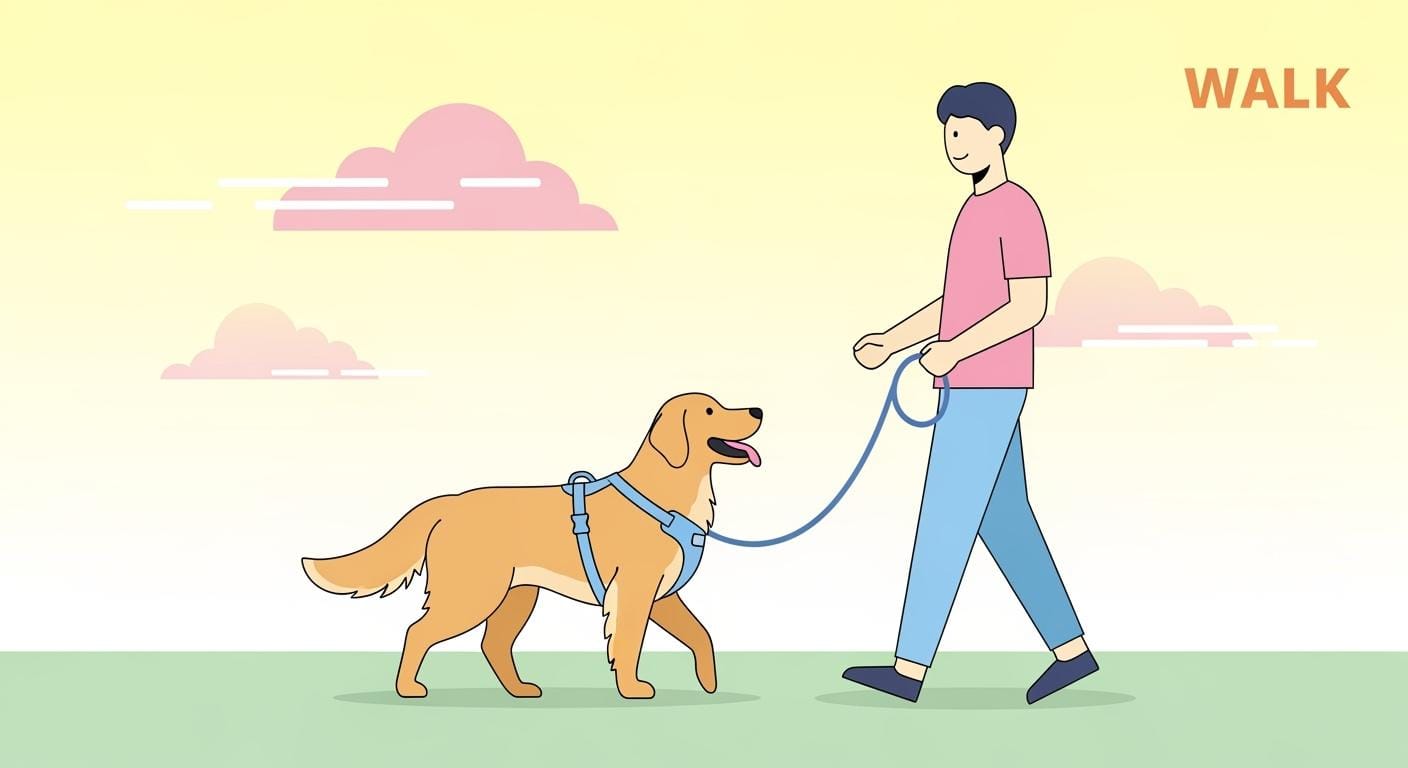
A better harness style should make the fit feel simpler, not more fragile. Once the right shape is on the dog, adjustment usually becomes easier, movement looks more natural, and the warning signs stop returning every time the dog changes direction.
Häufig gestellte Fragen
Can a harness be the right size and still fit badly?
Yes. A size chart gives a starting point, but it does not guarantee that the harness shape matches your dog’s chest depth, shoulders, or movement pattern.
Why does my dog’s harness twist even though I measured carefully?
Twisting often means the structure is unstable on your dog’s body or the strap lengths are uneven. If it keeps happening after re-adjustment, the harness shape is usually the bigger issue.
What does it mean if the harness rides up to the throat?
It usually means the front section is starting too high or being pulled upward under tension. A better fit should stay lower on the chest and remain stable during walking.
Is rubbing behind the elbows always a size problem?
Not always. It is often a strap-path or layout problem. A harness can have acceptable tightness and still rub because the shape sits too close to the moving joints.
When should I stop adjusting and replace the harness?
Stop adjusting when each “fix” creates a new problem, or when the same drift, rub, throat climb, or back-out warning keeps returning after short real-use tests.