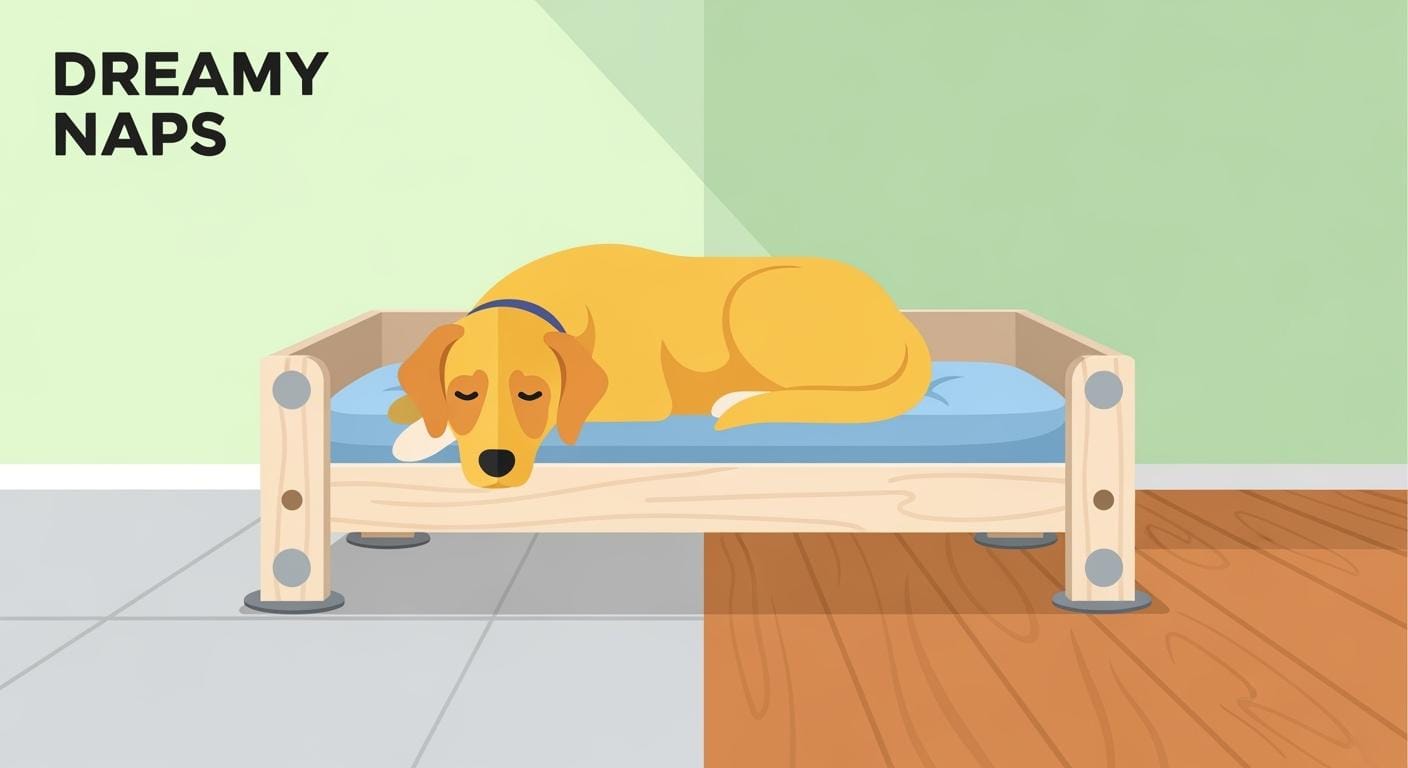
A waterproof dog bed only works outdoors if it blocks moisture from more than one direction. Many beds handle a light splash on top but still soak up dampness from grass, concrete, dew, or a wet patio. That is why “waterproof” should never be judged by the sleep surface alone. The base, seams, zipper area, and inner fill all affect whether your dog stays dry or ends up resting on a bed that feels cool, damp, and slow to clean.
The best starting point is to compare different outdoor dog beds by how they deal with wet ground, not just by whether the fabric repels a quick splash.
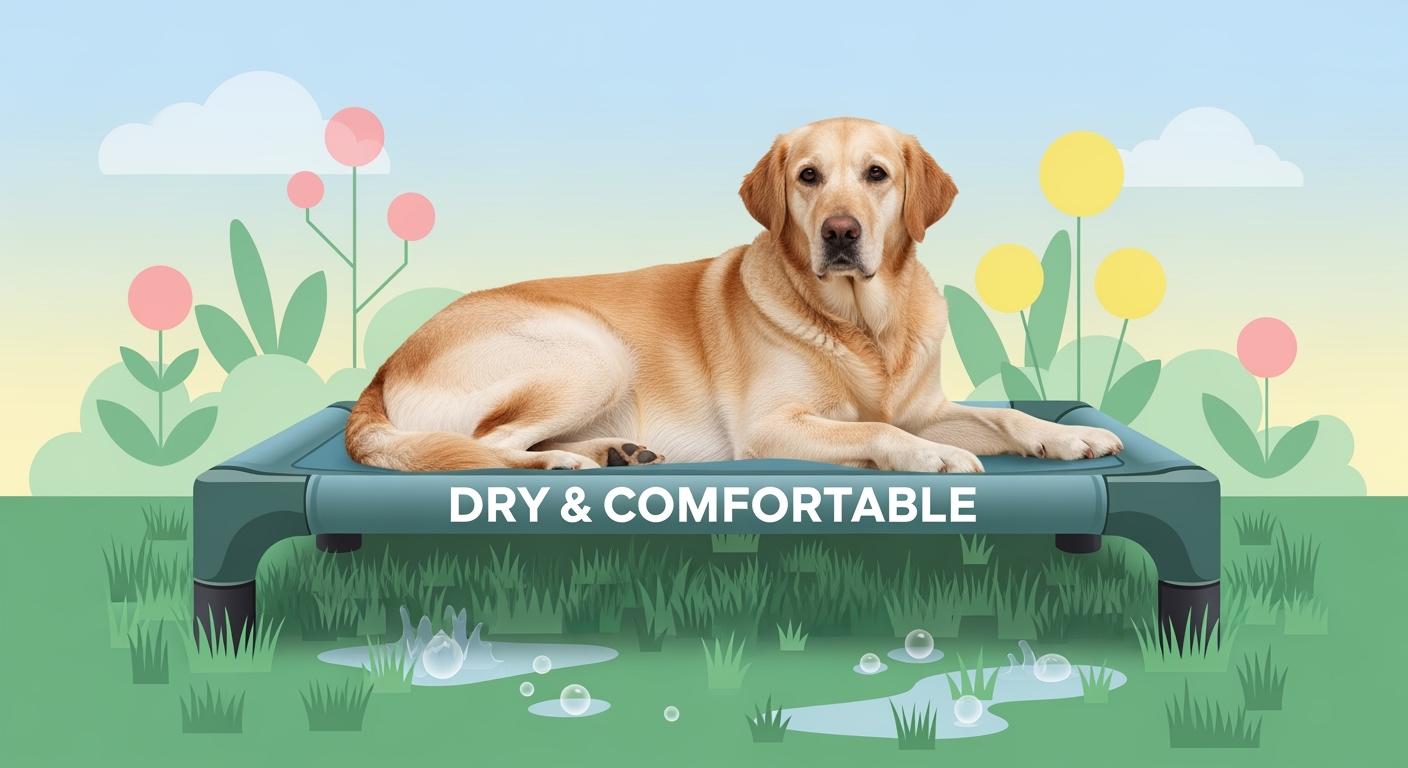
What actually keeps a dog bed dry on wet ground
The biggest leak point is usually not the middle of the fabric. It is the weak spot where moisture gets in slowly: the underside, the stitched seam, the zipper line, or the fill that traps dampness once water sneaks through. A bed can look dry on the surface and still feel cold underneath because ground moisture has worked in from below.
The most important parts to check
- Waterproof base: the underside should resist moisture from grass, soil, patio stone, or concrete.
- Protected seams: stitching is a common failure point if the seam is not well finished.
- Covered zipper area: exposed openings often let water in faster than people expect.
- Fast-drying fill or liner: even a decent shell feels bad once the inside starts holding moisture.
Why “water resistant” is often not enough outdoors
Water-resistant surfaces may be fine for short contact with light moisture, but wet ground creates longer exposure. A bed that sits on damp grass for an hour is dealing with pressure and repeated contact, not just a brief splash. For that reason, outdoor use usually needs stronger protection than the kind of finish meant for light indoor accidents or quick wipe-down cleaning.
| Bed area | What to look for | Why it matters on wet ground |
|---|---|---|
| Top surface | Coated or tightly finished fabric | Helps moisture bead off instead of soaking straight in |
| Underside | Stronger moisture barrier and durable contact material | Ground contact is often where slow dampness starts |
| Seams and corners | Well-finished edges and protected construction | Weak seams let water creep inward over time |
| Fill or core | Removable, fast-drying, or protected inner layer | A soaked core stays uncomfortable long after the surface looks dry |
Quick rule: if a bed only talks about a waterproof top but says little about the base, seams, and inner construction, it may not be the best choice for repeated ground moisture.
How to choose materials and construction that hold up outdoors
A good outdoor bed does two jobs at once: it keeps moisture out, and it stays practical to clean after weather, dirt, and daily use. A surface that blocks water but traps odor or dries slowly can still become frustrating very quickly.
Look for construction that supports real outdoor use
- Check whether the base feels built for abrasion and damp contact, not just for indoor floors.
- Look closely at edge finishing and zipper placement because those areas often fail first.
- Choose covers that can be removed or wiped down without a complicated cleanup routine.
- Think about how the bed dries after rain or cleaning, not only how it looks when new.
Raised styles and low-profile beds solve different moisture problems
A ground-level waterproof bed can work well when the shell and underside truly block moisture. A raised bed solves the problem differently by lifting the sleep surface away from wet ground in the first place. Which approach feels better depends on your dog’s sleep style, joint comfort, and where the bed will be used. That is why weather performance makes more sense inside a broader outdoor setup rather than as one single feature claim.
Do not ignore drying speed
A bed that takes too long to dry often becomes the bed your dog avoids. Slow-drying fill can trap odor, hold cold dampness, and make the whole bed feel stale even if the surface looks fine. For everyday outdoor use, fast cleanup and fast drying are often just as important as the waterproof layer itself.
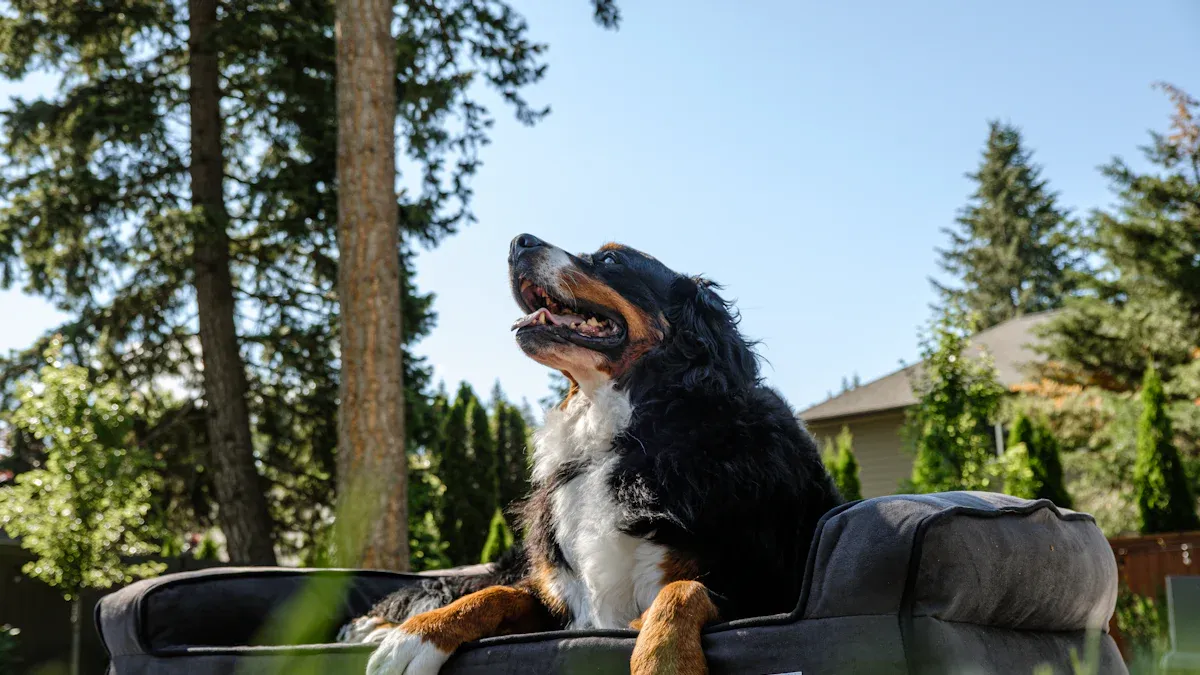
Fit, sleep style, and when a waterproof bed is the wrong answer
A bed can be waterproof and still be wrong for your dog. If the size is too small, the body may spill onto wet edges. If the bed is too thin, the dog may feel the cold from below. If the dog prefers to sprawl, a small compact pad may stay dry but still not feel comfortable enough to use.
Match the bed to how your dog actually rests
- Dogs that sprawl need enough flat surface area to stay fully on the dry zone.
- Dogs that curl may do well on a slightly smaller footprint if the center stays supportive.
- Older dogs often need more cushioning or easier entry than a very taut raised surface provides.
- Messy or water-loving dogs usually benefit from faster cleaning and quicker drying more than from plush padding.
When a waterproof bed may not be the best outdoor choice
If the ground stays muddy for long periods, if airflow matters more than padding, or if your dog overheats easily, a fully padded waterproof bed may be less useful than a more breathable elevated style. On the other hand, if your dog dislikes tensioned sleeping surfaces or needs more joint support, a raised cot may not feel comfortable enough on its own.
Those trade-offs become easier to judge when you compare them against a fuller guide to outdoor dog bed size and support instead of choosing by moisture protection alone.
Common mistakes that lead to damp, smelly, disappointing beds
Most bad waterproof bed experiences are not caused by one dramatic failure. They come from a few small oversights repeated over time. A bed gets placed on ground that never fully dries, the cover gets wiped but the core never airs out, or the underside keeps picking up moisture because the bed was chosen by top fabric alone.
Mistakes to avoid
- Choosing by surface fabric only and ignoring the base.
- Assuming “outdoor” automatically means suitable for wet ground.
- Leaving the bed on damp grass for long periods without checking the underside.
- Cleaning the cover but forgetting that the inner layer may still be damp.
- Using a plush indoor-style bed outside and expecting it to behave like true outdoor gear.
A better outdoor routine
- Place the bed where water does not pool.
- Check underneath after wet weather, not just the top surface.
- Dry every layer fully after rain, spills, or washing.
- Recheck seams, corners, and zipper areas once wear starts to show.
- Replace the bed or cover when odor and dampness keep returning even after proper drying.
The best waterproof dog bed is usually the one that stays dry enough to remain comfortable, dries quickly after use, and still fits your dog’s real resting style instead of solving one problem while creating another.
FAQ
What makes a dog bed truly waterproof for outdoor ground use?
A truly outdoor-ready waterproof bed needs more than a coated top. The underside, seams, zipper area, and inner construction all need to resist moisture or dry quickly after exposure.
Is water resistant the same as waterproof for wet grass?
No. Water-resistant fabrics may handle short exposure, but repeated contact with wet grass or damp concrete often needs stronger protection, especially at the base and seams.
Why does a waterproof bed still smell damp sometimes?
The outer shell may be blocking surface water while the fill, underside, or zipper area still traps moisture. If the inside dries slowly, odor can build up even when the top looks fine.
Are raised outdoor dog beds better for wet ground?
They can be, because they keep the sleep surface away from the wet ground itself. But they are not automatically better for every dog, especially if your dog needs softer padding or dislikes elevated tensioned surfaces.
How often should I check an outdoor waterproof dog bed?
Check it after rain, after washing, and regularly during heavy outdoor use. Pay special attention to the underside, seams, and any part that stays in contact with damp ground.