Toughest Dog Bed: Hard Frame or Plush Cushion for Chewers and Heavy Use
Scope: indoor and covered-outdoor beds for dogs that chew, dig, or wear beds out faster than the average household
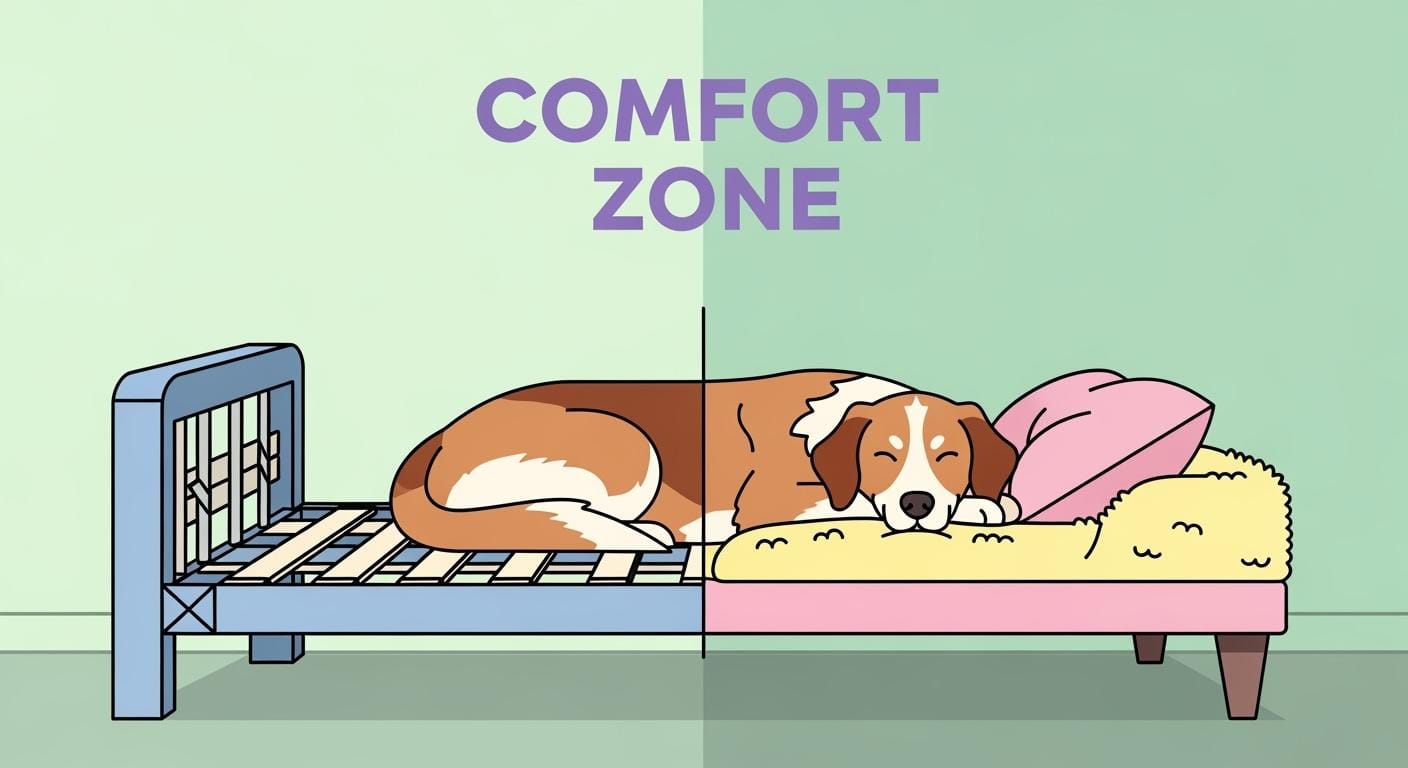
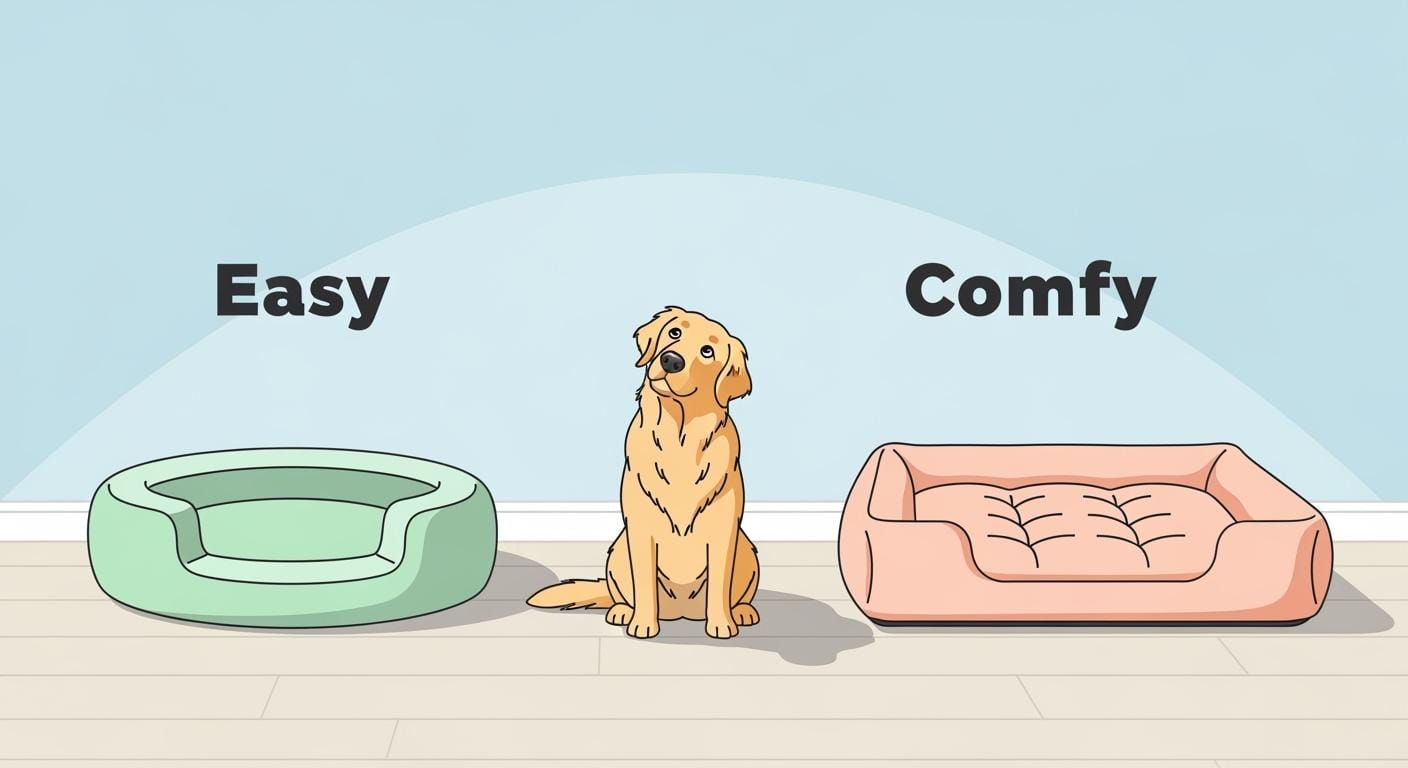
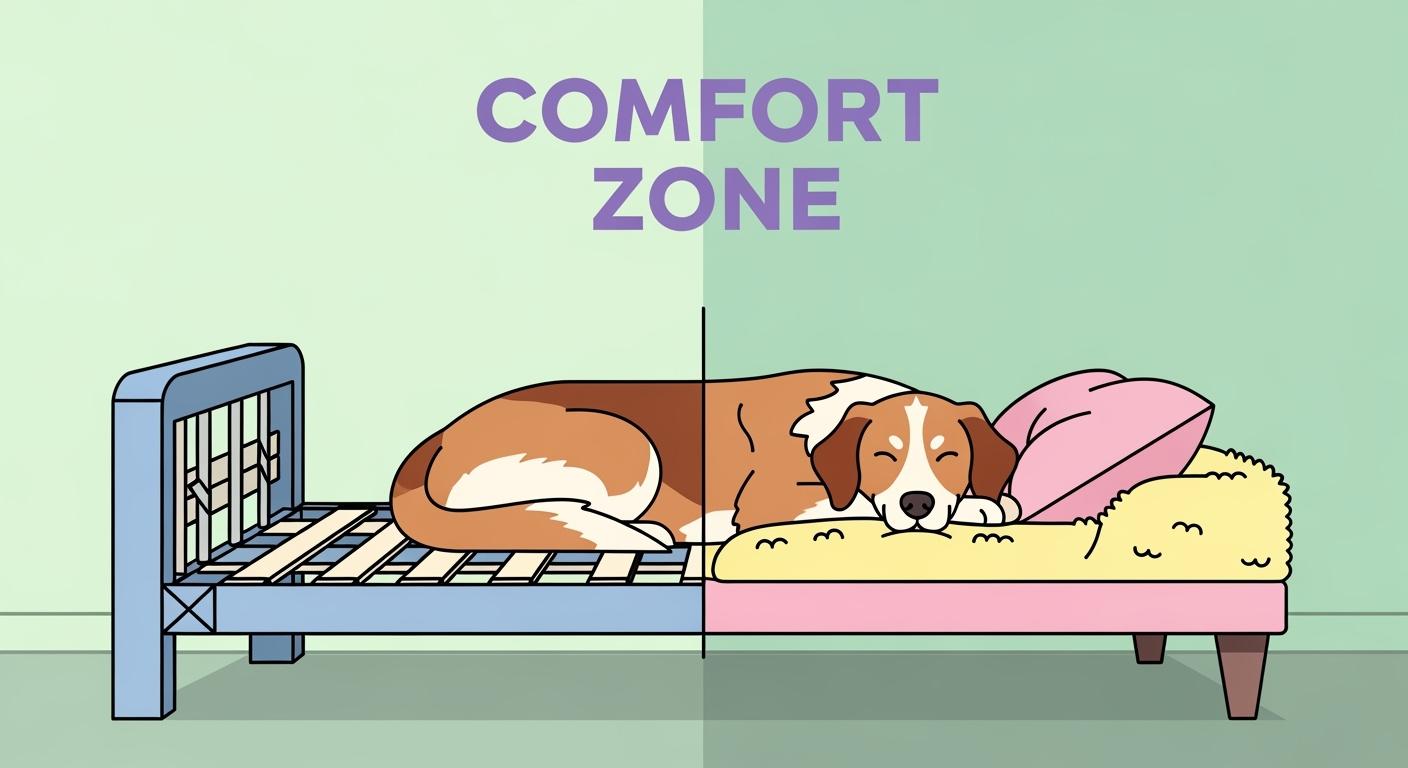
The toughest dog bed for your household is not the bed with the strongest fabric — it is the bed your dog cannot find a chew point on in the first place. Hard-frame designs win by removing the seams and corners that invite teeth; plush cushions win by giving the kind of comfort that pulls a restless or anxious dog into actually using the bed. The right pick depends on which problem you are solving.
Note: Durability is a behavior question before it is a materials question. The fabric only has to survive what the dog actually targets — and that depends on why the dog is chewing in the first place.
Key Takeaways
Pick a raised-frame elevated bed for active dogs that target seams, corners, or stuffed surfaces — fewer exposed edges usually means fewer chew points. Pick a plush cushion bed for anxious, senior, or nesting dogs whose discomfort with hard surfaces makes them avoid the bed entirely. Many heavy-use households end up with one of each, used in different rooms.
Who This Guide Is For
This guide is written for owners whose dog has already destroyed at least one bed, or whose dog’s behavior — chewing, digging, scratching at surfaces — makes the next failure feel like a matter of time. It assumes you can observe what your dog actually targets first when given a new bed.
It is not written for general bed shopping in low-wear households, post-surgical bedding prescribed by a vet, or working-dog kennel gear, all of which have different priorities.
How This Guide Was Written
The recommendations below come from hands-on observation in households where bed durability was an active, repeating problem — homes with active chewers, diggers, large breeds, and dogs whose previous beds had already failed. The patterns described here are the ones that showed up across multiple dog-and-bed combinations, not single-case impressions. Specifically, this guide tracks four things: what the dog targets first when introduced to a new bed, how long the bed survives normal use, which design features change that survival window, and whether the dog actually adopts the bed for sleep or treats it as a chew object.
Where this guide describes how a feature affects durability, the claim is grounded in observable wear patterns inside the first one to two weeks of use — the window when most failures begin. It is not grounded in lab tear tests, fabric certifications, or controlled experiments.
This guide deliberately does not cite specific bacterial counts, tensile-strength figures, or veterinary research on orthopedic outcomes. Those are real fields, but a buying guide is the wrong place to summarize them. For chewing rooted in anxiety or compulsion, the right source is a veterinary behaviorist. For joint and pain questions, the right source is your veterinarian. For verified material strength, the right source is the manufacturer’s published test data.
The framework this guide uses to distinguish chew motivations — puppy teething, boredom-driven chewing, and anxiety-driven chewing — is consistent with how veterinary behavior literature categorizes destructive chewing in companion dogs (Overall, 2013; Landsberg et al., 2013; ASPCA). The references section at the end of this article lists every source, so any claim here can be traced back to an authoritative starting point.
A Short Glossary Before the Trade-Offs
Four terms appear throughout this guide. They are worth defining because the durability trade-offs become much clearer once the vocabulary is shared:
- Chew access — how easy it is for a dog to get teeth onto an edge, seam, or corner of the bed. Less access means less damage, regardless of fabric strength.
- Failure point — the spot where damage first appears. Common failure points are corners, seams, zippers, and any raised piping.
- Skipped use — when a dog avoids the bed and chooses the floor or another spot. A bed that survives because the dog never lies on it is not actually working.
- Target behavior — what the dog goes for first when introduced to a new bed. This usually predicts the bed’s lifespan more accurately than any spec sheet.
The toughest bed for your dog is the one that minimizes chew access at the failure points your dog actually targets, without causing skipped use.
When a Hard Frame Helps and When a Plush Cushion Still Wins
Why Elevated Frames Survive Longer with Most Chewers
Elevated raised-frame beds win durability comparisons mostly because they offer fewer of the things dogs actually chew. The sleeping surface is usually a single tight panel of fabric stretched over a frame, with no soft corners to grip and no stuffed cushion to pull apart. The frame itself is harder to bite than fabric, and dogs tend to lose interest once they can’t get a grip.
The other quiet advantage is cleanup. A surface that wipes or hoses off keeps odors from setting in, which matters more than people expect — many “tough bed” failures are actually owners replacing a still-intact bed because it smells.
When Plush Cushions Still Make Sense
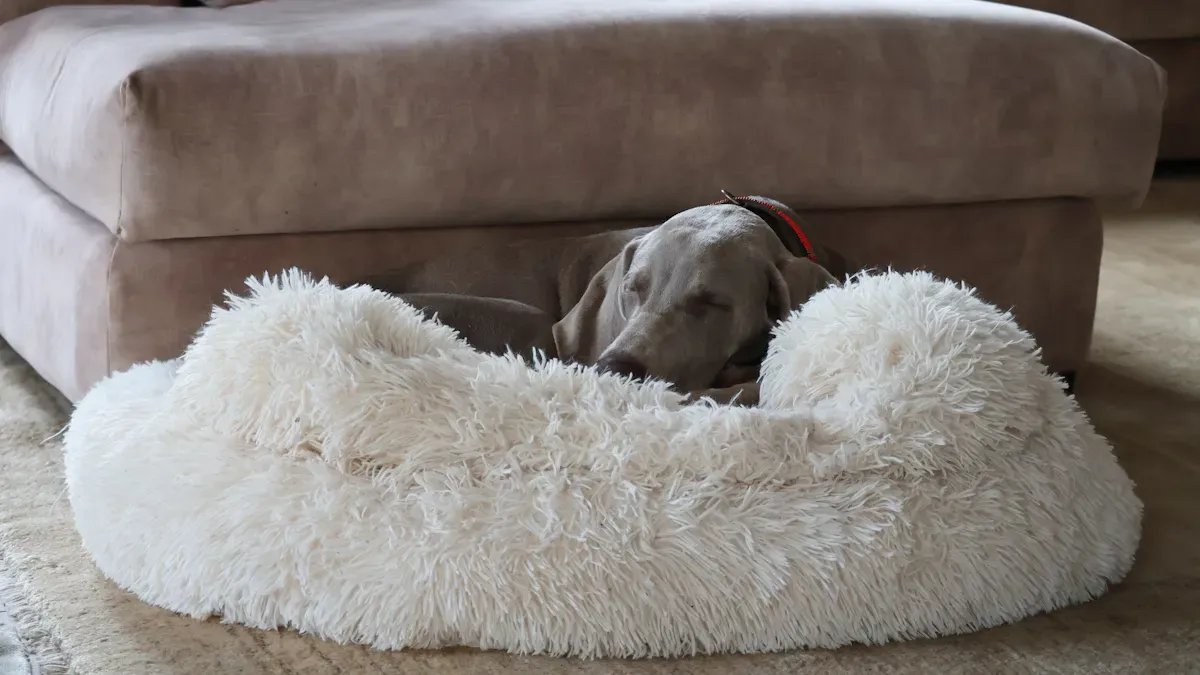
Plush cushions still win for dogs whose target behavior is not destruction at all. Anxious dogs that need to nest, senior dogs that find any hard surface uncomfortable, and dogs with thin coats or low body fat often skip elevated beds entirely and sleep on the floor instead — which is the worst possible outcome from a durability standpoint, because no bed lasts forever if it never gets used.
The judgment call is whether your dog’s chewing is frequent and targeted, or occasional and exploratory — a distinction consistent with how veterinary behaviorists separate compulsive or anxiety-linked destruction from normal investigatory mouthing (Overall, 2013; Sherman & Mills, 2008). Frequent targeted chewing favors a hard frame. Occasional chewing in a dog that genuinely needs cushioning often favors a reinforced plush bed with a removable washable cover.
Raised-Frame vs Armored Floor Pad vs Plush Cushion
| Type | Best Use Case | Why It Helps | What to Watch |
|---|---|---|---|
| Raised-Frame Elevated Bed | Active chewers, large breeds, hot climates | Fewest exposed edges, easy cleanup, no stuffing to expose | Less cushioning; some dogs skip use if surface feels too firm |
| Armored Floor Pad | Diggers and corner-targeters that still want a floor sleep position | Reinforced cover plus low edge height, harder to grip | Heavier to move and clean; firmness varies by model |
| Plush Cushion Bed | Anxious dogs, seniors, lean dogs, nesters | Comfort that prevents skipped use and supports curl-up sleep | Multiple seams and corners create natural failure points |
For most chewing-prone households, a raised frame is the right starting point. Switch to a reinforced plush bed only when your dog’s target behavior is comfort-seeking rather than destruction.
Common Mistakes That Cause Real Problems
- Choosing by fabric name alone (microfiber, ripstop, etc.) without checking how many seams and corners the bed actually has.
- Assuming “tough” means “comfortable enough” — a bed that survives because the dog skips it is not working.
- Ignoring the cleanup factor; many tough beds get replaced for odor, not damage.
- Adding a thick fabric cover to a frame bed, then losing the chew-resistance the frame was supposed to provide.
Tip: The most common mistake is picking the bed with the strongest-sounding material name instead of the bed with the fewest things to grip. Surface design beats fabric strength most of the time.
What Actually Changes the Outcome: Chew Access, Comfort, Cleanup
Why Edges and Seams Decide the Outcome
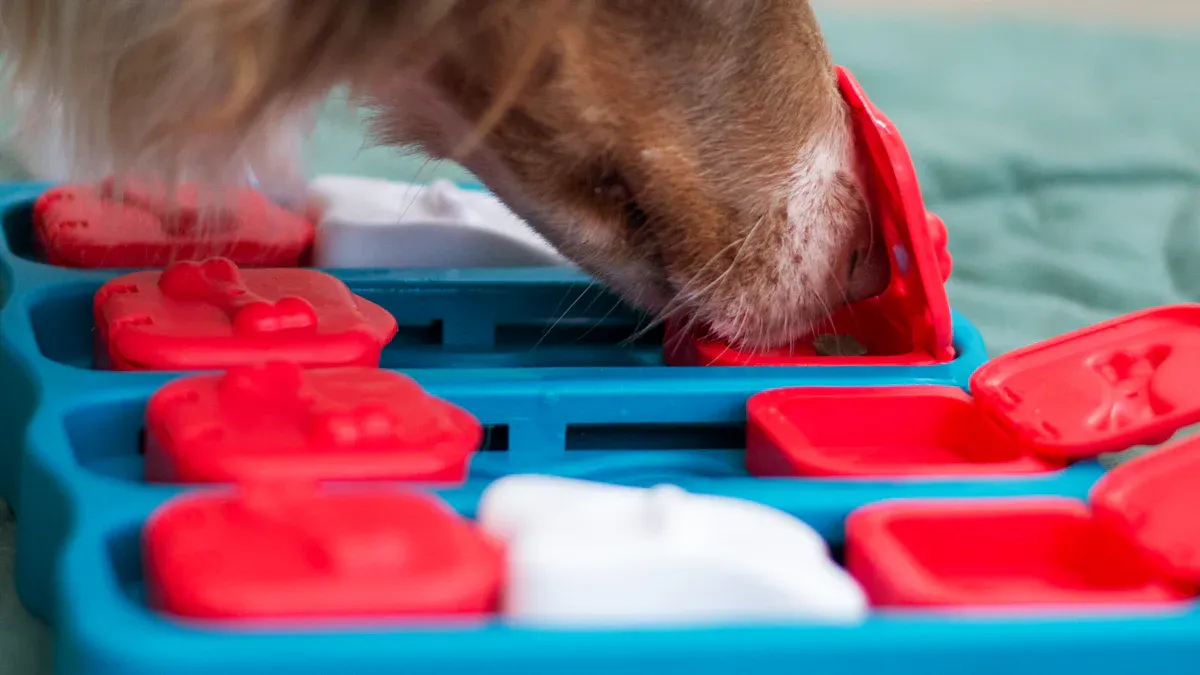
Watch where your dog goes first with a new bed. The order is usually corners, then seams, then zippers — the same parts you would grip if you were trying to pull the bed apart. A bed that has none of those gripping points usually survives, and a bed that has all three usually fails at the weakest one.
Comfort decides whether durability even matters. A bed your dog refuses to use lasts forever in the worst possible way. The two things to watch for are whether your dog settles within a few minutes of trying the bed, and whether they return to it across the day on their own.
A Simple 3-Step Test Protocol
- Day 1 — first introduction: Place the bed in the dog’s usual rest area without coaxing. Watch which part they investigate first and whether they target any edges, seams, or corners with their mouth.
- Day 2 to 3 — settle test: Note whether your dog actually lies down and stays, or treats the bed as a chew object. A bed that gets used for sleep within 48 hours is usually a keeper; one that does not is usually a return.
- Week 1 — wear inspection: Inspect every corner, seam, and zipper after a week. Any visible fraying, pulled threads, or exposed fill is an early failure signal, not a cosmetic issue.
Observation Log Template
Record these five fields across the first week, so you have something concrete to compare across beds:
- Dog’s age, weight, and known chewing pattern (occasional, anxiety-driven, or persistent)
- Target behavior on day 1 — sleep, sniff-and-walk-away, or chew attempt
- Sleep adoption — uses bed for full naps, partial naps, or skips it
- Wear inspection at day 7 — none, light fraying, or visible damage
- Cleanup ease — wipes clean, machine-wash needed, or odor sets in
For reference, here is what one filled-in log entry might look like for a single bed trial:
| Field | Sample Entry |
|---|---|
| Dog profile | 4-year-old Lab mix, 65 lb, anxiety-driven chewer (corners and seams) |
| Day 1 target behavior | Sniffed corners, mouthed one corner for about 30 seconds, then lay down |
| Sleep adoption | Used for full naps by day 2; chose bed over floor for 4 of 5 days |
| Day 7 wear inspection | Light fraying at one corner; no exposed fill |
| Cleanup ease | Wiped clean once; no lingering odor at end of week |
This is a deliberately ordinary entry — no dramatic failure, no perfect pass. Most real trials look like this, and the early-fraying signal is exactly the kind of observation that should drive the next decision before the bed actually fails.
Pass / Fail Fit Check
| Check Item | Pass Signal | Fail Signal | Improvement Plan |
|---|---|---|---|
| Chew access | Dog ignores edges and seams | Targets corners or pulls at seams | Switch to a frame design with fewer exposed edges |
| Sleep adoption | Settles within a few minutes and stays | Skips bed for the floor or another spot | Add cushioning or switch to a softer style |
| Day 7 wear | No fraying, no pulled threads | Visible damage at corner or seam | Treat as early failure; switch style before full damage |
| Cleanup | Wipes clean, no lingering odor | Odor sets in within a week | Use removable washable cover or hoseable frame design |
| Stand-up after sleep | Rises easily and moves normally | Stiffness or limping after rest | Add orthopedic cushion layer |
Disclaimer: This guide covers bed choice and durability, not behavior modification or medical care. If your dog’s chewing is sudden, anxiety-driven, or paired with skin irritation, joint pain, or other health changes, consult a veterinarian or certified behaviorist.
Failure Signs in Use: Corner Targeting, Seam Picking, Frame Chewing, Skipped Use
Troubleshooting Common Symptoms
| Symptom | Likely Cause | Fast Check | Improvement Plan |
|---|---|---|---|
| Corner targeting | Exposed edge gives a grip point | Inspect corners for tooth marks | Switch to a frame design without corners |
| Seam picking | Stitched seam visible on the surface | Run a finger along seams for pulled threads | Reinforced seams or hidden-seam construction |
| Frame chewing | Boredom or anxiety, not the bed itself | Watch when chewing happens — alone or in front of you | Add chew toys and address the underlying cause |
| Foam exposed | Cover already breached | Look for any tear larger than a fingertip | Replace bed; exposed foam is a swallow risk |
| Skipped use | Surface uncomfortable or location wrong | Watch where the dog actually sleeps instead | Move bed or switch to softer style |
Tip: If the same failure point shows up on a second bed, the problem is target behavior, not the bed. Switching brands rarely helps; switching design category usually does.
When to Switch Style
If two beds in a row fail at the same spot, treat that as a signal to change design category, not to buy another bed in the same style. Persistent corner targeting points to a frame bed with no corners. Persistent seam picking points to a stretched-fabric design with no exposed seams. Persistent skipped use points to a comfort problem the toughest fabric in the world will not solve.
When to Bring in a Vet or Behaviorist
A few patterns are signals that the problem is no longer about the bed and a professional should be involved:
- Chewing that started suddenly in a dog that previously left beds alone — possible anxiety, pain, or dental issue. Consult a veterinarian first.
- Chewing paired with pacing, panting, or destruction only when alone — possible separation anxiety. Consult a certified veterinary behaviorist through the American College of Veterinary Behaviorists (ACVB, dacvb.org) or a certified behavior consultant through the International Association of Animal Behavior Consultants (IAABC, iaabc.org).
- Stiffness, limping, or visible pain after rest, regardless of bed type — consult a veterinarian for joint or orthopedic assessment. The AAHA 2022 Pain Management Guidelines and 2023 Senior Care Guidelines describe how veterinarians evaluate these signs in dogs.
- Skin irritation, hot spots, or hair loss where the dog contacts the bed — consult a veterinarian about possible material sensitivity or underlying skin condition.
None of these are bed-shopping problems. A different bed will not fix them. When the underlying issue is behavioral, leading veterinary behavior groups such as AVSAB recommend reward-based, cause-first approaches over punitive correction (AVSAB, 2021), which is another reason to identify the trigger before trying to “tougher-bed” the symptom.
What This Guide Will Not Tell You
To stay honest about scope, this guide deliberately does not cover:
- Specific brand picks, model numbers, fabric trade names, or prices.
- Tensile-strength figures, bacterial counts, or laboratory durability ratings.
- Behavior modification for chewing driven by separation anxiety or compulsive behaviors — that is a vet or certified behaviorist question.
- Outdoor-only kennel beds, working-dog gear, or post-surgical bedding, all of which have different priorities.
If your question sits in any of those areas, a buying guide is the wrong tool — a veterinarian, certified behaviorist, or the manufacturer’s published test data is the right one.
Quick Recommendation by Dog Type
| Dog Type | Recommended Setup | Key Consideration |
|---|---|---|
| Active chewer or large breed | Raised-frame elevated bed | Fewest chew points beats strongest fabric |
| Digger that wants a floor sleep spot | Armored floor pad with reinforced cover | Low edge height with no grip points |
| Anxious or senior nester | Reinforced plush cushion with removable washable cover | Comfort prevents skipped use |
| Repeat-failure household | Combination — frame bed in main area, plush in quiet corner | Different beds for different rest moods |
FAQ
What makes a dog bed actually tough for chewers?
Fewer exposed corners, seams, and zippers — surface design matters more than fabric name.
How often should I clean a tough dog bed?
Often enough that odor never sets in — the right frequency varies by dog, coat, and household, and is better judged by smell and visible dirt than by a fixed schedule. Ask your vet if your dog has allergies or skin issues.
Can a tough bed still be comfortable for older dogs?
Yes, especially when a frame design is paired with a thin orthopedic cushion layer for joint support.
My dog destroyed two beds at the same corner — what now?
Switch design category, not brand — pick a frame style without corners, since target behavior is driving the failure.
References
- American Veterinary Society of Animal Behavior. (2021). Position Statement on Humane Dog Training.
- ASPCA. Destructive Chewing. aspca.org/pet-care/dog-care/common-dog-behavior-issues/destructive-chewing
- Overall, K. L. (2013). Manual of Clinical Behavioral Medicine for Dogs and Cats. Elsevier.
- Landsberg, G., Hunthausen, W., & Ackerman, L. (2013). Behavior Problems of the Dog and Cat (3rd ed.). Saunders.
- Sherman, B. L., & Mills, D. S. (2008). Canine anxieties and phobias: An update on separation anxiety and noise aversions. Veterinary Clinics of North America: Small Animal Practice, 38(5), 1081-1106.
- American Animal Hospital Association. (2022). AAHA Pain Management Guidelines for Dogs and Cats.
- American Animal Hospital Association. (2023). AAHA Senior Care Guidelines for Dogs and Cats.
- American College of Veterinary Behaviorists (ACVB). dacvb.org
- International Association of Animal Behavior Consultants (IAABC). iaabc.org