Many people think reflective dog collars glow in the dark. You may ask if your dog will stay visible on evening walks. The truth is, reflective trim needs a light source to shine. It helps with safety by making your dog easier to spot when car headlights or flashlights hit the collar. Reflective trim does not work like LED collars, which use built-in lights. You should set clear expectations with your team and customers from the start.
Tip: Use unified language for US and EU product copy to avoid confusion and returns.
Key Takeaways
Reflective dog collars do not light up by themselves. They only shine when light, like from headlights or flashlights, hits them.
Make sure to explain this clearly in product descriptions. Use easy words to say that reflective trim works best when it is dark or dim.
Use both reflective trim and bright colors for better safety. Bright colors help people see the collar during the day. Reflective trim helps people see it when it is dark.
Check how well the collar reflects light often. Clean the collar gently so it stays bright and works well.
Teach your team to explain the difference between reflective and LED collars. Each type helps dogs be seen in different ways.
Reflective Dog Collars: Common Confusion
Misunderstandings: Glow, Daylight, Distance
A lot of customers think reflective dog collars glow in the dark. This is not true. Reflective trim does not make its own light. It only shines when a light hits it, like from a car or a flashlight. If there is no light, the trim will not look bright. Some people also think the trim is always easy to see during the day. But it works best at night when a light shines on it. How far away the light is also matters. The trim is easier to see if the light is close and at the right angle. If the angle is wrong, the trim will not reflect much light.
Note: Reflective trim helps keep your dog safe when a light shines on it, but it does not replace lights or watching your dog.
Customer Feedback: Tickets and Returns
You may get support tickets or returns from people who thought the collar would glow or be seen all the time. Many ask, “Why doesn’t this glow in the dark?” or “Why can’t I see the collar during the day?” These questions show that product details need to be clear. If you explain these things early, you can stop confusion and make customers happier. You can use simple words in your product copy, like “most visible when headlights or flashlights shine on it,” to help set the right expectations. This helps your team and lets customers know how reflective trim really works.
Visibility vs Lighting Explained
What Reflective Trim Means
Reflective trim uses special technology to help you see your dog better when it is dark. The trim has tiny glass beads or prismatic films inside. These materials bounce light back to where it came from, like car headlights or a flashlight. You see this effect best when the light shines right on the collar. The trim does not make its own light. It needs light from outside sources.
Reflective materials help you see better by sending light back to where it started.
Lighting means the outside lights that shine on reflective materials.
Common reflective technologies are glass microbead type and microprism type. Each type reflects light in its own way.
3M reflective material is used a lot. It lets collars reflect light from many directions.
Reflective piping trim can help your dog stand out at night or in places with little light. When a car comes close, the headlights hit the trim and send a bright flash back to the driver. This helps lower traffic accidents and keeps pets and people safer.
What Reflective Dog Collars Do Not Do
Reflective dog collars do not glow in the dark by themselves. You will not see the trim shine unless a light hits it. The collar does not replace LED collars or other lights. It does not work as a safety device unless there is enough light. You should not expect the collar to be easy to see in daylight or from every direction. The trim works best when headlights or flashlights point at it. Wet, dirty, or wrinkled surfaces can make the trim less bright.
Reflective materials help you see better only when a light shines on them.
Fluorescent materials soak up UV light and give it off again, but most reflective dog collars do not use this.
Using both reflective and fluorescent materials is good for safety when it is hard to see, but most collars only use reflective trim.
You should tell your team and customers what to expect. The collar helps you see your dog, but it does not make light or glow. For training or walking in very dark places, you may need extra lights or an LED collar.
Staff-Friendly Explanation
You can show the difference between reflective and LED collars with a simple table:
Feature | Reflective Collars (Trim) | LED Collars |
|---|---|---|
Visibility | Up to 300 feet when a light shines on it | Good for dark places |
Cost | Lower cost for places with lots of light | Higher cost, uses electronics |
Lifespan | 1-3 years, no care needed | 6 months to 2 years, needs batteries |
Tip: Tell customers that reflective dog collars work best when a light shines on them. The trim does not glow or light up by itself. For best safety, use reflective trim in places with cars and good lighting. Ask a safety expert for advice in risky places.
US and EU Language for Reflective Dog Collars
Preferred Terms and Phrases
You should use clear words in your product listings. This helps buyers in the US and EU know what reflective dog collars do. Start with “reflective (retroreflective) trim” the first time you talk about it. After that, just say “reflective trim” to keep it simple. Call the trim a “visibility aid.” It works best when headlights or flashlights shine on it. You can say, “Visibility depends on lighting, angle, and distance.” Use phrases like “helps improve visibility in low-light conditions” or “most noticeable when illuminated by a direct light source.” These words help set honest expectations. They also help your team answer safety questions.
Tip: Use the same words in your catalog and product feeds. This makes things less confusing. It also helps people compare listings in different places.
Risky Phrases to Avoid
Some words can confuse buyers or make them return products. Do not use words that promise results or say the collar meets human safety rules unless you have proof. Do not say “glow in the dark,” “safety device,” or “certified PPE.” These words can trick buyers and cause problems for your business. Use words that match real-life use instead.
Here is a table to help your team:
Risky phrase | Why it is risky | Safer replacement phrase |
|---|---|---|
Glow in the dark | Implies the collar emits light | Most visible when illuminated by headlights |
Safety device | Suggests certified protection | Visibility aid for low-light conditions |
Certified PPE | Claims compliance without proof | Designed to help improve visibility |
Always visible | Promises universal performance | Visibility depends on lighting and angle |
Escape-proof | Implies guaranteed containment | Secure fit when used as directed |
You should check your product copy and catalog for these risky words. Change them to safer choices. If you get a hard safety question, ask a safety expert before you make a decision.
Copy Blocks for Product Listings
One-Sentence Feature
Reflective dog collars use special technology. They help your dog stand out in low light. The collar shines when a light hits it.
Two-Sentence Expectation Setter
You see the trim best when headlights or flashlights shine on it. How well you see it depends on light, angle, distance, and the collar’s surface.
“Works Best When” Bullets
You walk your dog at night or dusk and cars or flashlights are nearby.
You train your dog outside where cars or bikes move around.
You want your dog to be easier to see in the morning or evening.
Short Disclaimer
How well you see the collar can change with light, angle, distance, and how clean it is. For safety in risky places, ask an expert before you rely only on reflective trim.
Tip: Use simple words in your product listings. Explain how reflective dog collars help your dog be seen when a light shines on them. Do not make promises you cannot prove.
Feature | Description |
|---|---|
Reflective Material | Has reflective trim to help your dog be seen in low light. |
Durability | Made from strong nylon so it lasts a long time. |
Personalization | You can engrave your dog’s name and phone number on the buckle. |
Easy Maintenance | You can wash it in a machine to keep it clean. |
You can use these copy blocks for product pages, packaging, and catalogs. Using clear claims helps people know what to expect and stops confusion about safety and visibility.
Proof and Verification for Buyers
Reflective Performance Reports
You should check how well the reflective trim works before buying. Ask your supplier for a report with the coefficient of retroreflection (RA). This number shows how much light the trim sends back to the source. The report should include results for different angles and distances. You want to know how the trim works when headlights or flashlights shine on it. Good suppliers test the trim after bending, washing, and flexing. This helps you see if the collar will stay bright after normal use.
Tip: Always ask for data that matches real-life use. Get details about lighting, angle, and surface condition.
Durability and Surface Factors
The collar’s material affects how comfy, bright, and strong it is. Good reflective trim can handle rain, dirt, and cleaning. If the trim gets dirty or wrinkled, it may not reflect light well. You should ask your supplier how the trim works after washing or outdoor use. Durability is important for dog training and daily walks. A collar that keeps reflecting light helps keep dogs safe over time.
Pick collars with tough, reflective materials.
Ask about tests for rubbing, bending, and washing.
Check if the trim stays bright after being outside.
Inspection Basics
When you get a shipment, check the collars for where the reflective trim is. Make sure the trim is smooth and clean. Look for neat stitching and no loose threads. Test the trim by shining a flashlight from different angles and distances. If you see a bright flash, the trim works well. If the trim looks dull or spotty, ask your supplier for more info.
Note: For safety rules, talk to a safety expert.
OEM means the supplier makes products using your design. ODM means the supplier designs and makes products for you. Private label lets you pick the trim, where it goes, labels, and packaging. You can choose your own words and make sure the product matches your catalog.
What to ask supplier for | Why it matters | How to verify at receiving |
|---|---|---|
Reflective performance report | Shows visibility in real conditions | Shine a flashlight and check reflection |
Durability test results | Proves trim lasts after cleaning | Inspect trim after washing |
Placement and coverage details | Ensures trim is in the right spot | Check trim location and stitching |
Merchandising Guidance for Reflective Dog Collars
Product Photos and Descriptions
You help buyers by using clear photos and simple words. Show the collar in different kinds of light. Take one photo with a flashlight or car headlights shining on it. Take another photo in daylight. This lets buyers see how the reflective trim works. Do not edit photos to make the trim look brighter than it really is. Honest pictures help build trust and stop confusion.
Describe the collar using easy words. Tell where the reflective trim is and how wide it is. Say that how well you see the trim depends on light, angle, and distance. You can use a table to show the main features:
Feature | Description |
|---|---|
Reflective Trim | Most visible when a direct light shines on it |
Placement | Goes along the edges for better coverage |
Material | Strong nylon so it lasts a long time |
Cleaning | You can wash it in a machine |
Tip: Use captions to show where the reflective trim is in each photo. This helps buyers find the trim fast.
Showing Scale and Placement
You help buyers pick the right collar when you show size and placement. Put the collar next to a ruler or something common, like a tennis ball. Show the collar on a dog during a walk or training. Take close-up photos of the trim from different sides. This lets buyers see how much trim is on the collar and where it is.
Use this list to help your team:
Add at least one photo with a light shining on the collar.
Show the collar on a dog to give real-life examples.
Point out the trim with arrows or notes.
Put a ruler or coin in the photo to show size.
Note: Ask a safety expert if you need help with rules about visibility or safety.
Customer Support Macros
“Does Not Glow” Response
Some buyers think the collar glows in the dark. You can explain how it really works.
The reflective trim does not glow on its own. It only shines when a light, like headlights or a flashlight, hits it. This makes your dog easier to see during night walks or training. If there is no light, the trim will not look bright.
Remind buyers that not all reflective products work the same way. Some collars and leashes reflect more light than others.
Customers often ask if all products reflect the same amount of light.
Not every collar or leash is just as easy to see.
Some models use better reflective trim for stronger shine.
“Not Visible in Daylight” Response
Some buyers think the collar should be easy to see during the day. You can help them understand what to expect.
Reflective trim works best when a direct light, like car headlights, shines on it at night. In the daytime, the trim may not look bright. How well you see it depends on light, angle, and distance. For better daytime visibility, use bright colors with the reflective trim.
“Less Reflective After Washing” Response
Some buyers say the collar does not reflect as much after cleaning. You can tell them how to care for it and what mistakes to avoid.
Common Customer Mistake | What End Customer Typically Does | Risk / Impact on Product & Brand | Recommended Brand Guidance |
|---|---|---|---|
Scrubbing prints & reflective strips aggressively | Uses hard brushes directly on printed logos or reflective tapes | Scratched logos, less shine, worn look → “print came off,” “reflective part stopped working” | Use a soft brush, scrub gently, and do not brush hard on prints or reflective parts. |
Tell buyers to use a soft brush and clean gently. This keeps the reflective trim working and the collar looking nice.
Retail Team Checklist Before Launch
Listing Review
Check every product listing for clear words. Use phrases like “reflective trim helps you see better when headlights or flashlights shine on it.” Do not use words that promise things you cannot prove. Look at all photos to show the collar in daylight and at night. Add captions to show where the reflective trim is. Say how lighting, angle, and distance change how well you see the collar. This helps buyers know what to expect before they buy.
Packaging and Hangtag Review
Packaging does more than keep the collar safe. It helps customers know your brand and product. Honest packaging with clear info can make customers happier. Hangtags can get a shopper’s attention if you display them well. You can add care tips or a coupon to hangtags for extra value. Make sure the hangtag says the collar’s reflective trim works best when a light shines on it. This sets expectations and stops confusion when people buy.
Staff Training Script
Train your team to answer questions about reflective collars. Use a simple script with key features:
Reflective trim shines when a car or flashlight hits it.
Bright colors help people see the collar during the day.
Strong materials work well in any weather.
The collar fits well and adjusts easily.
The clasp matches your dog’s size for safety.
Some collars have a spot for an ID tag.
Soft edges stop rubbing.
A safety clip or extra connection point adds security.
Group these features into three visibility zones to help with training. This makes it easier for your team to explain benefits during dog training or when talking to customers. Use a table to compare nylon, leather, or neoprene so staff can answer questions. Remind your team to tell customers to ask a safety expert for special needs or rules.
Visibility Expectations Table
You might wonder how reflective trim works. Many people think a reflective dog collar always shines. But the trim needs light to reflect. It works best when headlights or a flashlight shine on it. This helps keep your dog safe at night, in fog, or early in the morning. Reflective collars can help your dog be seen from far away, sometimes up to 500 feet, if the light is right.
Product testers use real feedback to make trim better. They check how the trim works after washing and using it outside. This helps you trust the collar in low-light places. You can use this table to help your team and customers know what to expect. It answers common questions and shows how reflective trim works in different light.
Lighting condition | What customers expect | What reflective trim actually does | Safe copy line |
|---|---|---|---|
Total darkness (no light) | Collar glows or is visible | Trim does not shine without a light source | Most visible when illuminated by headlights or flashlights. |
Nighttime with headlights | Collar shines brightly from far away | Trim reflects light back to the driver, visible up to several hundred feet | Visibility depends on lighting, angle, and distance. |
Cloudy or foggy weather | Collar stands out in low light | Trim reflects light if a direct source is present | Helps improve visibility in low-light conditions. |
Daylight | Collar looks bright and easy to see | Trim may not appear bright; color of collar is more noticeable | Bright colors aid daytime visibility; reflective trim works best at night. |
After washing or heavy use | Trim stays just as reflective | Trim may lose some reflectivity if dirty or worn | Clean gently to maintain reflective performance. |
Note: For best results, use reflective collars when you walk or train your dog near cars or bikes. Always check the collar before you use it.
Reflective vs LED Dog Collar Market
Key Differences
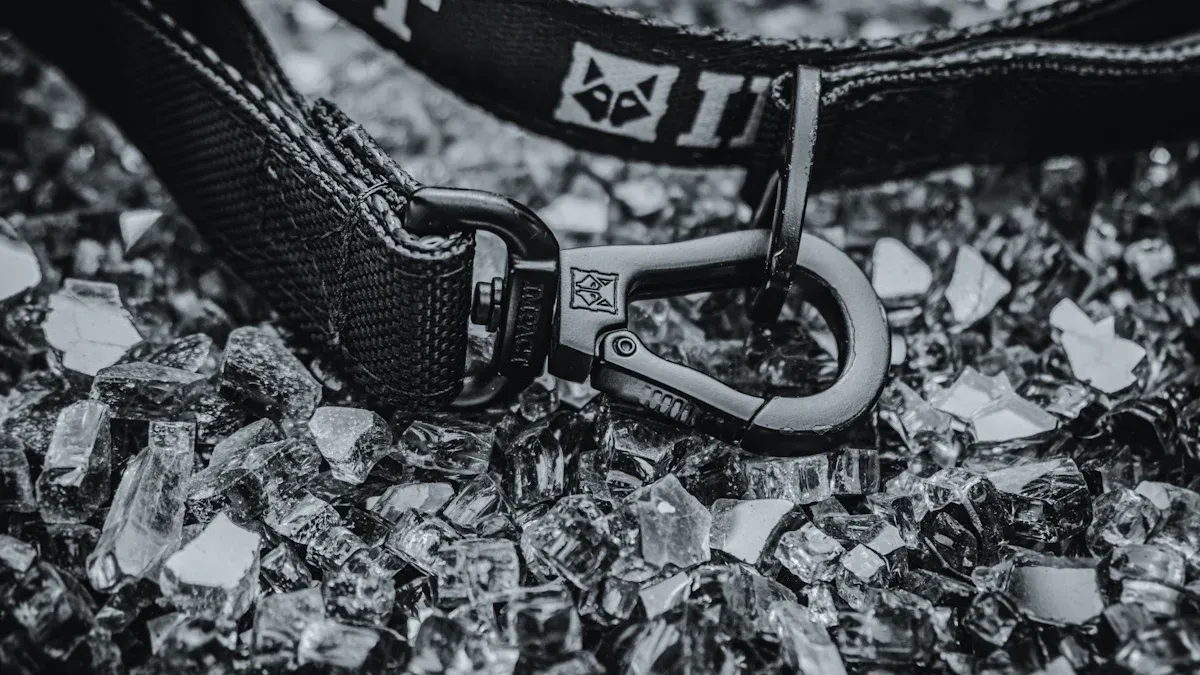
You see many options in the led dog collar market. You need to know how reflective collars and led collars work. Reflective collars use special trim that bounces light back to the source. Led collars use built-in lights. You notice the difference when you walk your dog at night. Reflective trim needs headlights or a flashlight to shine. Led collars light up by themselves. You see led collars in total darkness. Reflective collars need outside light.
Here is a table that shows the main differences:
Feature | Reflective Dog Collars | LED Dog Collars |
|---|---|---|
Light Source | Reflects external light (e.g., car headlights) | Own light source (leds) |
Visibility in Darkness | Limited visibility in total darkness | Visible even in total darkness |
Maintenance | Low maintenance, lasts 1-3 years | Requires battery management, lasts 6 months to 2 years |
Limitations | Only works with external light; small reflection angle | Battery handling; may dim over time; dogs may need time to adjust |
You see that the led dog collar market offers many choices. Led collars give you light in every situation. Reflective collars help when cars or flashlights are nearby. You need to think about your environment and your needs.
Use Cases and Limitations
You use reflective collars when you walk your dog near roads or in places with streetlights. You see the trim shine when a car passes or when you use a flashlight. You use led collars when you walk your dog in parks, trails, or places with no lights. Led collars help you see your dog in total darkness. You use led collars for dog training at night or in foggy weather.
You need to check the led dog collar market for battery life and brightness. Led collars need batteries. You must check them often. Led collars may get dim over time. Some dogs need time to get used to led collars. You see that reflective collars need less care. You clean them and check the trim for dirt or wear. You do not need batteries for reflective collars.
You choose a collar based on your needs. You use reflective collars for walks near traffic. You use led collars for dark places. You combine both for extra visibility. You ask a safety expert if you need advice for special situations. You check lighting, angle, and distance before you decide. You make sure your dog stays visible and safe.
You help your team and customers by using simple claims for reflective dog collars. If you set expectations early, people will not get confused. This also means fewer returns. Check your product copy, staff training, and supplier papers often. Use signs and flyers to show safety tips. Give short talks and answer questions about dog training and gear. Reflective collars help people see your dog in low light. This can stop accidents. Keep teaching staff and customers to make safety and trust better.
FAQ
What makes reflective stitching important for dog welfare?
Reflective stitching helps your dog be seen at night. It makes your pet easier to spot when cars or flashlights shine on the collar. This technology does not make its own light. You need to check the lighting and angle before you trust reflective trim.
How do illuminated collars differ from reflective collars?
Illuminated collars have built-in lights and can change how they shine. You can see your dog even when it is very dark. Reflective collars need light from outside to work. You pick illuminated collars for places with no streetlights, like parks or trails. You use reflective collars for safety near roads and traffic.
Can reflective trim help with dog welfare during daytime walks?
Reflective trim works best at night. Bright collar colors help your dog be seen during the day. Do not expect reflective trim to shine in daylight. You make walks safer by using both bright colors and reflective trim for different lighting.
What factors affect nighttime visibility for reflective dog collars?
Nighttime visibility depends on light, angle, distance, and how clean the collar is. Check the collar for dirt or damage. You get the best results when a car or flashlight shines right on the trim.
Should you rely only on reflective technology for safety-centric pet accessories?
Do not rely only on reflective trim for safety. Use other features too, like bright colors or illuminated collars. Ask a safety expert for advice in risky places.