A reflective dog collar helps your dog stay easier to see in low light, but visibility does not fix a poor fit. The collar still has to stay secure without riding into the throat, rubbing under the neck, or slipping off when your dog backs up. Most problems start with small mistakes: setting the collar once and never rechecking it, ignoring coat changes after grooming, or trying to use collar tightness to control pulling.
The better goal is simple: keep the collar visible, comfortable, and secure for ordinary walks. That is easier when the collar is treated as one part of a broader walking setup rather than the only thing standing between your dog and a bad escape.
Why reflective collars still need the same fit checks as any other collar
Reflective stitching, trim, or webbing can improve visibility, but it does not change how pressure sits on the neck. A reflective collar that is too loose can still twist or slide over the head. A reflective collar that is too tight can still cause coughing, rubbing, or obvious discomfort. The reflective part helps you be seen. The fit is what helps keep the walk controlled.
What a good fit should do
- Stay secure without choking or digging in.
- Lie flat enough that the reflective area stays visible instead of twisting underneath the neck.
- Let your dog breathe, sniff, and move naturally.
- Reduce the chance of backing out when startled or excited.
Why daily conditions change collar fit
Coat thickness, wet fur, seasonal shedding, grooming, and weight changes can all shift how the collar sits. That is why collar fit works best inside a repeatable daily walking routine instead of a one-time adjustment that never gets checked again.
Quick rule: if the collar only feels secure when it is tightened too much, or if it still slips when worn snugly, the problem is not solved by one more notch.
How to do a simple fit check before each walk
The safest approach is to check the collar the same way every time. A consistent routine catches most slipping and rubbing problems before they turn into a stressful outing.
Use this quick sequence
- Fasten the collar where it normally sits on the upper neck.
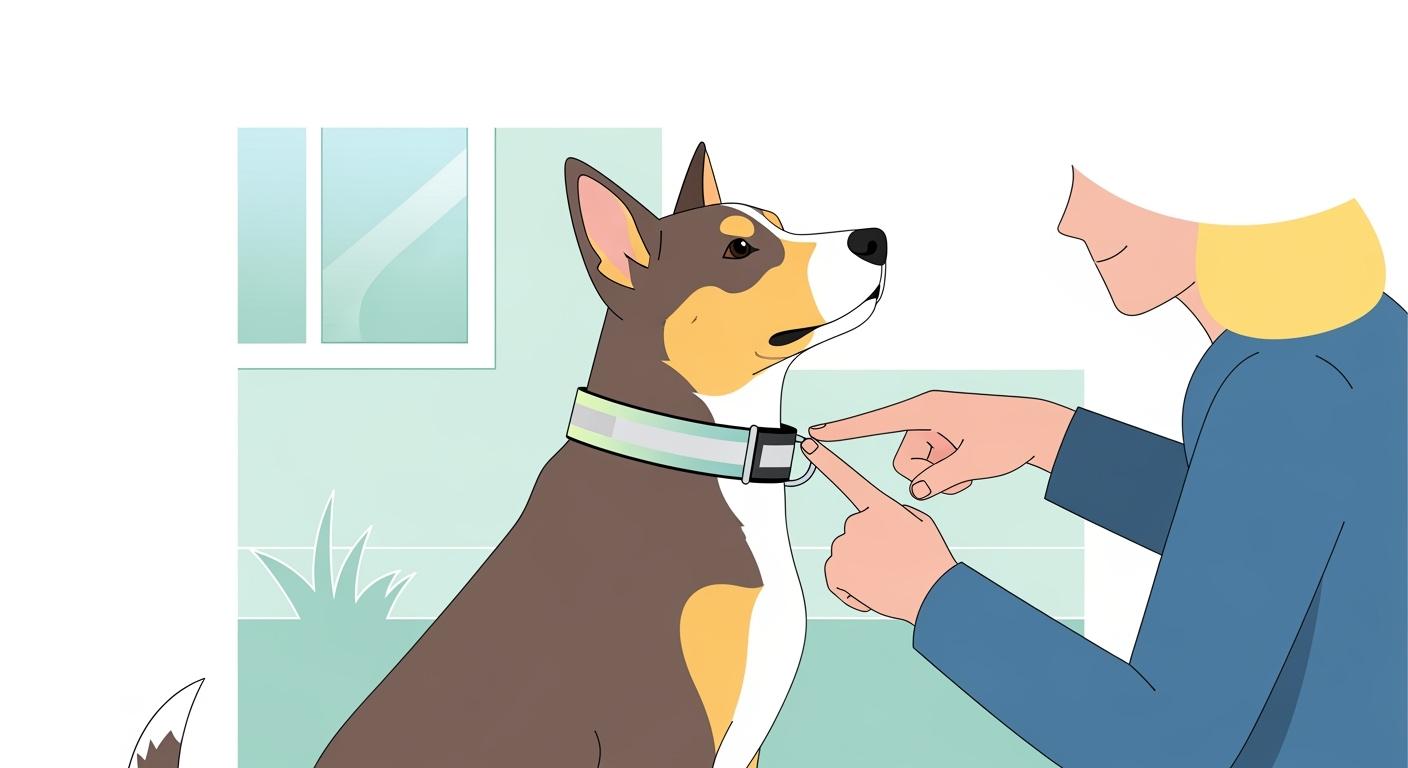
- Slide two fingers under the collar and confirm they fit snugly without forcing.
- Let your dog stand and turn normally so you can see whether the collar rides or twists.
- Do a gentle backward slip check over the widest part of the head.
- Watch for coughing, scratching, or any obvious discomfort as the walk begins.
| Check | What good looks like | What needs adjustment |
|---|---|---|
| Two-finger check | Two fingers fit flat under the strap | No space at all or obvious looseness |
| Collar position | Sits high enough to stay stable | Drops too low, rides into the throat, or twists often |
| Slip check | Does not slide off with light backward pressure | Comes off too easily when the dog backs up |
| Walk test | No coughing, pawing, or head-shaking | Rubbing, gagging, scratching, or visible discomfort |
Common fit mistakes
- Leaving the collar on the same hole all season.
- Checking fit only while the dog is standing still.
- Ignoring the way long or thick fur can hide looseness.
- Tightening the collar more just because the dog pulls.
How coat type, neck shape, and backing-up behavior change the risk
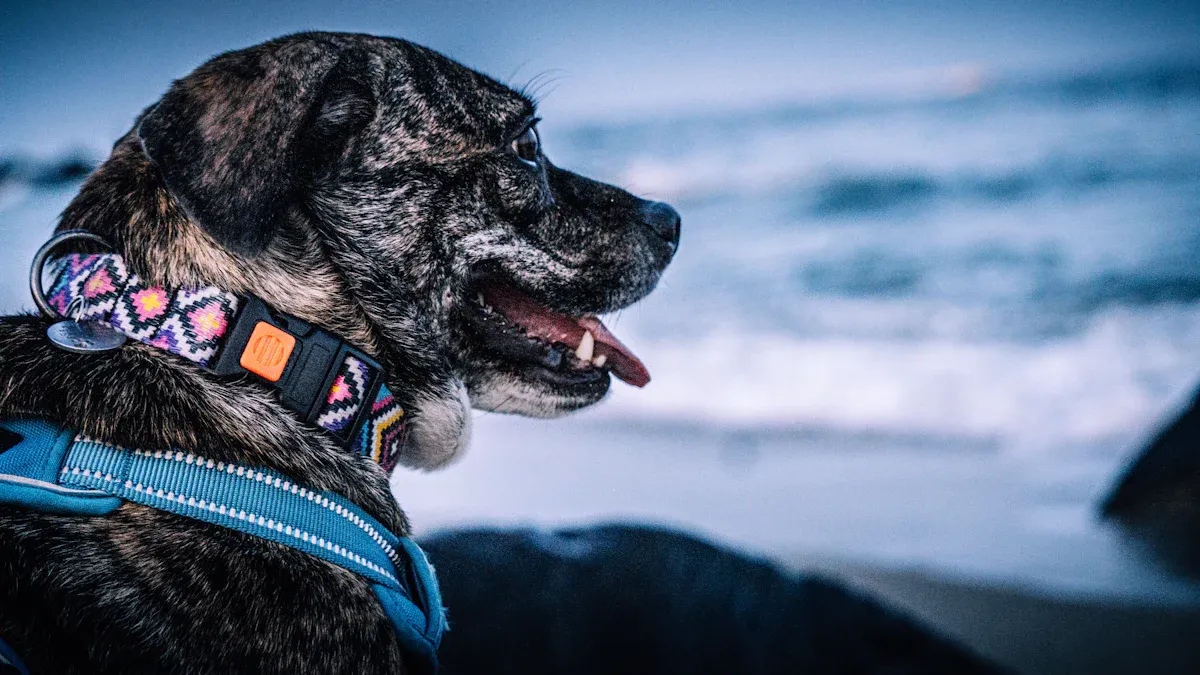
Not every dog slips out for the same reason. Some dogs have narrow heads and neck shapes that make flat collars easier to back out of. Others have thick or fluffy coats that compress under pressure and make the collar feel tighter at first, then looser once the walk gets going.
Dogs that need closer fit checks
- Dogs with narrow heads and similar neck-to-head width.
- Dogs with thick seasonal coats or recent grooming changes.
- Dogs that startle easily and pull backward instead of forward.
- Dogs that shake hard, spin, or twist during exciting walks.
What to recheck after coat or body changes
If your dog has been groomed, has shed heavily, has gotten wet, or has gained or lost weight, check the fit again before using the collar as normal. A reflective collar that felt fine on a winter coat can become too loose on a summer coat very quickly.
When slip risk is still high even after adjustment
If your dog keeps backing out, twists the collar repeatedly, or pulls hard enough that the neck becomes the main control point, it is usually better to step back and compare that problem against reflective collar fit and visibility guidance rather than simply making the collar tighter and hoping it holds.
When a collar is not enough and what to watch for on daily walks
A reflective collar is often useful for visibility and identification, but it is not always the best main walking tool. If the walk depends on repeated pressure to the neck, the setup may no longer match the dog’s actual behavior and comfort needs.
Warning signs that mean stop and reassess
- Repeated coughing, gagging, or throat pressure.
- Redness, missing fur, or irritation under the collar line.
- Frequent slipping during backward movement.
- Twisting that turns the reflective side out of position most of the walk.
- Hardware wear, fraying, or a buckle that no longer feels dependable.
When a harness may be the better answer
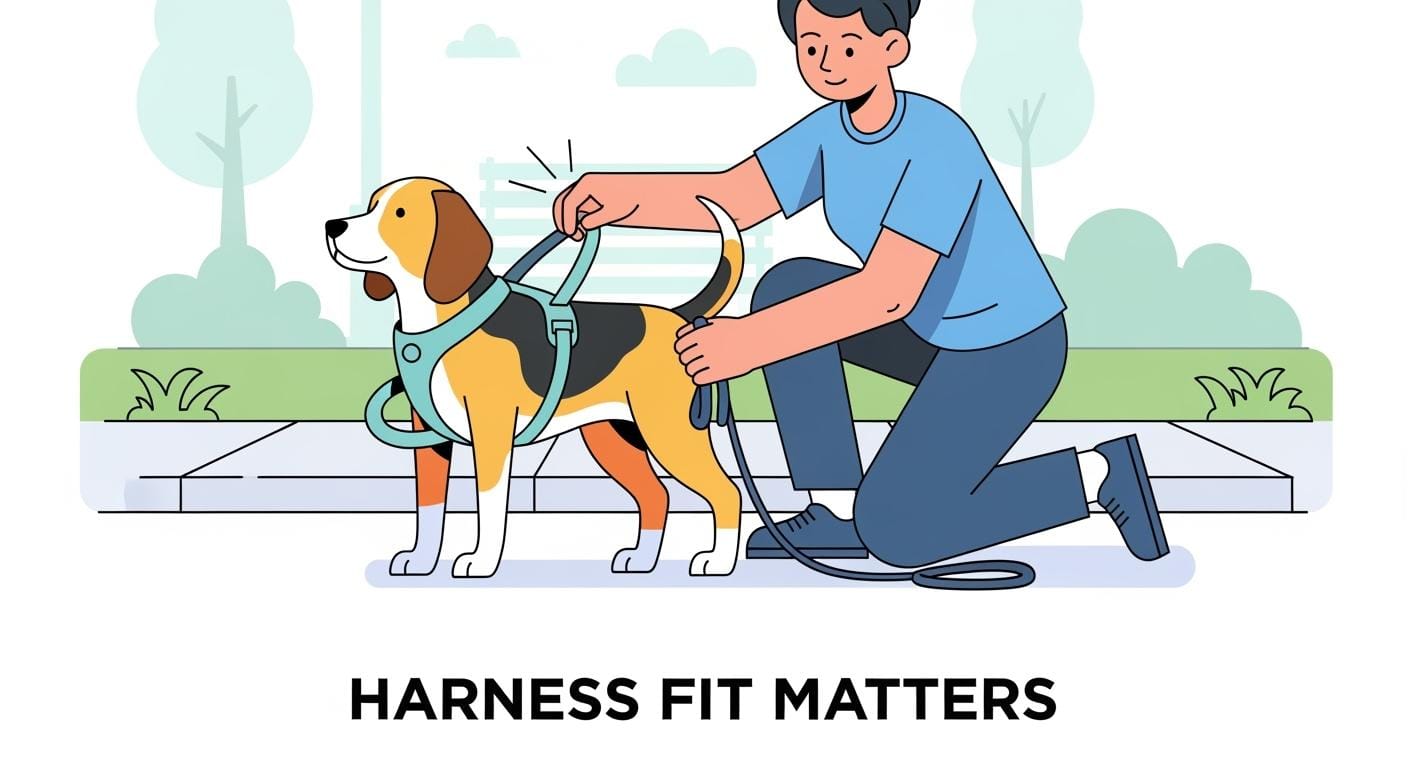
If your dog pulls hard, has a high slip risk, or shows ongoing neck discomfort, the better solution is often to shift daily control away from the throat. In those cases, checking harness sizing and use cases is usually more helpful than relying on collar tightness to do a job it was never meant to do.
A better pre-walk routine
- Confirm the collar sits flat and the reflective area is not twisted under the neck.
- Do the two-finger fit check.
- Inspect the buckle, ring, and stitching for wear.
- Do a gentle backward slip check.
- Think about the route and whether this collar setup still fits the dog’s behavior there.
FAQ
How tight should a reflective dog collar be?
It should be snug enough that two fingers fit underneath without forcing, but not so loose that it rotates excessively or slides over the head during a gentle backward check.
Does a reflective collar stop my dog from slipping out?
No. Reflective material improves visibility, not escape resistance. Slip prevention still depends on correct fit, correct placement, and whether the collar style suits your dog’s head and neck shape.
Why does the collar fit differently after grooming?
Grooming and shedding change coat bulk, which changes how the collar sits and how much slack is really there. A collar that felt snug before grooming can become too loose afterward.
What should I do if my dog keeps backing out?
Recheck fit and placement first. If the problem keeps happening, the issue may be the collar style or the dog’s shape and behavior, not just one small adjustment.
When should I stop using the collar as the main walking tool?
Reassess if your dog coughs, pulls hard, slips backward repeatedly, or shows rubbing and discomfort that keep returning even after proper fit checks.