A puppy collar should feel secure without pressing into the neck, but that balance changes faster than many owners expect. Puppies grow quickly, their head-to-neck ratio changes, and a collar that looked fine a few days ago can suddenly become too loose, too tight, or much easier to slip out of. That is why the best collar routine is not just choosing a size once. It is measuring, checking, and rechecking before the fit starts causing discomfort or escape risk.
If you are comparing everyday walking gear more broadly, start with pet harnesses and leashes. It helps to think of a puppy collar as one part of the setup, not the only tool you will ever need.
Why puppy collar fit changes faster than adult collar fit
Puppies do not grow evenly. Some get thicker through the neck and chest very quickly, while others stay narrow-headed for longer and can back out of loose collars more easily. That means the fit problems are not always obvious at first. A collar can look neat while the puppy is standing still and still fail once the puppy twists, pulls backward, lowers the head, or starts moving excitedly.
Puppy skin and coat also make fit mistakes show up faster. Rough edges, stiff webbing, bulky hardware, and over-tight adjustment can create rubbing sooner on a young dog than on a mature one. The goal is not to make the collar feel extra secure by tightening more than necessary. The goal is to keep it stable enough for ID and light management while still letting the puppy move and swallow comfortably.
This is also why breed labels are not enough on their own. Two puppies of the same breed can need different collar widths, different adjustment ranges, and different recheck timing depending on growth stage, coat, and behavior. Fit needs to follow the dog you have now, not the size you expect later.
The two fit checks that matter most
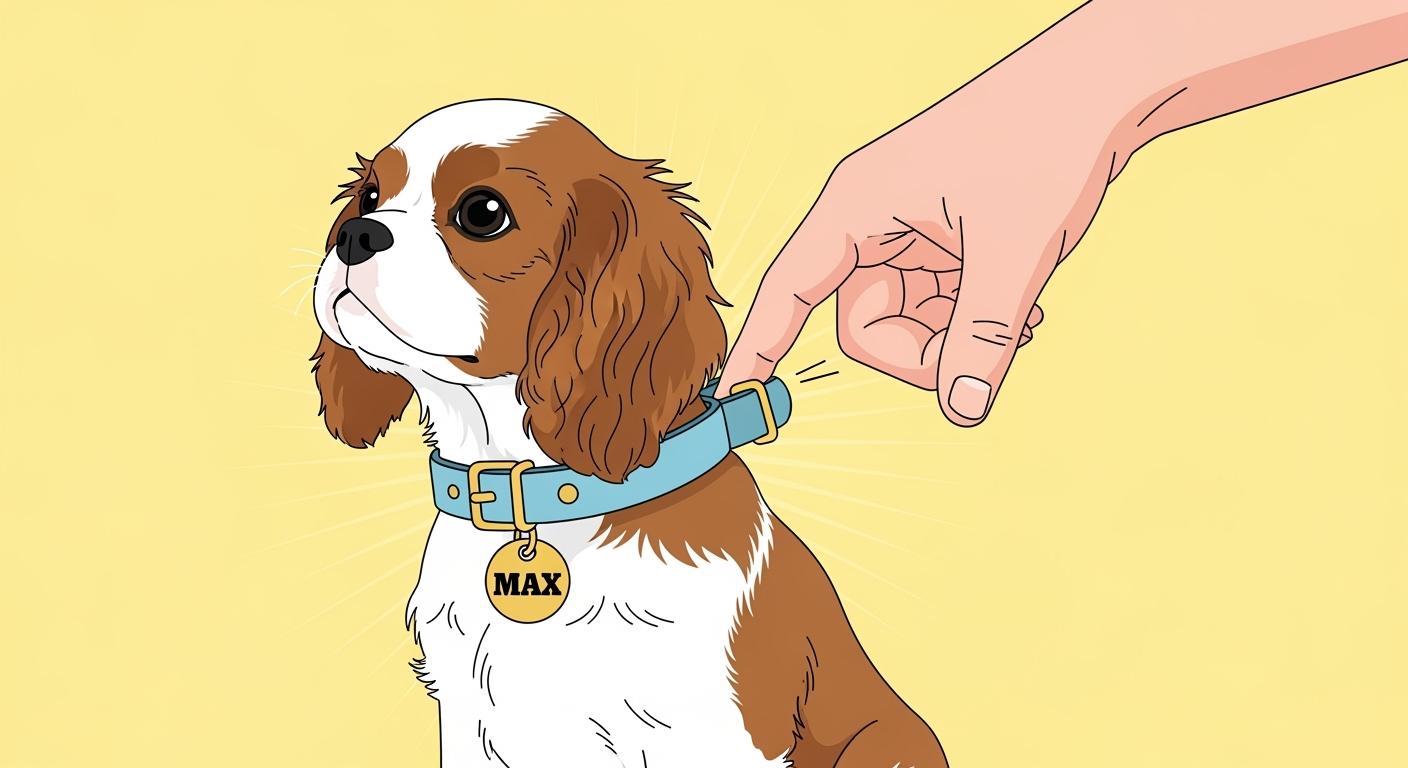
The first check is the two-finger test. Once the collar is buckled where it normally sits, slide two flat fingers between the collar and the neck. You should feel light resistance, but your fingers should not feel squeezed. If you cannot fit two fingers, the collar is too tight. If the collar hangs away from the neck or spins very easily, it is probably too loose.
The second check is the slip test. With the collar sitting in its normal position, gently try to pull it forward and upward over the puppy’s head. You are not trying to yank hard. You are checking whether the collar can slide off too easily with normal escape-like movement. If it comes over the head with light force, the fit is not secure enough.
These two checks work best together. A collar can pass the two-finger test and still fail the slip test, especially on narrow-headed puppies. A collar can also pass the slip test but still be too tight and uncomfortable. That is why tightness and slip resistance should always be checked as a pair instead of as separate ideas.
After the checks, watch real movement. Let the puppy stand, turn, sit, and walk a short loop. The collar should stay in place instead of rolling constantly, and the puppy should not scratch at it, freeze, cough, or keep trying to back out.
How to measure and recheck as your puppy grows
Measure the neck where the collar will actually sit by using a soft tape and keeping it snug without pulling tight. Do not guess from age, breed, or the last collar size you bought. Once you have the measurement, choose a collar with enough adjustment range that you are not already at the tightest or loosest end on day one. Puppies need room to grow, but not so much extra room that the fit becomes unstable immediately.
Recheck the collar often during growth spurts, after grooming, when the coat changes, or any time the puppy starts behaving differently on walks. A puppy that suddenly scratches more, resists walking, paws at the collar, or seems easier to slip out of is giving you useful fit information. Do not wait for visible redness before deciding something is off.
Hardware matters here too. The buckle should close cleanly, the strap should lie flat, and the D-ring should not feel oversized for a very small neck. Heavy hardware can make a light collar rotate more, which makes the fit feel less consistent even when the strap length seems correct.
For very young puppies, a soft adjustable collar often works better than a stiff decorative one. The more often you expect to resize it, the more important it becomes that the collar adjusts easily and keeps its setting instead of slowly slipping looser over time.
When a collar is no longer the best walking option
A puppy collar is often fine for ID and light daily management, but it becomes a weaker choice once the puppy starts pulling hard, backing out regularly, coughing under leash tension, or showing repeated neck discomfort. In those cases, the problem is not just collar fit. The problem is that a collar is being asked to do more control work than it handles well.
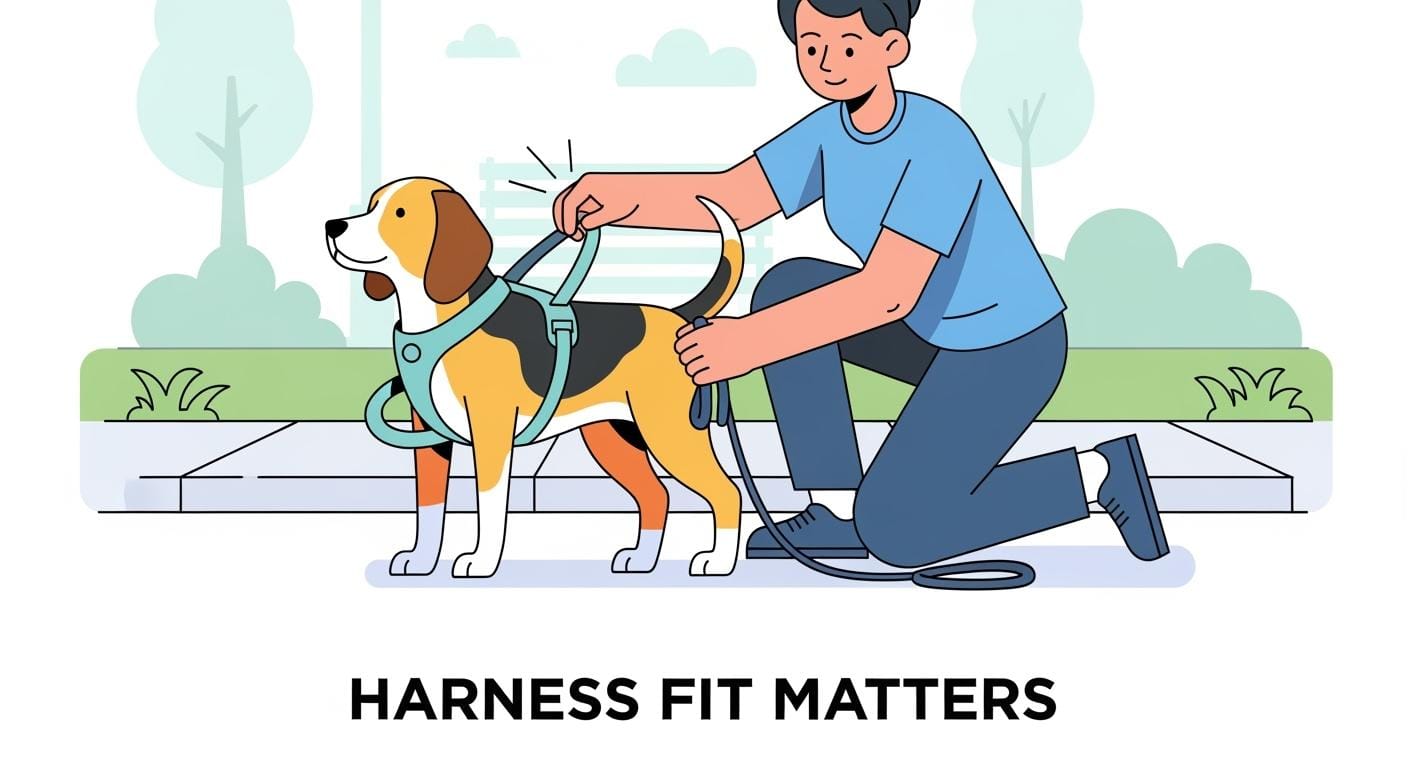
If that starts happening, shift the leash connection to a harness and keep the collar mainly for ID. This dog harness and leash set guide is the most useful next step if you need a calmer, more stable walking setup while your puppy is still learning.
For a broader comparison of harness styles and what tends to fit daily walks best, this best dog harness guide helps you sort through the main options without overcomplicating the choice.
The goal is not to stop using collars completely. It is to use them honestly. A collar works well when it fits, stays comfortable, and matches the job. Once those conditions change, it is better to adjust the setup early than keep forcing the collar to do something it no longer does well.
FAQ
How tight should a puppy collar be?
A puppy collar should be snug enough that it does not slide off easily, but loose enough that you can fit two fingers under it comfortably. Then confirm the fit again with a slip test and a short movement check.
How often should I recheck a puppy collar?
Recheck it frequently during growth, especially if your puppy is young, changing coat, or growing quickly. It is also smart to recheck after grooming and any time the puppy starts acting uncomfortable.
Why does the collar fit indoors but not on walks?
Because movement reveals problems that standing still hides. A collar can look fine while the puppy is calm and still rotate, loosen, or ride differently once the puppy starts walking, turning, or pulling backward.
What signs mean the collar is too tight or too loose?
Too tight often shows up as scratching, reluctance to walk, coughing, or visible pressure marks. Too loose often shows up as easy rotation, slipping over the head, or repeated escape attempts.
When should I switch from a collar to a harness for walks?
Switch when your puppy starts pulling hard, coughing under leash tension, backing out of collars, or showing repeated discomfort. In those cases, a harness is usually the safer walking tool while the collar keeps handling ID.