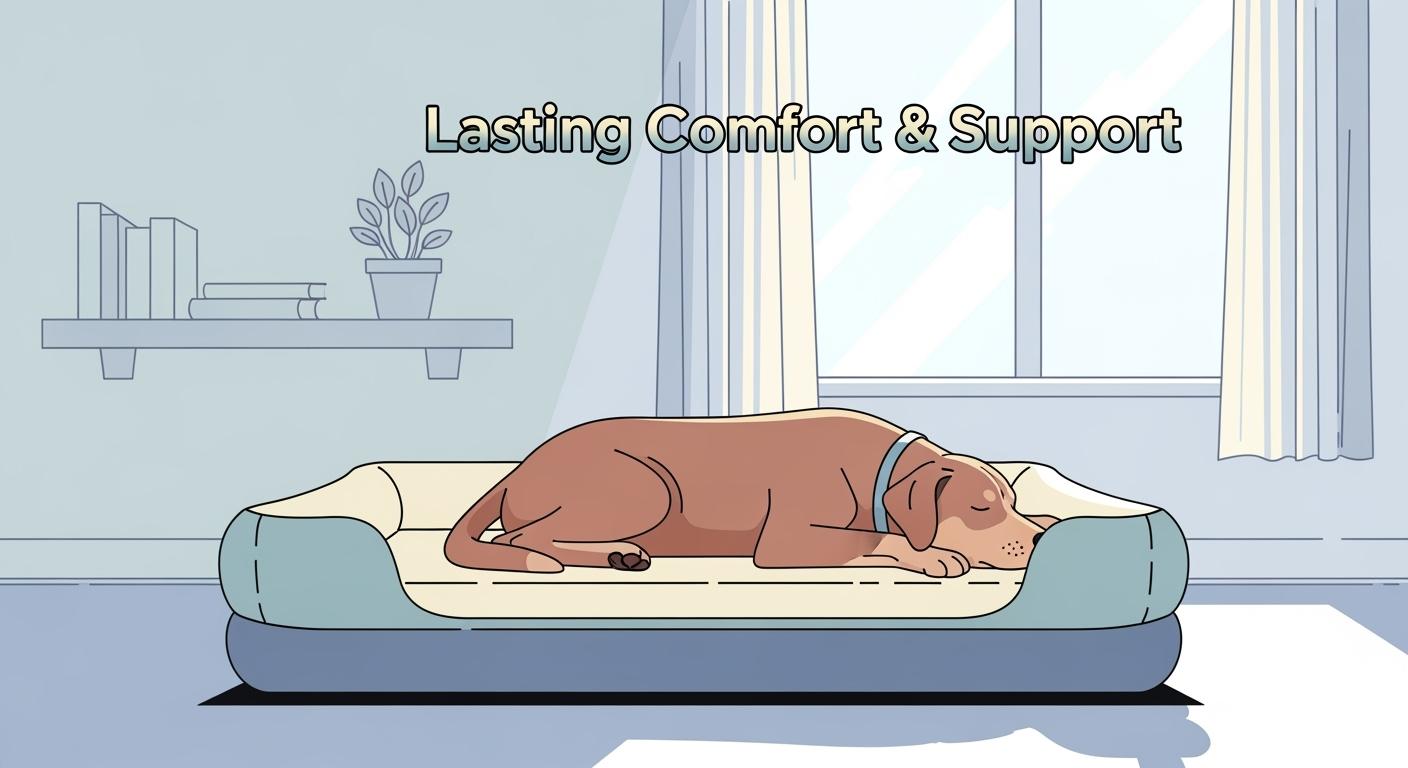
You want an indestructible dog bed that stands up to chewing and still gives your dog lasting comfort. The right dog bed filling and firmness matter for every dog’s comfort and health. Early choices about filling can shape your dog’s joint health and mobility. Orthopedic and memory foam beds help with pressure relief and comfort, especially for dogs with joint pain or arthritis. Dogs who sprawl or curl up need different support levels for true comfort. Think about your dog’s habits, body size, and health needs when searching for the perfect dog bed. Persistent chewing can damage any bed, so supervision or training may help. Dogs with pain or skin problems may need a vet’s advice.
Key Takeaways
Pick a dog bed made with tough materials like ballistic nylon or high-density foam. These materials last a long time. Choose orthopedic or memory foam filling. This helps support your dog’s joints and eases pressure. Think about your dog’s size, age, and how they sleep. This helps you pick the right firmness and filling. Find beds with covers you can remove and wash. This keeps the bed clean and helps it last longer. Watch your dog so they do not chew the bed. Ask a vet for advice if your dog has pain or trouble moving.
What Makes an Indestructible Dog Bed Supportive
Key Features for Durability
When you look for an indestructible dog bed, you want strong materials and good construction. The filling and cover help the bed last longer. High-resilience foam or bonded poly-fiber filling are good choices. These fillings do not flatten quickly and keep their shape for a long time. Some eco-friendly options exist, but you should check if they give enough support and are worth it for your dog.
Here is a table that shows different materials used in tough dog beds:
Material | Description | Durability Features |
|---|---|---|
Ballistic Nylon | Thick weave, used in military gear | Hard to puncture, stands up to chewing |
Ripstop Canvas | Has a grid pattern to stop tears | Good for dogs that scratch or dig |
Kevlar Blends | Kevlar fibers make it stronger | Light, very hard to tear |
High-Density Foam | Solid block, not soft and fluffy | Great support, hard to break |
Bonded Poly-Fiber | Thick pad made with heat | Lasts longer than loose filling |
You want a filling that stays firm and does not move around. High-density foam and bonded poly-fiber filling are the most tough. Ballistic nylon and ripstop canvas covers protect the inside and add more value. Eco-friendly covers can be strong, but always check how they are made.
Safety tip: Dogs that chew a lot can still damage any bed. Watch your dog and train them to chew less.
Why Support and Pressure Relief Matter
Support and pressure relief help your dog feel good and stay healthy. Orthopedic support is important for dogs with joint pain or arthritis. The right filling, like memory foam or high-resilience foam, gives comfort and spreads your dog’s weight evenly.
“Many people do not know that a dog’s bed can help with arthritis. It can help your dog move better and feel happier.” -Dr. Marie Bucko
Orthopedic beds use special filling to lower pressure on your dog’s body. You want a bed that gives support and stays strong. Orthopedic filling shapes to your dog and helps their joints. Eco-friendly fillings can be comfy, but make sure they give enough support for your dog.
Here are the main benefits of orthopedic filling:
Memory foam fits your dog’s body.
It spreads weight and lowers pressure spots.
Studies show these beds help older dogs sleep and move better.
Orthopedic dog beds support joints.
They help with pain and make dogs more comfortable.
These beds help dogs sleep better, especially older ones.
You want a filling that keeps its shape and lasts a long time. Support and strength are important for all dogs, young and old. If your dog has pain, trouble moving, or skin problems, ask your vet before you buy a bed.
Dog Bed Fillings and Support
Picking the right filling for your indestructible dog bed is very important. Each filling type gives different support and comfort. You should choose a filling that fits your dog’s needs and size. The right filling helps your dog sleep well and stay active.
Solid Foam, Shredded Foam, and Fiberfill
Solid foam gives strong support and keeps its shape. This filling does not move around or sag. Large or heavy dogs need this kind of support. High-resilience foam is a good choice because it lasts longer and bounces back.
Shredded foam feels softer and can be changed to fit your dog. You can move the filling to match how your dog sleeps. But shredded foam can move inside the bed and make some spots uneven. Heavy dogs may flatten this filling over time.
Fiberfill feels soft and light. Many beds use polyester fiberfill because it is fluffy. Small dogs or dogs that like to curl up enjoy this filling. Fiberfill can get flat if used a lot, so it may not work for big dogs or those with joint pain.
Tip: Dogs that dig or scratch need a filling that does not clump or move. High-resilience fiber makes the bed last longer and feel better.
Memory Foam and Orthopedic Options
Memory foam and orthopedic beds give extra support and comfort. Memory foam shapes to your dog’s body and spreads weight. This helps take pressure off joints. Older dogs and dogs with arthritis need this kind of filling. Orthopedic beds use layers of memory foam and strong foam for more support.
Big dogs and older dogs get the most help from memory foam. Studies show memory foam beds:
Give strong support for big and old dogs.
Help with joint pain, which is good for dogs with arthritis.
Make dogs more comfortable by lowering pressure spots.
Some orthopedic beds have gel or special foam for cooling and strength. These features help your dog stay comfy and keep the bed in good shape. If you want an eco-friendly bed, look for recycled or plant-based foam. Make sure these fillings are thick and strong enough for your dog.
Note: Orthopedic beds are good for all dogs, not just seniors. Big dogs, active dogs, and dogs healing from injury also need orthopedic filling.
Comparison Table: Fill Types, Pros, Cons, Best For
Use this table to see the differences between dog bed fillings. It will help you pick the best one for your dog.
Option | Pros | Cons | Best For |
|---|---|---|---|
Solid Foam | Strong support, keeps shape, lasts long | Can feel hard, not flexible, may get warm | Big dogs, chewers, joint support |
Shredded Foam | Soft, can change shape, flexible | Moves around, can get flat, less support for big dogs | Dogs that like to burrow |
Fiberfill | Soft, light, some eco-friendly choices | Gets flat with use, less support, needs fluffing | Small dogs, light use, good price |
Memory Foam | Good support, shapes to body, lasts long | Can be heavy, may get warm, needs to be thick | Big dogs, older dogs, joint pain |
Orthopedic Beds | Layers of support, helps with pain, strong | Can be big, costs more, uses special filling | Seniors, dogs with pain, all sizes |
Pick a filling that fits your dog’s weight, age, and sleep style. Memory foam and orthopedic beds give the best comfort and support. Solid foam is good for strong support and lasts a long time. Fiberfill and shredded foam are soft and work well for small dogs. Eco-friendly fillings are nice, but check if they are thick and strong enough.
Safety reminder: Dogs that chew a lot can break any bed. Watch your dog and train them if needed. If your dog has pain or skin problems, ask your vet for advice.
Choosing the Right Firmness for Your Dog Bed
Firmness Levels and Dog Needs
You want your dog to rest on a bed that gives the right balance of support and comfort. Firmness matters for every dog, but the best level depends on your dog’s size, age, and health. If you pick a bed that is too soft, your dog may sink in and feel sore. If the bed is too hard, your dog may not relax or get enough pressure relief.
Proper support helps prevent aches and stiffness, especially as your dog ages.
A well-designed bed keeps your dog’s spine straight and works for all sleep positions.
Balancing softness and support avoids painful pressure points, which is important for dogs with arthritis.
Orthopedic beds use special foam to help with joint pain and improve movement. These beds shape to your dog’s body and spread weight, which lowers stress on joints.
Foam Density and Thickness Guide
When you choose a dog bed, look at the density and thickness of the filling. High-density memory foam (4-5 pounds per cubic foot or 64-80 kg/m^3) gives the best support and lasts longer. This type of filling spreads your dog’s weight and protects hips, elbows, and spine. Beds for large breeds should use foam at least 4-7 inches (10-18 cm) thick. Thin beds flatten fast and do not protect joints. Multi-layer orthopedic dog beds with gel or high-resilience foam add value and comfort.
Measure your dog from nose to tail and add a few inches for the right bed length.
Large breeds need supportive foam, not plush filling.
High-density foam keeps its shape for years and gives lasting orthopedic support.
Decision Table: Dog Profile, Best Support, What to Avoid
Use this table to match your dog’s needs to the best support and filling. This helps you get the most value and comfort from your indestructible dog bed.
Dog Profile or Context | Best Support Level and Fill | What to Avoid |
|---|---|---|
Small, light dog | Medium firmness, fiberfill or shredded foam | Very firm or thin beds |
Large or heavy dog | Firm, high-density memory foam, 4-7 in thick | Soft, plush, or thin filling |
Senior or arthritic dog | Orthopedic support, multi-layer memory foam | Flat, unsupportive, or lumpy beds |
Persistent chewer | High-resilience solid foam, tough cover | Loose filling, exposed seams |
Dog with joint pain | Orthopedic dog beds, gel or memory foam | Beds that bottom out or shift |
Safety tip: Persistent chewing can damage any bed. Supervise your dog and train as needed. Dogs with pain, mobility, or skin issues may need advice from a veterinarian.
Choosing the right firmness and filling gives your dog comfort, support, and resilience. You protect your dog’s joints and help them rest better. Always check the value of the materials and match the bed to your dog’s needs.
Pressure Relief in Indestructible Dog Beds
How Pressure Relief Helps Joint Health
You want your dog to feel comfortable and supported every time they rest. Pressure relief plays a key role in protecting joint health, especially for senior dogs or those with arthritis. When you choose a dog bed with the right filling, you help your dog avoid sore spots and stiffness. Orthopedic beds use memory foam or layered orthopedic support to spread your dog’s weight evenly. This reduces pressure on elbows, hips, and shoulders.
When your dog sleeps well, their body gets more time to heal and rest. This leads to less inflammation and pain. You may notice your dog moves more easily and seems happier. Good sleep also improves your dog’s mood and behavior, creating a positive cycle for their quality of life.
Here is a quick look at the value of pressure relief for joint health:
Benefit | Description |
|---|---|
Improved mobility | Senior dogs showed enhanced ability to move. |
Reduced pain and stiffness | Dogs experienced less discomfort while resting. |
Better nighttime rest | Enhanced sleep quality led to increased alertness. |
Orthopedic dog beds with high-quality filling give your dog the support they need. You add value to your dog’s life by choosing a bed that protects their joints and helps them rest.
Signs Your Dog Needs Better Pressure Relief
You can spot when your dog needs better pressure relief by watching their habits and comfort. Look for these common signs:
Limping, stretching a lot, or struggling to get up after resting
Restless sleep or frequent position changes
Choosing the couch or your bed instead of their own
Visible wear and tear on the dog bed
Senior age or health changes that affect comfort
If you see these signs, your dog may need a new bed with better orthopedic support and filling. Orthopedic support and memory foam can make a big difference in your dog’s comfort and mobility. Always check the value of the dog bed fillings and make sure they match your dog’s needs.
Safety tip: Persistent chewing can damage any bed. Supervise your dog and train as needed. Dogs with pain, mobility, or skin issues may need advice from a veterinarian.
Design Features to Prevent Bed Failure

Chew-Resistant Covers and Construction
You want a dog bed that lasts and keeps your dog happy. Chew-resistant beds use strong materials and smart designs to last longer. Many covers are made from ballistic nylon or other tough fabrics. These materials stop scratching and biting from ruining the bed. Triple-stitched seams make the bed stronger and help stop rips. Some beds hide zippers and make corners stronger so they do not break. Heavy-duty metal frames can help if your dog chews a lot.
Tip: Pick beds with covers you can take off and wash. This makes cleaning simple and helps the bed stay nice for longer.
Here are some things that make beds tougher and stop them from breaking:
Feature | Benefit |
|---|---|
Triple-stitched locked seams | Makes it harder for the bed to rip |
Heavy-duty proprietary materials | Stands up to chewing and rough play |
Water-resistant liner | Keeps foam safe from water |
Removable, washable covers | Keeps the bed clean and stops damage |
Strong construction | Handles rough use and active dogs |
Third-party tested | Shows the bed is strong and hard to tear |
Scenario B: Persistent Chewer Solutions
If your dog chews a lot, you need extra help. Watch your dog and use gates to keep them away from the bed when you cannot watch. Crate training can stop chewing when you are not home. You can spray bitter or sour flavors on the bed to make it taste bad. Some sprays mix flavors to work better.
Take away things your dog can chew.
Give your dog safe toys when they want to chew.
Use sprays on the bed if you need to stop chewing.
Safety reminder: Dogs who chew a lot can still break any bed. Watching your dog and training them can help.
Common Cause Table: What Goes Wrong and What to Do
You can stop most bed problems if you know what causes them. Use this table to see problems and how to fix them.
Common Problem | What Happens | What to Do |
|---|---|---|
Tearing at seams | Seams break or come apart | Get beds with triple-stitched seams |
Flattening of filling | Bed gets flat and loses shape | Choose CertipurUS foam or solid core |
Moisture damage | Bed smells or gets moldy | Use a water-resistant liner |
Chewing damage | Holes or missing fabric | Pick chew-resistant beds and watch your dog |
Dirty cover | Bed gets stains or smells bad | Wash covers that come off often |
Dogs with pain, trouble moving, or skin problems should see a vet for advice.
Step-by-Step Guide to Choosing a Dog Bed
Step 1: Identify Support Needs
You want your dog to rest well and stay healthy. Start by looking at your dog’s size, age, and health.
Orthopedic support helps dogs with arthritis or joint pain.
Pick a bed that fits your dog’s size so they can stretch and curl up.
If your dog has allergies, choose hypoallergenic materials.
Watch how your dog sleeps. Some dogs sprawl, while others curl up tight.
Scenario A:
You have a large, heavy dog that flattens soft beds. You need a bed with strong orthopedic support and a firm base.
Step 2: Pick the Core and Comfort Layer
Choose a core that matches your dog’s needs.
Large breeds and older dogs need a bed that supports joints.
Dogs with arthritis need a bed that eases pain.
XL orthopedic beds with a 4- to 6-inch memory foam core work well for big dogs.
Small dogs may need a 2- to 3-inch core.
Chronic discomfort can happen if your dog sleeps on hard surfaces.
Scenario B:
Your dog loves to chew. Pick a bed with a solid foam core and a tough comfort layer. Avoid loose filling.
Step 3: Select the Cover and Liner
Pick covers and liners that last and clean easily.
Washable fabrics make cleaning simple.
Breathable textiles like cotton or linen help control odor.
Waterproof liners protect against spills.
Non-toxic fillings keep your dog safe.
A snug liner fit keeps everything in place.
For persistent chewers, look for hidden zippers, minimal seams, and reinforced corners.
Step 4: Validate Fit and Maintenance
Check that the bed fits your dog and is easy to care for.
Use a light blanket or throw for quick cleaning.
Wash the cover every 1-2 weeks to control allergens.
Rotate the cushion every few months for even wear.
Beds made from high-density foam or organic latex last longer and support joints.
Safety tip: Persistent chewing can damage any bed. Supervise your dog and train them if needed. Dogs with pain, mobility, or skin issues may need advice from a veterinarian.
Feature Checklist and Reference Tables
Feature Checklist for Indestructible Dog Beds
You want a dog bed that is tough and comfy. Use this checklist to help you choose the best one:
Strong seams and tough materials stop rips and tears.
Thick, sturdy fabric stands up to claws and teeth.
Beds with solid shapes do not lose their form.
Chew-proof features like triple stitching make beds stronger.
Orthopedic foam helps joints and does not get flat.
Waterproof liners keep the bed safe from spills.
Non-slip bottoms stop the bed from sliding on floors.
Covers you can take off and wash make cleaning simple.
Hypoallergenic and antibacterial materials help with smells.
Make sure the bed fits your dog’s size and how they sleep.
Tip: Comfort is just as important as strength. Orthopedic support helps older dogs and dogs with joint pain sleep better.
Here are some materials you might find:
Riplock PVC: Very strong and lasts a long time. It works well outside.
HiFlow TuffMesh: Lets water drain and stands up to rough play.
Safety reminder: Dogs that chew a lot can still break any bed. Watch your dog and train them if needed. If your dog has pain or skin problems, ask your vet for help.
Parameter and Value Table
Use this table to compare features when you shop for a tough dog bed:
Parameter | Target range or option | Why it matters |
|---|---|---|
Core type | solid foam, shredded foam, fiberfill | Shows how much support the bed gives |
Base foam density | 1.8-2.5 lb/ft^3 (29-40 kg/m^3) | Helps the bed stay firm and not get flat |
Top layer density | 3.5-5.0 lb/ft^3 (56-80 kg/m^3) | Makes the bed comfy but not too soft |
Firmness feel | soft, medium, firm | Matches how your dog likes to sleep |
Chew target design | hidden zipper, minimal seams | Stops weak spots that can break |
Cover fabric | strong woven fabric, coated options | Resists scratches and damage |
Liner | waterproof or water-resistant | Keeps foam dry and helps with smells |
Cover removal | removable, machine-washable | Makes cleaning easy and keeps the bed fresh |
Base | non-slip | Stops the bed from moving on hard floors |
Quick check: Pick a bed that fits your dog’s needs and habits. Look for strong materials, easy cleaning, and good support for your dog’s health.
You want the perfect dog bed that supports your dog and stands up to daily use. Start by matching the bed’s features to your dog’s size, age, and habits. Look for an indestructible dog bed with reinforced materials and orthopedic foam for lasting comfort. Remember, no bed is fully chew-proof, so supervise your dog when needed. For dogs with pain or mobility issues, ask your veterinarian for advice.
Quick Checklist:
Choose strong, easy-to-clean materials.
Pick the right shape and size for your dog.
Check for orthopedic support if your dog is older or has joint pain.
Supervise if your dog likes to chew.
Persistent chewing can damage any bed. Dogs with health issues may need veterinary guidance.
FAQ
What size dog bed should you choose?
You should measure your dog from nose to tail. Add 6-8 inches (15-20 cm) for comfort. This gives your dog space to stretch and curl up. Always check the bed’s length and width before you buy.
How do you clean an indestructible dog bed?
You should pick a bed with a removable, machine-washable cover. Wash the cover every 1-2 weeks. Use mild detergent. Let the cover air dry. Clean spills quickly to prevent odors and stains.
Can any dog bed be completely chew-proof?
No bed is fully chew-proof. Persistent chewing can damage any bed. You should supervise your dog and use training. For strong chewers, choose beds with hidden zippers, tough fabric, and reinforced seams.
What filling is best for dogs with joint pain?
You should choose orthopedic or memory foam filling. These materials support joints and relieve pressure. Thick, high-density foam works best for large or senior dogs. Ask your veterinarian if your dog has pain or mobility issues.
How often should you replace a dog bed?
You should check the bed for flattening, tears, or odors every few months. Replace the bed if it loses shape or support. Dogs with allergies or skin problems may need more frequent changes. Always follow safety tips for your dog’s health.