Getting the right harness for a small dog starts with measurement, but measurement alone is not enough. Small dogs are more affected by bulky hardware, throat pressure, rubbing behind the legs, and loose neck openings that can make backing out easier. A better process is to measure first, read the size chart carefully, then do a short movement test before you treat the fit as final.
If you are still comparing styles, start with a dog harness that is meant for daily walks and has light hardware, simple strap adjustment, and a shape that does not crowd the shoulders.
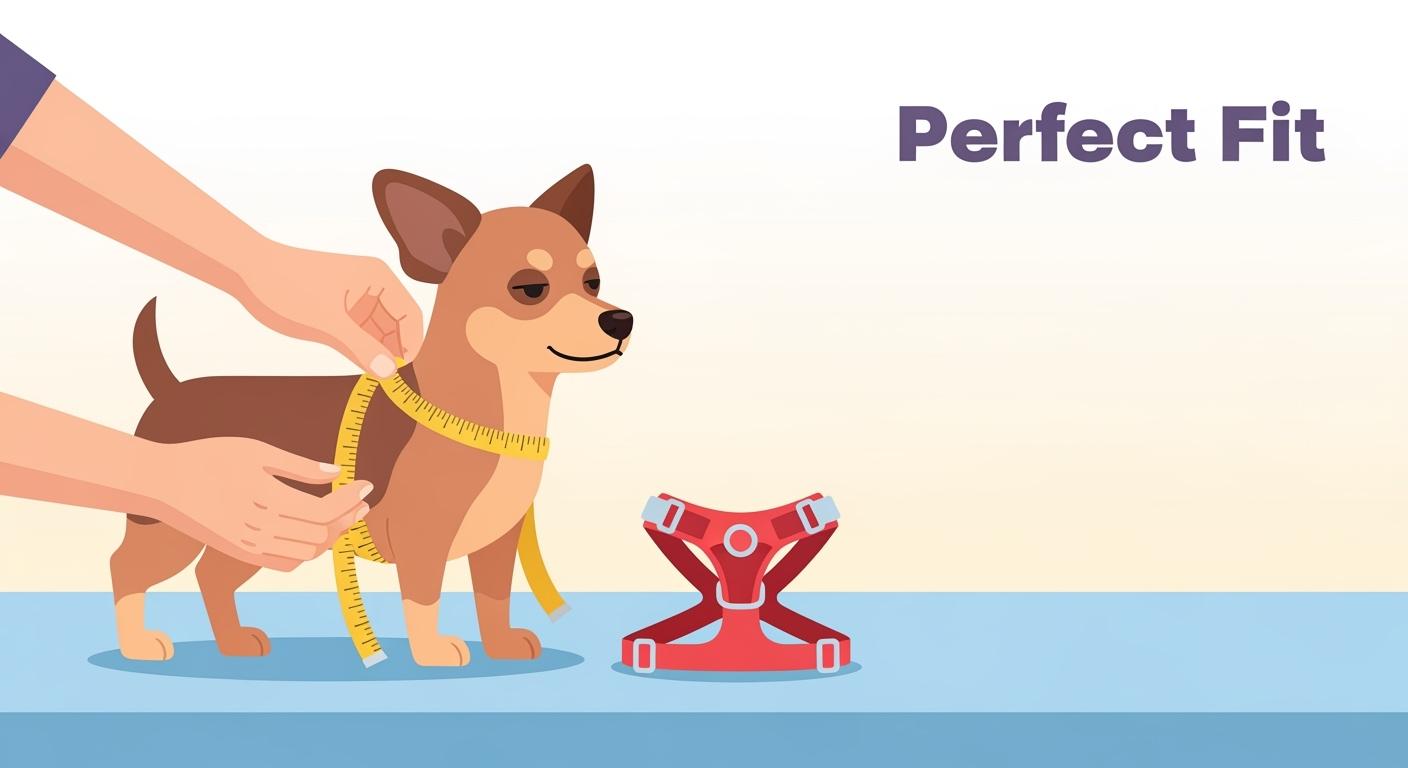
What to measure before you look at a size chart
For most small dogs, chest girth is the first number to trust. Measure the widest part of the rib cage just behind the front legs. Keep the tape level, snug, and flat against the coat without squeezing. This number usually matters more than weight because small breeds can have very different body shapes even when they weigh about the same.
Next, measure the neck where a collar would naturally sit. This is not the middle of the throat. It is lower, closer to the base of the neck. A harness that looks fine at the chest can still feel wrong if the neck opening is too high or too tight.
If the brand asks for back length, measure from the base of the neck to the base of the tail, but do not guess this if the chart does not use it. For fluffy dogs, press the tape close to the body instead of measuring the outer layer of fur. When a dog is between haircuts, it helps to measure twice and keep the smaller and larger reading written down.
How to read the size chart without guessing
Do not choose a harness for small dogs by weight alone. Weight can be a useful tie-breaker, but chest size is usually the deciding number. If your dog falls into one size for chest girth and another for neck size, check which part of the harness is less adjustable. That less adjustable area should guide the decision.
When your dog lands between sizes, think about body shape and coat changes. A narrow dog with a deep chest may need the size that better matches chest girth. A dog with a thick coat or fast weight fluctuation may need more adjustment range. If you are unsure which harness structure makes sense for your dog’s body type, this best dog harness guide is a good next step before you buy.
Also look at where the straps will sit once tightened. Small dogs often do better when the chest panel stays low enough to avoid the throat and the girth strap sits far enough behind the front legs to reduce rubbing. A chart can suggest a size, but strap placement is what tells you whether the design really suits your dog.
Fit checks to do right after you put the harness on
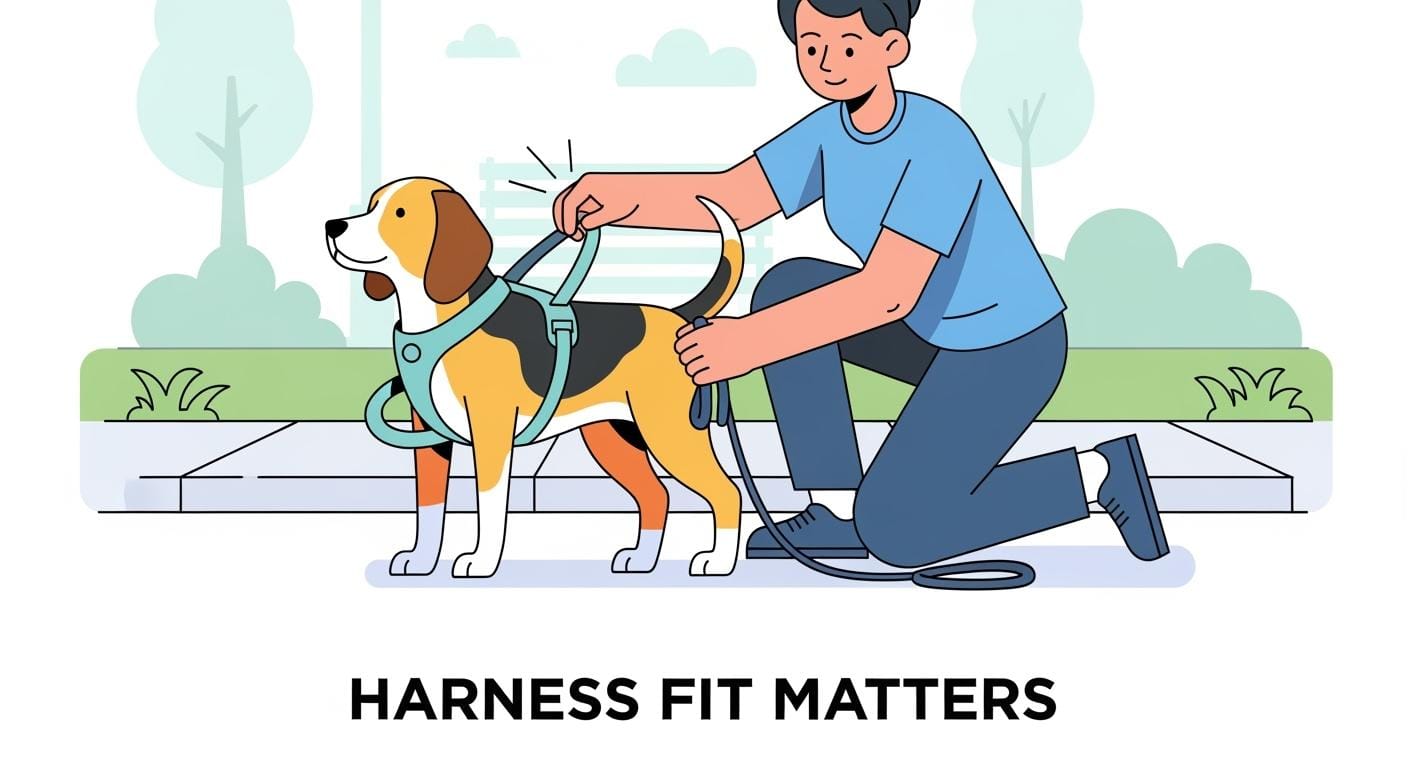
Start with the two-finger check at the neck, chest, and girth area. The harness should feel secure without pressing into the skin. Then watch your dog stand, walk, turn, and sit. The harness should stay centered and should not drift sideways, ride up toward the throat, or block the front legs from moving smoothly.
Look closely at the space behind the elbows. This is one of the first places a poor fit shows up on a small dog. If the strap sits too close to the leg crease, you may see rubbing after only a short walk. If the neckline climbs upward when the leash tightens, the harness may be too loose in front or simply the wrong shape.
Pay attention to how the leash works with the harness too. A good fit can still feel awkward if the leash length, clip position, or walking setup keeps pulling the harness off center. This dog harness and leash set guide helps you check that the full setup feels balanced instead of just focusing on the harness alone.
Common small-dog fit problems and how to fix them
If the harness twists, first even out both sides before tightening anything further. Uneven strap length often causes rotation more than overall looseness does. If the chest panel drifts too high, loosen the neck slightly and reset the girth strap farther back behind the front legs.
If your dog freezes, scratches, or takes short steps, check whether the harness is too heavy or too stiff for that body frame. Small dogs often respond badly to hardware that swings or bounces. In that case, a lighter design with less bulk may work better than repeated adjustment on a structure that never really suits the dog.
If the harness leaves red marks, stop using it until you know why. Redness behind the front legs usually means friction or poor strap placement. Redness at the throat often means the neckline is too high or the front fit is unstable. If your dog can pull backward and nearly slip free, treat that as an escape warning, not something to “keep testing” on outdoor walks.
When to re-measure and when to stop using the harness
Re-measure after weight changes, coat changes, growth spurts, or any long break from using the harness. Puppies need more frequent checks because a fit that looked fine a month ago may already be wrong. Even adult small dogs can change enough in winter coat or body condition to affect the fit.
Stop using the harness right away if you see swelling, broken skin, repeated coughing, strong resistance to movement, or a pattern of backing out. Those are not small adjustment issues. They are signs that the size, shape, or setup needs to change before the next real walk.
FAQ
How do I measure a small dog for a harness?
Measure the chest at the widest part of the rib cage just behind the front legs, then measure the neck where a collar naturally sits. Use those two numbers before looking at weight.
What if my small dog is between harness sizes?
Use chest girth as the main number, then check which part of the harness has less adjustment range. If the neck opening is fixed or only lightly adjustable, that area matters more than a broad weight range on the chart.
How tight should a small dog harness be?
It should feel secure but not pinching. You should be able to slide two fingers under the straps while still keeping the harness centered during walking and turning.
Why does the harness rub behind my dog’s front legs?
This usually means the girth strap sits too close to the elbow crease, the harness shifts during motion, or the material edge is not sitting flat against the body.
How often should I re-measure my dog?
Re-measure after any clear change in weight, coat, age, or body shape. Puppies and recently groomed dogs usually need more frequent checks than stable adult dogs.