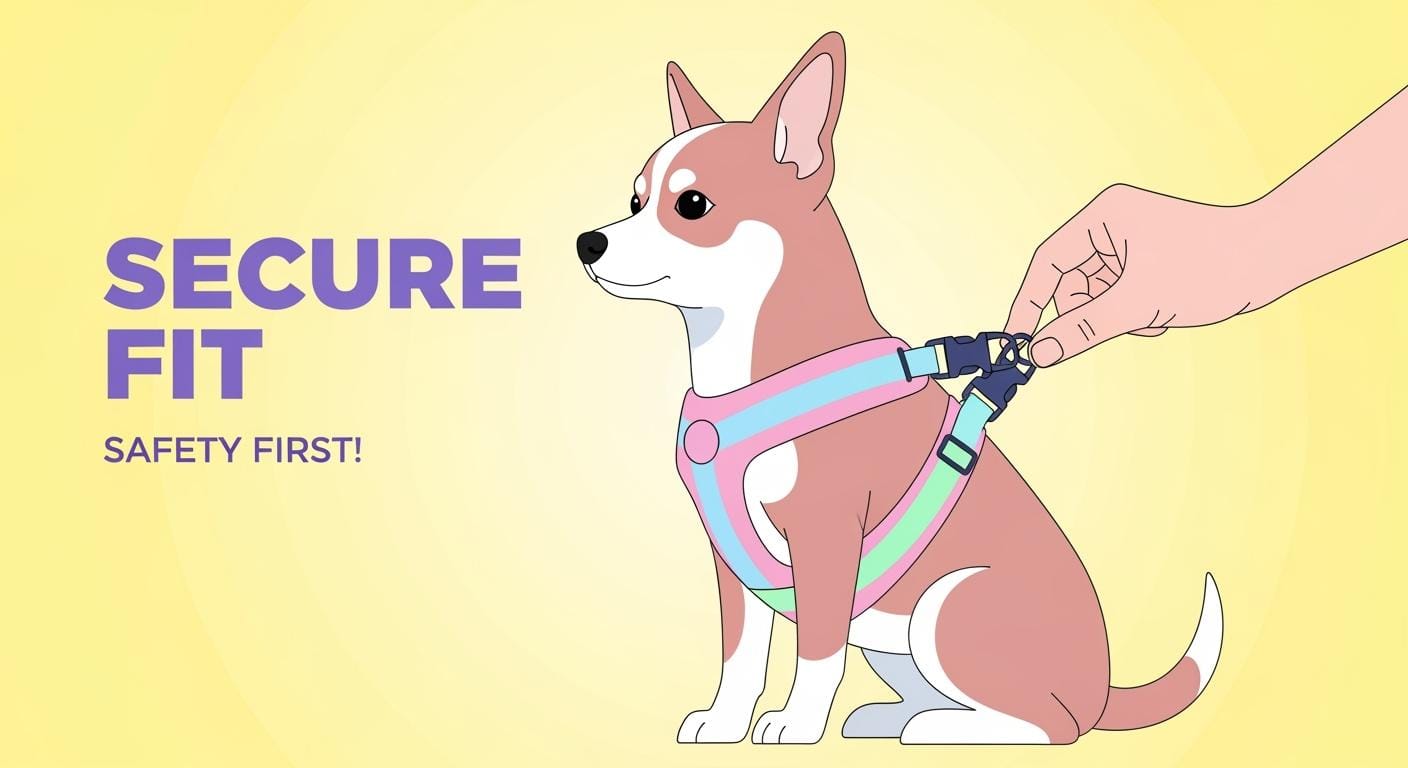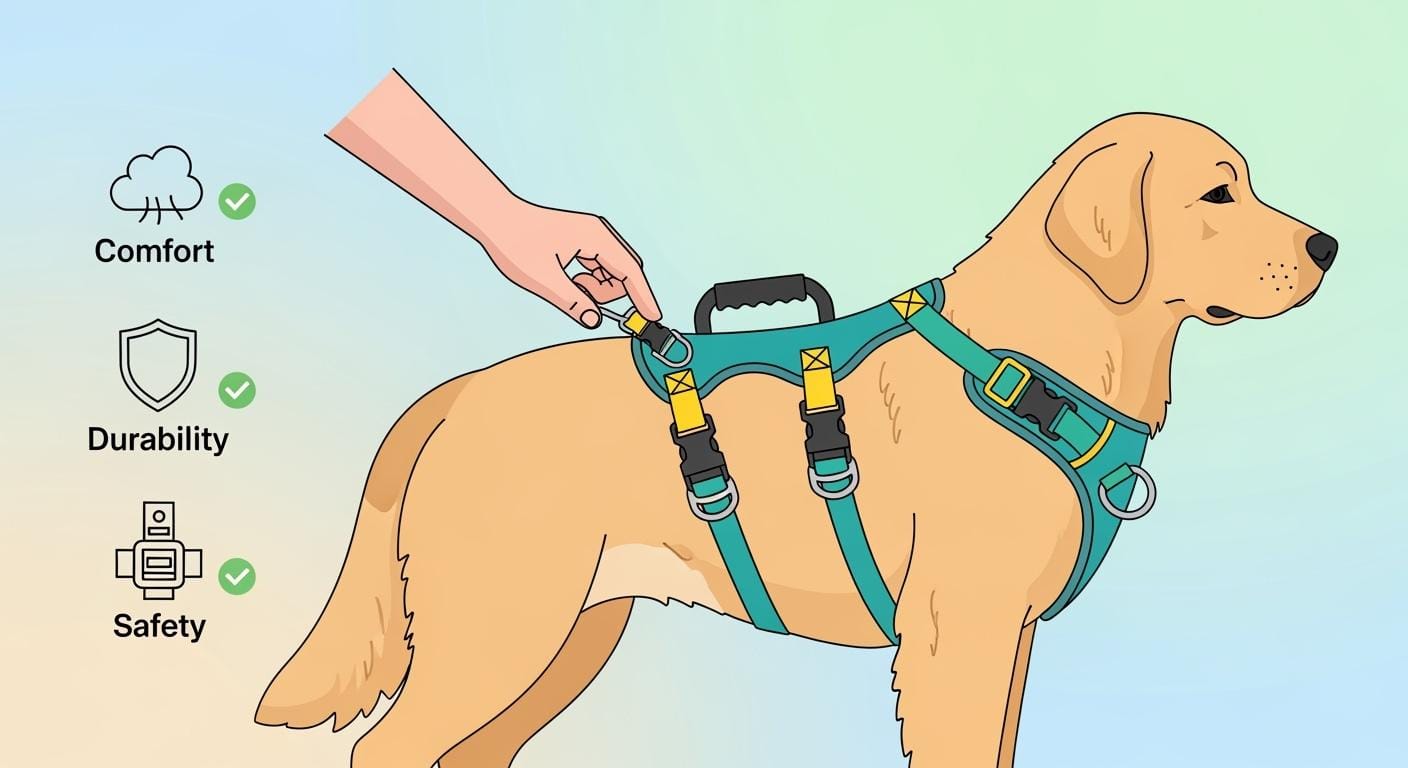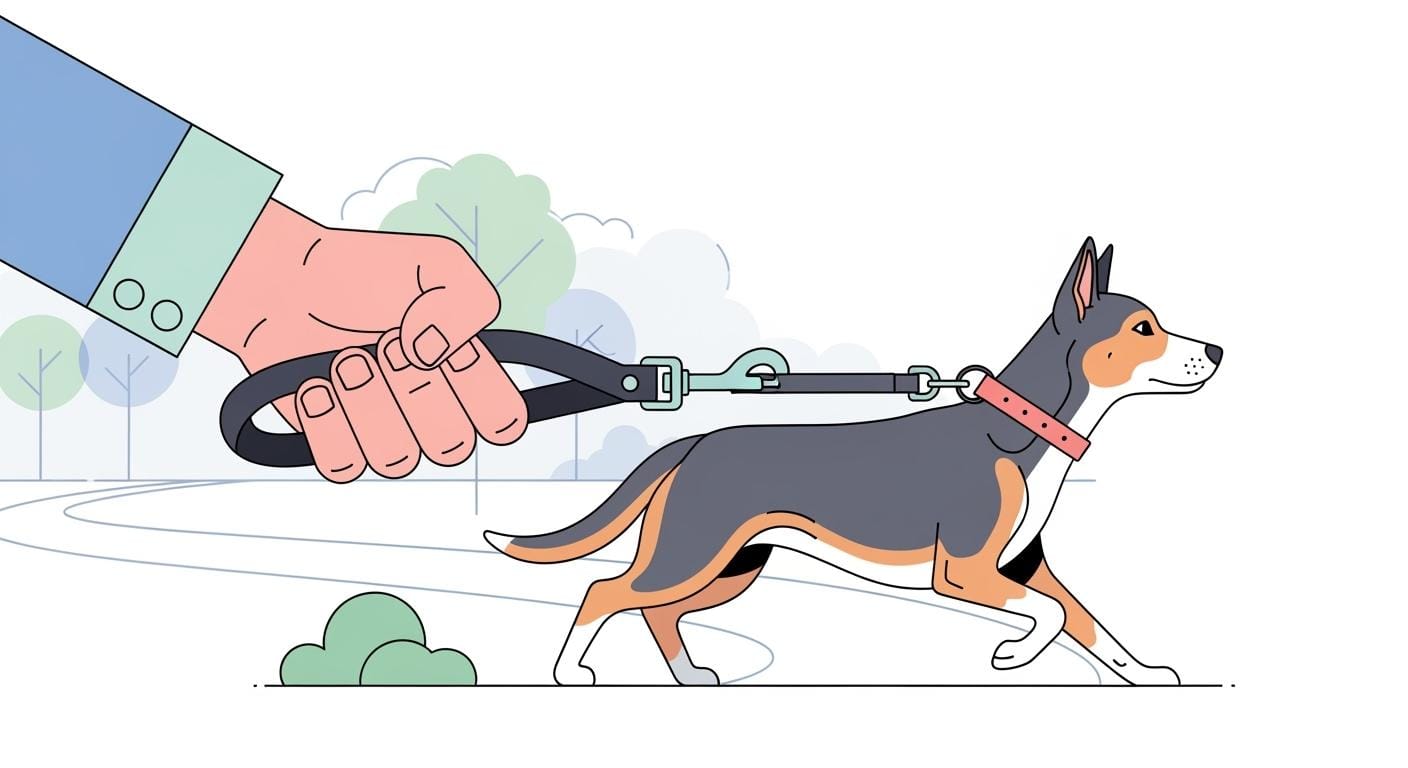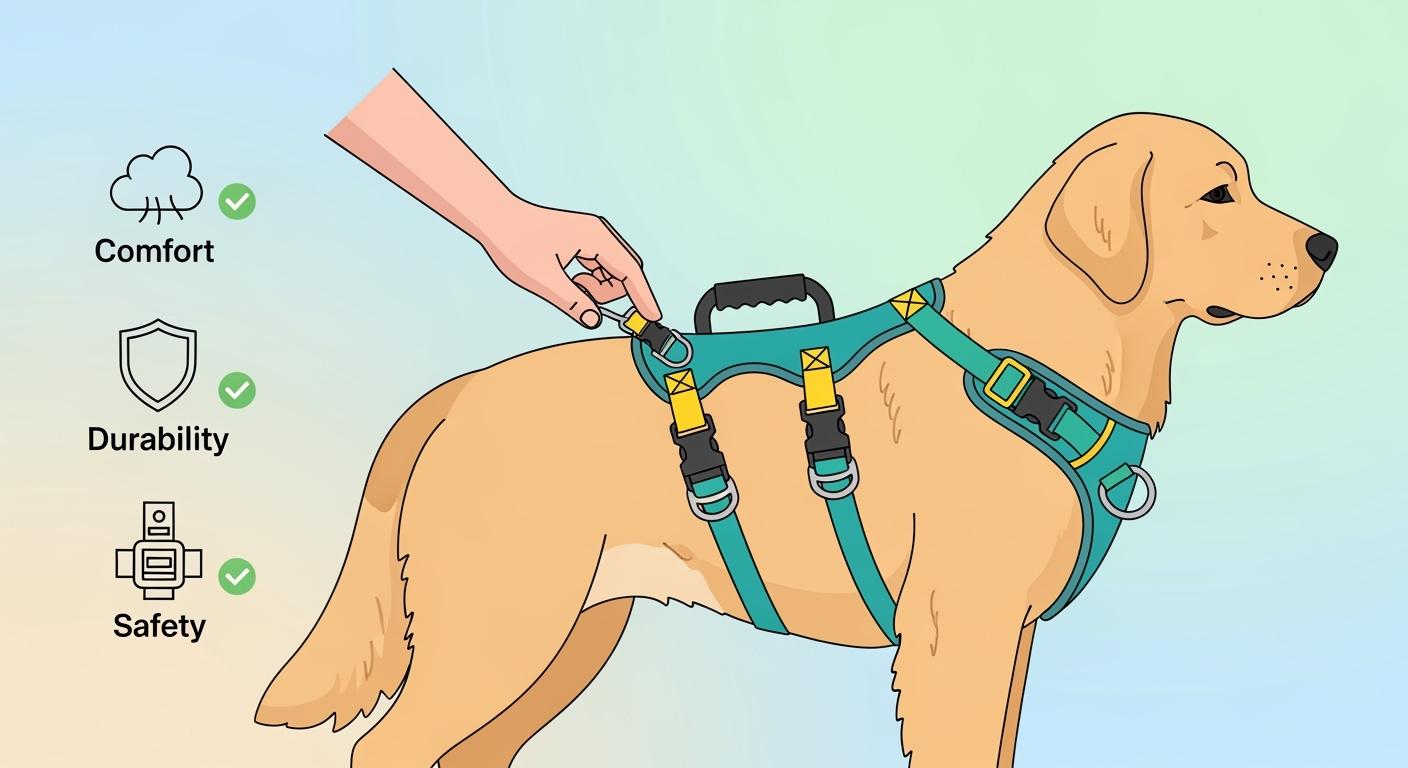
A harness for large dogs should help you manage strength without creating extra bulk, heat, or restricted movement. Before you focus on more control features, check clip position, handle usefulness, body coverage, and whether the harness stays centered once your dog actually starts walking.
Key Takeaways
- Start with fit, comfort, and shoulder freedom before you judge control features. A harness that shifts, rubs, or crowds the front legs will not feel better just because it has more hardware.
- Use clip position to match your dog’s walking style. Front clips help with redirection, back clips feel simpler for calm walks, and dual-clip setups give more flexibility.
- Check handle placement, chest panel position, side shift, and heat buildup after a short walk. Real movement tells you more than the size label.
Clip Points and Control Options for Large Dogs
Front Clip, Back Clip, and Dual Clip
Clip position changes how the harness feels in motion. A front clip gives more redirection when a large dog surges forward. A back clip feels simpler and less intrusive on calmer walks. A dual-clip setup gives you both choices, which can help when your dog’s behavior changes by route or situation.
The better option depends on how your dog walks. If your dog lunges or loads the leash quickly, a back clip alone often feels too passive. If your dog already walks with decent leash manners, a simple back clip may be enough.
A dual-clip harness makes sense when you want one setup for both redirection and easier everyday handling. It does not automatically make the harness better, though. Extra hardware still has to sit in the right place and stay out of the dog’s way.
Clip-Point Purpose and Movement Tradeoffs
Each clip position changes both control and comfort. Front clips usually help more with steering but can feel busier if the chest panel is bulky. Back clips feel simpler but give less help if the dog leans hard into pressure. Dual-clip designs sit in the middle and work best when the fit stays balanced from front to back.
| Clip placement | Advantages | Tradeoffs |
|---|---|---|
| Front clip | More redirection for dogs that surge forward | Needs a chest panel that does not crowd the shoulders |
| Back clip | Simple feel for calmer everyday walks | Gives less help with strong pulling |
| Dual clip | Lets you switch between control styles | Adds hardware and may feel busier if the fit is poor |
When you compare harnesses for large dogs, look beyond the clip itself. Check handle reach, chest coverage, bulk, and whether the harness stays stable once the leash comes tight.
Dual-Clip Harnesses and Training Flexibility
A dual-clip harness can be useful when you want one setup for training sessions and calmer walks. You can use the front point when you need more redirection and the back point when your dog is settled. That flexibility is helpful only if the harness still fits cleanly and does not add too much bulk around the chest or shoulders.
| Feature | Dual-clip harness | Single-clip harness |
|---|---|---|
| Attachment points | Front and back options | One main leash point |
| Use range | More flexible across different walks | Simpler but less adaptable |
| Hardware load | More parts to inspect and position correctly | Less hardware to manage |
| Fit sensitivity | Needs a balanced fit so clips do not add awkward bulk | Usually easier to read at a glance |
Dual-clip designs help most when you know why you want both options. If you only ever use one clip, a simpler harness may feel cleaner and easier.
Common Mistakes in Clip Selection
The most common mistake is matching the clip to the label instead of the dog. A back clip can feel too passive for a hard puller. A front clip can feel intrusive if the chest panel is bulky or the dog is already walking calmly. Another mistake is picking a harness with more control features but ignoring whether the dog can still move naturally.
Tip: Try the harness in a low-distraction area first. Watch for side shift, chest drift, tangling, or obvious changes in stride before you use it in busier places.
Pass/Fail Table: Clip-Point Checks
| Check | Pass example | Fail example |
|---|---|---|
| Clip matches behavior | Front clip for strong pullers, back clip for calm walkers | Back clip only for a dog that repeatedly surges forward |
| Handle reach | Easy to grab without searching for it | Too small, too low, or hard to find quickly |
| Chest coverage | Low enough bulk that the dog still moves freely | Chest panel interferes with front-leg movement |
| Heat and padding | Padding protects contact points without trapping too much heat | Heavy padding stays hot or damp |
| Adjustment hold | Straps stay where you set them | Straps slip after the first walk |
Comparison Table: Front Clip, Back Clip, and Dual Clip
| Harness type | Control feel | Best use | Main advantage | Main watch-out |
|---|---|---|---|---|
| Front clip | More steering at the chest | Dogs that surge or need redirection | Helps interrupt forward pulling | Needs a clean front fit to avoid interference |
| Back clip | Simpler, less intrusive feel | Calmer daily walks | Easy to use and familiar | Gives less help with strong pulling |
| Dual clip | Flexible between both styles | Owners who want one harness for varied walks | Lets you change setup by route or dog behavior | Extra hardware can feel busy if the fit is poor |
Troubleshooting Table: Clip Issues
| Problem | Cause | Quick fix |
|---|---|---|
| Chafing or red marks | Rough material or poor strap placement | Reset the fit or reduce bulk at contact points |
| Dog backs out | Loose chest or neck area | Refit and retest under light backward pressure |
| Restricted movement | Front section sits too close to the shoulder | Loosen and reposition the front fit |
| Harness rotates | Uneven strap tension or poor balance | Re-center and tighten both sides evenly |
Note: The best clip setup still has to respect fit. If the harness rubs, twists, or changes your dog’s stride, the control feature is not helping enough.
You want a harness for large dog that feels steady, manageable, and easy to read during the walk. Choose the clip point that matches your dog’s actual behavior, then check handle use, chest coverage, and movement before you decide the harness is working.
Handle Use, Coverage, and Bulk
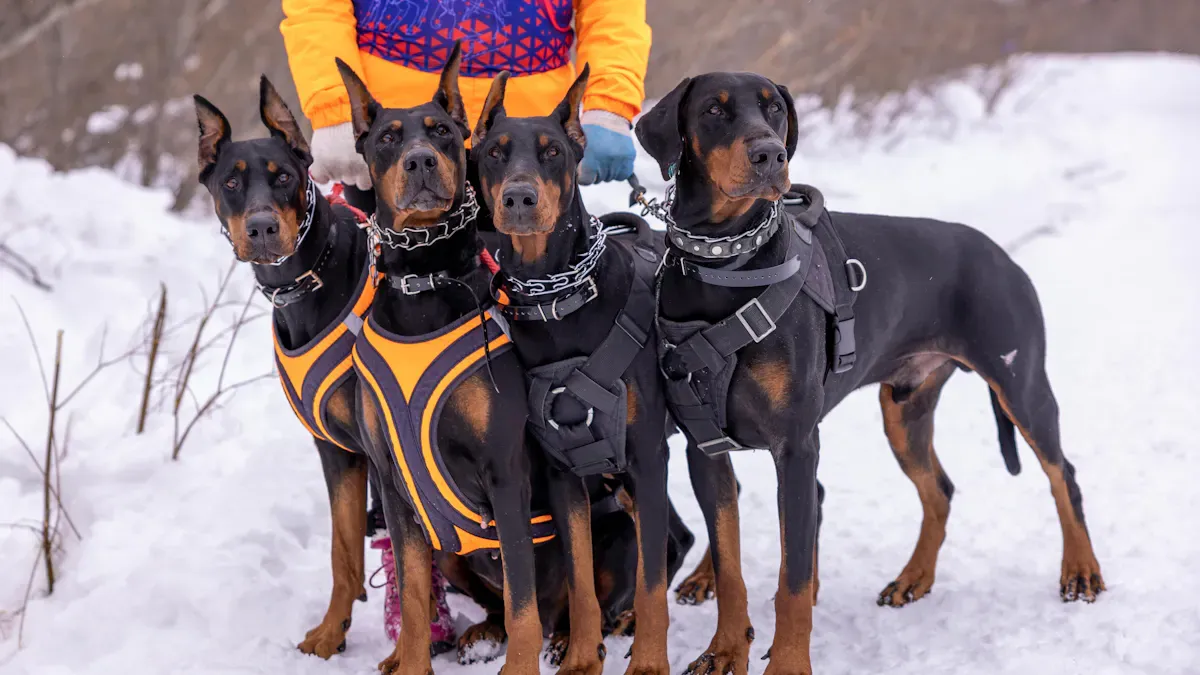
Handle Usefulness for Large Dogs
A top handle can be helpful when you need a quick close hold near stairs, doorways, crowds, or brief positioning moments. It should be easy to find, big enough to grip cleanly, and placed close enough to the back that it does not flop. A handle is for brief control, not for carrying the dog or replacing leash handling for the whole walk.
Body Coverage, Heat, and Movement
More coverage can spread pressure, but it can also add heat, weight, and drying time. Less coverage usually feels lighter and cooler, but it still has to keep the chest panel stable. The better harness is the one that gives enough coverage for control without turning the dog stiff, hot, or bulky.
Signs of Bulk and Restriction
Watch for shorter steps, shoulder crowding, chest panels touching the inside of the front legs, or a harness that feels heavier once the leash goes tight. If the harness only looks good when your dog is standing still, you have not finished the fit check.
- The harness rubs under the arms or leaves repeated sore spots.
- The chest panel sits so wide that it brushes the inside of the front legs.
- The handle or extra hardware bounces or shifts during movement.
- Padding stays hot, sweaty, or slow to dry after use.
Common Mistakes with Handle and Coverage
Many people assume more coverage means more control. In practice, too much coverage can make the dog hotter, harder to fit, and slower to move naturally. Another mistake is choosing a large top handle but ignoring whether it is actually reachable when the dog is moving.
- Choosing coverage for appearance instead of how the dog moves in it
- Using the handle for too long instead of only for short control moments
- Keeping heavy padding that traps heat and makes cleaning harder
- Ignoring whether the harness still dries well after washing
Pass/Fail Table: Handle and Coverage Checks
| Check | Pass example | Fail example |
|---|---|---|
| Handle access | Easy to grab and release quickly | Hard to find or too small to grip well |
| Coverage level | Enough contact for control without extra bulk | Heavy coverage that interferes with movement |
| Adjustment ease | Straps move and lock without slipping | Stiff or slippery adjustments |
| Heat and drying | Padding breathes and dries reasonably fast | Padding stays hot, damp, or slow to dry |
| Cleaning access | Simple enough to inspect and wash regularly | Too many layers to inspect easily |
Comparison Table: Higher vs. Lower Coverage
| Feature | Higher coverage harness | Lower coverage harness |
|---|---|---|
| Heat retention | Usually higher | Usually lower |
| Weight | Heavier feel on the dog | Lighter feel in motion |
| Movement freedom | Needs careful fitting to avoid restriction | Often easier to keep free-moving |
| Padding load | More contact material to manage | Less bulk to trap moisture |
| Cleaning time | Can take longer to wash and dry | Usually quicker to inspect and clean |
| Best fit goal | Use only when coverage still stays stable and comfortable | Use when the dog needs lighter, cleaner movement |
Troubleshooting Table: Bulk and Coverage Problems
| Problem | Cause | Quick fix |
|---|---|---|
| Dog overheats | Too much coverage or dense padding | Switch to a lighter, more breathable setup |
| Chafing | Poor strap placement or rough contact points | Adjust placement and inspect the material finish |
| Restricted movement | Harness is too bulky at the shoulders or chest | Move to a lower-bulk design |
| Hard to clean | Complex padding or layered build | Choose a simpler harness structure |
Tip: Read the care label and let every part dry fully before the next walk. A damp harness is harder to judge for comfort and fit.
Fit, Movement, and Practicality
Shoulder Freedom and Low Side Shift
A large dog harness should leave the shoulders free enough for a normal stride and should stay centered instead of drifting off to one side. A clean Y-front or well-placed chest shape usually helps more than extra bulk. If the harness swings sideways or crowds the shoulder points, control will feel worse instead of better.
Front-Leg Clearance and Chest Panel Stability
The chest panel should stay stable without rubbing the front legs or dragging into the armpit area. If the dog shortens the stride, steps wider than normal, or keeps adjusting the body position, the harness may be interfering more than helping.
Quick Fit Screen: Two-Finger Check
The two-finger rule is only a starting point. You still need to recheck after your dog walks, turns, and leans into the leash. A harness can pass the finger test and still fail once motion begins if the chest panel drifts or the side straps shift.
Easy Cleaning and Wear Inspection
Clean the harness regularly with mild soap, rinse it well, and let it air dry away from direct heat. After cleaning, inspect the buckles, webbing, stitching, and adjustment points. A harness that stays dirty or damp can hide wear and make rubbing harder to spot.
Common Mistakes in Fit and Material Choice
The usual mistakes are choosing too much padding, ignoring side shift, trusting standing fit without a movement check, and overlooking how the harness feels after it has been washed and re-used. A practical harness should stay readable, easy to adjust, and comfortable enough for repeated walks.
Pass/Fail Table: Fit and Movement Checks
| Criteria | Pass example | Fail example |
|---|---|---|
| Fit | Snug, even, and stable after movement | Too loose, too tight, or off-center |
| Comfort | No repeated rubbing or sore spots | Red marks, heat spots, or coat wear |
| Safety | Dog cannot back out during normal checks | Dog slips free or nearly does |
| Usability | Easy to put on, recheck, and adjust | Complicated fit that changes every walk |
Comparison Table: Padding, Mesh, and Webbing
| Material element | Comfort role | Practical watch-out |
|---|---|---|
| Padding | Softens pressure points | Too much can trap heat and moisture |
| Mesh | Helps airflow and reduces bulk | Needs enough structure for larger dogs |
| Webbing | Provides main support and adjustment | Should feel strong without feeling abrasive |
Troubleshooting Table: Fit and Durability Issues
| Problem | Cause | Quick fix |
|---|---|---|
| Harness shifts sideways | Poor fit or loose straps | Re-center and tighten evenly |
| Chafing | Rough finish or bad placement | Switch to softer contact points and refit |
| Hardware wears out | Repeated strain or poor inspection routine | Inspect often and replace worn parts |
| Dog escapes | Incorrect adjustment or wrong shape | Refit and test before the next walk |
Tip: Always check fit after the dog moves. A stable harness should stay comfortable, centered, and easy to handle before every walk.
A good harness for a large dog should balance control, comfort, and movement. Start with fit, then judge clip point, handle use, chest coverage, and how the harness behaves after a real walk.
Checklist for harness for large dog:
- Measure the dog and fit the harness before judging extra control features.
- Choose clip position based on real walking behavior, not just label claims.
- Check handle reach, coverage, heat, and side shift after movement.
- Inspect webbing, buckles, and adjustment points regularly.
- Clean and dry the harness fully so fit and wear stay easy to judge.
Tip: Always check the harness after a short walk. The best setup is the one that still feels controlled, comfortable, and easy to handle after movement.
FAQ
How do you check if a dog harness fits your large dog safely?
Start with a snug fit at the chest and sides, then recheck after your dog walks and turns. A safe fit stays centered, leaves shoulder room, and does not rub or shift badly.
What is the best way to clean a dog harness for comfort and long use?
Brush off dirt, wash with mild soap, rinse well, and air dry fully. After that, inspect the webbing, buckles, and padding again before the next walk.
Can too much padding make a dog harness harder to use?
Yes. Extra padding can add heat, weight, and drying time. A harness should have enough soft contact to stay comfortable without becoming bulky or harder to fit.