You may think your dog pulls because it is stubborn, but most leash pulling actually comes from human habits. When you keep the leash tight, your dog reacts with a natural reflex to pull back. This happens because the tension you create tells your dog to resist, almost like a game of tug. If you want to improve training your dog to be on a leash, pay close attention to how you use your dog training leash. Small changes in your leash handling can lead to big results. These dog training tips can help you and your dog enjoy walks together.
Key Takeaways
Keep the leash loose so your dog does not get confused. A tight leash tells your dog that pulling is okay.
Give your dog a reward right away for calm walking. Fast feedback helps your dog learn what to do.
Practice in quiet places before adding distractions. This helps your dog learn good leash manners in a safe place.
Always use the same commands and tools. Changing rules can make your dog confused and slow training.
Be patient and practice often. Good leash manners take time and hard work.
Why Dog Training Leash Mistakes Cause Pulling
Pressure and Release: What Dogs Learn
When you use a dog training leash, your dog pays close attention to how you handle pressure and release. If you keep steady tension on the leash, your dog feels a leash tension cue. This steady pull does not tell your dog what you want. Instead, your dog may try to pull harder or move in another direction. When you finally relax the leash, your dog gets a release cue. If this happens right after your dog pulls, your dog learns that pulling makes the pressure go away. This is a form of negative reinforcement. Your dog starts to believe that pulling is the way to get relief from the leash.
Tip: Always give a clear release cue when your dog walks calmly. This helps your dog understand which behavior earns comfort.
Mixed Signals and Confusion
Dogs need clear feedback during training. If you sometimes let your dog pull to reach a smell or person, you give an environment reward cue. This teaches your dog that pulling works. If you change your rules or tools often, your dog gets mixed signals. Your dog may not know when to walk calmly or when it is allowed to pull. Inconsistent leash handling can confuse your dog and make training harder.
Pulling, Zigzagging, and Freezing Behaviors
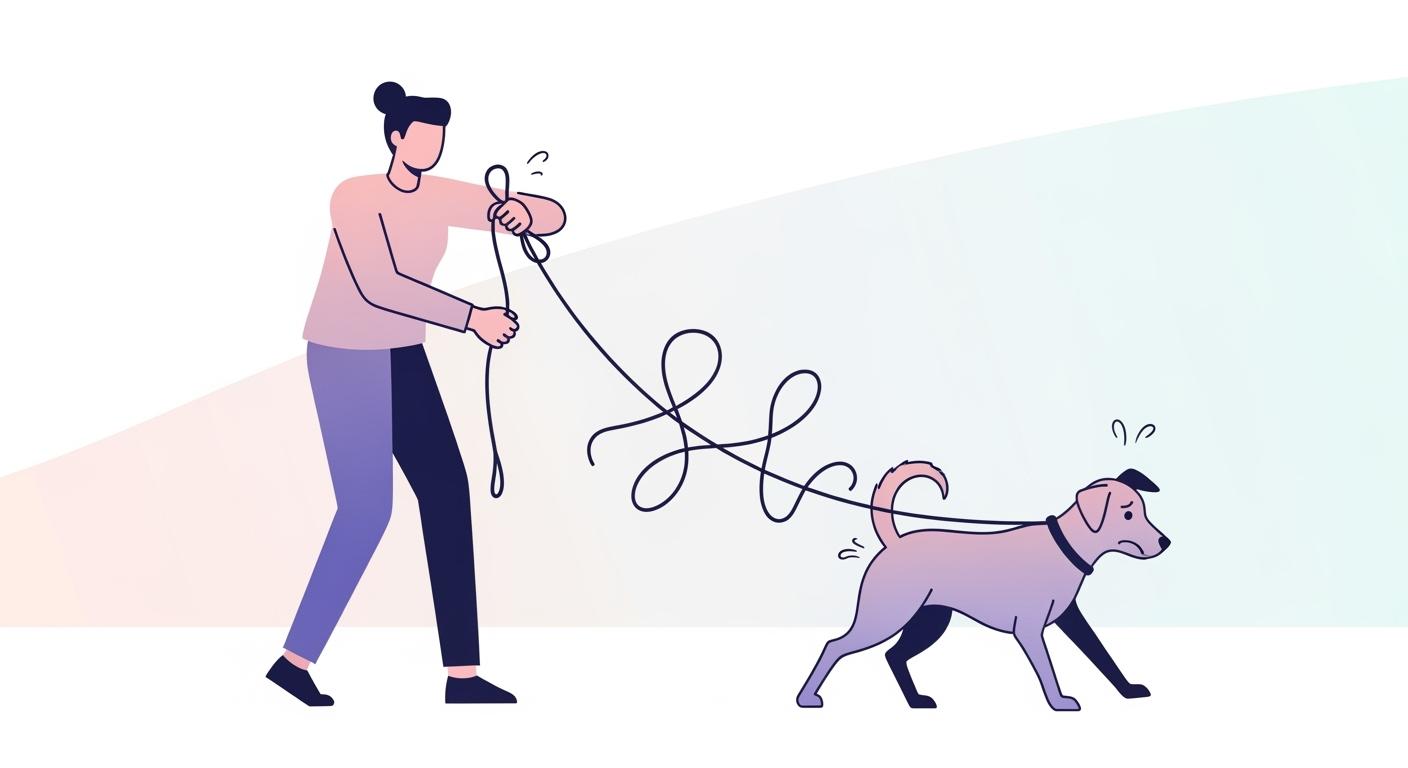
Leash mistakes can lead to many unwanted behaviors. Your dog may start pulling, zigzagging, or freezing in place. These actions show that your dog feels unsure about what you want. If you grip the leash too tightly or let it tangle, you may add sudden pressure. This can startle your dog or cause stress. Always check for signs of pain, limping, skin irritation, panic, or heavy stress. If you see these, stop and consult a veterinarian. Remember, better handling reduces confusion but cannot guarantee perfect results. Equipment cannot replace training and supervision. If your dog keeps pulling, seek help from a qualified trainer.
Common Dog Training Leash Handling Errors
Dog training leash handling shapes your dog’s behavior every time you walk. Many mistakes dog owners make happen without realizing it. These mistakes can confuse your dog and make leash manners harder to teach. You can improve your dog’s walking skills by learning about the most common loose leash mistakes and how to fix them.
Constant Tension Without Release
If you keep the leash tight all the time, your dog feels pressure that never goes away. Dogs learn through a pressure and release system. When you hold steady tension, your dog cannot tell when it makes the right choice. This constant tension can make your dog focus more on distractions. Your dog may think that pulling is normal or even expected. A tight leash can also make your dog feel trapped or vulnerable. This can lead to barking, lunging, or freezing. You block natural communication when you never give a release cue. Your dog may feel confused or frustrated, and leash manners will not improve.
Tip: Practice relaxing your grip and letting the leash go slack for a moment when your dog walks calmly. Use a standard training leash between 4-6 ft (1.2-1.8 m) for better control and feedback.
Late Rewards or Corrections
Timing matters in dog training. If you reward your dog too late, your dog may not connect the reward with the right behavior. For example, if you give a treat after your dog has already pulled, you teach your dog that pulling leads to rewards. Dogs learn best when you give feedback right after the correct action. Delayed corrections or rewards can slow down learning. Your dog may ignore cues or lose motivation. Competing distractions in the environment can make this even harder. Quick, clear feedback helps your dog understand what you want.
Environment Rewards Pulling
Dogs love to explore. If your dog pulls and you let it reach a smell, person, or object, you give an environment reward cue. Your dog learns that pulling works. This makes leash manners worse over time. Dogs remember that pulling gets them to exciting places. You must control the environment reward by only moving forward when the leash is loose. This teaches your dog that calm walking, not pulling, leads to fun.
Note: If your dog shows signs of pain, limping, skin irritation, panic, heavy stress, or breathing problems, stop the walk and consult a veterinarian. Equipment cannot replace training and supervision. If your dog keeps pulling, seek help from a qualified trainer.
Mistake Table: What Dogs Learn and Quick Fixes
Mistake | What the Dog Learns | What You See | Quick Fix |
|---|---|---|---|
Constant tension with no clear release | Pulling is normal, tension means move ahead | Dog pulls, zigzags, or freezes | Relax leash, reward calm walking |
Reward delivered late, after pulling | Pulling earns treats or praise | Dog pulls, then looks for reward | Reward only when leash is loose |
Moving forward while the dog is pulling | Pulling gets to fun places | Dog drags you to smells or people | Stop or turn until leash is slack |
Using leash to steer, not teach position | Leash is a steering tool, not a guide | Dog resists, fights leash | Teach position with treats and cues |
Gripping too short, bracing body | Tension is always present | Dog pulls harder, handler tense | Hold leash with relaxed hands, elbows soft |
Switching tools and rules too often | Rules change, nothing is clear | Dog ignores cues, acts confused | Stay consistent with tools and commands |
Letting tangles create pressure spikes | Sudden pressure is random | Dog startles, may panic | Untangle leash, avoid wraps and jerks |
Handling Do and Do Not Table
Habit | Why It Confuses the Dog | Replacement Habit |
|---|---|---|
Hold leash tight at all times | Dog cannot tell when it is right | Let leash go slack when dog is calm |
Reward after pulling | Dog links pulling to reward | Reward only when leash is loose |
Move forward on tension | Dog thinks pulling is the rule | Only move when leash is slack |
Change tools every walk | Dog never learns clear rules | Use same leash and commands each walk |
Ignore tangles and wraps | Dog feels random pressure | Check leash often, untangle quickly |
Scenario A Walkthrough
Let us look at a common situation. You walk your dog with a dog training leash. You keep the leash tight because you want control. Your dog pulls ahead. You finally let the leash go slack when your dog reaches a smell. Then you give a treat. Here is what happens:
You keep tension on the leash.
Your dog pulls harder to reach the smell.
You release the tension when your dog gets to the smell.
You reward your dog after it pulls.
Your dog learns that pulling and tension lead to rewards and freedom. This makes leash manners worse.
Corrected Routine:
Start with a loose leash.
When your dog walks calmly, give a release cue and reward right away.
If your dog pulls, stop moving or turn away.
Only move forward when the leash is slack.
Reward your dog for calm walking, not for pulling.
This routine teaches your dog that calm walking leads to rewards and fun. You build better leash manners and a stronger bond.
Remember: Patience is key. Dogs need time to learn new habits. Practice in different places, not just at home. Use the right dog training leash for your dog’s size and needs. If you feel frustrated, take a break and try again later.
Top Five Most Frequent Leash Handling Mistakes
Using the wrong leash for your dog
Not being consistent with commands
Leading with purpose, not yanking
Only practicing at home, not in real-life settings
Forgetting to be patient
By avoiding these mistakes and using clear, consistent handling, you help your dog learn good leash manners. Small changes in your routine can make a big difference.
Leash Length, Setup, and Mechanics
Short vs Long Leash: Body Position and Frustration
Choosing the right leash length changes how your dog moves and feels during walks. A standard leash of 4-6 ft (1.2-1.8 m) works well for everyday activities and basic training. This length gives you control and helps your dog stay close. Long lines, ranging from 15-30 ft (4.6-9.1 m), allow your dog more freedom to explore and sniff. Dogs on longer leashes often show more natural behaviors, like sniffing and relaxed walking. If you use a short leash all the time, your dog may feel restricted. This can lead to frustration and pulling. Walking at a human pace is not natural for dogs, so giving them a bit more room can reduce stress.
Tip: Use a standard leash for busy areas and a long line for safe, open spaces. Always supervise your dog and check for signs of stress or discomfort.
Hands, Elbows, and Added Tension
How you hold the leash matters as much as its length. If you grip the leash tightly or keep your elbows locked, you add extra tension. This tension sends confusing signals to your dog. Relax your hands and keep your elbows soft. This helps your dog feel less pressure and makes it easier for you to give clear cues. Mistakes dog owners make often include holding the leash too short or bracing their body, which can make the dog pull harder.
Tangles and Inconsistent Handling
Tangles and wraps in the leash can create sudden pressure spikes. These mistakes can startle your dog or cause it to freeze. Check the leash often and untangle it quickly. Consistent handling helps your dog understand what you want. Avoid switching between different leashes or rules too often, as this can confuse your dog and slow down training.
Parameter and Value Table for Leash Setup
Parameter | Target Range or Option | Why it Matters |
|---|---|---|
Leash length | 4-6 ft (1.2-1.8 m) or 15-30 ft (4.6-9.1 m) | Changes mechanics and clarity |
Tension pattern | On and off clearly | Reduces confusion |
Reward timing | Immediate after the right choice | Prevents accidental reinforcement |
Forward motion rule | No forward reward on tension | Stops teaching pulling |
Reset pattern | U turn or pause and check in | Restores attention |
Distraction level | Low to high progression | Prevents overwhelm |
Handling grip | Relaxed hands, stable elbows | Reduces added tension |
Tangle control | Avoid wraps and sudden pulls | Prevents pressure spikes |
Note: Better leash handling reduces confusion but cannot guarantee perfect results. If your dog shows pain, limping, skin irritation, panic, or heavy stress, stop and consult a veterinarian. Equipment cannot replace training and supervision. If pulling continues, seek help from a qualified trainer.
Loose Leash Walking: Step-by-Step Handling Routine
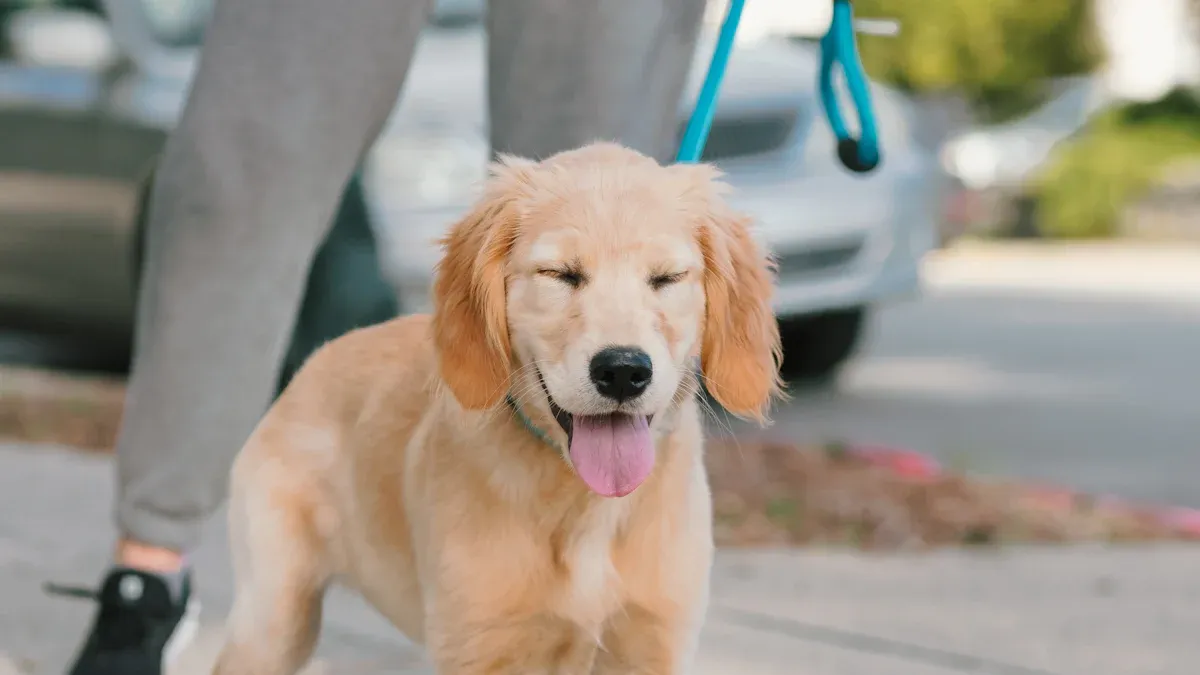
Loose leash walking starts before you step outside. You set your dog up for success by preventing pulling from the beginning. Many dog walking mistakes happen when you wait for your dog to pull before you react. You can avoid this by preparing your dog and your leash before the walk begins.
Start the Walk Before Pulling Begins
You help your dog learn leash manners by starting the walk with a loose leash. If you wait until your dog pulls, you reinforce that unwanted behavior. Begin each walk with your dog beside you, leash slack, and attention on you. This builds a positive reinforcement history for walking calmly next to you. Your dog learns that not pulling on the leash brings rewards and movement.
Prepare your leash and treats before you open the door.
Ask your dog to sit or stand calmly at your side.
Only start walking when your dog is focused and the leash is loose.
If your dog gets excited or starts pulling, pause and wait for calm before moving forward.
Tip: Practicing leash manners outside in different environments helps your dog generalize the skill.
Consistent Reward Timing and Marker Cues
Timing matters in successful training. You must mark and reward your dog immediately when they walk near you with a loose leash. Use a clear marker word like “Yes!” as soon as your dog is in the right position. Give a treat right after the marker. This helps your dog understand which behavior earns a reward. Professional trainers agree that even a short delay can confuse your dog. Consistent reward timing and marker cues make your communication clear.
Use your marker word the moment your dog is beside you and the leash is slack.
Deliver the treat quickly, within one second of the marker.
Practice in low-distraction areas first, then add more distractions as your dog improves.
If your dog gets distracted, increase distance or use the circle method to regain focus.
Note: Immediate feedback helps your dog learn faster and builds trust.
Responding to Tension Immediately
You must respond to leash tension right away. If you feel the leash tighten, stop moving. Wait for your dog to create slack in the leash. This teaches your dog that tension means “red light” and slack means “green light.” Only move forward when the leash is loose. Your dog learns that pulling does not work, and walking calmly brings rewards and exploration.
Stop walking as soon as you feel tension in the leash.
Wait for your dog to step back or turn toward you, creating slack.
Mark and reward the moment the leash is loose.
Repeat this pattern every time tension appears.
Safety Note: If your dog shows pain, limping, skin irritation, panic, heavy stress, or breathing problems, stop the walk and consult a veterinarian. Equipment cannot replace training and supervision. Persistent pulling may require help from a qualified trainer.
Step Table: Routine and Adjustments
You can follow this step-by-step routine to teach loose leash walking. Adjust leash length using the principle: choose the shortest length that allows calm walking and clean reward delivery, then increase only when your dog can keep slack in the leash.
Step | Setup | Pass Sign | What to Change |
|---|---|---|---|
1 | Dog at your side, leash slack, treats ready | Dog looks at you, leash loose | Wait for calm before starting walk |
2 | Begin walking, use marker word when leash stays loose | Dog walks beside you, leash slack | Mark and reward immediately |
3 | Dog gets distracted or leash tightens | Dog pauses, leash slack returns | Stop, wait for slack, then reward |
4 | Practice in busier area (4-6 ft / 1.2-1.8 m leash) | Dog maintains focus, leash loose | Use treats and praise to maintain behavior |
5 | Practice with more distractions (15-30 ft / 4.6-9.1 m leash) | Dog responds to commands, leash loose | Reward for calm behavior, adjust leash length if needed |
Tip: If your dog struggles, step back to an easier environment or shorter leash. Build up slowly for better results.
Scenario B Walkthrough
Many dog walking mistakes happen when you switch leash types or lengths too often, especially outdoors. For example, you use a short leash at home, then switch to a long line at the park. Your dog may start pulling because the rules feel different. This confusion can undo progress in leash manners.
Diagnosis:
Dog pulls more outside with a longer leash.
Handler changes leash type or length without clear rules.
Dog does not understand when to keep slack in the leash.
Step Down Plan:
Use a standard leash (4-6 ft / 1.2-1.8 m) in a quiet area. Practice loose leash walking until your dog keeps slack consistently.
Move to a slightly busier area. Keep the same leash length. Use treats and praise to maintain focus.
When your dog succeeds, try a longer leash (15-30 ft / 4.6-9.1 m) in a safe, open space. Practice commands and reward for calm behavior.
If your dog starts pulling, return to the shorter leash and easier environment. Rebuild skills before increasing length or distractions again.
Note: Better handling reduces confusion but cannot guarantee perfect results. Always supervise your dog and adjust your routine based on their progress.
You build strong leash manners by following a clear routine, responding to tension quickly, and adjusting your leash setup as needed. Consistency and patience lead to successful training and enjoyable walks for you and your dog.
Training Games to Improve Leash Manners
Reinforce Position, Not Speed
You help your dog learn better leash manners when you reward position instead of speed. Focus on rewarding your dog for walking calmly beside you, not for moving quickly. This approach encourages your dog to stay connected with you and remain calm. Dogs do not naturally walk at a human pace, so you must teach them that slow, steady walking brings rewards. If you allow your dog to pull ahead, you reinforce pulling. Teaching your dog to walk slowly and calmly is essential for effective leash skills.
Reward your dog when it walks at your side with a loose leash.
Ignore speed. Focus on position and calm behavior.
Use treats or praise to mark the correct spot next to you.
U-Turns and Check-Ins for Focus
Games like U-turns and check-ins keep your dog focused on you during walks. When your dog pulls ahead, call its name and turn 180 degrees. This teaches your dog to pay attention to your movements. Mark and reward your dog when it looks at you. This builds a habit of checking in with you instead of getting distracted. Changing your pace or direction also keeps your dog engaged.
Try U-turns when your dog starts to pull.
Reward your dog for looking at you or returning to your side.
Change your walking speed or direction to keep your dog alert.
Sniff Breaks as Controlled Rewards
Controlled sniff breaks can serve as powerful rewards for calm walking. Allowing your dog to sniff after walking nicely reinforces good behavior. In one case, a reactive dog showed less lunging when given regular sniff breaks. Sniffing helps dogs relax and provides mental stimulation. This method reduces impulsive pulling and helps your dog stay calm. Always use sniff breaks as a reward for loose leash walking, not for pulling.
Note: Better handling reduces confusion but cannot guarantee perfect results. If your dog shows pain, limping, skin irritation, panic, heavy stress, or breathing issues, stop and consult a veterinarian. Equipment cannot replace training and supervision. Persistent pulling may require help from a qualified trainer.
Weekly Plan Table for Practice
Day | Goal | Game | Success Sign |
|---|---|---|---|
Monday | Build focus | U-turns | Dog follows your turn |
Tuesday | Reinforce calm position | Red Light, Green Light | Dog stops and goes on cue |
Wednesday | Encourage check-ins | Reward Check-ins | Dog looks at you often |
Thursday | Practice controlled rewards | Sniff Breaks | Dog sniffs after loose leash |
Friday | Improve attention | Change | Dog switches sides on cue |
Saturday | Combine skills | Mixed Games | Dog stays engaged and calm |
Sunday | Review and relax | Free Walk with Rules | Dog maintains manners |
Training in a quiet area helps your dog focus and learn faster. Use simple games and clear rewards to build strong leash habits.
Troubleshooting Leash Training Setbacks
Over-Threshold Moments and Difficulty Levels
Sometimes your dog stops listening or acts out on walks. This can happen when your dog feels overwhelmed by things around them. Loud noises, busy places, or strong smells can be too much. When your dog goes over threshold, it cannot pay attention or follow commands. You might see your dog freeze, get very hyper, or even act aggressive. Giving more commands during these moments will not help your dog.
Dogs may pull, bark, or lunge when they feel stressed or excited.
Distractions like other animals or traffic make training harder.
Leash aggression can happen if your dog feels trapped or scared.
You can help your dog by making things easier. Move to a quieter spot or give your dog more space. Watch for signs of stress, like heavy panting or freezing.
Safety Note: If your dog has pain, limps, has skin problems, panics, is very stressed, or has trouble breathing, stop and call your vet. Equipment does not replace training or watching your dog. If your dog keeps pulling, ask a trainer for help.
Treat Delivery and Lure Dependence
Treats are good for teaching your dog, but you want your dog to listen for more than just food.
If you use treats too much, your dog may only work for food. This is not the goal of training. Try different rewards so your dog learns to listen because they want to please you and enjoy being with you, not just for treats.
Use praise, play, or sniff breaks as rewards too. This keeps your dog happy and helps you bond.
Harness and Leash Handling Mismatch
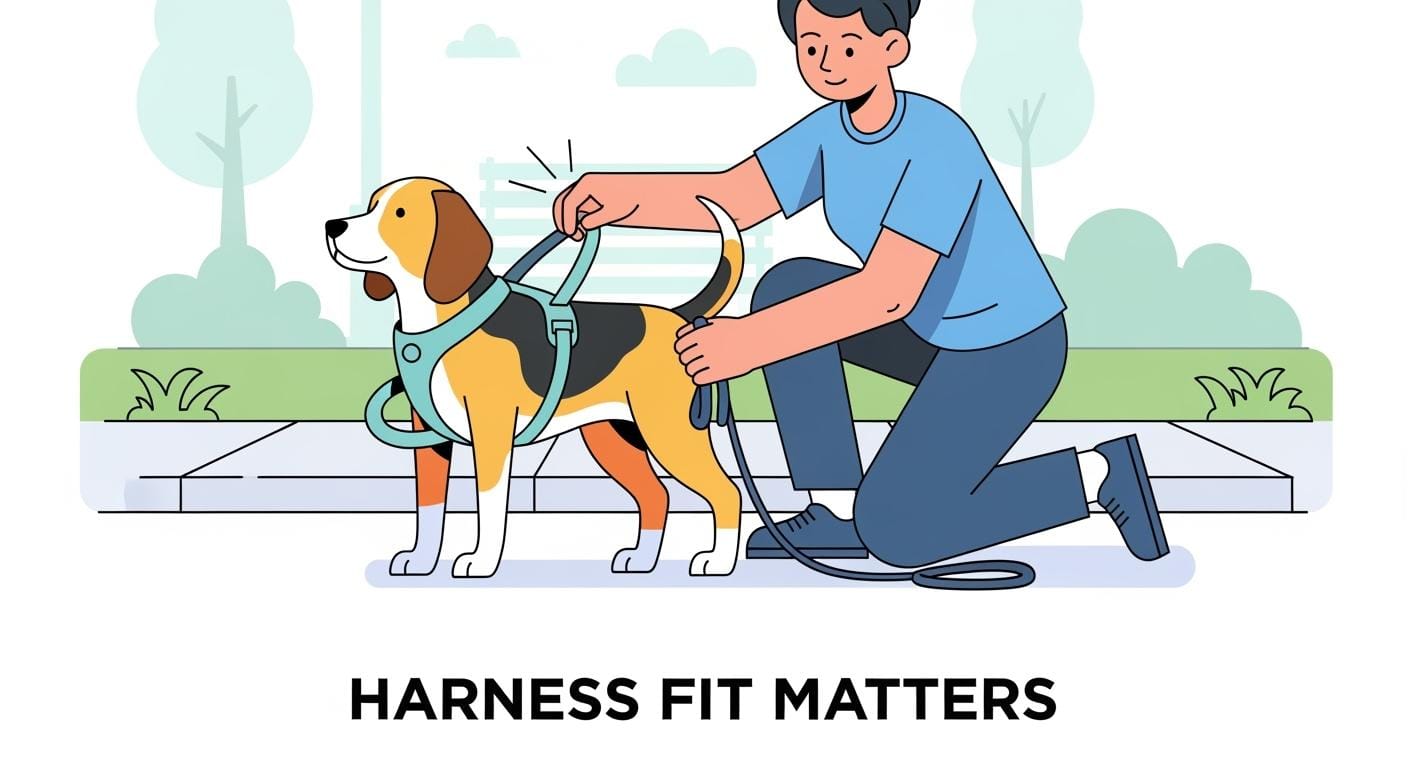
If your harness and leash handling do not match, walks can be stressful. If your dog pulls, it can feel like a tug-of-war. Using harsh corrections or jerking the leash makes things worse.
Jerking the leash or using harsh collars can make your dog scared or aggressive. These methods do not fix the problem and can hurt your dog.
Pick a harness and leash that fit your dog and help them walk calmly. Use gentle, clear signals and be consistent every walk.
Troubleshooting Table: Problems and Fixes
Problem | Likely Cause | Quick Fix | Next Step |
|---|---|---|---|
Dog pulls on leash | Over-threshold, curiosity, or habit | Move to quiet area, reset walk | Practice in low-distraction spots |
Dog ignores commands | Too many distractions, over-threshold | Lower difficulty, use clear cues | Build up slowly |
Dog only works for treats | Lure dependence | Add praise, play, sniff breaks | Fade treats over time |
Dog barks or lunges | Frustration, anxiety, poor fit | Pause, create space, check gear | Consult a trainer if needed |
Leash tangles or jerks | Inconsistent handling, wraps | Untangle, use relaxed grip | Practice smooth leash handling |
Note: Good leash handling helps your dog, but it does not always fix everything. Always watch your dog and change your routine if needed.
Dog Training Leash Product Notes for Retail and Wholesale
Explaining Leash Use Cases Clearly
You need to match the leash to your training goals and your dog’s needs. Standard leashes work well for daily walks and basic training. Long lines help with recall practice and give your dog more freedom in open spaces. Busy areas call for shorter leashes to keep your dog close and safe. Specialty leashes, like reflective or waterproof styles, help in low-light or wet conditions. Always choose a leash that fits your dog’s size and activity level.
Safety Note: If your dog shows pain, limping, skin irritation, panic, heavy stress, or breathing problems, stop using the leash and consult a veterinarian. Equipment cannot replace training and supervision. If your dog keeps pulling, seek help from a qualified trainer.
Spec Checklist: Hardware, Swivel, Handle, Attachment, Durability
When you select a leash, check these features:
Hardware: Look for strong clips and metal parts that resist rust.
Swivel: A swivel prevents twisting and tangling during walks.
Handle: Choose a padded or rounded handle for comfort.
Attachment: Make sure the clip fits your dog’s collar or harness securely.
Durability: Pick materials like nylon or leather for strength and comfort. These materials withstand pulling and chewing.
Common sizes include 4 ft (1.2 m) and 6 ft (1.8 m) lengths, with widths from 5/8 in (1.6 cm) to 1 in (2.5 cm). Styles include nylon, rope, leather, reflective, and waterproof options.
Feature | Options/Details |
|---|---|
Length | 4-6 ft (1.2-1.8 m) |
Width | 5/8-1 in (1.6-2.5 cm) |
Material | Nylon, leather, metal chain |
Types | Standard, retractable, slip |
Durability | Withstands pulling and chewing |
Support Script: Choosing, Practicing, Fixing, Rechecking
You can follow these steps for the best results:
Choose the right leash for your dog’s size and training needs.
Practice in a quiet area before trying busy places.
Fix problems by checking for tangles, adjusting grip, or switching to a different length.
Recheck your dog’s comfort and the leash’s condition often.
Note: Better handling reduces confusion but cannot guarantee perfect results. Always supervise your dog. If you see signs of pain or stress, stop and get help.
OEM and ODM Explainer Paragraph
If you need custom leashes for your store or training program, you may see the terms OEM and ODM. OEM stands for Original Equipment Manufacturer, which means you can order products with your own branding or design. ODM means Original Design Manufacturer, where you choose from ready-made designs that can be customized for your needs. Both options help you offer the right leash for your customers.
You can help your dog walk better by avoiding common mistakes. Some mistakes are using retractable leashes, pulling on the leash, and only practicing outside. If you walk with a loose leash, your dog feels calm and safe. Start walking in quiet places before adding distractions. Practice often and give clear feedback to your dog. Even small changes in how you walk can help your dog’s manners. Be patient and practice walking every day. If your dog has pain, limps, has skin problems, panics, is very stressed, or has trouble breathing, stop and call your vet. Remember, equipment does not replace training or watching your dog. If your dog still has problems walking, ask a trainer for help.
Retractable leashes can make it hard to control your dog and can be unsafe. Dogs may pull away and not learn good leash manners.
Pulling on the leash teaches bad habits. Both you and your dog may think tension means control, which causes confusion.
Only practicing leash manners outside is not enough because there are too many distractions. Training should begin in a quiet place.
Handling the leash better helps your dog understand, but it does not always fix everything. Go over these tips when you need to and ask for help if you need it.
FAQ
How long should your dog training leash be?
You should use a standard leash between 4-6 ft (1.2-1.8 m) for most walks. For recall practice or open spaces, try a long line of 15-30 ft (4.6-9.1 m). Choose the shortest length that allows calm walking.
Why does your dog pull even after training?
Your dog may pull if you use inconsistent cues or let the leash stay tight. Practice clear handling and reward calm walking. If pulling continues, ask a qualified trainer for help.
Can you use treats for leash training every walk?
Yes, you can use treats to reward good leash manners. Over time, add praise, play, or sniff breaks as rewards. This helps your dog stay motivated without relying only on food.
What should you do if your dog freezes or panics on the leash?
Stop walking right away. Check for pain, limping, or stress. If you see these signs, consult a veterinarian. Equipment cannot replace training or supervision.
Is a harness better than a collar for leash training?
A harness can reduce pressure on your dog’s neck. Choose a harness that fits well and matches your handling style. Always supervise your dog and adjust your routine for safety.