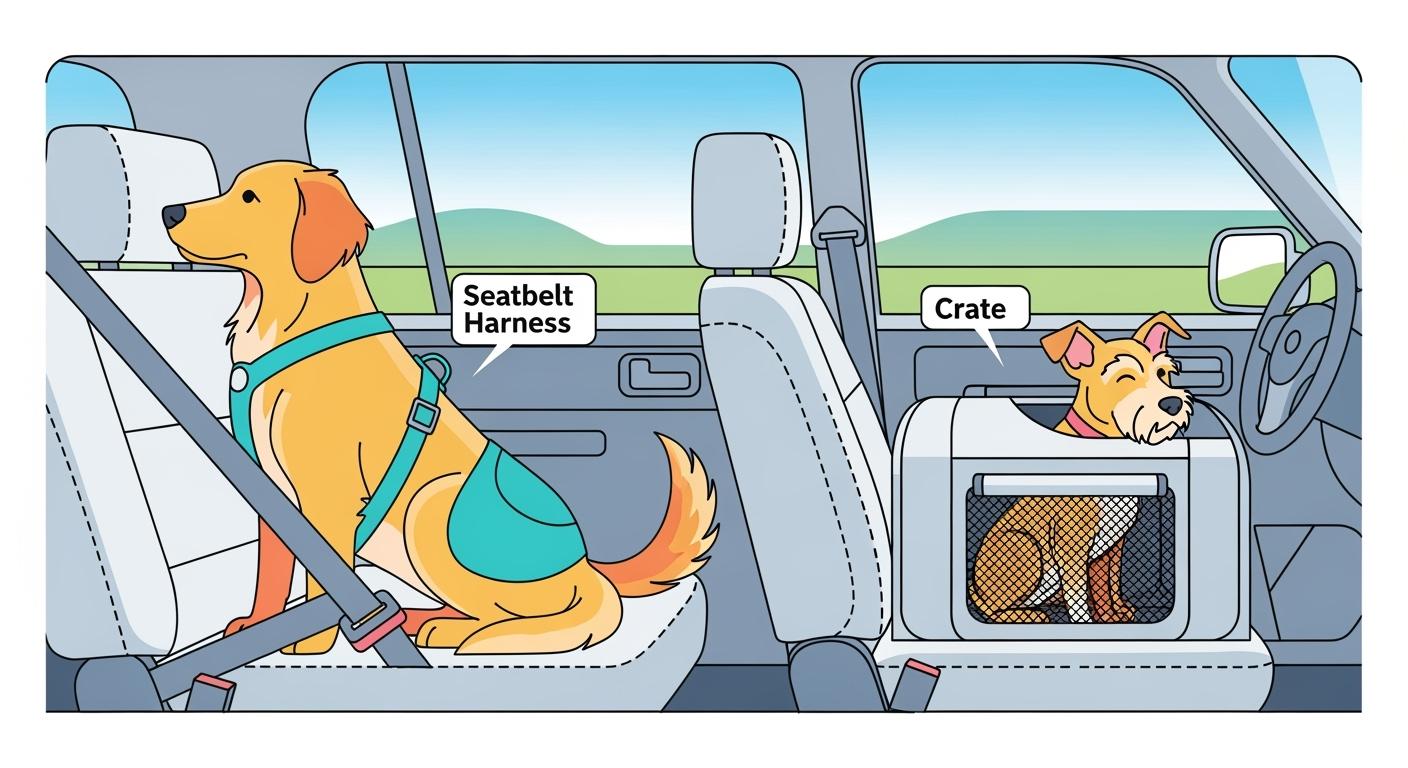
Choosing between a crate-in-car and a dog seatbelt restraint affects safety, stress, and driver distraction. Start with your dog’s temperament (calm, anxious, chewer, reactive), your typical trip length, and your vehicle layout. Then confirm anchoring, tether length, and fit with a short test drive before longer travel.
Key Takeaways
Crate-in-car suits anxious or energetic dogs, especially for longer trips.
- Pick a crate if your dog gets nervous or is very active. Crates give dogs a safe spot and stop them from moving too much. Many people like crates because they are strong and keep dogs safe. Some crates are crash tested and do well in safety tests. You can tie crates down in the back of your car so they do not slide. Crates are good for long rides, daily drives, or if your dog needs to stay put.
Tip: Crates help stop dogs from escaping and keep drivers focused.
Dog seatbelt restraint works best for calm, trained dogs and short commutes.
- Use a dog seatbelt if your dog is calm and listens well. Seatbelt harnesses are simple to use and do not take up much space. Experts say to use harnesses made for cars, not for walking. Car harnesses keep dogs safer in the car. Always clip the seatbelt to a harness that fits right, not to a collar. Seatbelt restraints are best for short trips when your dog does not chew or get tangled.
Note: Do not use extension tethers or ziplines. These can make dogs less safe and cause tangles.
Safety depends on proper fit and installation.
- Check that crates and harnesses fit your dog before every trip. A crate that is too big or small can be unsafe or let your dog escape. Harnesses that do not fit can slip off or rub your dog’s skin. Tie crates down with the car’s anchors and strap carriers to the back seat. Good setup keeps your dog safe and helps stop injuries.
Trip length affects which setup is ideal.
- Pick your travel gear based on how long you will drive. Crates are better for long trips. Seatbelt restraints are good for short drives. Check your gear often and fix it if needed.
Common return risks include chewing, tangling, poor fit, and unanchored crates.
- Watch for dogs chewing straps, getting tangled, or gear that does not fit. Crates that are not tied down can move and be unsafe. These problems often mean you need to return or swap gear. Training and watching your dog can help stop these issues.
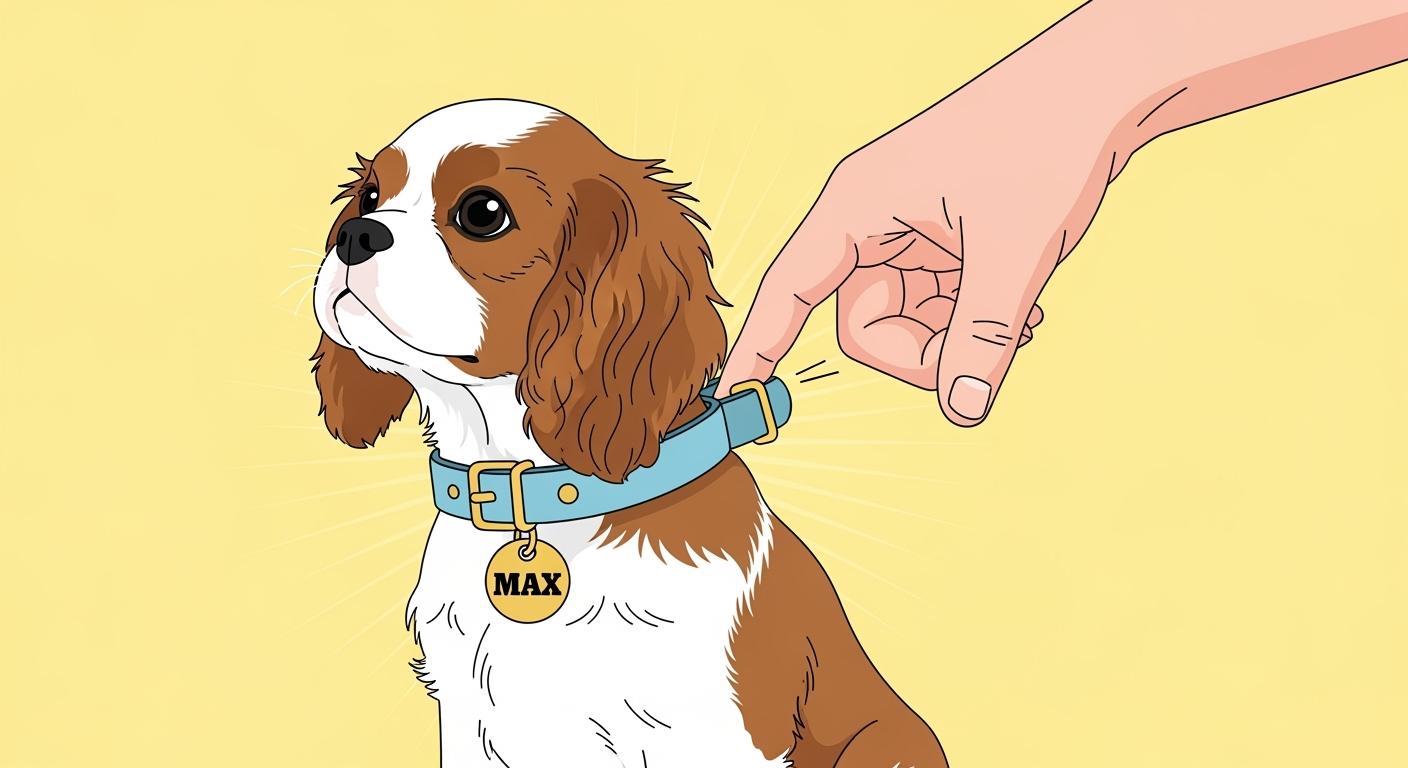
Always attach seat belts to harnesses, not collars.
- Always clip seat belts to harnesses only. If you use a collar, your dog’s neck can get hurt or scared.
Clean and dry gear after wet trips to prevent odor and skin issues.
- After wet or muddy trips, take out crates, harnesses, and carriers. Wash and dry them so they do not smell or bother your dog’s skin.
Crate-in-car and dog seatbelt: practical setup
Crate placement and anchoring in cargo area
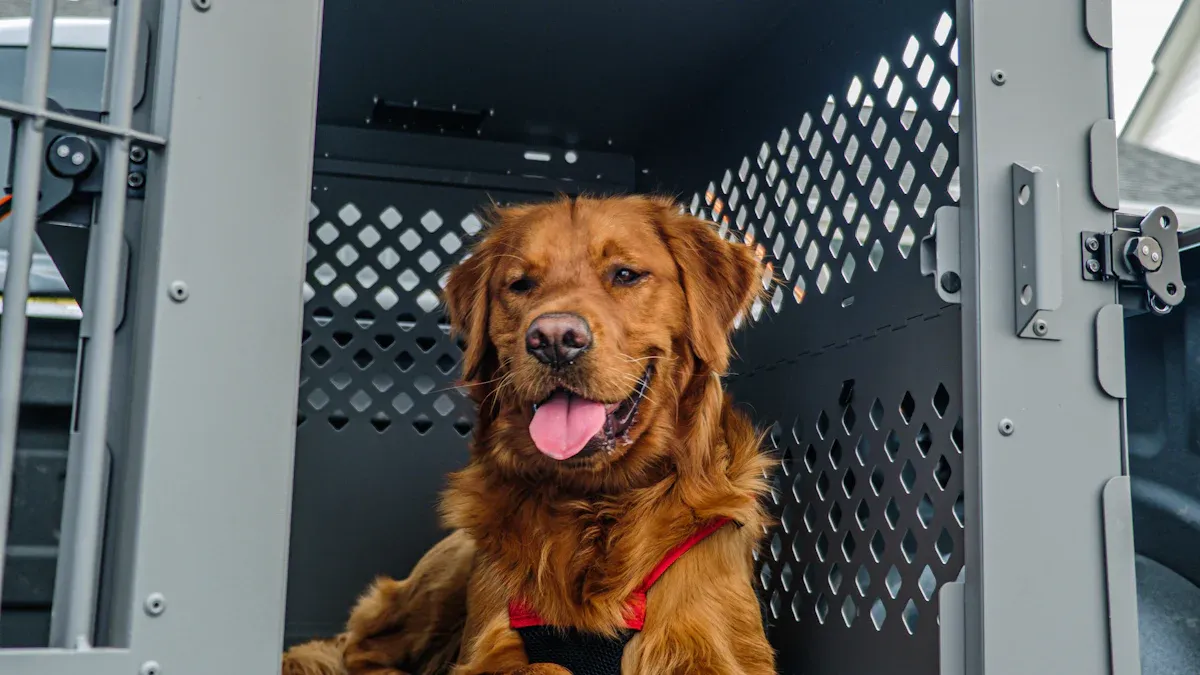
You want your crate to stay put during travel. Place the crate in the cargo area and anchor it using your vehicle’s cargo anchors. This keeps the crate from sliding or tipping. Safety groups recommend using multiple tie-down points and matching your equipment to the weight of your dog and crate. Place heavy gear against the cab and balance the weight. Check restraints during your trip to make sure nothing has shifted. Here is a quick table of best practices:
| Guideline | Description |
|---|---|
| Cargo Securement | Secure crates with strong anchors or tiedowns. |
| Restraint for Rolling Cargo | Use chocks or wedges to stop crates from rolling. |
| Minimum Working Load Limit | Securement system should handle at least half the crate and dog’s weight. |
| Minimum Number of Tiedowns | Use enough tiedowns to keep the crate stable. |
Dog seatbelt restraint components and connection rules
A dog seatbelt setup uses a harness and a tether. Attach the tether to the headrest posts or seat belt buckle, then connect it to your dog’s harness. Never attach a dog seatbelt to a collar. Some systems combine the harness and restraint for easy use, but this can limit your harness choice. Quick-release buckles help in emergencies, but may not be as strong. Always check the weight range for your system. Proper restraint systems keep your dog safe and limit movement.
Carrier use for small dogs on rear seat
If your dog weighs 30 lb (13.6 kg) or less, a carrier on the rear seat works well. Secure the carrier with the seat belt or vehicle anchors. This setup gives small dogs a safe, defined space. Make sure the carrier fits your dog and allows enough airflow. Carriers improve containment effectiveness for small breeds.
When neither option fits: training and alternatives
Sometimes, your dog does not settle in a crate or with a dog seatbelt. In these cases, start with short trips and reward calm behavior. Use barriers or train your dog to accept restraint. Always supervise your dog and adjust your setup as needed. Training helps reduce chewing, tangling, and escape attempts.
Safety comparison: crate vs seat belts
Crash safety and injury prevention
You want your dog to be safe in a crash. Both crate-in-car and seat belts can help stop injuries. They work only if you use them the right way. Crates are strong and keep dogs safe when anchored well. Crash-tested crates protect best if you do not put them in weak spots. The crate’s quality and how you tie it down matter most. Bad crate design or poor placement can make injuries worse. Harnesses with seat belts also help keep dogs safe. The harness quality and how you clip it to the seat belt affect safety. Never use extension tethers because they can hurt your dog badly. The table below shows how each restraint changes the force in a crash:
| Restraint Type | Peak Force Experienced | Notes |
|---|---|---|
| Unrestrained | Very high (varies) | Loose dogs can become a hazard in sudden stops or crashes |
| Crates/Harnesses | Varies widely | Performance depends on design and scenario |
Crash tests show three main ways dogs get hurt:
- Vehicle on Object: The car hits something, and your dog keeps moving.
- Body on Object: Your dog hits the car or people inside.
- Organs on Body: Your dog’s organs move forward and get hurt even if the body stops.
Limiting driver distraction and pet movement
Keeping everyone safe means stopping distractions. Dogs without restraints can move around and bother the driver. This makes crashes more likely. Using seat belts or crates helps keep dogs in one spot. It also helps drivers stay focused. Good seat belts and crates keep dogs safe and help you drive better. The chart below shows how distractions change safety:
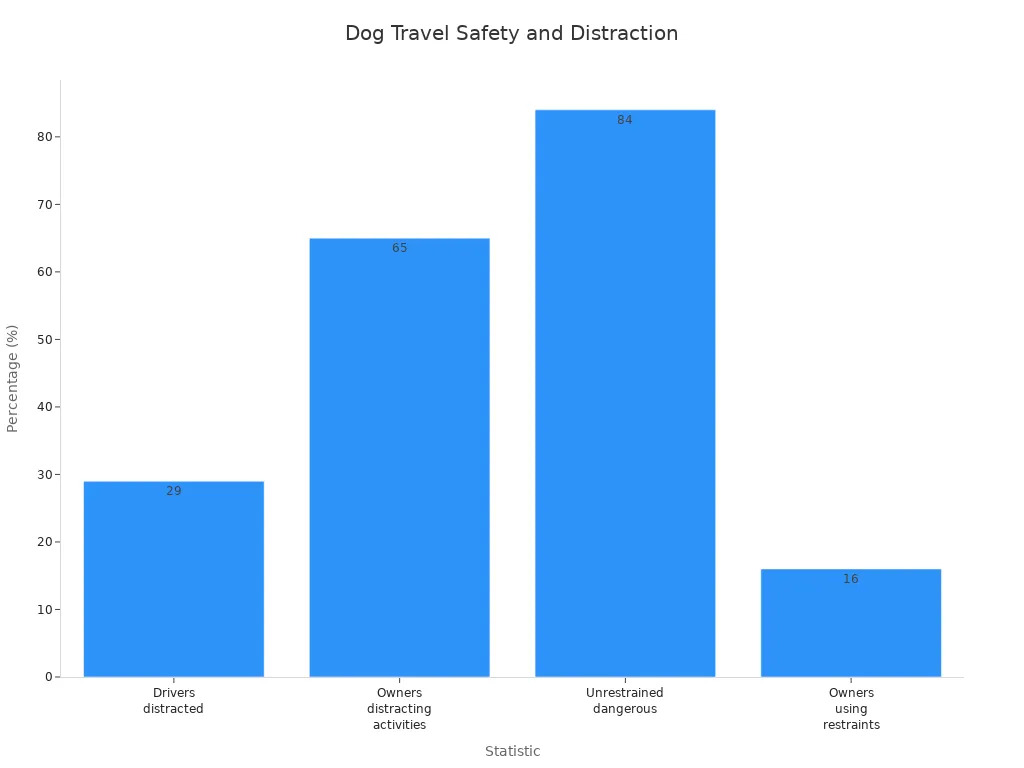
Most drivers think loose dogs are risky. Not many use restraints, but those who do feel safer and less distracted. Always check your seat belts and crate before you travel.
Common failure modes and risk triggers
You can stop most injuries by checking your gear. The biggest problems are loose seat belts, crates not tied down, and using extension tethers. These mistakes make crashes more dangerous. Always clip seat belts to harnesses, not collars. Tie crates down with straps and check all connections. Do not use barriers for big dogs as crash protection. Barriers do not keep dogs as safe as crates or seat belts. If you use a harness, make sure it fits and clips right to the seat belt. Good setup and regular checks keep your dog safe.
Temperament-based decision
Matching your dog’s temperament to the right travel setup helps you reduce stress and keep your dog safe. You need to look at how your dog acts during car rides, then choose a setup that fits their needs. Follow these steps for a smoother trip:
Step 1: Assess your dog’s temperament and travel behavior.
Step 2: Match trip length and vehicle layout to the best restraint type.
Step 3: Install, fit-test, and train your dog to reduce tangles, chewing, and returns.
Anxious, restless, motion-sensitive dogs
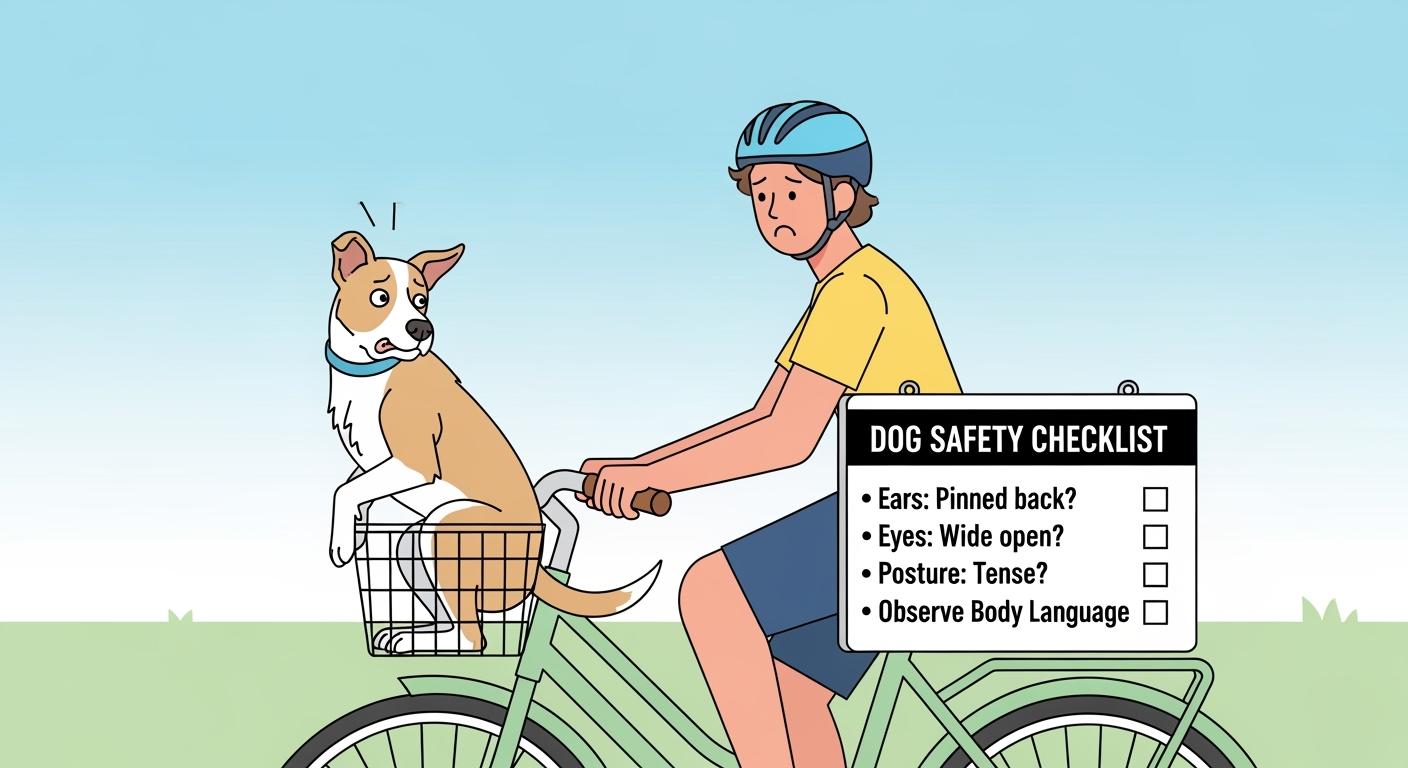
Dogs with travel anxiety may pant, pace, drool, vocalize, or try to escape. These dogs often do better with a stable, enclosed space and gradual acclimation.
You can help your dog by:
- Using a crate-in-car anchored in the cargo area. This setup gives your dog a defined, secure space.
- Adding familiar items like toys or blankets.
- Consider calming routines (quiet loading, familiar bedding, and short practice trips). If anxiety is severe, ask a veterinarian for guidance.
Scenario A:
Your anxious dog paces and cannot settle on long trips. You place a crate in the cargo area and anchor it using vehicle cargo anchors. You add your dog’s favorite blanket and a toy. You start with short drives to help your dog get used to the crate. Over time, your dog learns that the crate means safety and comfort. You check the crate size to make sure your dog can stand and turn around. You avoid placing the crate in crumple zones. You use treats and praise to reinforce calm behavior. This routine helps your dog relax and reduces anxiety during travel.
Chewers and dogs prone to tangling
Some dogs chew on straps or get tangled in restraints. These behaviors can lead to returns or unsafe travel. You need to pick gear that limits access to straps and keeps movement controlled.
Tips for chewers and tanglers:
- Use a crate-in-car for dogs that chew, as it keeps straps out of reach.
- If you use a harness restraint, choose chew-resistant materials and supervise your dog.
- Keep the tether range short to prevent tangling. Avoid extension tethers or zipline-style add-ons.
- Train your dog to accept the restraint before longer trips.
If your dog spins or chews, test the setup on short drives. Adjust the fit and reinforce positive habits with treats.
Reactive or overstimulated dogs
Reactive dogs bark, jump, or get distracted easily. These dogs may try to cross seats or interact with people while you drive. You need to limit their movement and reduce distractions.
Best practices for reactive dogs:
- Use a crate-in-car or a barrier to keep your dog contained.
- Cover the crate if your dog gets overstimulated by sights.
- Place the crate in the cargo area and anchor it securely.
- For medium to large dogs, avoid using barriers as crash protection. Crates or harness restraints work better for safety.
You can train your dog to settle in the crate or behind a barrier. Start with short trips and reward calm behavior.
Calm, trained travelers
Calm, trained dogs handle travel well. They do not chew, tangle, or distract the driver. You can use a harness restraint with a dog seatbelt for these dogs, especially on short commutes.
| Scenario | Key Tips |
|---|---|
| Road Trip | Use crate training, take frequent breaks. |
| Air Travel | Ensure crate familiarity, complete health check-ups. |
| Public Transport | Train basic commands, use treats and praise. |
| Camping | Provide a familiar crate space, include favorite items. |
Scenario B: Your calm dog joins you for short errands. You fit a well-adjusted harness and connect a short seat belt tether to the harness (not the collar). You keep slack minimal so your dog cannot hop seats. Before each trip, check buckles, strap tension, and anchor points so nothing loosens in motion.
You need to match your dog’s temperament to the right travel setup. Anxious dogs do best in crates with familiar items and gradual training. Chewers and tanglers need setups that limit access to straps. Reactive dogs benefit from crates or barriers. Calm, trained travelers do well with harness restraints and short tethers. Always check fit, install gear properly, and train your dog for safe travel.
Trip length and travel routine
Choosing the right setup for your dog’s car restraint depends on how often you travel, how long each trip lasts, and your dog’s habits. You need to match your dog’s temperament and travel needs to the right gear. This helps keep your dog safe and comfortable, reduces distractions, and builds good habits for future travel.
Short errands and quick trips
You may take your dog on short errands, such as picking up groceries or visiting the park. Even for these quick trips, safety matters. You should always secure your dog with a harness restraint or a travel crate. Never let your dog ride in the front seat, because airbags can cause injury. Do not allow your dog to stick their head out of the window, since flying debris can hurt them.
- Use a seatbelt harness or crate for every trip, no matter how short.
- Keep your dog in the back seat or cargo area.
- Avoid letting your dog roam or jump between seats.
- Carry basic supplies, such as water and cleaning wipes, in case of accidents.
- Stay focused on driving and avoid distractions from your dog.
Unrestrained pets can become dangerous during sudden stops. Dogs may try to escape after minor accidents, which increases their risk. You help prevent these problems by using proper restraints every time you travel.
Daily commute needs
If you bring your dog along for daily commutes, you need a setup that balances safety and comfort. Dogs who travel often benefit from routines that make each ride predictable and stress-free. You should choose gear that fits your dog’s size and temperament.
| Restraint Type | Key Features | Benefits for Dogs |
|---|---|---|
| Crash-Tested Safety Harnesses | Tough stitching, wide straps, reinforced connection points, padded areas | Protects during impacts, reduces injury risk |
| Car Seats with Restraints | Built-in tethers, padded construction | Comfort for small dogs, keeps them secure |
| Safety Systems | Durable materials, adjustable length | Flexibility for different dog sizes and preferences |
You should check the fit of your dog’s harness or crate before each commute. Clean and dry the gear after wet or muddy trips to prevent odor and skin irritation. Over time, your dog will learn the routine and settle more easily during travel. You can reinforce good habits by rewarding calm behavior and making the ride comfortable.
Long road trips and rest stops
Long road trips require extra planning for your dog’s safety and comfort. You need to take frequent breaks, about every two hours, so your dog can stretch and relieve themselves. Look for rest areas with fenced dog parks when possible. Always leash your dog before exiting the vehicle.
- Give your dog a walk before starting the journey.
- Map out dog-friendly stops along your route.
- Bring disposable gloves and plastic bags for clean-up.
- Provide fresh water and a light snack at each stop.
- Check your dog’s restraint and adjust if needed after each break.
You should use a crate-in-car for anxious or energetic dogs on long trips. For calm dogs, a harness restraint with a short tether works well. Clean and dry all gear after travel to prevent odor and keep your dog comfortable. Building a routine helps your dog feel secure and makes future travel easier.
Tip: Good habits and regular cleaning keep your dog’s travel gear safe and comfortable for every trip.
By following these steps, you match your dog’s temperament and travel routine to the best restraint setup. You help your dog stay safe, comfortable, and happy during every journey.
Common cause -> What it leads to -> What to do
Traveling with your dog can be safe if you avoid mistakes. Problems often happen when the setup is wrong or gear does not fit. Skipping checks can also cause trouble. Here are the most common reasons restraints or crates fail, what happens, and how to fix it. Use this guide to help keep your dog safe and lower returns.
Restraint attached to collar -> Neck risk and fear response -> Use harness only, adjust fit before travel
If you clip a restraint to your dog’s collar, it can hurt their neck or scare them. Always use a harness that fits well. Adjust it before every trip. This keeps your dog’s neck safe and helps them feel calm.
Never use a seat belt or tether on a collar. Always use a harness.
Use of long tether/slider -> Excess movement, secondary impact/tangle risk -> Shorten range, avoid extension accessories
Long tethers or ziplines let dogs move too much. Dogs can get tangled or hit things if you stop fast. Keep the tether short. Do not use extension add-ons. This keeps your dog safer in one spot.
Harness not fitted or uneven tension -> Spinning, chafing, escape -> Re-measure, adjust symmetrically, test with short trips
A loose or uneven harness can make your dog spin, rub their skin, or escape. Measure your dog again and adjust the harness so it fits the same on both sides. Try short trips to check the fit. This helps you find problems early and keeps your dog comfy.
Crate not anchored or unreliable door lock -> Shifting, escape -> Anchor to vehicle points, check door lock before each trip
If you do not tie down the crate or check the door, it can slide or your dog can get out. Always anchor the crate to the car’s cargo points. Check the door lock before every trip. This keeps the crate steady and your dog inside.
Dog crossing seats in rear -> Distraction, tangling -> Limit movement, choose more stable setup
Letting your dog move between seats can distract you and cause tangles. Use a crate or short tether to keep your dog in one place. This helps you pay attention to driving and keeps your dog safe.
Wet/muddy after trip, no cleaning -> Odor, skin irritation -> Remove, rinse, dry thoroughly, rotate gear
Leaving wet or muddy gear in the car can make it smell and bother your dog’s skin. After each trip, take out the gear, rinse it, and dry it well. Switch gear if needed. This keeps your dog comfy and your car clean.
Overstimulated dog in open restraint -> Jumping, barking, driver distraction -> Use crate or barrier, cover crate if needed
A dog that gets too excited may jump, bark, or distract you. Use a crate or barrier to block what your dog sees. Cover the crate if your dog reacts to things outside. This helps your dog calm down and lets you focus on the road.
Chewing on restraint or crate -> Damage, escape risk -> Supervise, use chew-resistant materials, reinforce training
Some dogs chew on their gear, which can break it or let them escape. Watch your dog during trips. Pick chew-resistant gear. Train your dog with short practice rides and rewards.
Crate too small or too large -> Discomfort, escape, injury -> Measure dog, select appropriate size, test fit
A crate that is too small or too big can make your dog uncomfortable, let them escape, or cause injury. Measure your dog and pick a crate that fits. Test the fit before you travel. Your dog should stand, turn, and lie down easily.
Harness slips off or loosens -> Escape, injury -> Double-check fit, use backup safety clip
If the harness slips off or gets loose, your dog can escape or get hurt. Always check the fit before each trip. Use a backup safety clip if you can. This gives extra safety.
Crate placed in unsafe area (crumple zone) -> Increased injury risk -> Place crate in cargo area or rear seat, avoid crumple zones
Putting the crate in a crumple zone makes crashes more dangerous. Always put the crate in the cargo area or back seat, not in crumple zones. Tie it down tight.
Multiple dogs in one crate/restraint -> Fighting, injury -> Separate crates/restraints, monitor interactions
If you put more than one dog in a crate or restraint, they might fight or get hurt. Use a separate crate or restraint for each dog. Watch them during the trip.
Unfamiliar gear without acclimation -> Stress, resistance -> Gradual introduction, positive reinforcement
New gear can stress your dog if you do not let them get used to it. Introduce new gear slowly. Use treats and praise to help your dog adjust.
Inadequate ventilation in crate -> Overheating, distress -> Ensure airflow, avoid covering all sides
Bad airflow in the crate can make your dog too hot or upset. Make sure air can move through the crate. Do not cover all the sides. Watch your dog for signs of overheating.
Not using the right restraints can be very dangerous for pets and people. A loose pet can get hurt in a crash or sudden stop and may also hurt others in the car.
By following these steps and avoiding mistakes, you help keep your dog safe and lower the chance of returns or injuries. Always check your dog’s behavior, match the setup to the trip, and test your gear before every drive.
Specs table: dog seatbelt and crate-in-car
When you choose between a dog seatbelt and a crate-in-car, you need to look at key facts. This specs table gives you a quick way to compare the most important points. Use it to match your dog’s needs to the right setup.
Parameter | Value
| Parameter | Value |
|---|---|
| Primary decision inputs | Temperament and trip length |
| Rear-seat carrier small-dog note | Typically 30 lb (13.6 kg) and under |
| Testing coverage caution | Many tests focus up to 75 lb (34.0 kg); select systems noted up to 90 lb (40.8 kg) |
| Dog seatbelt connection rule | Attach to a well-fitting harness, not a collar |
| Tether range principle | Avoid extension tethers and zipline add-ons; keep range short to reduce tangles and unsafe movement |
| Crate-in-car placement principle | Anchor crate in cargo area using vehicle cargo anchors |
| Carrier placement principle | Secure carrier on rear seat using vehicle anchors or the seat belt |
| Return-risk triggers to watch | Chewing, tangling, poor fit, unanchored crate, wet gear left on |
Primary decision inputs | Temperament and trip length
You should start by looking at your dog’s temperament and how long you plan to travel. An anxious or energetic dog may need a crate. A calm dog may do well with a seatbelt harness for short trips.
Rear-seat carrier small-dog note | Typically 30 lb (13.6 kg) and under
If your dog weighs 30 lb (13.6 kg) or less, you can use a carrier on the rear seat. Make sure you secure the carrier with the seat belt or anchors.
Testing coverage caution | Many tests focus up to 75 lb (34.0 kg); select systems noted up to 90 lb (40.8 kg)
Most crash tests use dog models up to 75 lb (34.0 kg). Some harnesses have been tested up to 90 lb (40.8 kg). If your dog is larger, check published test results and consider a crate-in-car setup.
Dog seatbelt connection rule | Attach to a well-fitting harness, not a collar
Always attach the seatbelt to a harness that fits your dog. Never use a collar for car travel.
Tether range principle | Avoid extension tethers and zipline add-ons; keep range short to reduce tangles and unsafe movement
Keep the tether short. Do not use extension tethers or ziplines. This helps prevent tangling and keeps your dog safe.
Crate-in-car placement principle | Anchor crate in cargo area using vehicle cargo anchors
Place the crate in the cargo area. Use the vehicle’s cargo anchors to keep it from moving.
Carrier placement principle | Secure carrier on rear seat using vehicle anchors or the seat belt
If you use a carrier, secure it on the rear seat with the seat belt or anchors.
Return-risk triggers to watch | Chewing, tangling, poor fit, unanchored crate, wet gear left on
Watch for chewing, tangling, poor fit, crates that are not anchored, and wet gear. These problems can lead to returns or unsafe travel.
Tip: Use this table as a checklist before every trip. It helps you pick the safest and most comfortable setup for your dog.
Decision table: crate-in-car vs dog seatbelt
Picking the right travel setup for your dog depends on temperament, trip length, and your car’s layout. Use this decision table to find the safest and easiest option for your dog. Each row shows a common situation, the best setup, and risks to watch for.
Note: Crash-test results vary by product and test method. Look for published test information and focus on correct installation and fit.
Temperament | Trip length | Vehicle layout | Handling goals | Recommended setup | Return/exchange risk
| Temperament | Trip length | Vehicle layout | Handling goals | Recommended setup | Return/exchange risk |
|---|---|---|---|---|---|
| Anxious | Long | Cargo area with anchor | Minimize distraction | Crate-in-car | Escape attempts, crate size issues |
| Chewer | Short | Rear seat | Quick entry/exit | Harness restraint (chew-resistant) | Chewing damage, fit problems |
| Reactive | Commute | Rear seat, no cargo | Reduce distraction | Crate-in-car or barrier | Jumping, barking, escape |
| Calm | Short | Rear seat | Fast routine | Harness restraint | Loose fit, spinning |
| Anxious | Short | Rear seat | Quick entry/exit | Carrier (small dog) | Stress, resistance |
| Multiple dogs | Long | Cargo area | Separate, minimize fighting | Multiple crates or crate plus barrier | Fighting, escape |
| Energetic | Long | Cargo area | Stable containment | Crate-in-car | Escape, crate damage |
| Calm | Long | Rear seat | Comfort, easy cleaning | Harness restraint | Odor, moisture |
| Reactive | Short | Rear seat | Reduce distraction | Barrier concept | Jumping, distraction |
How to use this table
- Step 1: Look at your dog’s temperament and how they act in the car. Is your dog calm, anxious, energetic, or reactive?
- Step 2: Match the trip length and your car’s layout to the best restraint. For example, use a crate-in-car for long trips with anxious or energetic dogs. Use a harness restraint for short trips with calm dogs.
- Step 3: Install, check the fit, and train your dog with the setup you pick. This helps stop chewing, tangling, and returns.
The travel setup for dogs depends on their temperament, trip length, and car layout. Dogs who are new to travel need training first. Start with short trips and practice calm behavior in the car. Car travel gives you control and helps dogs with different temperaments. Always use the right restraints and plan breaks on long trips to keep your dog safe and comfortable.
- Stability: Stops your dog from sliding, which lowers stress and injury risk.
- Connection: Keeps the harness or crate tied to the car, making it safer.
- Restraint: A crash-tested harness or crate protects your dog during sudden stops or crashes.
Tip: Watch for return risks like chewing, tangling, poor fit, or crates that are not tied down. Change your setup and routine to fit your dog’s needs and lower problems.
By using these steps and the table, you can pick the best travel setup for your dog. This keeps your dog safe, lowers stress, and helps prevent returns or injuries.
Type comparison: crate, carrier, dog seatbelt, barrier
Picking the right travel setup for your dog means knowing how each type works. You need to think about your dog’s temperament, how long you will travel, and your car’s layout. The table below shows how crates, carriers, harness restraints, and barriers are different.
Type | Size range | Temperament | Trip length | Install complexity | Cleaning | Common failure/return reasons
| Type | Size Range | Temperament | Trip Length | Install Complexity | Cleaning | Common Failure/Return Reasons |
|---|---|---|---|---|---|---|
| Crate-in-car | Small to large | Anxious, energetic, reactive | Long, commute | Moderate-high | Easy-moderate | Escape, poor fit, door lock |
| Carrier rear seat | Small ( 30 lb / 13.6 kg) | Anxious, calm | Short, commute | Easy | Easy | Stress, resistance, ventilation |
| Harness restraint (seatbelt) | Small to large | Calm, trained, chewer | Short, commute | Easy-moderate | Easy | Chewing, loose fit, spinning |
| Barrier concept | Medium-large | Reactive, energetic | Short, commute | Moderate | Easy | Jumping, distraction, escape |
Crate-in-car
A crate-in-car fits dogs of many sizes. It works best for anxious, energetic, or reactive dogs. Use it for long trips or daily drives. Setting up a crate takes more time. You must anchor it in the cargo area with your car’s anchors. Cleaning is usually simple, but big crates can be hard to move. Problems include dogs escaping, crates that do not fit, or weak door locks.
Carrier rear seat
A rear-seat carrier is for small dogs, usually under 30 lb (13.6 kg). This setup helps anxious or calm dogs on short rides. You can install a carrier fast by using the seat belt or anchors. Cleaning is easy. Watch for stress, trouble getting inside, or bad airflow.
Harness restraint (dog seatbelt)
A harness restraint is good for calm, trained dogs or chewers. Use it for short trips or commutes. Installing is easy or takes a little time. Always clip the seatbelt to a harness that fits well, not a collar. Cleaning is simple. Problems include chewing straps, loose harnesses, or dogs spinning in the seat.
Barrier concept
A barrier works for medium or large dogs who are reactive or energetic. Use it for short trips or commutes. Installing a barrier takes some effort. Cleaning is easy. Barriers can fail if dogs jump over, get distracted, or try to escape. Mesh barriers may break faster than solid ones.
Tip: Always look for weak straps, thin padding, or bad stitching. These problems can make gear break or feel uncomfortable for your dog.
Common reasons for returns or failures include:
- Padding that flattens fast and does not support your dog.
- Fabrics that hold hair and smell, making cleaning hard.
- Straps that stretch and do not stay tight.
- Stitching that looks neat but breaks under pressure.
- Water-resistant coatings that stop working after many uses.
Step 1: Check your dog’s temperament and how they act during travel. Step 2: Match trip length and car layout to the restraint type. Step 3: Install, test the fit, and train your dog to stop tangling, chewing, and returns.
By looking at these types, you can pick the best travel setup for your dog and keep every trip safe and comfortable.
Checklist: dog seatbelt and crate-in-car travel
A good travel routine starts with a clear checklist. You can use this guide to keep your setup consistent and reduce tangles, chewing, and fit-related returns.
Before travel
- Check harness fit and tension
Make sure the harness fits your dog snugly. Adjust the straps so they do not slip or pinch. A well-fitted harness keeps your dog secure and prevents escape. - Confirm crate size and door lock
Measure your dog and the crate. Your dog should stand, turn, and lie down easily. Test the door lock to ensure it closes firmly. - Anchor crate to vehicle points
Place the crate in the cargo area. Use your vehicle’s cargo anchors to secure it. This stops the crate from sliding or tipping. - Attach restraint to harness, not collar
Always connect the seatbelt or tether to a well-fitting harness. Never use a collar for car travel. - Inspect for wear or damage
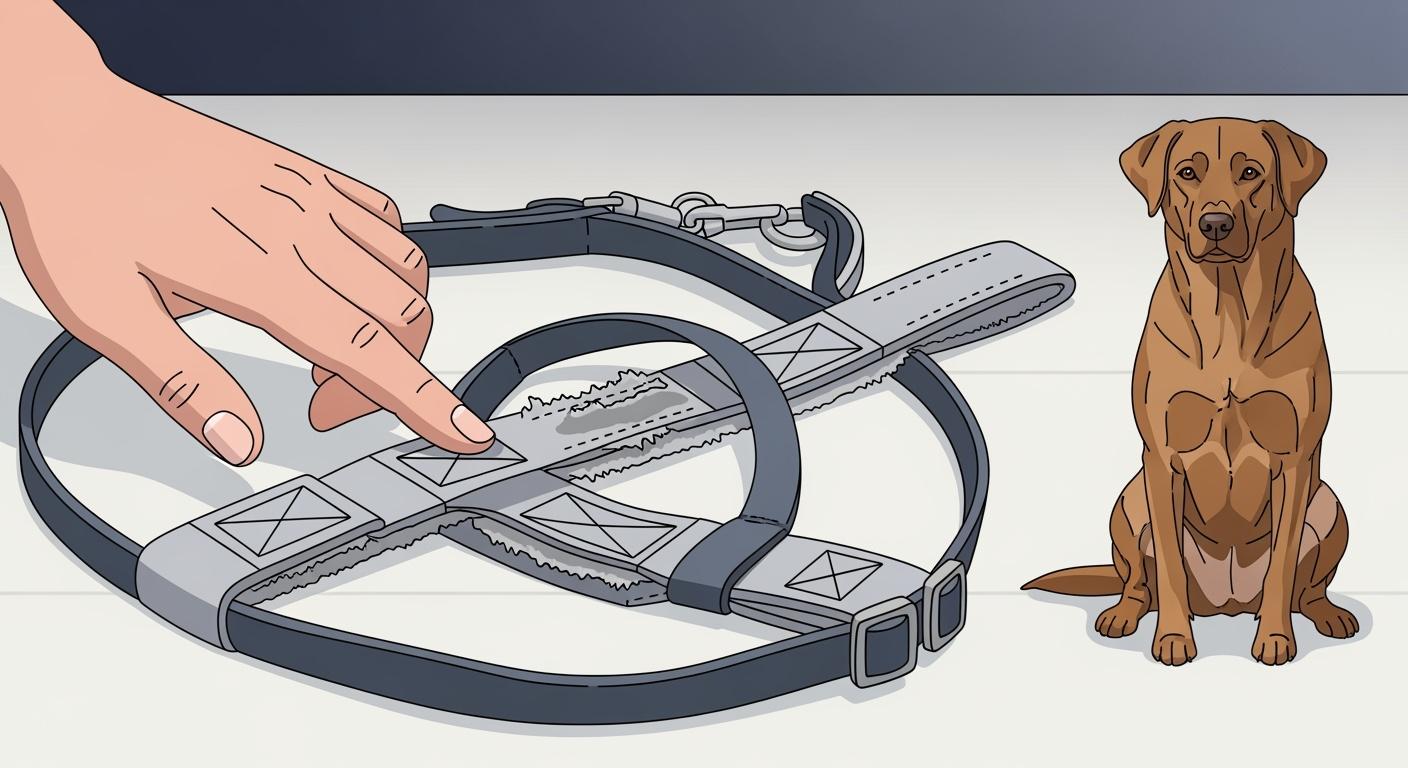
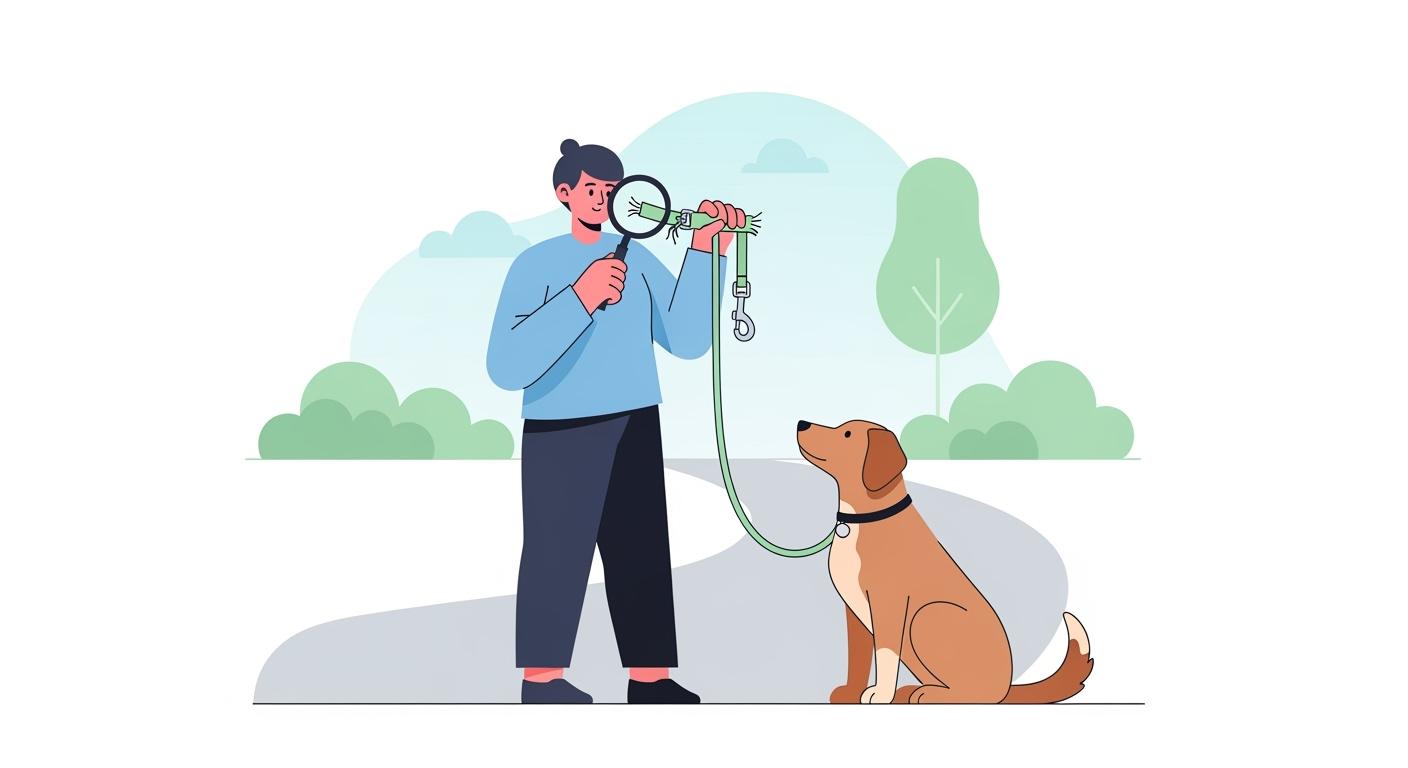
Look for frayed straps, broken buckles, or weak spots. Replace any damaged gear before you travel. - Ensure ventilation in crate
Check that air can flow through the crate. Do not cover all sides. Good airflow keeps your dog cool and comfortable. - Remove long tethers or sliders
Take off any extension tethers or zipline-style add-ons. Keep the tether short to prevent tangling and unsafe movement. - Prepare water and cleaning supplies
Pack water, a bowl, and cleaning wipes. Bring a towel for muddy paws or spills. - Acclimate dog to gear before trip
Let your dog explore the crate or harness at home. Use treats and praise to build positive associations. - Separate dogs if needed
Give each dog their own crate or restraint. This reduces stress and prevents conflicts. - Place crate outside crumple zones
Avoid putting the crate in areas designed to absorb crash impact. Use the cargo area or rear seat. - Secure all gear before driving
Double-check that everything is anchored and nothing can move around during the drive.
Tip: Choose a crate or restraint based on your dog’s size and behavior. Pick high-quality, easy-to-clean materials for less stress and easier maintenance.
During travel
- Monitor for spinning or chafing
Watch your dog for signs of discomfort. Adjust the harness or crate padding if needed. - Watch for chewing or escape attempts
Keep an eye on your dog. If they chew or try to escape, pull over safely and check the gear. - Limit movement and seat jumping
Use short tethers or crates to keep your dog in one spot. This helps you focus on driving. - Check for overheating or distress
Feel the crate or harness area for warmth. Open windows slightly or adjust airflow if your dog seems hot. - Minimize driver distraction
Keep your attention on the road. A secure dog helps you drive safely.
Note: Plan pet-friendly routes with regular rest stops. Schedule breaks every 2-3 hours for bathroom and water needs.
After travel
- Remove and clean gear
Take out the crate, harness, or carrier. Wipe down surfaces and wash as needed. - Dry thoroughly before next use
Let all gear air dry completely. This prevents odor and skin irritation. - Inspect for damage or wear
Check for any new signs of damage. Replace worn parts right away. - Rotate equipment if needed
Use backup gear if you need to clean or repair your main setup. - Reinforce positive travel habits
Praise your dog for calm behavior. Give treats or extra playtime after a good trip. - Store gear in dry, safe place
Keep all travel equipment in a clean, dry spot until your next trip.
Keeping a checklist helps you remember every step. You protect your dog and make travel easier for everyone.
FAQ: dog seatbelt and crate-in-car
Why does my dog spin or chafe in a harness restraint?
Your dog may spin or chafe if the harness does not fit well or if the tether is too long. A loose harness can rub your dog’s skin or let them twist around. Always measure your dog and adjust the harness so it fits snugly. Keep the tether short to limit movement and prevent tangling. Test the setup on short trips before longer drives.
Why should restraints never attach to collars?
Attaching a restraint to a collar can hurt your dog’s neck during sudden stops. Collars do not spread force across the body. Always use a well-fitting harness for car travel. Clip the seatbelt or tether to the harness, not the collar. This keeps your dog safer and reduces the risk of injury.
How do I choose between crate-in-car and seatbelt restraint for a chewer?
If your dog chews on straps, a crate-in-car often works better. Crates keep straps out of reach and limit chewing. For calm chewers, you can use a harness restraint made from chew-resistant materials. Always supervise your dog and reinforce good travel habits with training. Start with short trips to help your dog adjust.
Why do long trips cause more problems with travel setups?
Long trips give your dog more time to get restless, chew, or try to escape. You may see more tangling, discomfort, or stress. Plan frequent rest stops so your dog can stretch and relieve themselves. Check the fit of the harness or crate at each stop. Bring water and cleaning supplies for comfort and safety.
How can I reduce tangling and seat jumping?
Keep the tether short and avoid extension tethers or zipline add-ons. Use a crate or barrier if your dog tries to jump seats. Secure your dog in the back seat or cargo area. This limits distractions and keeps everyone safer.
What is the best way to clean and deodorize gear after muddy trips?
Remove all gear after travel. Rinse off mud and dirt, then let everything dry completely before the next use. Use mild soap and water for harnesses, crates, and carriers. Drying gear well prevents odor and skin irritation for your dog.
How do I prevent escape attempts from crates or restraints?
Check that the crate door locks securely and that the crate is anchored to the vehicle. For harnesses, double-check the fit and use a backup safety clip if possible. Train your dog to settle in their travel space. Start with short trips and reward calm behavior.
What should I do if my dog resists new travel gear?
Introduce new gear slowly at home. Let your dog sniff and explore the crate or harness. Use treats and praise to build positive associations. Practice with short car rides before longer trips. Gradual training helps your dog feel safe and comfortable.
Tip: Always keep your dog in the back seat or cargo area. Never let pets ride in the front seat because airbags can cause injury. Crates and carriers limit distractions and protect your dog during accidents.
Travel is safer when your setup matches your dog’s temperament, your trip length, and your vehicle layout. Prioritize correct anchoring, a short tether range, and a fit check before every drive. If your dog seems injured, distressed, or unusually anxious, ask a veterinarian for guidance.