Most people do not return a dog seat belt because it is broken. Many returns happen because buyers are not sure if it fits their dog or car. Simple and honest notes help people know what to expect. These notes also make safety the most important thing. You help buyers see if it works for them fast. This means there are fewer questions and problems later. Using the same words and giving clear safety tips helps people trust you. It also keeps dogs and drivers safe every time they travel.
Key Takeaways
Always look at your car’s buckle receiver before you buy a dog seat belt. This makes sure it fits right and helps stop returns.
Use simple and honest words in product listings. Do not use words like ‘universal fit’ because they can confuse shoppers.
Add clear compatibility notes in your listings. Say what the dog seat belt connects to and mention any changes that can affect the fit.
Give good photos of the product. Show how the seat belt connects to the car and point out important parts.
Tell customers to use a harness with a strong D-ring. This keeps their dog safer when they travel.
Dog seat belt returns and compatibility issues
Common shopper assumptions
Many shoppers believe that every dog seat belt will fit any car. You might think that all buckles and seats are the same. This is not true. Vehicle seat belt buckles are made for people, not for every dog accessory. Some buyers expect a dog seat belt to work with any harness or collar. Others assume that one size fits all dogs, no matter their breed or weight. These assumptions can lead to disappointment when the product does not fit as expected.
Tip: Always check the seat belt buckle and the attachment point in your vehicle before you buy a dog seat belt. This quick step helps you avoid returns and keeps your dog safe.
Vague fit claims and support tickets
When product listings use phrases like “fits all cars” or “universal fit,” you set up shoppers for confusion. These claims sound easy, but they do not match real-world results. If you use unclear language, you will see more support tickets and returns. For example, a listing that says “works with any dog” may lead to questions about size, weight, or harness type. Shoppers may contact support because the dog seat belt does not click in, feels loose, or blocks the release button.
You can reduce these issues by using clear, honest notes. State what the dog seat belt attaches to and what can vary. Show photos of the buckle and the attachment method. This helps shoppers make the right choice and keeps your support team focused on real problems, not confusion.
Glossary for dog car safety terms
Key terms for listings
You need to use the same words every time you talk about dog seat belts. This helps your team, your customers, and your support staff understand each other. Here are the most important terms you should include in every product listing, catalog, and support document:
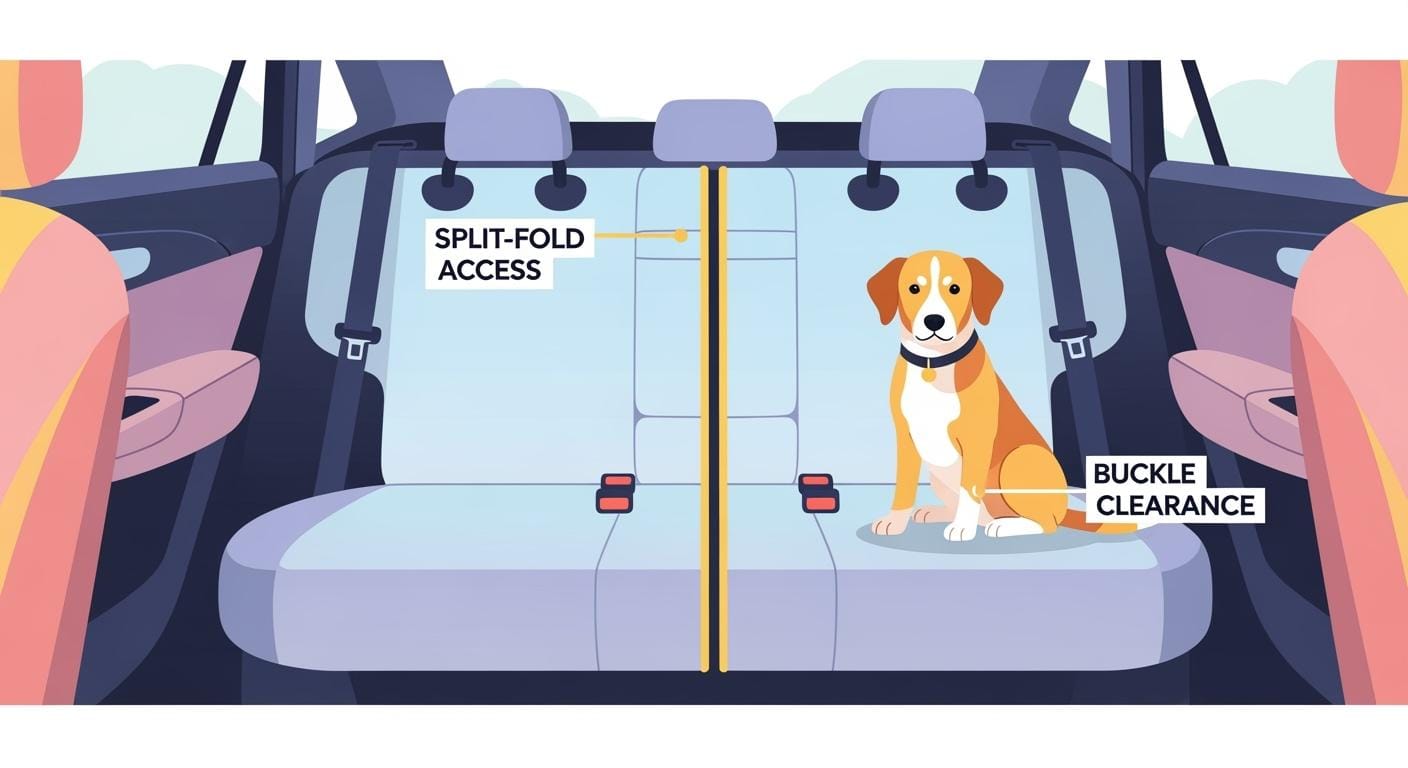
Buckle receiver
Buckle tongue
Buckle stalk
Click engagement
Anchor point
Seat-belt webbing
Tether
Harness attachment
Note: Using these terms in your product pages and packaging helps shoppers check compatibility quickly and reduces confusion.
One-sentence definitions
Term | Definition |
|---|---|
Buckle receiver | The female slot in the car seat where you insert the metal tongue of the seat belt. |
Buckle tongue | The metal tab that you push into the buckle receiver until it clicks and locks. |
Buckle stalk | The short strap or rigid part that holds the buckle receiver above the seat cushion. |
Click engagement | The sound and feel you get when the buckle tongue locks fully into the receiver. |
Anchor point | The fixed spot in the car where you attach a tether or seat belt for your dog. |
Seat-belt webbing | The strong fabric strap that runs across the seat and holds people or pets in place. |
Tether | The strap or belt that connects your dog’s harness to the car’s seat belt system. |
Harness attachment | The clip or hook that connects the tether to your dog’s harness, not to a collar. |
You should use these definitions in your product listings, packaging, and support replies. This keeps your messaging clear and helps shoppers make safe choices for their pets.
Dog seat belt attachment types

Buckle-in vs seat-belt-loop
You will find two main types of dog seat belt attachments. Each type connects to your vehicle in a different way. You must treat these types separately in your product copy. Mixing them can confuse shoppers and lead to more returns.
Buckle-in style:
This type uses a metal tongue that clicks into the car’s buckle receiver. You need to check the fit for each vehicle. Some cars have unique buckle shapes or sizes. Always tell shoppers to test the click engagement before driving. Never promise that this style fits every car.
Best for: Quick connection and clear seatbelt access.Seat-belt-loop style:
This type wraps around the seat-belt webbing and secures with a loop or clip. You do not insert anything into the buckle receiver. Compatibility depends on the width and position of the seat belt. You must show how the loop attaches and how the reinforced straps prevent slipping.
Best for: Flexible fit and easy cleaning after use.
Tip: Always state which attachment type your product uses. Clear copy helps shoppers choose the right style for their car and dog.
Photo requirements for each type
You must include clear photos for each attachment type. Good images help shoppers check compatibility and reduce support tickets.
Attachment Type | Photo Checklist |
|---|---|
Buckle-in | Show the metal tongue next to the buckle receiver. Include a close-up of click engagement. Display the release button with the tongue inserted. Add a scale cue (like a ruler in inches/cm). |
Seat-belt-loop | Show the loop wrapped around the seat-belt webbing. Include a close-up of the reinforced straps. Display how the loop sits on the seat. Add a photo of the tether attached to a harness. |
You should avoid mixing photos of both types in one listing. Clear images make it easier for shoppers to follow install steps and check fit before ordering.
Writing compatibility notes for dog seat belts
Clear language for compatibility
You need to write compatibility notes that help shoppers understand what your dog seat belt connects to and what can change from car to car. Always say what the product attaches to, such as the buckle receiver or the seat-belt webbing. Tell buyers that vehicle seat belt buckles are made for people, not for every dog seat belt. Remind them that the fit can change based on the car model, seat design, and buckle shape.
You should never promise that a dog seat belt will fit every car or every dog. Instead, use phrases like “designed to fit most standard buckle receivers” or “works with most dog car seats and harnesses.” This approach sets honest expectations and helps reduce returns. When you write about dog car harnesses, explain that the harness must have a sturdy attachment point for the tether. Make sure you mention that the dog seat belt is for use with a harness, not a collar, to keep the dog safe.
Note: Always include a clear statement about what the dog seat belt interfaces with and what may affect the fit. This helps shoppers make the right choice and keeps your support team focused on real issues.
Phrases to avoid
Some phrases can confuse shoppers or lead to overpromising. You should avoid these in your product listings and support replies:
“Universal fit”
“Fits all cars”
“Crash-proof”
“Guaranteed safety”
“Works with any harness”
“One size fits all dogs”
“Compatible with all dog car seats”
These phrases can cause buyers to expect a perfect fit every time. If the dog seat belt does not fit their car or harness, they may return it or contact support. Instead, use language that explains what the product is designed for and what can vary. For example, say “Check your vehicle’s buckle receiver shape and size before purchase” or “Use only with dog car harnesses that have a secure D-ring.”
Quick pre-check routine
You can help shoppers check compatibility before they buy. Add a simple pre-check routine to your product page and packaging. This routine lets buyers test the fit and function of the dog seat belt in their own car.
Dog Seat Belt Compatibility Pre-Check:
Find the buckle receiver in your car’s back seat.
Insert the dog seat belt tongue into the buckle receiver.
Listen and feel for a solid click engagement.
Make sure the tongue goes all the way in and locks.
Check that the release button is not blocked by the dog seat belt hardware.
Pull and twist the tether gently to confirm it stays secure and does not twist or jam.
Attach the tether to your dog’s harness and check that the dog can sit, lie down, and turn around without pulling on the restraint.
Tip: If the dog seat belt does not click in, feels loose, or blocks the release button, it may not fit your car. Try the pre-check on every seat you plan to use.
Sample Compatibility Note Block for Listings:
This dog seat belt is designed to fit most standard buckle receivers in the back seat. Compatibility can vary by vehicle make, model, and seat design. Always test the click-in and release function before use. Use only with dog car harnesses that have a secure D-ring. Do not attach to a collar. Not for use in front seats with active airbags. If the dog seat belt does not fit or blocks the release button, do not use it. For seat-belt-loop style, check that the loop fits around the seat-belt webbing and holds the tether securely. Always supervise your dog when using any restraint in the car.
By following these steps, you help shoppers check fit before they drive. You also set clear limits and reduce confusion about dog seatbelt tethers, dog car seats, and harness use. This approach builds trust and lowers support tickets for your team.
Installation and fit checks for dog car safety

Step-by-step install lines
You want every dog car safety setup to work smoothly for your customers. Clear install steps help shoppers and support teams avoid confusion. Use these lines in your product pages, packaging, and support replies:
Place your dog in the back seat before you start.
Find the buckle receiver or seat-belt webbing in your vehicle.
For buckle-in style: Insert the metal tongue of the dog seat belt into the buckle receiver. Push until you hear and feel a click engagement.
For seat-belt-loop style: Wrap the loop around the seat-belt webbing. Fasten the clip or hook as shown in the product photo.
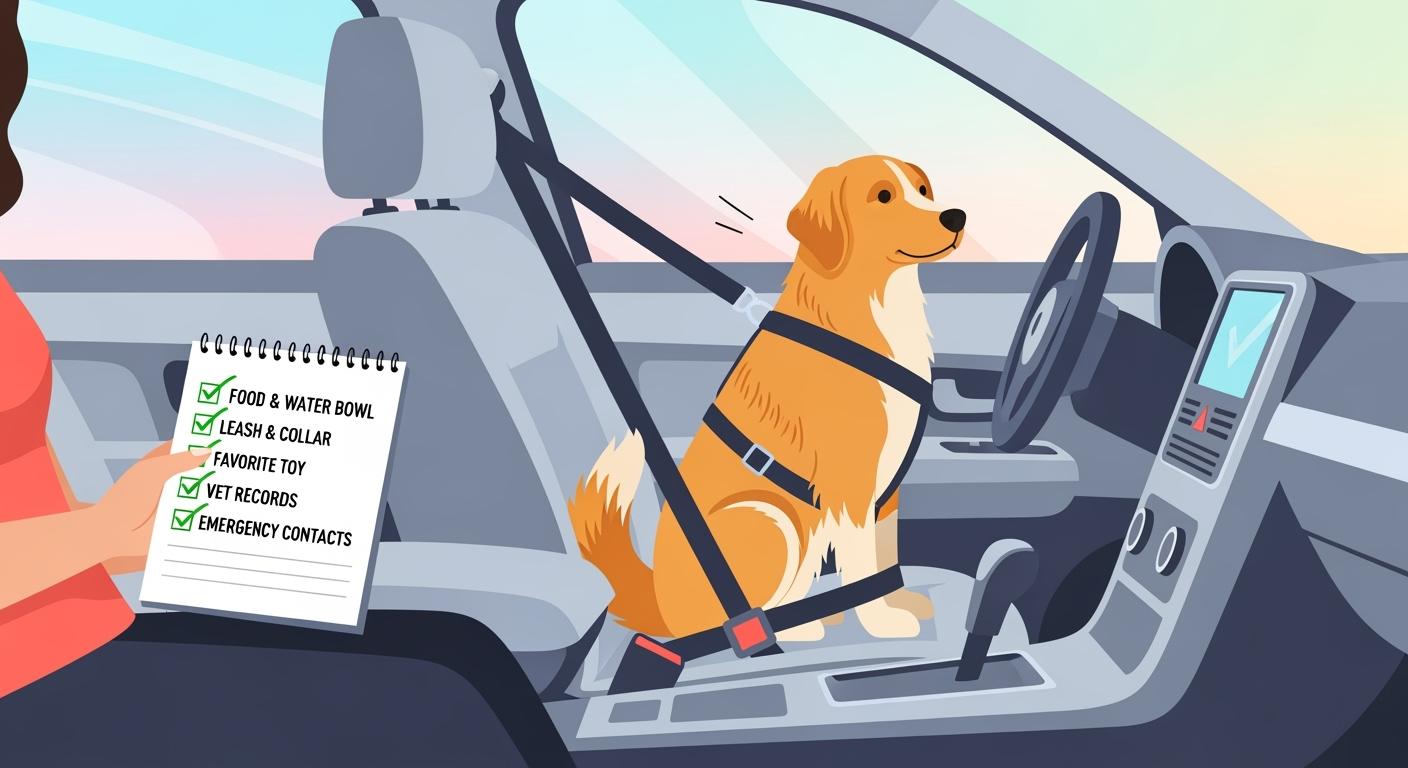
Attach the tether to your dog’s harness. Never connect to a collar.
Adjust the tether length so your dog can sit, lie down, and turn around. The tether should not let your dog reach the front seat. Most tethers adjust from 16 to 27 inches (40 to 70 cm).
Check that the release button is not blocked and the hardware does not twist.
Tip: Always follow these steps for every install. This keeps dog car safety at the highest level and helps prevent mistakes during travel.
Fast self-checks before driving
Before every trip, you should run three quick checks. These steps help you confirm that your dog car safety setup works as intended.
Click test: Pull on the dog seat belt to make sure it stays locked in the buckle receiver or loop. You should hear and feel the click engagement.
Release check: Press the release button. Make sure you can remove the dog seat belt quickly if needed.
Tether test: Watch your dog move. Your dog should sit, lie down, and turn around without pulling hard on the tether. The dog should not reach the front seat.
You can share these checks with your team and your customers. Fast checks keep every dog travel setup safe and easy to use. They also reduce support tickets and returns.
Note: Remind shoppers to check their dog car safety setup before every travel day. This habit protects both the dog and the driver.
Safety claims and disclaimers for dog seat belts
Harness-only attachment
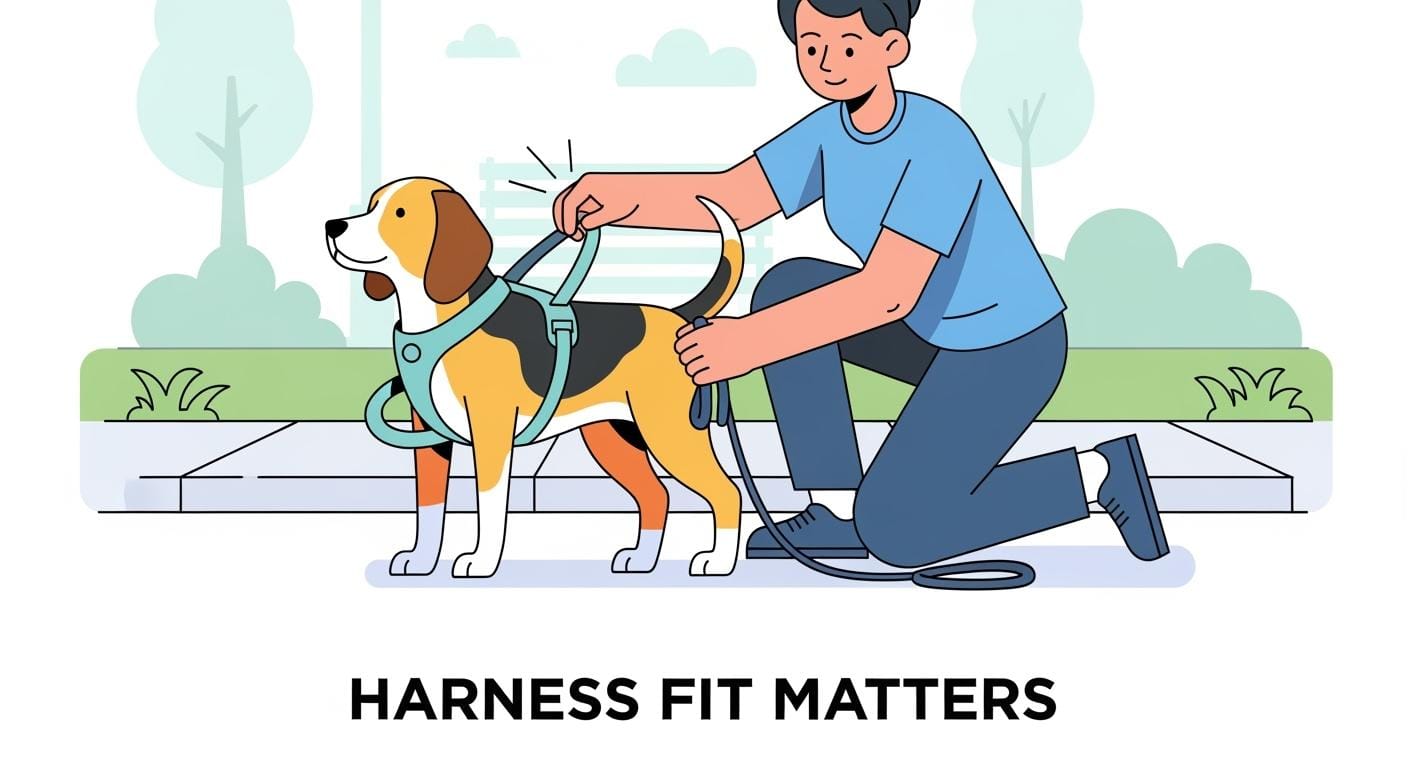
You want to give your customers the best safety for every trip. Always recommend that shoppers connect the dog seat belt to a harness, not a collar. This step gives better protection for the dog’s neck and spine. Sudden stops can happen at any time. A harness spreads the force across the chest and shoulders. This reduces the risk of injury. Many safety devices for pets work best with harnesses. You should include a clear note in your product listing: “Use only with a dog harness that has a secure D-ring. Do not attach to a collar.” This message helps your buyers understand the importance of harness-only use for safety.
Safety Disclaimer:
For the highest level of safety and protection, always connect this dog seat belt to a harness with a sturdy D-ring. Never attach to a collar. This product is not a substitute for crash-tested models. Always check fit and function before each trip.
Airbag and front seat caution
You need to remind shoppers about airbag risks. Airbags can cause harm to pets in the front seat. Always recommend that buyers use the back seat for their dog. This gives extra protection and keeps the dog away from active airbags. If a shopper must use the front seat, they should turn off the airbag if possible. You should add a clear warning: “Do not use in front seats with active airbags.” This simple step improves safety for every dog.
Supervision and tether length
You want to help your customers keep their pets safe during every drive. Remind them to supervise their dog at all times. The right tether length is important for safety and protection. The tether should let the dog sit, lie down, and turn around, but not reach the front seat. Most tethers adjust from 16 to 27 inches (40 to 70 cm). This range gives enough movement without risking distraction. Always tell shoppers to check the tether before each trip. Regular checks keep safety at the highest level.
Tip:
Supervise your dog during travel. Adjust the tether so your dog cannot jump out or get tangled. Use only approved safety devices and check for wear before each use.
You build trust when you give honest safety advice. You help your buyers choose the right products for protection and peace of mind.
Common support tickets and copy fixes
When you manage dog seat belt listings, you often see the same support tickets. Each issue has a root cause. You can fix many of these with better product page copy or clearer photos. Here are the most common tickets and how you can address them.
“Does not click in”
You may get tickets from shoppers who say the seat belt tongue does not fit their car’s buckle receiver. This usually happens because vehicle buckles vary in shape and size. Some buyers do not check before purchase.
PDP Copy Fix:
“This dog seat belt is designed for most standard buckle receivers. Always test the tongue in your vehicle’s buckle receiver before use. If it does not click in fully, do not use it.”
Photo Fix:
Show a close-up of the tongue next to a typical buckle receiver with a ruler for scale.
“Feels loose”
Some shoppers report that the seat belt feels loose after installation. This can happen if the buckle receiver is deep or the stalk is flexible. Sometimes, the seat belt webbing allows extra movement.
PDP Copy Fix:
“Check that the dog seat belt locks in fully and does not move side to side. Some vehicles have deeper buckle receivers or flexible stalks. Always test for a secure fit before travel.”
Photo Fix:
Include a photo showing the seat belt locked in place with no extra slack.
“Button blocked”
You may hear that the release button is hard to press after installing the seat belt. This happens if the hardware blocks the button or sits too close.
PDP Copy Fix:
“After installing, make sure the release button is easy to press and not blocked by the dog seat belt hardware. If blocked, do not use the product in that seat.”
Photo Fix:
Add an image showing the release button clear and accessible.
“Dog reaches front”
Some shoppers say their dog can still reach the front seat. This usually means the tether is too long or not adjusted.
PDP Copy Fix:
“Adjust the tether so your dog can sit, lie down, and turn around, but cannot reach the front seat. Most tethers adjust from 16 to 27 inches (40 to 70 cm).”
Photo Fix:
Show a dog sitting in the back seat with the tether adjusted to the correct length.
Summary Table:
Support Ticket | Likely Root Cause | PDP Copy/Photo Fix |
|---|---|---|
Does not click in | Buckle receiver shape/size varies | Add pre-check note and scale photo |
Feels loose | Deep receiver or flexible stalk | Advise secure fit check and show no-slack photo |
Button blocked | Hardware blocks release button | Warn to check button access and show clear button photo |
Dog reaches front | Tether too long or not adjusted | Advise correct length and show adjusted tether photo |
SKU and variant naming for dog seat covers and belts
Naming by attachment, length, hardware
You need clear SKU and variant naming for every dog seat cover and belt in your catalog. This helps your team, your buyers, and your support staff. When you use clear names, you reduce wrong orders and make reordering simple. You also help shoppers find the best dog seat cover for their needs.
Start with the main product type. Use “dog seat cover” for standard models. Use “high-strength dog seat cover” for heavy-duty options. This makes it easy to see which cover fits a work truck or a family car. If you sell covers for the ford f-150, always include “ford f-150” in the SKU name. This helps buyers who drive a ford f-150 find the right cover fast. You should also use “f-150” in the variant name. Many buyers search for f-150 covers by truck model.
List the attachment type in the SKU. For example, use “bench cover” or “hammock cover.” Add the length in both inches and centimeters. For example, “dog seat cover, bench, 54in/137cm.” If the cover has special hardware, add that to the name. For example, “dog seat cover, hammock, quick-release buckles.” If the cover offers waterproof protection, include “waterproof” in the name. This helps buyers who need waterproof covers for wet dogs or muddy days.
You can use a table to organize your SKUs:
Product Name | Attachment Type | Length (in/cm) | Hardware | Vehicle Model |
|---|---|---|---|---|
dog seat cover, bench, 54in/137cm | Bench | 54/137 | Standard buckles | Universal |
dog seat cover, hammock, 60in/152cm | Hammock | 60/152 | Quick-release buckles | f-150 |
high-strength dog seat cover, 54in/137cm | Bench | 54/137 | Reinforced straps | ford f-150 |
dog seat cover, waterproof, 54in/137cm | Bench | 54/137 | Waterproof layer | Universal |
Tip: Always match the cover name to the vehicle model, attachment type, and hardware. This reduces wrong orders and makes your catalog easy to search.
You should use the same naming rules for every cover in your catalog. This helps your team keep track of stock and helps buyers choose the best dog seat cover for their ford f-150 or other vehicles. Clear names also help you answer support questions faster. When you use “dog seat cover” and “high-strength dog seat cover” in your catalog, you show buyers the difference between a standard cover and a heavy-duty cover. If you offer waterproof protection, always say “waterproof” in the name. Buyers who need waterproof covers will find them quickly.
You can help buyers find the best dog seat cover for their needs. Use clear, honest names for every cover and belt. This keeps your catalog organized and your customers happy.
RFQ checklist for OEM and private label
When you work with OEM or ODM partners, you buy products made for your brand. Private label lets you pick the hardware and set the labeling text. You control the packaging copy and make sure the product detail page uses the same compatibility wording. This process helps keep your dog safety products clear for shoppers. It also makes your listings consistent.
Documentation for compatibility notes
You need to ask your supplier for detailed documentation before you approve any dog seat belt or cover. This paperwork helps you check that every product matches your safety and compatibility standards. Here is a checklist you can use:
Product attachment type (buckle-in or seat-belt-loop)
Hardware dimensions (inches and cm)
Supported vehicle seat types (bench, bucket, split)
Compatibility notes for PDP and packaging
Glossary terms used in all materials
Tether length range (inches and cm)
Harness attachment method
Safety disclaimers and supervision reminders
Photo samples showing attachment and fit
Tip: Ask your supplier to use the same glossary and compatibility notes in every document. This keeps your catalog and support team on the same page.
Receiving checks for variants
When you get a shipment, you must check each variant to avoid mix-ups. This step protects your brand and helps your customers get the right dog product every time. Use this table to guide your receiving checks:
Variant Attribute | What to Check | Why It Matters |
|---|---|---|
Attachment type | Matches order and packaging | Prevents wrong fit claims |
Hardware size | Matches documentation (in/cm) | Ensures compatibility |
Tether length | Within specified range (in/cm) | Stops safety complaints |
Labeling and copy | Matches approved PDP and packaging | Keeps messaging consistent |
You keep your dog seat belt listings accurate and safe when you follow these steps. Careful checks lower returns and help buyers trust your brand.
Ticket-to-copy fix table for dog car safety
Support ticket | Root cause | Copy/photo fix
You see many support tickets about dog car safety products. Each ticket often points to a simple cause. You can solve most issues with clear product detail page (PDP) copy or better photos. Use this table to help your team update listings and reduce confusion.
Support ticket | Likely root cause | PDP copy or photo fix |
|---|---|---|
Seat belt does not click in | Buckle receiver shape or size does not match | Add a pre-check routine. Show a close-up photo of the tongue next to a standard buckle receiver. |
Seat belt feels loose | Deep receiver or flexible stalk in vehicle | Advise a secure fit check. Show a photo of the seat belt locked in place with no slack. |
Release button is blocked | Hardware blocks access to release button | Warn to check button access. Show a photo with the release button clear and easy to press. |
Dog reaches front seat | Tether is too long or not adjusted | Advise adjusting tether length. Show a photo of the dog sitting in the back seat with correct length. |
Tether twists or jams | Hardware rotates or webbing is not flat | Advise checking for twisting. Show a photo of the tether lying flat and untwisted. |
Harness clip does not fit | Harness D-ring is too thick or small | Advise checking harness D-ring size. Show a close-up of the clip and a compatible harness D-ring. |
Seat belt does not fit all seats | Vehicle seat design varies | Advise testing in each seat. Add a note that fit can change by seat and vehicle model. |
Dog chews through tether | Tether material is not chew-resistant | Advise supervision. Show a photo of the dog supervised and not left alone in the car. |
Tip: Update your PDPs with these fixes. Clear copy and photos help shoppers choose the right dog car safety product and reduce returns.
Variant clarity table for high-strength dog seat cover
Attribute | Display method | Order accuracy
You want every customer to get the right high-strength dog seat cover. Showing each detail clearly helps stop wrong orders and returns. When you give the right info, buyers can match the cover to their needs easily.
Here is a table that shows how to display each important attribute and why it matters for order accuracy:
Variant Attribute | How to Display It | Why It Reduces Wrong Orders |
|---|---|---|
Attachment type | List as “bench”, “hammock”, or “split bench” | Buyers see which cover fits their seat style |
Dimensions | Show both inches and centimeters (e.g., 54in/137cm) | Shoppers match cover size to their seat measurements |
Material strength | Use “high-strength” in product name and description | Buyers know the cover is for heavy-duty use |
Waterproof layer | Add “waterproof” in name and bullet points | Customers select covers for wet or muddy conditions |
Hardware type | List “reinforced straps” or “quick-release buckles” | Shoppers pick the hardware that matches their needs |
Color | Display color swatches and name | Buyers select the right color for their vehicle |
Vehicle compatibility | List supported models (e.g., “fits most SUVs”) | Customers check if the cover matches their vehicle |
Tip: Always use clear names and measurements. This helps buyers find the best dog seat cover for their car. It also stops confusion.
Plain Text Variant Clarity Table:
Variant attribute | How to display it | Why it reduces wrong orders
Attachment type | List as “bench”, “hammock”, or “split bench” | Buyers see which cover fits their seat style
Dimensions | Show both inches and centimeters (e.g., 54in/137cm) | Shoppers match cover size to their seat measurements
Material strength | Use “high-strength” in product name and description | Buyers know the cover is for heavy-duty use
Waterproof layer | Add “waterproof” in name and bullet points | Customers select covers for wet or muddy conditions
Hardware type | List “reinforced straps” or “quick-release buckles” | Shoppers pick the hardware that matches their needs
Color | Display color swatches and name | Buyers select the right color for their vehicle
Vehicle compatibility | List supported models (e.g., “fits most SUVs”) | Customers check if the cover matches their vehicle
When you show each attribute clearly, you help everyone pick the right dog seat cover. This makes orders more accurate and helps your team and customers every time.
PDP copy block library for dog seat belt listings
Hero paragraph
Travel with peace of mind. You help keep your dog secure and comfortable on every drive.
Compatibility block
Designed for most standard buckle receivers in back seats.
Fit can change by vehicle make, model, and seat design.
Not for use in front seats with active airbags.
Use only with a dog harness that has a sturdy D-ring.
Do not attach to a collar.
Tether adjusts from 16 to 27 inches (40 to 70 cm).
Always test click-in and release before use.
Check that the release button is not blocked.
If the seat belt does not fit or feels loose, do not use it.
Supervise your dog during travel.
Installation steps
Place your dog in the back seat.
Insert the seat belt tongue into the buckle receiver until you hear a click.
Attach the tether to your dog’s harness D-ring.
Adjust the tether so your dog can sit, lie down, and turn around.
Check that the release button is clear and the tether does not twist.
Safety disclaimer
This product helps reduce roaming and distraction. It is not a substitute for crash-tested models. Always use with a harness, never a collar. Check fit and function before each trip.
FAQ
Will this dog seat belt fit every car?
You should check your vehicle’s buckle receiver before purchase. Fit can change by car make, model, and seat design. Always test the seat belt tongue for click engagement in your own car.
Can I use this seat belt with any dog harness?
You need a harness with a sturdy D-ring. Do not attach the seat belt to a collar. This helps protect your dog’s neck and keeps travel safer.
How long is the adjustable tether?
You can adjust the tether from 16 inches (40 cm) to 27 inches (70 cm). This range lets your dog sit, lie down, and turn around without reaching the front seat.
Is this seat belt crash-proof?
This product helps reduce roaming and distraction. It does not replace certified crash-tested equipment. Always supervise your dog and check fit before each trip.
Can my dog ride in the front seat with this seat belt?
You should use the back seat for your dog. Do not use this seat belt in front seats with active airbags. This helps lower risk and keeps your pet safer.