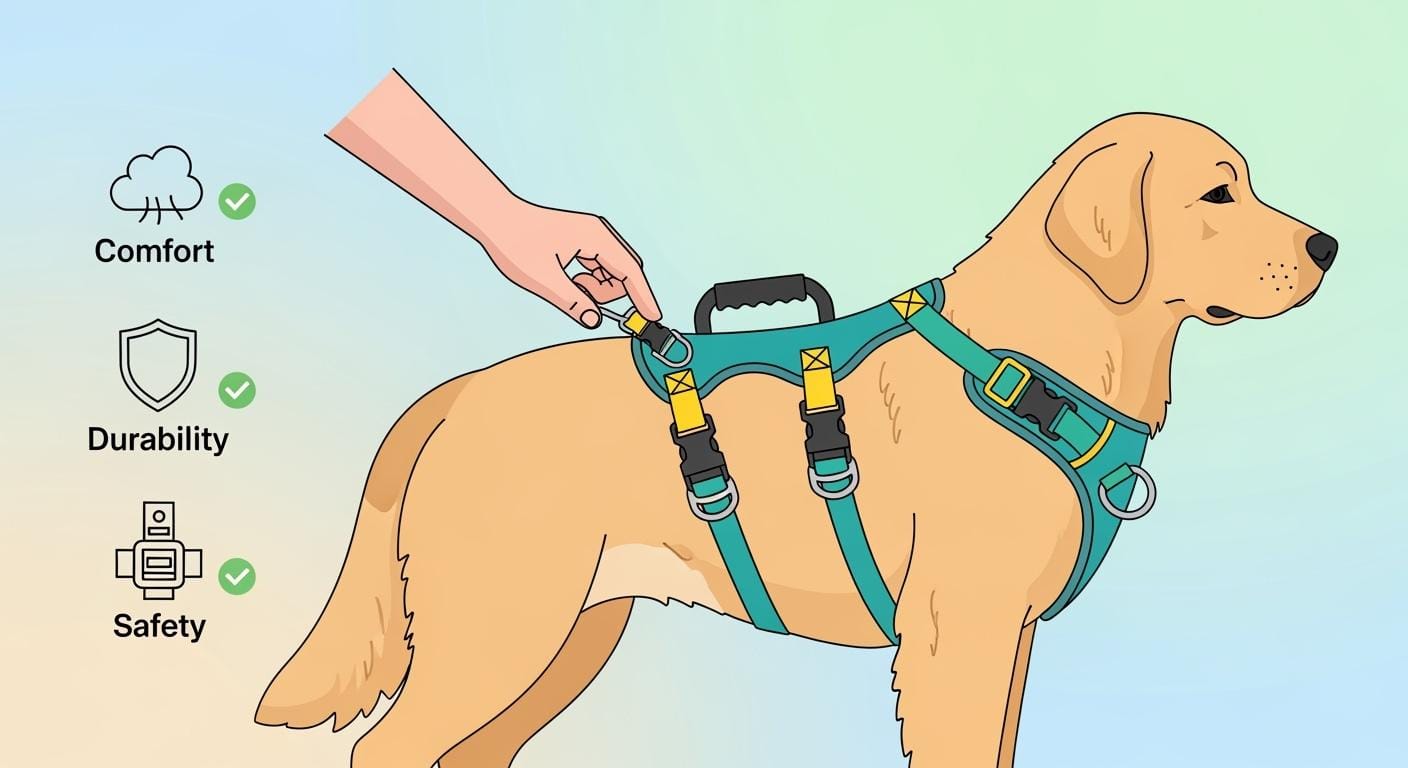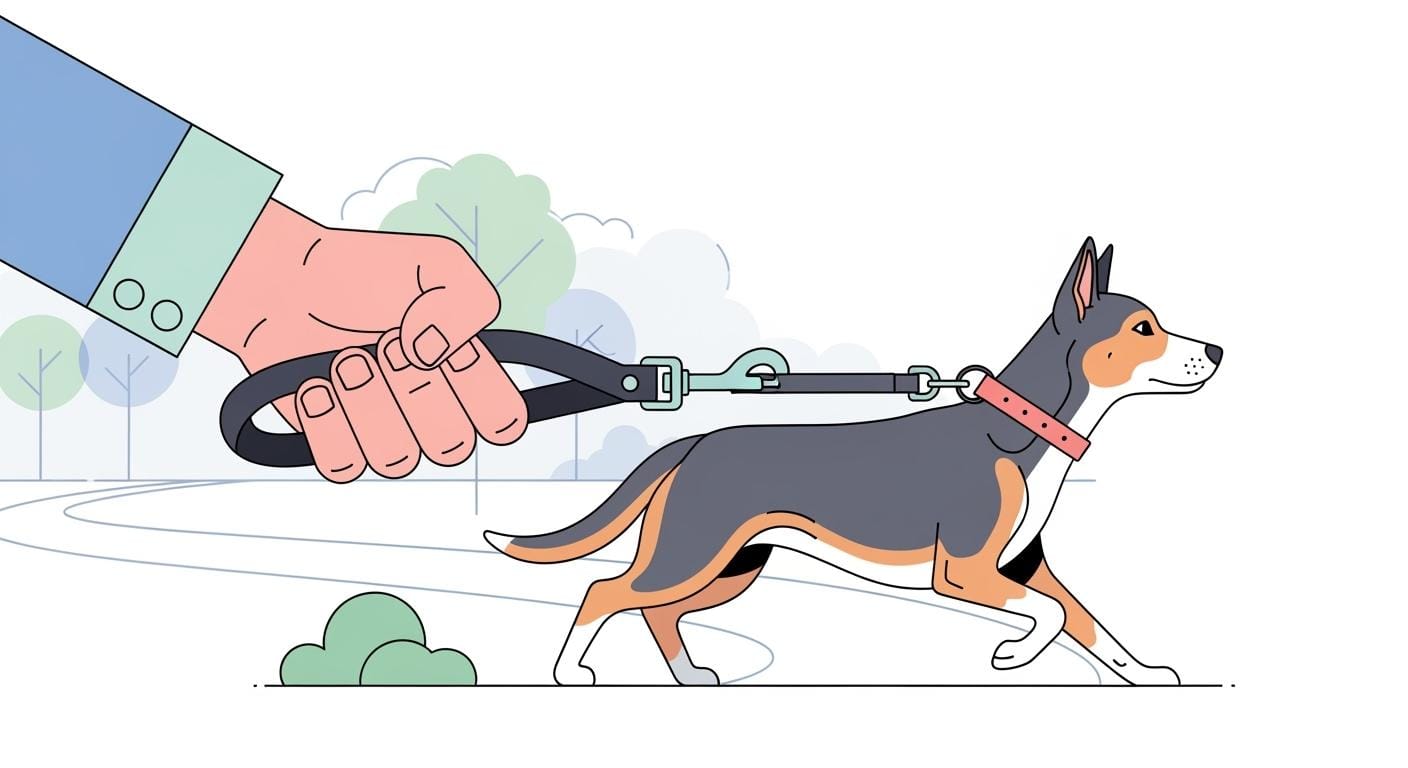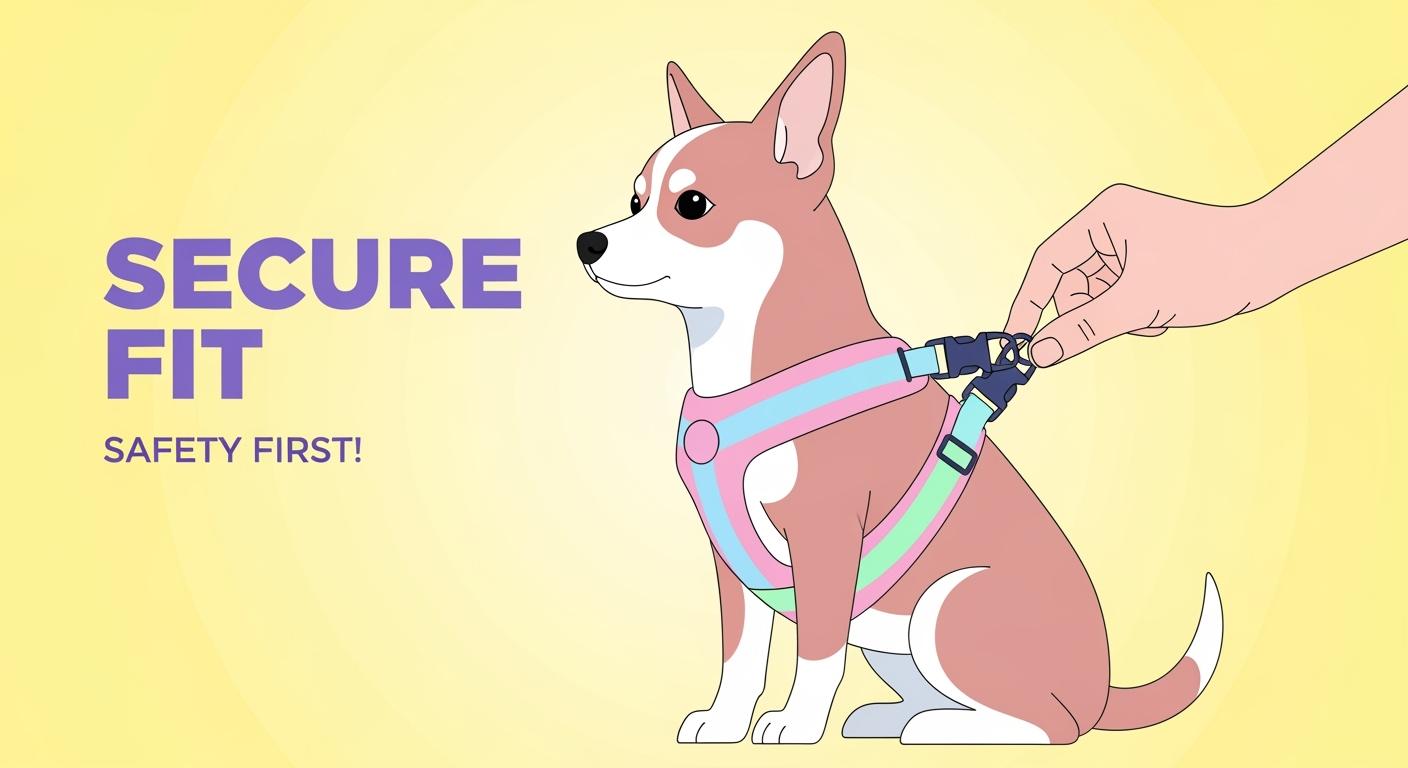
A small dog can look comfortable in a harness and still be one quick step away from a bad setup. The usual problem is not just size. It is the combination of clip position, hardware weight, body coverage, and how the harness sits once the walk actually starts. On small frames, a bulky buckle feels bigger, a front clip hangs lower, and a loose chest-to-rib fit can turn into a back-out risk fast. When choosing a dog harness small dog owners can trust, focus less on softness alone and more on whether the harness stays stable, clears the shoulder, and remains easy to recheck outside.
Key Takeaways
- Choose a harness that fits snugly without crowding your dog’s shoulder or chest. A harness that looks secure but shifts during movement can still raise escape risk.
- Front-clip, back-clip, step-in, and vest styles all work differently on small dogs. Pick the one that matches your dog’s walking style, not just the one that looks easiest to buy.
- Regularly inspect the harness before walks and after real movement. Watch for rubbing, twist, low-hanging hardware, or gaps that appear once your dog turns, sniffs, or backs up.
Why fit matters more on small dogs
Small frames do not hide hardware mistakes
Small dogs feel harness details more quickly than many medium or large dogs do. A thick buckle, stiff adjuster, or low chest ring can take up a lot of space on a short frame. That can change how the harness settles and how freely the dog moves. When you choose a dog harness small dog owners use every day, check whether the hardware sits flat, feels proportionate, and stays out of the way during short steps and quick turns.
What looks minor on a product page can feel oversized on a toy or small breed. The best setup usually feels lighter, cleaner, and easier to center from the start.
Neck relief only helps when the harness stays in place
Many people switch from a collar to a harness because they want less pressure on a small dog’s neck. That is a sensible goal, but it only helps when the harness stays where it should. If the harness slides forward, twists, or rides up, the dog may still end up walking in an awkward position. The benefit comes from stable pressure distribution, not just from wearing a harness instead of a collar.
| What to Check | Why It Matters on Small Dogs |
|---|---|
| Hardware weight | Heavy buckles or rings can feel outsized on a light frame and make the harness sit unevenly. |
| Pressure placement | A harness works better when force stays across the chest and body instead of creeping upward or twisting. |
| Airway and comfort signs | If your dog coughs, resists, or looks uncomfortable, stop and recheck fit before continuing. |
If you notice coughing, pain, or breathing trouble, stop using the harness and consult your veterinarian.
Escape risk starts at the chest and ribcage line
A loose or poorly fitted harness can let your dog slip out, especially if your dog feels anxious or startled. On small dogs, this often happens when the harness looks snug from above but leaves slack around the chest-to-rib area or shifts when the dog backs up. Narrow frames, quick movement, and short body length make these gaps more important than they may look indoors.
The biggest mistake is trusting a still-standing fit. A harness that seems fine in the house can show gaps, twist, or slide once the dog backs up, turns sharply, or hits leash tension outdoors.
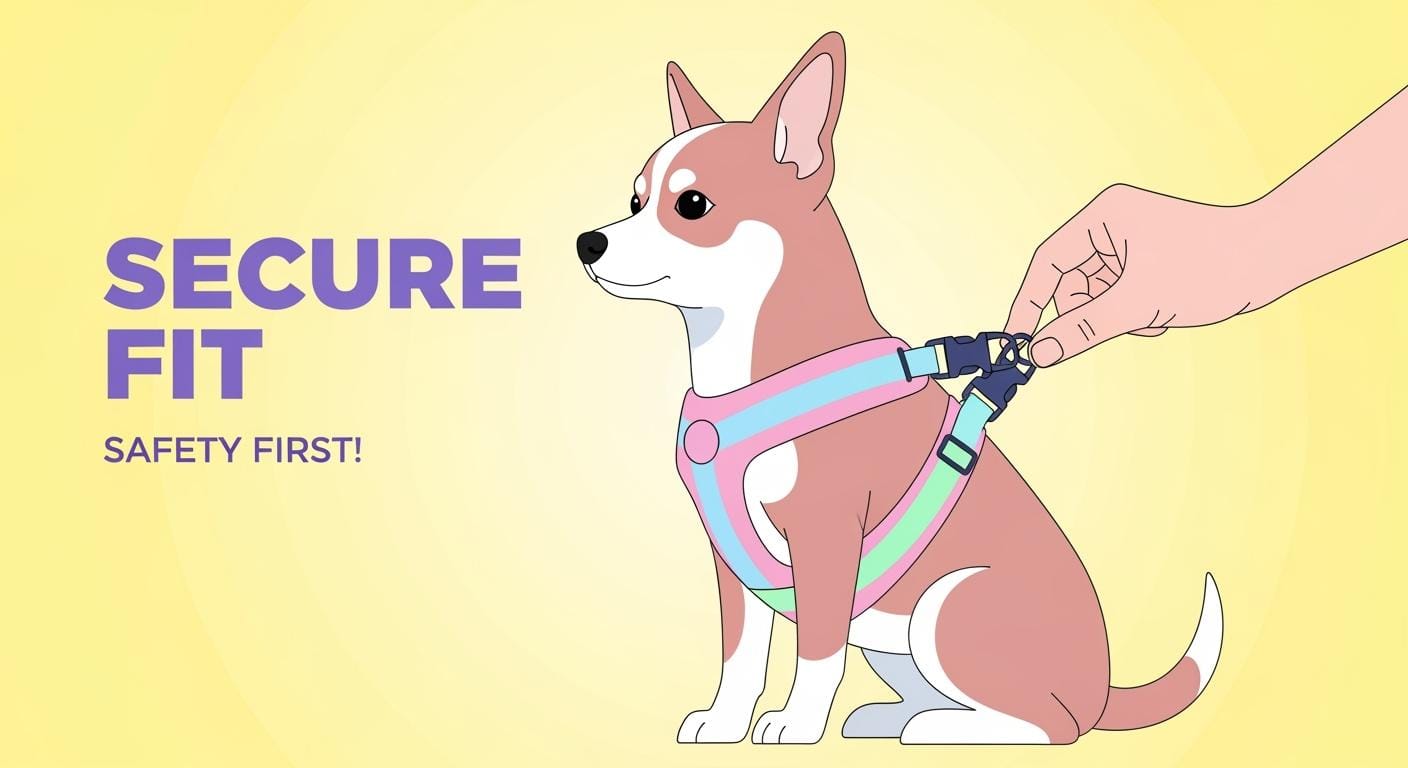
Use the one-finger check as a starting point, then test the harness on a real walk. A proper fit should stay centered, keep the shoulder clear, and leave your dog able to move without needing the harness readjusted every few minutes.
Disclaimer: This article offers general guidance on dog harness small dog fit and safety. For any signs of pain or breathing issues, consult your veterinarian.
How clip style changes the walk
Clip style changes more than leash attachment. It changes where control comes from, how the harness sits when tension appears, and how much you need to monitor shifting, tangling, or low-hanging hardware. On small dogs, these details show up quickly because there is less room for the harness to settle without affecting movement.
Front clip vs. back clip
Front-clip harnesses attach the leash at the chest. They can give you more steering and can be helpful when a small dog pulls, zigzags, or gets overexcited. The tradeoff is that front hardware can hang low on short dogs, and the leash path is easier to tangle if the walk gets messy. A front clip is useful when it stays clear of the legs and does not drag the harness off center.
Back-clip harnesses attach near the shoulders and usually feel simpler in daily use. They are often easier to put on, easier to recheck, and less likely to create leash interference under the front legs. The tradeoff is that they give you less steering help when the dog pulls or backs up hard. For calm walkers, that may be perfectly fine. For quick, reactive, or escape-prone small dogs, the easier feel of a back clip does not automatically make it the safer choice.
Here’s a quick comparison:
| Feature | Front-Clip Harness | Back-Clip Harness |
|---|---|---|
| Leash control | More steering help for pulling or darting | Simpler, but offers less directional control |
| Daily comfort | Works well if the chest hardware stays clear of the legs | Often feels cleaner for calm, steady walkers |
| Tangle risk | Higher if the leash hangs low or crosses under the legs | Usually lower in routine walks |
| Best use case | Dogs that need more steering and closer leash management | Dogs that already walk fairly calmly |
| Small-dog caution | Watch for low chest hardware and side shift | Do not assume simple means escape-resistant |
Tip: If you use a front-clip harness, check whether the leash path stays clear when your dog turns, sniffs, or speeds up. A front clip that works in a straight line can still become awkward in real use.
Dual clip and no-pull features
Dual-clip harnesses give you both front and back attachment points, which can be useful when you want more flexibility. For small dogs, the upside is control without committing to one leash position all the time. The downside is extra bulk. More attachment points can mean more rings, more hardware, and more chances for the harness to feel busy on a short frame.
No-pull harnesses often rely on front attachment or chest structure to interrupt pulling. That can help in training, but it is not automatically a better everyday choice for every small dog. If the chest panel sits too low, the dog may shorten its step, the leash may interfere with movement, or the whole harness may start rotating under tension. The right question is not “Is it no-pull?” but “Does this setup still let my dog move cleanly?”
Here’s how dual-clip and no-pull harnesses compare:
| Feature | Dual-Clip Harness | No-Pull Harness |
|---|---|---|
| Design feel | More flexible, but usually a bit busier | Built more around steering or pull management |
| Main benefit | Lets you switch leash position based on the walk | Can help interrupt pulling when fitted well |
| Main caution | Extra hardware can feel bulky on small frames | Some designs need closer watch on stride freedom and chest placement |
A three strap escape proof dog harness can add security for dogs that regularly back out of simpler styles. The extra strap is useful when it actually lands in the right place and stays there. If it turns the whole setup into something heavy, hot, or slow to recheck, the extra security may come with daily-use drawbacks.
No-pull designs are not automatically right for every small dog. If your dog already walks calmly, a simpler back-clip or step-in harness may create fewer problems. If your dog pulls or tries to reverse out, more structure may help, but only if the harness still stays balanced and comfortable.
Step-in and vest coverage
Step-in harnesses let your dog place both front legs into the harness before you fasten it at the back. Many small dog owners like this style because it feels simple and avoids slipping gear over the head. For a dog harness small dog owners use for easy daily handling, a step-in design can work well when the dog is calm and the harness stays snug around the chest without opening gaps when the dog backs up.
Vest harnesses cover more of the body and can feel more secure because there is more contact area. That extra coverage can help with escape resistance, but it also adds more material to monitor. On small dogs, high coverage can trap heat faster, crowd the front of the shoulder, or rub near the armpit if the shape is off. A vest style is most helpful when the added coverage is earning its place, not just making the harness look more substantial.
Here’s a quick look at step-in and vest harnesses:
| Harness Type | Security Features | Comfort Features |
|---|---|---|
| Step-in Harness | Simple closure, easy to adjust, works best when the dog does not back out under stress | Easy on and off, often preferred by dogs that dislike head-over styles |
| Vest Harness | More body contact and often better coverage against slipping | Can feel secure and padded, but needs closer heat and movement checks |
Many owners like step-in styles because they feel easy and low-drama. For dogs that repeatedly try to back out, a vest or more structured harness may be the better direction, but only if the harness does not become bulky enough to create new problems.
Note: Always check for shoulder crowding, armpit rubbing, low chest hardware, or side shift, especially with higher-coverage harnesses. A real walk shows these issues faster than an indoor fitting does.
You may need to try more than one style before the choice becomes obvious. The right harness for a small dog is usually the one that stays secure without turning each walk into a fit-management task.
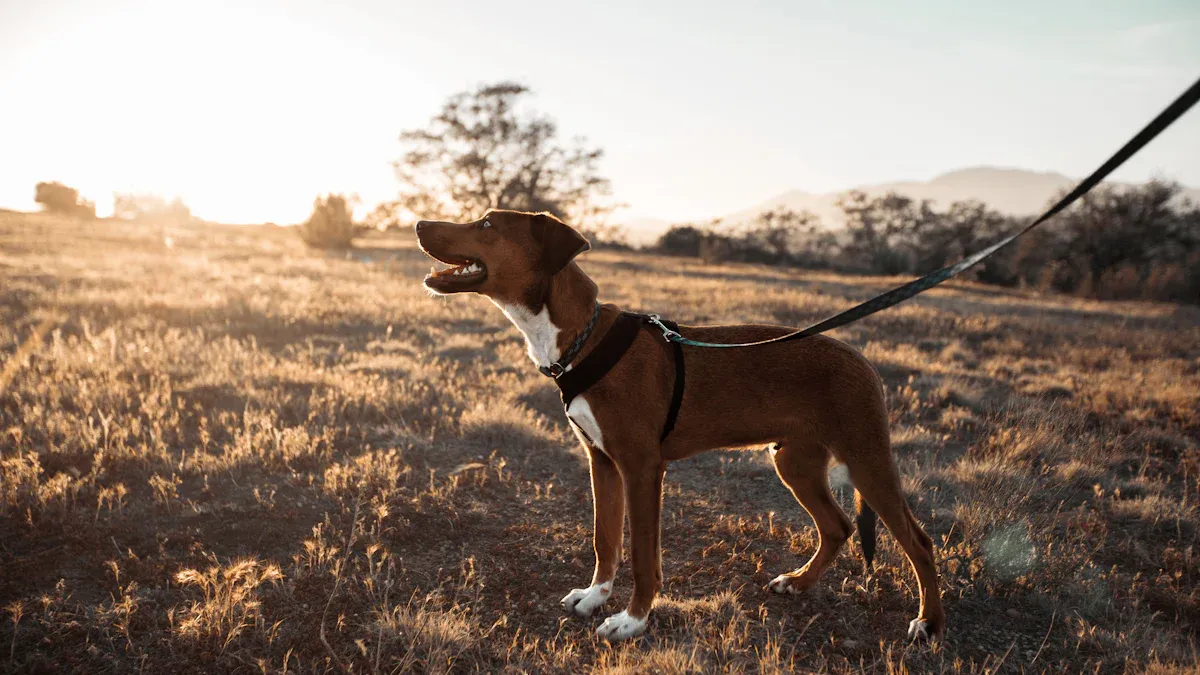
Escape proof dog harness setup and walk checks
Common mistakes to avoid
Most small-dog harness mistakes are easy to make because the setup looks acceptable before the walk starts. Problems usually show up once the dog pulls back, pivots quickly, or gets distracted.
- Choosing a harness based on appearance, softness, or color before checking how the hardware scales to a small frame.
- Relying on size labels without measuring chest shape and watching how the harness sits in motion.
- Ignoring shoulder clearance and focusing only on whether the straps feel snug.
- Using thick padding or extra coverage that feels secure at first but traps heat or shifts during the walk.
- Assuming a more technical-looking harness is automatically harder to escape from.
You should always check the harness on your dog before heading outside, then check it again after a few minutes of real movement. Small dogs expose fit problems quickly, which is useful if you pay attention early.
Quick fit and escape check
A quick fit and back-out check helps you decide whether the harness is ready for a real walk or only looks acceptable indoors.
| Fit & Security Check | Pass | Fail |
|---|---|---|
| You can fit one finger under each strap without obvious gaps | ✅ | ❌ |
| Straps and panels sit flat instead of bunching or twisting | ✅ | ❌ |
| The harness stays centered when you apply light leash tension | ✅ | ❌ |
| Shoulders and front legs move without rubbing or shortened stride | ✅ | ❌ |
| Buckles, rings, and stitching look secure and undamaged | ✅ | ❌ |
| No loose area appears when your dog backs up or turns sharply | ✅ | ❌ |
| Your dog still walks normally once outside distractions begin | ✅ | ❌ |
If any item fails, adjust the harness or change the style before trusting it for a longer walk. Indoor fit is only the starting point. Real movement is what tells you whether the setup is truly secure.
A no-pull dog harness with escape-resistant features should still let your dog walk, turn, and sniff naturally. If a vest style feels too hot, too bulky, or too tight around the front of the body, the extra coverage may be solving one problem while creating another.
Troubleshooting walk behavior
Even a good-looking setup can show problems once the walk starts. Use this table to decide what the behavior is actually telling you.
| Issue | What to Check or Do |
|---|---|
| Harness shifts or rotates | Recheck balance and strap tension. A small dog often exposes uneven fit quickly once leash tension starts. |
| Rubbing at armpits or chest | Look at edge placement and shoulder clearance. If rubbing continues, try a different style instead of over-tightening. |
| Dog tries to back out | Check for slack at the chest-to-rib area and whether the harness opens space when the dog reverses. |
| Buckles or straps wear out | Inspect the hardware before each walk. Replace the harness if you see fraying, cracking, or loosening parts. |
| Dog resists walking | Check for pinching, crowding, heat buildup, or a low chest ring that interferes with movement. |
| Dog coughs or seems distressed | Remove the harness right away, watch your dog closely, and contact your veterinarian if the problem continues. |
You may need to try several harness styles to find the best fit for your dog. Small-dog harness choice is rarely about one “best” design. It is usually about finding the style that stays secure without adding more bulk, more heat, or more management than your routine needs.
A real-walk check is still the most important step. Indoor fitting does not show how the harness behaves with leash tension, turning, stopping, backing up, or distractions. Always test the harness outside before trusting it for longer walks or travel.
Tip: The right harness should feel quieter after the first few minutes, not busier. If you keep re-centering, re-tightening, or correcting the leash path, the style may not be the right match for your small dog.
You can keep your small dog safer and more comfortable by treating clip style, fit, and coverage as one decision instead of three separate ones. The best setup is the one your dog can move in naturally while you still keep good control.
Picking the right clip style, fit, and coverage makes a bigger difference on small dogs than many owners expect.
- A snug, adjustable harness lowers escape risk, but only if it stays centered once the walk starts.
- Front-clip, back-clip, step-in, and vest designs all have tradeoffs.
- Real-walk checks matter more than indoor first impressions.
- If your dog shows pain, coughing, or obvious distress, stop and ask your veterinarian.
FAQ
How do you know if your small dog’s harness fits correctly?
You should be able to fit one finger under each strap without leaving obvious gaps. Then watch what happens on a real walk. If the harness twists, rubs, rides low, or opens space when your dog backs up, the fit still needs work.
Can a harness stop your small dog from escaping?
A well-fitted harness can lower escape risk, but no style is automatically secure just because it has more straps or more coverage. The real test is whether it stays centered and closed up around the chest and ribcage when your dog pulls back or turns suddenly.
Should you use a harness or collar for daily walks?
| Option | Typical Use |
|---|---|
| Harness | Daily walks, leash control, and more stable pressure distribution |
| Collar | ID tags and light everyday wear when appropriate |
For many small dogs, a harness is the better walking setup because it is easier to manage leash pressure across the body instead of relying on the neck alone.