You have real problems when you talk about a dog harness no pull product. Many buyers think “no pull” means their dog will stop pulling fast. This wrong idea often causes returns and policy problems. You must use facts and never promise training results. When you say “no pull,” use it as a Claim_Feature or Claim_Function. Talk about how the harness helps you guide your dog, not change behavior. Your team-procurement, product, compliance, merchandising, and CS-should always put safety and risk first.
Key Takeaways
Use ‘no pull’ as a Claim_Feature or Claim_Function. Focus on how the harness helps guide the dog. Do not say it will change behavior.
Do not promise training results. Say that pulling is a behavior. It takes time and training to get better.
Use simple and honest words on product pages. Explain how the harness helps the handler manage pulling.
Follow the claim ladder to sort your claims. Use safe phrases. Describe the harness’s features and functions. Do not make big promises.
Add standard disclaimers to product listings. Remind customers that training needs practice. It should be consistent and use rewards.
Teach your team about safe messaging. Make sure everyone uses the same words. This helps avoid confusion and keeps your brand strong.
Watch customer feedback and returns. Use this information to improve your messaging. Try to meet what customers expect.
Use StridePaw resources for help. Find internal links and tools. They support safe and honest messaging for dog harnesses.
Dog Harness No Pull Claim Risks
Shopper Perceptions vs. Product Reality
It is hard to sell a dog harness no pull product. Many shoppers think a no pull dog harness will stop pulling right away. But this is not what the harness really does. You need to explain this clearly. When you use “no pull,” use it as a Claim_Feature or Claim_Function. For example, say the harness has a “front-attachment option for directional control.” Or say it “helps reduce pulling leverage for the handler when used correctly.” These words show what the harness is made to do. They do not say the dog will stop pulling.
Tip: Use simple words on your product pages and hangtags. Show how the harness helps the handler, not how it changes the dog’s behavior.
Many shoppers want quick results. They may not know that pulling is a behavior that needs time and training to fix. If you say the harness does more than it can, you may have problems. You want your customers to use dog harnesses safely and know what to expect.
Over-Claiming: Returns and Policy Issues
If you say a no pull dog harness will stop pulling, you put your business at risk. Over-claiming can cause more returns and complaints. Shoppers may say the harness did not work because their dog still pulls. This can make things confusing and frustrating for your team and your customers.
You must follow the same rules and policies for retail and online sales. Only make claims you can prove with facts. Use the approved phrase bank. For example, say the harness “may help reduce pulling for some dogs when properly fitted and used with training.” This phrase uses a qualifier and matches real results. Do not use banned phrases like “stops pulling” or “guaranteed no pulling.” These words promise things you cannot make sure will happen.
Note: Always add standard disclaimers like:
“This harness is a handling tool. Training outcomes depend on consistent, reward-based practice.”
When you use safe, evidence-based messaging, you protect your brand and help your customers. You also lower returns and policy problems. You show you care about safety and honesty. You help your team support customers who want better control on walks without making false promises.
Defining No Pull Dog Harness Features
Mechanical Design and Control
When you look for a no pull dog harness, you want to know how the design helps you manage pulling. The mechanical features matter most. You should focus on what the harness does, not what it promises for training. Use the claim ladder to guide your messaging. For example, say the harness has a “front-attachment option for directional control” as a Claim_Feature. This means the leash attaches at the chest, which helps you redirect your dog’s forward motion. You get better control on walks because the harness works with your movements.
Here is a table showing common mechanical features in dog harnesses on walks:
Feature | Description |
|---|---|
Attachment Point | Attaches at the chest to discourage pulling behavior. |
Material | Made with durable marine nylon webbing. |
Hardware | Features rust-proof stainless steel hardware. |
Adjustability | Adjusts easily at three points for a secure fit. |
Strength | Triple-stitched for added strength. |
Comfort | Quick-drying, breathable, and machine washable for comfort. |
Size Options | Available in four sizes for different dog breeds. |
You see that each feature supports the handler. For example, adjustability lets you fit the harness to your dog’s body. Strength and comfort keep your dog safe and happy. These features do not promise to stop pulling. They help you manage your dog harnesses on walks and support your efforts for better control.
Tip: Always describe the harness using Claim_Feature and Claim_Function language. Say, “designed to help redirect forward motion” or “helps reduce pulling leverage for the handler when used correctly.”
Fit, Use, and Performance Factors
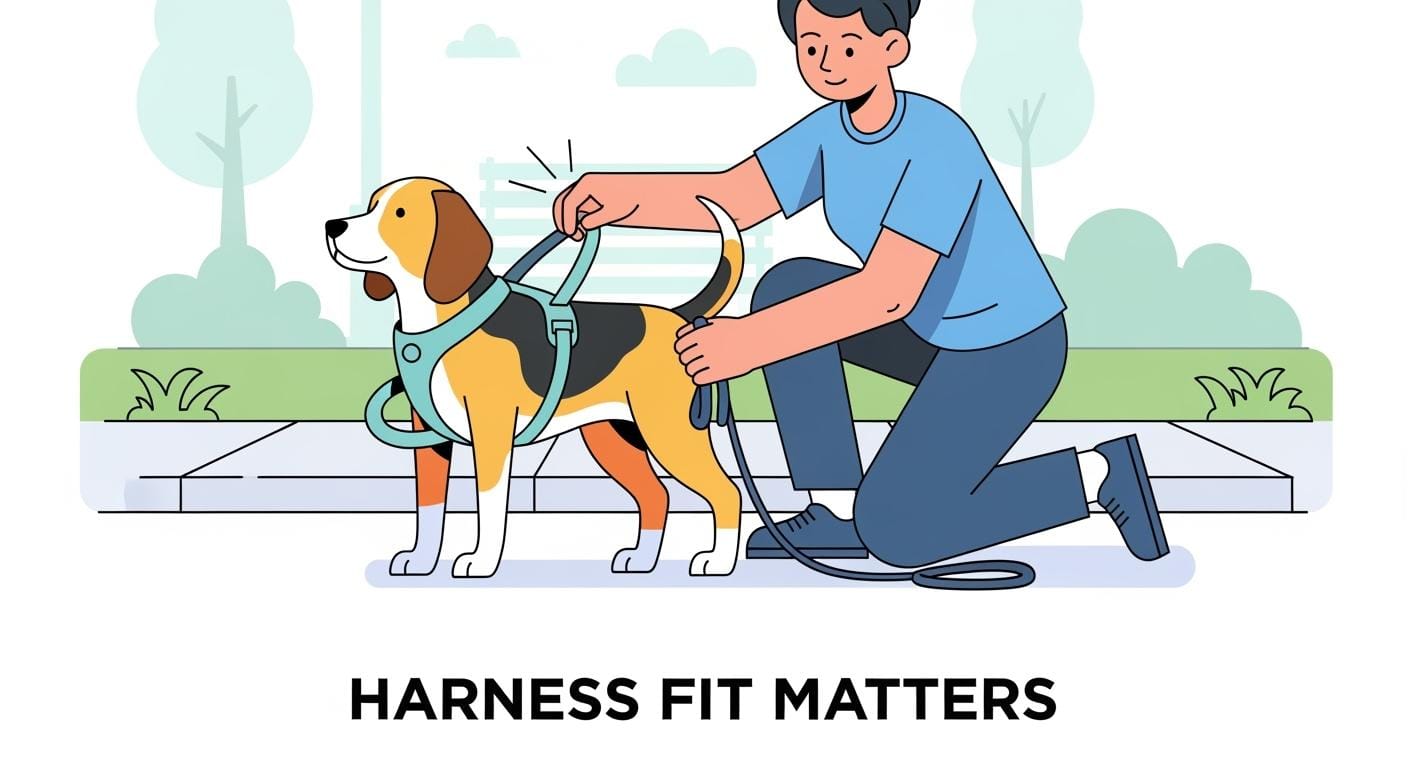
Fit and use play a big role in how a no pull dog harness works. You must fit the harness correctly for your dog. If the harness fits well, you get more control and less risk of discomfort. Use the harness as a management tool, not a training solution. Always anchor your claims as Claim_Feature or Claim_Function. For example, say, “fit-focused adjustment points for stable positioning” or “can improve handling control for some dogs depending on fit and technique.”
When you use the harness, follow the instructions. Make sure the straps sit snug but not tight. Check that the hardware does not rub or pinch your dog. If your dog shows signs of discomfort, stop and adjust the fit. You want your dog to feel safe and comfortable. This helps you manage pulling and keeps walks positive.
Performance depends on your dog, the fit, and how you use the harness. Results vary. Some dogs respond well to a front-attachment harness. Others need more time and practice. Never promise that the harness will stop pulling. Instead, say, “may help reduce pulling for some dogs when properly fitted and used with training.” This keeps your messaging honest and safe.
Note: Always remind customers, “This harness is a handling tool. Training outcomes depend on consistent, reward-based practice.”
You help your team and your customers when you use clear, evidence-based language. You lower risk and build trust. You show that you care about safety and support. When you describe the best harness for dogs that pull, focus on features and functions. You give buyers the facts they need to choose the right harness for their dog.
Claim Ladder for Dog Harness No Pull Messaging
When you write safe messages for a dog harness no pull product, you need to know about the claim ladder. This ladder helps you sort your claims by how risky they are. There are three main labels: Claim_Feature, Claim_Function, and Claim_Outcome. Each label helps you talk about the harness in a way that keeps your business safe and helps your customers.
Feature Claims: Construction and Configuration
You begin with feature claims. These claims tell what the harness is made of and how it is put together. Feature claims are the safest. You do not say the harness will change how a dog acts. You only talk about the parts and design.
Claim_Feature examples:
“front-attachment option for directional control”
“fit-focused adjustment points for stable positioning”
“two-point attachment compatibility (front and back)”
These claims help buyers see how the harness works. You show how the harness gives better control during dog harnesses on walks. You do not say it will stop pulling. You just explain how it is built.
Tip: Always use “no pull” as a Claim_Feature. For example, say, “no pull dog harness with front-attachment option for directional control.”
Function Claims: Handler Support
Function claims tell what the harness helps you do. These claims are a bit more risky. You talk about how the harness helps the handler, not how it changes the dog’s actions. You must use safe words and add qualifiers.
Claim_Function examples:
“helps reduce pulling leverage for the handler when used correctly”
“can improve handling control for some dogs depending on fit and technique”
“supports loose-leash training routines when paired with reward-based training”
Function claims show how the harness helps you manage pulling. You explain that the harness is a tool for management. You do not promise the harness will fix pulling. You only say it can help you have better control on walks.
Note: Always use qualifiers with function claims. For example, say, “may help reduce pulling for some dogs when properly fitted and used with training.”
Outcome Claims: Behavioral Change Risks
Outcome claims talk about changing the dog’s behavior. These claims are the most risky. You should not use outcome claims in your retail messages. If you say the harness will stop pulling, you can get into trouble. You may get more returns and complaints. You could also break important rules.
Claim_Outcome examples to avoid:
“stops pulling”
“prevents pulling”
“guaranteed no pulling”
“trains your dog”
“instant leash manners”
Never use these phrases. You cannot promise any harness will change a dog’s behavior. You should focus on features and functions. You help your customers by being honest.
Alert: Never promise training results. Always use the standard disclaimer:
“This harness is a handling tool. Training outcomes depend on consistent, reward-based practice.”
Claim Risk Table
Check the table below to see how each claim type fits your message. This table helps you pick safe claims for your no pull dog harness listings.
Claim Ladder Label | Example Phrase | Risk Level | Safe for Retail? |
|---|---|---|---|
Claim_Feature | “front-attachment option for directional control” | Low | ✅ Yes |
Claim_Feature | “fit-focused adjustment points for stable positioning” | Low | ✅ Yes |
Claim_Function | “helps reduce pulling leverage for the handler when used correctly” | Medium | ✅ Yes |
Claim_Function | “may help reduce pulling for some dogs when properly fitted and used with training” | Medium | ✅ Yes |
Claim_Outcome | “stops pulling” | High | ❌ No |
Claim_Outcome | “guaranteed no pulling” | High | ❌ No |
Instructions: Use this table to check your claims before you post anything about dog harnesses on walks. Only use claims that are safe for retail.
You keep your brand and customers safe when you use the claim ladder. You lower risk and build trust. You help your team make honest, fact-based messages for every no pull dog harness. You support all your teams, like procurement, product, compliance, merchandising, and CS. You make sure every claim matches what the harness can really do. You never say the harness will change a dog’s behavior. You always talk about features and functions. You help buyers pick the best harness for dogs that pull and manage pulling safely.
Evidence and Compliance for No Pull Dog Harness Claims
US and EU/UK Substantiation Rules
You must follow strict rules to sell a no pull dog harness. In the US and EU/UK, you need real proof for every claim. You cannot say a harness will change a dog’s behavior. You should show how the harness works and helps the handler. Always use the claim ladder labels. Use “no pull” as a Claim_Feature or Claim_Function. For example, say the harness has a “front-attachment option for directional control.” Or say it “helps reduce pulling leverage for the handler when used correctly.”
Your team needs to make a basic evidence kit before posting any claim. This kit should have:
Evidence_DesignRationale: Explain how the front attachment changes the dog’s motion and why fit is important.
Evidence_UserInstructions: Give simple fitting and use steps that match your claims.
Evidence_FieldFeedback: Keep track of returns and customer service questions about pulling.
Evidence_TestOrStudyLinking: Share short notes from studies that support your claim words.
Note: Always use standard disclaimers to protect your business and help your customers:
“This harness is a handling tool. Training outcomes depend on consistent, reward-based practice.”
“Effect varies by dog, fit, and handler technique. Avoid hard jerks; follow fitting guidance.”
“If the dog shows discomfort or breathing stress, stop use and consult a veterinarian or qualified trainer.”
Implied Claims in Copy and Images
You need to watch for hidden promises in your product words and pictures. Sometimes, what you write or show makes people think the harness will stop pulling. This can cause problems with rules and trust. Never use before-and-after photos or pictures that promise fast results. Do not use icons or images that show a dog pulling less unless you can prove it.
When you talk about a dog harness no pull product, focus on features and functions. For example, say, “fit-focused adjustment points for stable positioning.” Or say, “supports loose-leash training routines when paired with reward-based training.” These phrases help you stay honest and safe.
Your pictures should show the harness being used, but not promise behavior changes. Use photos that highlight the harness’s design and fit. Make sure your words match what the harness can really do. You help buyers get better control on walks when you use clear, evidence-based language.
Alert: Always check your product pages for risky claims. Use the approved phrase bank and claim ladder labels. Never promise that a harness will train a dog.
You keep your brand and customers safe when you follow these rules. You lower risk and build trust. Your team supports safe, honest messages for every no pull dog harness.
Approved Phrase Bank for No Pull Dog Harness Listings
You must use clear and safe words when you talk about a no pull dog harness. The right words help you avoid problems and set honest goals. The approved phrase bank guides your product pages, hangtags, and support scripts. This helps your team follow the rules and helps your customers.
Safe Feature Phrases
Safe feature phrases tell what the harness is made to do. You do not promise to change the dog’s behavior. You focus on how the harness is built and designed. Use these phrases as Claim_Feature:
“front-attachment option for directional control”
“designed to help redirect forward motion”
“two-point attachment compatibility (front and back)”
“fit-focused adjustment points for stable positioning”
These phrases show how the harness helps the handler. You help buyers see how the harness works for their dog. You do not say it will stop pulling.
Tip: Always use “no pull” as a Claim_Feature. For example, say, “no pull dog harness with front-attachment option for directional control.”
Safe Function Phrases
Safe function phrases explain how the harness helps the handler. You do not promise results for every dog. You show how the harness can help with better control. Use these as Claim_Function:
“helps reduce pulling leverage for the handler when used correctly”
“supports loose-leash training routines when paired with reward-based training”
“can improve handling control for some dogs depending on fit and technique”
You give buyers the facts. You help them see how the harness can make walks easier. You do not promise behavior changes.
Qualified Function Phrases
Qualified function phrases add important details. You remind buyers that results depend on the dog, the fit, and how they use the harness. Use these as Claim_Function with qualifiers:
“may help reduce pulling for some dogs when properly fitted and used with training”
“results vary by dog, fit, and handling technique”
“a management tool, not a standalone training solution”
You set clear goals. You help your team avoid risky promises. You support safe and honest messages for every dog harness.
Safer rewrites
Here are some risky lines and how to rewrite them with approved words:
Risky Line | Safer Rewrite (Approved) |
|---|---|
“Stops pulling instantly” | “may help reduce pulling for some dogs when properly fitted and used with training” |
“Trains your dog to walk nicely” | “supports loose-leash training routines when paired with reward-based training” |
“Guaranteed no pulling” | “front-attachment option for directional control” |
Instructions: Use this table to check your words before posting. Always pick phrases from the approved bank.
You keep your brand and customers safe when you use these phrases. You help every team member write safe, clear, and honest messages about your dog harness.
Banned Phrases to Avoid
You should know which words can cause problems for your business when you talk about a no pull dog harness. Some claims sound nice, but they promise things you cannot make sure will happen. If you use these banned phrases, you might get more returns and upset customers. You could also have trouble with rules. Always use “no pull” as a Claim_Feature or Claim_Function. Do not use it to promise behavior changes.
Alert: Never use words that say the harness will train a dog or change behavior right away. These claims do not match what a harness can do.
Here is a list of banned phrases you must not use on product pages, hangtags, or support scripts:
“stops pulling”
“prevents pulling”
“guaranteed no pulling”
“trains your dog”
“instant leash manners”
“works for every dog”
“behavior guaranteed”
If you use these phrases, you might trick your customers. You also make returns and complaints more likely. Your team should always use safe, fact-based words. This helps your brand and lets buyers pick wisely.
Banned Phrase | Why to Avoid |
|---|---|
stops pulling | Promises a result you cannot guarantee |
prevents pulling | Implies the harness works for all dogs |
guaranteed no pulling | Makes a promise that is not evidence-based |
trains your dog | Suggests the harness replaces training |
instant leash manners | Implies fast results without effort |
works for every dog | Ignores differences in dogs and handlers |
behavior guaranteed | Claims a change you cannot prove |
Tip: Always check your writing for these risky phrases before you post. Use the approved phrase bank and claim ladder labels to help you write safe messages.
Safer rewrites
You can change risky lines into safe, approved words. Use the phrase banks to fix your claims. Here are some examples:
Risky Line | Safer Rewrite (Approved) |
|---|---|
“Stops pulling instantly” | “may help reduce pulling for some dogs when properly fitted and used with training” |
“Trains your dog to walk nicely” | “supports loose-leash training routines when paired with reward-based training” |
“Guaranteed no pulling” | “front-attachment option for directional control” |
If you want to talk about a no pull dog harness, say it has a “front-attachment option for directional control” as a Claim_Feature. You can also say it “helps reduce pulling leverage for the handler when used correctly” as a Claim_Function. These phrases set honest goals and keep your words safe.
You help your team and your customers when you do not use banned phrases. You lower risk, build trust, and support safe, honest retail messages. Always use the claim ladder and approved phrase bank to help you write. If you follow these rules, you protect your brand and help buyers pick the right harness for their dog.
Managing Customer Expectations for Dog Harness No Pull

PDP and Hangtag Copy Tips
You want your product pages and hangtags to be clear. Buyers need to know what a harness can do. Always use “no pull” as a Claim_Feature or Claim_Function. For example, say the harness has a “front-attachment option for directional control.” This tells buyers how the harness helps you guide your dog. It does not say it will change your dog’s behavior.
Use simple and honest words. Do not use phrases that promise your dog will stop pulling. Focus on how the harness helps you during dog harnesses on walks. You can say, “helps reduce pulling leverage for the handler when used correctly.” This helps buyers know what to expect and keeps your message safe.
Tip: Add standard disclaimers to your product pages and hangtags:
“This harness is a handling tool. Training outcomes depend on consistent, reward-based practice.”
“Effect varies by dog, fit, and handler technique. Avoid hard jerks; follow fitting guidance.”
“If the dog shows discomfort or breathing stress, stop use and consult a veterinarian or qualified trainer.”
A table can help your team check for safe words:
Copy Element | Safe Example Phrase | Claim Ladder Label |
|---|---|---|
PDP Title | “No pull dog harness with front-attachment option” | Claim_Feature |
Hangtag Bullet | “Helps reduce pulling leverage for the handler” | Claim_Function |
Disclaimer Block | “Training outcomes depend on consistent, reward-based practice.” | Standard Disclaimer |
Training Support Messaging
You help your customers most when you show how to use the harness as a management tool. Remind buyers that pulling is a behavior that takes time and practice to improve. The harness gives you more control, but it does not train your dog by itself.
Use kind and helpful words. Tell buyers to use the harness with reward-based training. You can say, “supports loose-leash training routines when paired with reward-based training.” This helps buyers set real goals and trust your advice.
Note: Always use the approved phrase bank and claim ladder labels. Never promise instant results or guaranteed behavior changes.
Show you care about safety and support. Add a StridePaw video or placeholder to show how to fit and use the harness safely.
You help buyers manage pulling and keep their dog comfortable. You give them facts so they can use dog harnesses on walks with confidence. When you set honest expectations, you lower risk and build stronger relationships with your customers.
Merchandising and Support Alignment for No Pull Dog Harness
You want every team member to share the same message about your no pull dog harness. When you talk to buyers, you must use safe words and honest claims. This helps you avoid confusion and keeps your brand strong. You should always anchor “no pull” as a Claim_Feature or Claim_Function. Never promise that the harness will change a dog’s behavior.
Staff Talk Tracks
Your staff needs clear talk tracks for in-store conversations and online chats. You can use these examples to guide your team:
“This harness has a front-attachment option for directional control. It helps you guide your dog during walks.”
“The harness is designed to help redirect forward motion. It supports you when your dog pulls.”
“You may see less pulling when you use the harness with reward-based training. Results depend on your dog, fit, and technique.”
Tip: Remind staff to use the claim ladder labels. Always say “no pull” as a Claim_Feature or Claim_Function. Never say the harness will train your dog.
You help buyers set real expectations. You show them how the harness works as a management tool. You keep your message safe and honest.
CS Macros for Pulling Issues
Your customer service team needs ready-to-use macros for common questions about pulling. These macros help you answer quickly and stay consistent:
“Thank you for reaching out. Our harness features a front-attachment option for directional control. This helps you manage your dog’s pulling during walks.”
“The harness may help reduce pulling for some dogs when properly fitted and used with reward-based training. Results vary by dog, fit, and handling technique.”
“This harness is a handling tool. Training outcomes depend on consistent, reward-based practice.”
“If your dog shows discomfort or breathing stress, please stop use and consult a veterinarian or qualified trainer.”
Note: Always use the approved phrase bank and claim ladder labels in your macros. Never promise instant results or guaranteed behavior changes.
You keep your support team ready for questions. You help buyers understand what the harness can do. You build trust and lower risk by using safe, evidence-based language.
QA Checklist for No Pull Dog Harness Copy
A good QA process keeps your dog harness messages safe and clear. Every team member should check for risky words and pictures before posting product pages, hangtags, or support scripts. Use this checklist to make sure your writing follows all the rules and keeps your brand safe.
Words and Icons to Avoid
Do not use words or icons that promise a change in dog behavior. Never say things like “stops pulling” or “guaranteed no pulling.” These words break the rules and give buyers false hope. Always use “no pull” as a Claim_Feature or Claim_Function. For example, say “no pull dog harness with front-attachment option for directional control.” This tells buyers how the harness works, not what the dog will do.
Icons can also give the wrong idea. Do not use before-and-after pictures or “pull meter” graphics. These images can make buyers think the harness will fix pulling for every dog. Only show pictures that highlight the harness’s design, fit, or safe use. Follow Guardrail_ImpliedClaims and Guardrail_Visuals to avoid risky promises.
Alert: Always check your writing for banned words and risky icons before you approve it.
Approval and Version Control
You need a clear approval process for every piece of dog harness writing. Pick a team member to review each draft using the checklist below. Track changes and keep a record of approved versions. This helps your team stay on track and be ready for audits or customer questions.
Here is your Copy QA Checklist Table. Use it every time you check a new product page, hangtag, or support script:
QA Step | Pass/Fail | Notes/Action Needed |
|---|---|---|
Only uses approved phrase bank | ||
Anchors “no pull” as Claim_Feature or Claim_Function | ||
No banned phrases or outcome promises | ||
No risky icons or before/after visuals | ||
Includes standard disclaimers | ||
Matches claim ladder labels | ||
Follows Guardrail_ImpliedClaims | ||
Follows Guardrail_Visuals | ||
Version and approver recorded |
Instructions: Print or share this table with your team. Use it to check every dog harness listing before it goes live.
A careful QA process keeps your messages honest and safe. You help buyers know what the harness can do for their dog. You also protect your brand from returns and policy problems. Always use the checklist, follow the guardrails, and keep your team working together.
StridePaw Internal Links and Resources
When you work with dog harnesses in retail, you need trusted info fast. StridePaw gives you special resources to help you make safe and honest choices. These links guide your team and help your customers. Each resource helps you use “no pull” as a Claim_Feature or Claim_Function, not as a promise to change behavior.
Dog Harness Category/Collection
You can look at all the dog harnesses in the StridePaw Dog Harness Category. This group shows harnesses with features like front-attachment options for directional control. You can see how each harness helps handlers and fits different dogs. Use this page to compare products and pick harnesses that meet your compliance needs. Every listing uses approved phrase bank words and follows the claim ladder. You help your team choose harnesses that focus on safety and management, not on training results.
Tip: Save the category page for quick use during procurement or merchandising checks.
Harness Sizing and Returns Blog
Getting the right size is important when you pick a harness for a dog. StridePaw’s Harness Sizing and Returns Blog shows you how to measure a dog and pick the best fit. You learn how good sizing helps keep the harness in place-a key Claim_Feature. The blog also explains the returns process, so you can handle customer expectations and cut down on complaints. You get tips for fitting harnesses and advice for returns about pulling issues. This resource helps your compliance and CS teams answer questions with clear, evidence-based words.
Note: Always remind customers that results depend on the dog, fit, and handler technique.
QC/Compliance Basics Blog
Quality control and compliance help keep your dog harness listings safe. Go to the StridePaw QC/Compliance Basics Blog for tips on claim proof, evidence kits, and messaging rules. You learn how to use the claim ladder and phrase banks to avoid risky promises. The blog shows how to write design reasons and user instructions for every harness. You see examples of safe writing and learn how to check product pages before they go live. This resource helps product, compliance, and CS teams make honest, risk-aware listings.
Resource | Purpose | Who Should Use It |
|---|---|---|
Dog Harness Category | Compare harness features and options | Procurement, Merchandising |
Sizing and Returns Blog | Fit guidance and returns support | CS, Compliance |
QC/Compliance Basics Blog | Messaging and evidence best practices | Product, Compliance |
You keep your team up to date and your listings safe when you use these StridePaw resources. You help with every step from picking products to customer service, always focusing on honest claims and safety for every dog.
Request a Quote / Contact Us
You may need more details before you choose a dog harness for your store or team. StridePaw makes it easy for you to get answers. You can request a quote or contact the StridePaw team for help. This step helps you make smart choices and keeps your business safe.
If you want to compare harnesses, ask about bulk orders, or check compliance, use the StridePaw Request a Quote page. You will find clear options for every dog harness with a Claim_Feature like “front-attachment option for directional control.” You can ask about harnesses that support handlers with a Claim_Function such as “helps reduce pulling leverage for the handler when used correctly.” The StridePaw team will answer your questions about fit, features, and safe use.
Tip: Always ask for the evidence kit before you make a decision. The kit should include design reasons, user instructions, and feedback about pulling issues. This helps you match your dog harness claims to what you can prove.
If you have questions about sizing, returns, or safe messaging, use the StridePaw Contact Us page. The team can help you write product pages, hangtags, or support scripts. You can ask for help with the claim ladder, phrase bank, or standard disclaimers. You will get answers that focus on safety and honest claims. The team will never promise training results. They will always anchor “no pull” as a Claim_Feature or Claim_Function.
Here are some ways you can use these resources:
Request a quote for a dog harness with specific features.
Ask about bulk pricing for harnesses with two-point attachment compatibility.
Get help with compliance checks for your product listings.
Contact support for advice on safe copy or customer questions about pulling.
You can find the links here:
Request a Quote – StridePaw
Contact Us – StridePaw
Note: Always use the approved phrase bank and claim ladder labels in your requests. This keeps your team safe and your claims honest.
If you want to see how to use the contact form or request a quote, watch the StridePaw video below.
You help your team and your customers when you use these tools. You make sure every dog harness you choose or sell meets safety and compliance needs. You also show that you care about honest, evidence-based messaging for every dog and every handler.
You keep your team safe when you use the claim ladder and phrase bank for every dog harness no pull listing. You help buyers understand how a no pull dog harness works as a Claim_Feature or Claim_Function. You set clear expectations for every dog and support honest, evidence-based claims. Always check your copy with the QA checklist. For more help, request a quote or ask for samples/get a catalog from StridePaw.
FAQ
What does “no pull” mean for a dog harness?
“No pull” describes a Claim_Feature. The harness uses a front-attachment option for directional control. You get help guiding your dog, but you do not get a promise that pulling will stop.
Will this harness train my dog to stop pulling?
You do not get a training guarantee. The harness works as a Claim_Function to help you manage pulling. Training outcomes depend on your practice and reward-based routines.
Can every dog use a no pull harness?
Most dogs can use a harness with fit-focused adjustment points for stable positioning. You must check sizing and fit. Results vary by dog, fit, and handler technique.
How should I describe “no pull” in product listings?
You should anchor “no pull” as a Claim_Feature or Claim_Function. Use approved phrases like “front-attachment option for directional control” or “helps reduce pulling leverage for the handler.”
What phrases should I avoid in my copy?
You must avoid banned phrases like “stops pulling,” “guaranteed no pulling,” and “trains your dog.” These promise outcomes you cannot guarantee.
What evidence do I need before making claims?
You need an evidence kit. Include design rationale, user instructions, and feedback about pulling issues. Always match your claims to what you can prove.
How do I support customers who ask about pulling?
You should use safe, approved phrases. Remind customers that the harness is a management tool. Advise them to pair it with reward-based training for best results.
Where can I find help with safe messaging?
You can use StridePaw resources for guidance. Watch the video below for tips on safe copy and claim ladder use.